Direct Answer: Dead or spent flea eggs look collapsed, dented, and dull. Live eggs look plump, smooth, and slightly glossy. Both are about half a millimeter and off white, so judge shape, not size.
You had the house treated. Four days later you are on your knees with a phone flashlight, looking at tiny white specks in the carpet by the dog bed, wondering if you wasted your money.
I get this question constantly from pet owners here in Santa Cruz County, and almost nobody gives them a straight answer. The real question is not what a flea egg looks like. It is whether the eggs you are staring at are still going to hatch.
So that is what this article is about. How to tell a live egg from a spent shell, how to separate eggs from flea dirt, and why fresh eggs can keep showing up for weeks without meaning the treatment failed.
What Do Dead Flea Eggs Look Like Up Close?
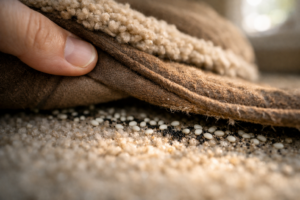
A flea egg is roughly half a millimeter long, off white, and oval. Think grain of salt, not speck of dirt. They are smooth and they do not stick to anything, which is why they roll off your pet and settle into carpet seams, couch cracks, and pet bedding.
The difference between live and dead is mostly about shape and shine:
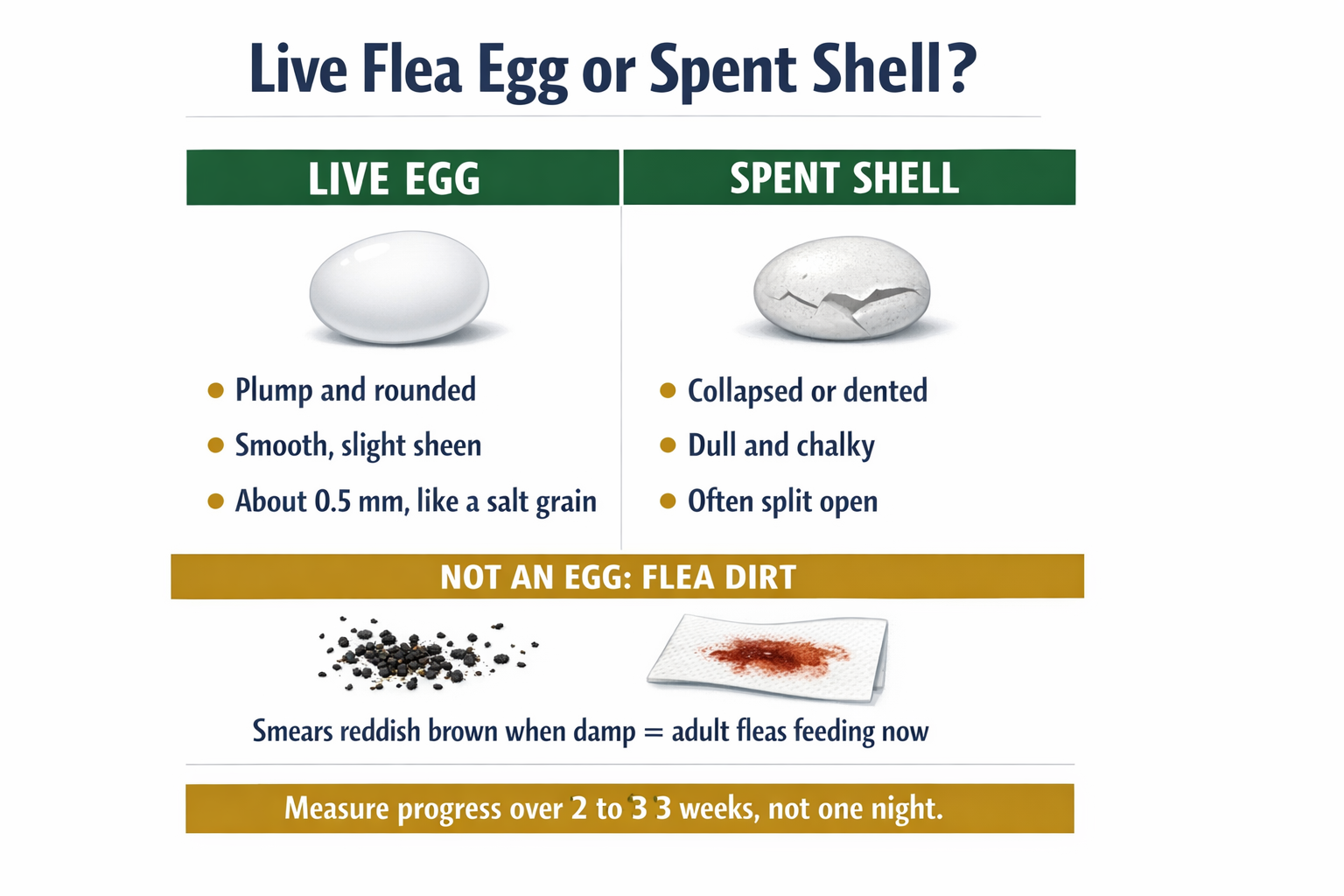
- Live egg: plump, rounded, smooth sided, with a faint pearl like sheen. It holds its oval shape when you nudge it.
- Spent or hatched shell: collapsed or dented on one side, dull and chalky, sometimes split open. The oval looks deflated.
- Dried out egg that never hatched: shriveled and wrinkled, often smaller looking and more yellow than white.
I will be honest with you about the limits here. At half a millimeter, your eyes are doing a lot of guessing. A cheap jeweler’s loupe or the macro mode on a phone camera will tell you more in ten seconds than squinting will in ten minutes.
And one count means very little either way. What matters is whether you are finding fewer of them each time you look.
The Paper Towel Test That Settles Most Arguments
Half the people who tell me they found flea eggs actually found flea dirt. The two sit side by side in the same carpet, so the mix up makes sense.
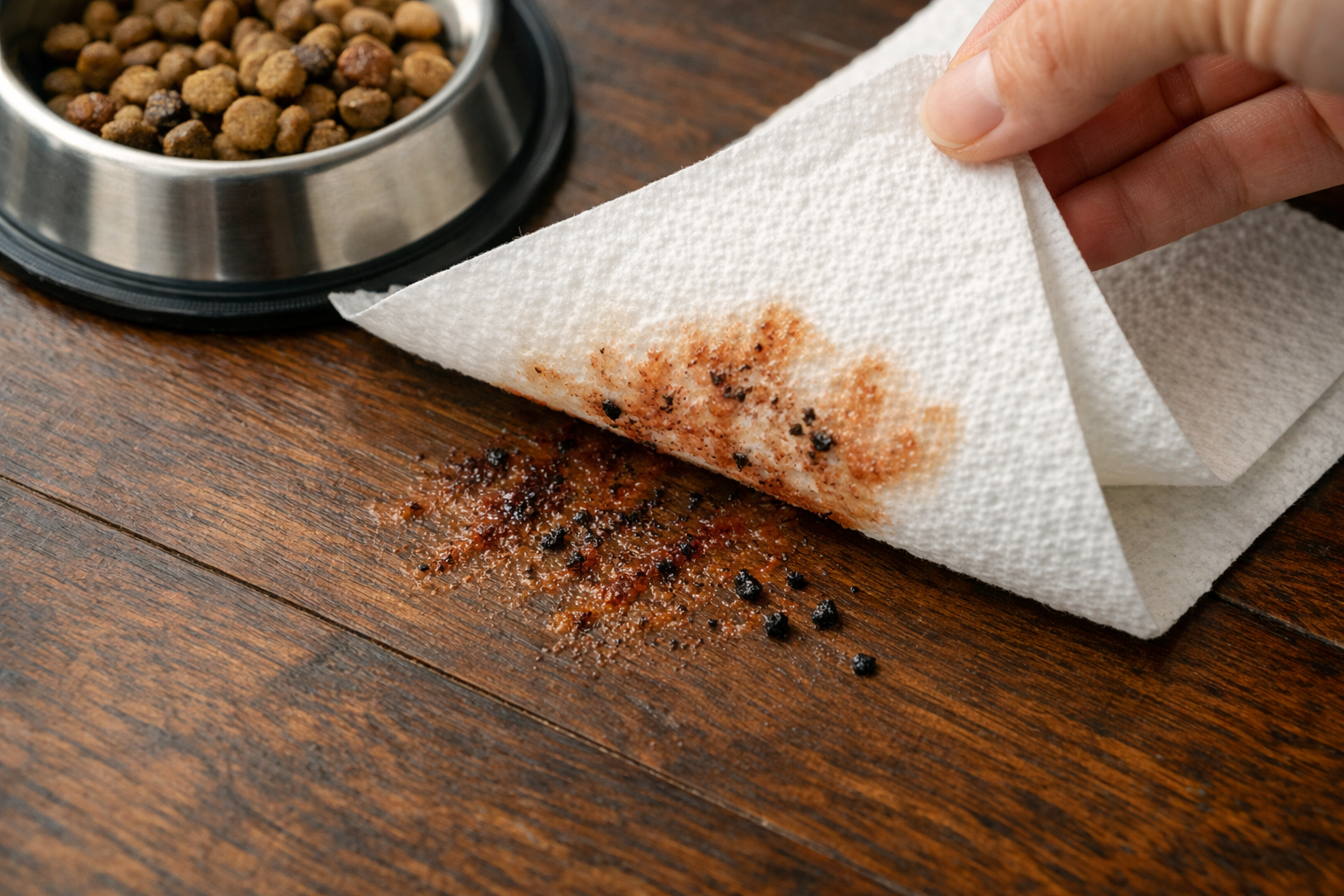
Flea dirt is adult flea waste, and it is mostly digested blood. It looks like coarse black pepper. Flea eggs are white and oval.
Here is the test I walk homeowners through on the phone:
1. Dampen a plain white paper towel with water. Not soaking, just damp.
2. Press it onto the specks on the floor, the bedding, or your pet’s fur after a flea comb pass.
3. Hold it up to the light. Reddish brown streaks mean flea dirt, which means adult fleas are feeding right now.
4. A white speck that stays white and leaves no color is an egg, live or spent.
Flea dirt is the more useful finding of the two. Eggs can sit in a rug long after the adults are gone. Fresh flea dirt means there is an adult on the animal today, and that points at the pet’s treatment schedule as much as the house.
Live Egg, Spent Shell, or Flea Dirt?
Use this as a quick reference when you are down on the floor with a flashlight.
| What you found | How it looks | What it tells you |
|---|---|---|
| Live flea egg | Off white oval, about half a millimeter, plump and smooth with a slight sheen | Recent egg laying. Expect larvae within roughly 2 to 12 days in a warm home |
| Hatched or spent shell | Collapsed, dented, dull and chalky, sometimes split | Leftover debris. By itself it is not proof of an active problem |
| Dried unhatched egg | Shriveled, wrinkled, yellowish | Egg that failed. Common after treatment and after heavy vacuuming |
| Flea dirt | Black pepper-like grains, smears reddish brown on a damp white towel | Adult fleas are feeding now. Check the pet’s treatment, not just the carpet |
| Flea larvae | Tiny pale worm-like shapes, under 5 mm, usually deep in carpet or cracks | The cycle is mid-stage and still running |
Why Fresh Eggs Keep Showing Up After a Treatment
This is the part nobody explains, and it is the honest reason people think a treatment failed.
Fleas spend part of their life inside a pupal cocoon. That cocoon is sticky, so it grabs carpet fibers, dust, and pet hair and buries itself down at the base of the pile. Most products have a hard time reaching through it.
The pupa inside can wait. According to UC’s pest notes on fleas, pre-emerged adults can sit in that cocoon for weeks before vibration, warmth, or carbon dioxide from a passing pet triggers them to come out.
So the sequence in a real house looks like this:
- Treatment knocks down the adults and the eggs and larvae it can reach.
- Protected pupae keep emerging over the following days and weeks.
- Each new adult feeds, mates, and starts laying within about 24 to 48 hours.
- You find fresh eggs and assume nothing worked.
Nothing went wrong. You are watching the tail of a cycle that started before anyone showed up with a sprayer. This is the same pattern that shows up with other treatments too, which is why ants can keep trailing for days after treatment day before the numbers drop.
Reading the Evidence on Your Floor
A side by side look at what each finding actually means while you wait out the cycle.
Tail End or Active Cycle? What Two Weeks Should Look Like
Stop counting eggs. Start counting adult fleas and fresh bites.
Eggs and shells sit in a rug for a long time. Adults are the only honest scoreboard. Over a two to three week stretch, run a flea comb over your pet every few days and note two numbers: live fleas caught, and new bites on ankles or on the animal’s belly.
If both numbers are trending down week over week, you are watching the tail end, even if you still find specks. If adult counts hold steady or climb after two weeks, something in the cycle is still fed, and that usually means the pet side or an untreated area like a crawl space or a shaded spot in the yard.
One thing that makes this harder locally: Santa Cruz County never gets the hard freeze that resets flea numbers inland. Between coastal fog, shaded yards under redwoods up in Ben Lomond, and heated homes in Aptos and Capitola, the cycle keeps ticking through the cool months. October is when I get the most calls, and it is no coincidence that is also when people pull blankets out of closets and find specks in the bedding. If you want the longer version of that, we covered whether fleas actually die off in winter here.
One local homeowner summed up the frustration better than I could: “Trying everything I could I could not manage the fleas that infested my home.” What changed for her was not a stronger product. It was knowing which stage she was fighting.
What You Can Do While the Cycle Plays Out
Vacuuming is not busywork here. The vibration is one of the few things that reliably triggers pupae to come out of the cocoon, where they are far easier to deal with.
- Vacuum high traffic lanes and pet resting spots every day or two for at least two weeks. Get the edges, under furniture, and along baseboards.
- Wash pet bedding and any throw blankets on hot and dry them on high heat.
- Keep the pet’s veterinary flea product on schedule. Treating the house while the animal goes untreated keeps the loop running. If you are weighing product options, the state review of fipronil flea drops is worth reading.
- Do not strip the house of everything at once. Moving furniture around mid cycle just spreads cocoons into fresh rooms.
The point I make on every flea call is that indoor treatment and pet treatment are two separate jobs. Skip either one and the cycle keeps going, no matter how good the other half was.
If you have kids or multiple animals and you are weighing what is safe to apply and when people and pets can come back in, we walk through those treatment day questions here.
Frequently Asked Questions About Flea Eggs After Treatment
Are flea eggs hard or soft?
They are soft and slightly rubbery, not brittle like a grain of sand. A live egg will squash rather than crack. A dried or spent shell feels more papery and tends to crumble, which is one more clue it is already done.
Can flea eggs hatch after being vacuumed up?
The tumbling and heat inside a vacuum kills most of them, and the ones that survive have nowhere to feed inside the canister. Still, empty the canister or bag into an outdoor trash can after each pass so nothing crawls back out.
How long after treatment should I still be seeing fleas?
It is normal to see some adult activity for two to three weeks while protected pupae finish emerging. What you want is a clear downward trend in live fleas and new bites over that window. If counts are flat or rising past three weeks, it is worth a second look at the pet, the yard, and any crawl space.
Does a follow up flea visit cost extra?
That depends on how the initial job was scoped, the square footage, how many rooms and outdoor areas are involved, and whether the home has a crawl space. Costs vary quite a bit across Santa Cruz County, so the only honest answer is to ask for a quote on your specific home before anyone commits.
Why do I only find eggs in one room?
Because eggs fall off wherever the animal rests longest. A single hot spot usually means one favorite couch, bed, or sunny patch of carpet, and that is the first place to concentrate your vacuuming and hot washing.
Not sure if you are watching a tail end or an active cycle?
Flea questions are easier to sort out when someone can look at the actual carpet, the pet bedding, and the crawl space. Because West Pest Co is owner operated, the person who inspects your home is the same person who comes back to check on it, and explaining what is being treated and why is part of the visit. Homeowners anywhere in Santa Cruz County are welcome to call (831) 430-8402 or visit westpestco.com with questions about flea activity.