Direct Answer: A rat nest in a backyard tree is almost always roof rats, which live and breed outdoors before moving in. Finding it outside means they likely have not reached your attic yet.
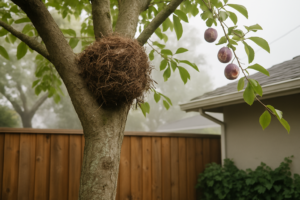
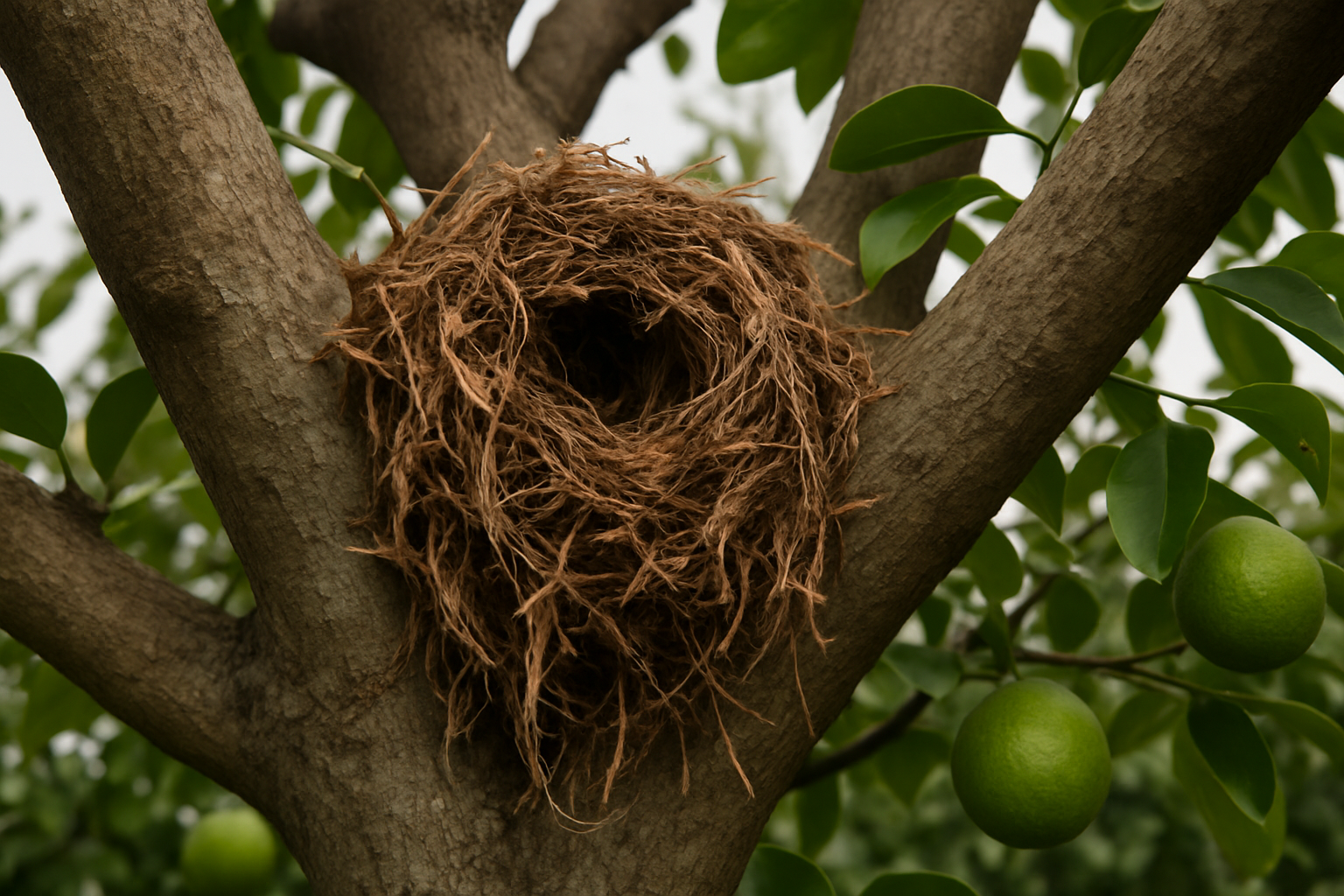
You walk out to the back fence, look up, and there it is. A tight ball of shredded bark, dry grass and leaves wedged in the fork of the plum tree, about eight feet off the ground.
One homeowner wrote in to us last summer with almost exactly that situation, asking about “looking to get a rats nest removed from a tree in our backyard.” Their next question was the one everybody asks: is this a yard problem or is this about to be a house problem?
I will give you the short version first. Finding it outside is better news than finding it inside, because the yard stage is the stage where you still have choices. Below is what that nest is actually telling you, and how to read the route from that branch to your roofline.
A Rat Nest in a Backyard Tree Almost Always Means Roof Rats
Two rat species matter around the Monterey Bay, and only one of them builds up in a tree. Roof rats climb. They nest above ground in vines, palm skirts, attic corners and tree canopies, and they move along branches and wires the way a squirrel does.
That is why the nest looks the way it does. A roof rat nest is usually a loose, head-sized ball of shredded plant material, sometimes with palm fiber, twine or bits of insulation worked in.
Our county vector control program notes that roof rats are strong climbers and that these rats can squeeze through openings far smaller than people expect, which is the whole reason a branch near a roof matters so much. You can read their rodent information page here.
So here is the useful way to think about it. Roof rats are an outdoor-first animal. They live in the landscape, breed in the landscape, and only come inside when the weather turns or the food runs short.
A nest in the tree means you are seeing the population at its outdoor stage. If you were hearing them run across the ceiling at 2 a.m., you would be reading a different article about rats in the attic.
Why Yards Around Here Are Built for Roof Rats
I see the same four or five features on property after property, from the Westside to Aptos to the hills above town. None of them are mistakes. They are just what a good Central Coast backyard looks like.
- Ivy banks and dense ground cover along a slope or fence line
- Unpruned palm skirts, which are about the best rat apartment in the county
- Backyard fruit, usually plum, apple, lemon or orange
- Bougainvillea, jasmine and other thick climbing vines on a wall or trellis
- Woodpiles stacked against a fence or under a deck
- Branches that touch a roofline or run parallel to a phone or cable line
Our climate does the rest. Rats here stay active through the cool, damp winter instead of dying back the way inland populations do, so a colony that gets comfortable in August is still working in January.
Nobody is telling you to rip out the plum tree or the garden boxes. One homeowner on the Westside wrote in convinced his raised beds had become “perfect rat nesting areas”, and the answer was never to demolish the garden.
What actually changes the math is clearance. Three to four feet of open air between any vegetation and your roof, eaves or fence top removes the bridge, and that is usually a pruning afternoon, not a landscape redo.
And the fallen fruit under the tree does more to hold a rat population in place than almost anything else on the property. Picking it up twice a week is unglamorous and it works.
Yard Features and What to Actually Change
Here is how I walk a property and what I tell people to adjust. Notice that almost none of these require removing the plant.
| Yard feature | Why roof rats use it | Practical change |
|---|---|---|
| Palm with a full skirt | Dry, hidden, insulated nesting pocket | Have the skirt trimmed back to the trunk |
| Fruit tree near the house | Food plus a climbing platform | Clear fallen fruit weekly, cut branches back 3-4 feet from the roof |
| Ivy bank or dense ground cover | Travel cover and ground nesting | Thin it, and keep it off fence tops and siding |
| Bougainvillea or jasmine on a wall | Vertical highway to the eaves | Pull growth away from the fascia and roof edge |
| Woodpile against a fence or deck | Harborage with multiple exits | Move it off the ground and away from structures |
| Branch running beside a cable line | Direct route to the roof | Prune the branch, leave the line to the utility |
The Walk From the Tree to the Roofline
This is the same short loop I walk when someone calls about a nest in the yard. It takes about fifteen minutes and tells you most of what you need to know.
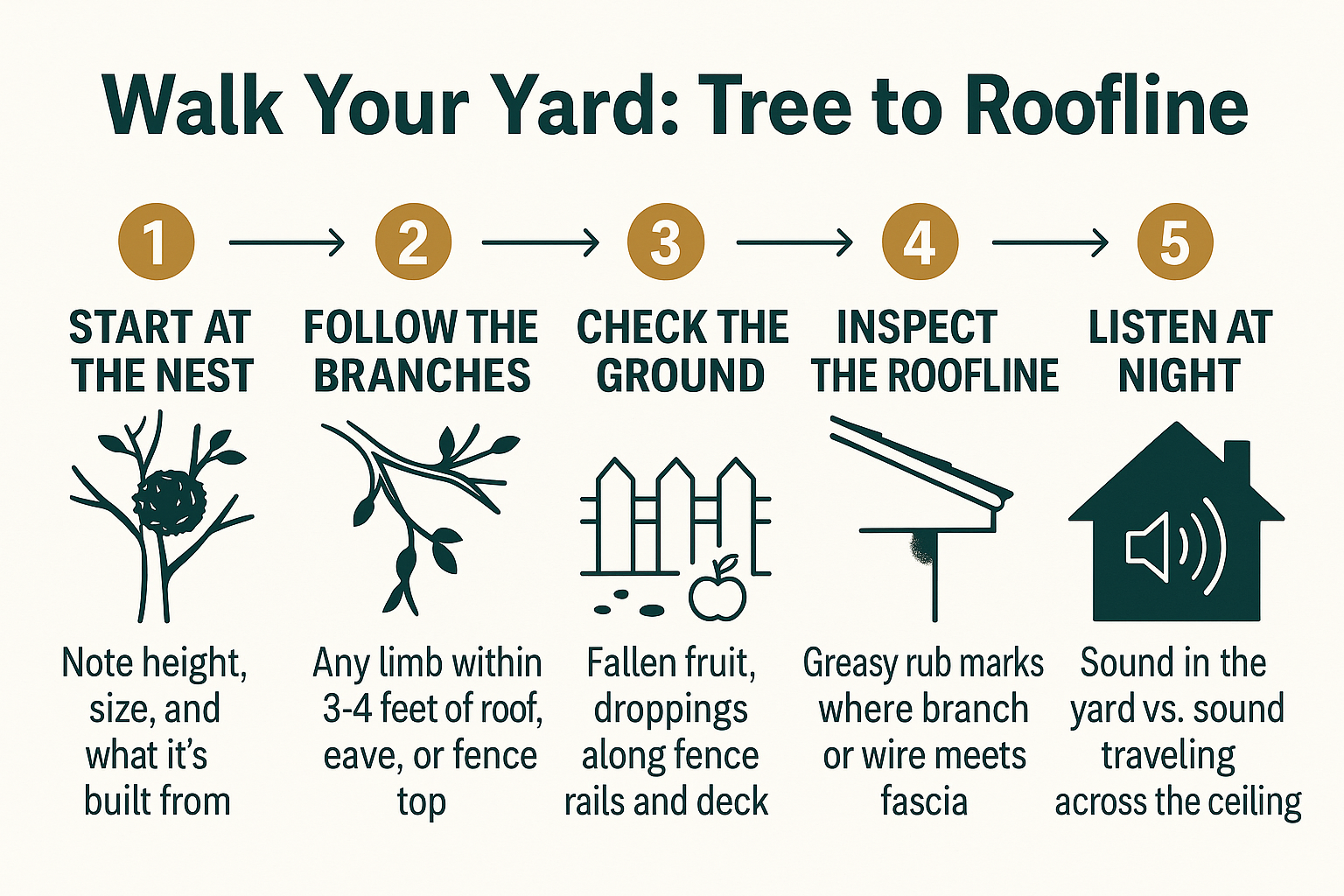
Knocking the Nest Down and Setting Out Bait Is the Wrong Move
The instinct is to grab a pole, knock the nest out of the tree and call it done. All that does is scatter the animals into the ivy or the woodpile, and you lose the one thing the nest was giving you, which is a known location.
The poison question is simpler than people think now. California restricted most consumer rodenticides starting with AB 1788 in 2020, and later legislation extended those limits further, so putting bait out in your yard is no longer the legal default it used to be. We cover the specifics in our post on California’s rat poison rules.
Homeowners around here usually raise it before I do. One customer put it plainly in a review: “our neighborhood has a lot of owls, hawks, and coyotes, to say nothing of neighborhood cats and our dog.”
That used to be the boutique position. It is now the standard one, and honestly it is also just the better technical answer for an outdoor nest.
A nest sitting in the open is a trapping and habitat question, not a bait question. You know where they are, you know what is feeding them, and snap traps placed on the actual runway along a fence rail or branch will tell you within a few days how many animals you are dealing with.
Are They Still Outside, or Already In? How to Tell
This is the part that decides what you do next, because a yard population and a structure population are two different problems.
Signs they are still working the yard:
- Droppings along fence rails, deck edges and the top of a retaining wall
- Fruit still hanging in the tree that has been gnawed or hollowed out
- Night activity you can hear in the trees or shrubs, not in the house
- Chewed irrigation line or hose bib insulation
Signs they have found a way up and in:
- Greasy dark rub marks where a branch, vine or wire meets the fascia or roof edge
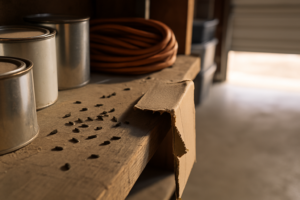
- Droppings in the garage, under the kitchen sink, or on top of water heater closets
- Scratching or thumping that travels along a ceiling rather than staying outside
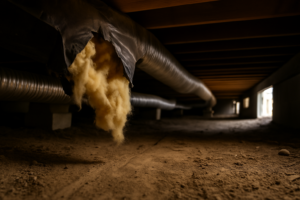
- Shredded insulation or nesting material showing at a vent or crawl space opening
If you only see the first list, you can reasonably watch it for a week while you prune back the clearance and pick up fruit. If anything on the second list shows up, that is the point to get a set of eyes on the roofline and the crawl space.
I have found access points on homes where the owner was certain everything was tight. One review described our inspection turning up “one unknown access point for rodents”, and another homeowner traced a rat coming in through a fireplace vent off the crawl space. If you are hearing something below the floor, our guide to rats under the house covers those signs in more detail.
Being Straight About What Removal Can and Cannot Do
A nest can be removed. Active rats can be trapped, and in most yards you see a real drop in activity within a couple of weeks.
What I will not tell you is that a property backing onto a greenbelt, a creek corridor or open hillside is ever permanently rat-free. The surrounding landscape keeps producing them, and anyone promising a forever fix on that kind of lot is selling something.
The honest goal is two things: a house they cannot get into, and a yard that does not feed them. That comes from closing off access and changing conditions, not from any single visit.
That is also why fall timing matters here. When the first real storms arrive, outdoor nests get wet and cold, and the rats that have been living in your tree all summer start testing the roofline for somewhere drier.
Frequently Asked Questions About a Rat Nest in a Backyard Tree
Should I knock the nest down myself?
I would leave it. Knocking it down scatters the rats into ivy, woodpiles and garden beds where they are much harder to find, and you lose the one spot you know they are using. Removal makes sense after trapping has reduced the active population.
Does a nest in the tree mean rats are already in my attic?
Not necessarily, and that is the good news. Roof rats live outdoors by default. Check the roofline for greasy rub marks where branches or wires meet the fascia, and listen for sound that travels across a ceiling rather than staying outside. If both are clear, you likely caught this at the yard stage.
Do I have to cut down my fruit trees?
No. The two changes that matter are three to four feet of clearance between any branch and your roof or fence top, and picking up fallen fruit regularly. The tree can stay.
What does rat work on a property like this usually cost?
It varies a lot, and anyone quoting a flat number sight unseen is guessing. Size of the lot, how many structures are involved, whether the rats are only outdoors, and how many return visits are needed all move the price. We break down the factors in our post on rat removal costs in this area, and an exact figure needs a look at the property.
Will the rats come back after the nest is gone?
Pressure from the surrounding landscape never really stops, especially near open space or a creek. What changes the long-term picture is removing the climbing routes and the food, then keeping an eye on the roofline each fall.
Wondering what that nest in your tree actually means?
This kind of call gets handled by a local, owner-operated outfit rather than a franchise branch, which means the person who answers the phone is the one who walks your yard and explains what he found and why. West Pest Co. was voted Best Pest Control in Santa Cruz in the Readers’ Choice awards in both 2023 and 2024, with a 5-star Google rating from homeowners across Santa Cruz County and the wider Monterey Bay area. If you want a set of eyes on the tree and the roofline, reach us at (831) 430-8402 or westpestco.com.