Direct Answer: Heavy rain floods outdoor burrows and drops ground temperatures, so rats move into attics, crawl spaces, and wall voids. Activity usually spikes within days of the season’s first real storm.
Every year it happens the same way. The first real storm rolls through Santa Cruz County in late fall, and within a week my phone starts ringing with people saying the exact same thing: “I hear something in the attic at night.”
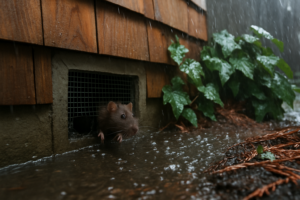
That timing is not a coincidence. Rain floods the burrows and brush piles rats have been living in all summer, and the nearest dry, warm space is the crawl space or attic of the house next door.
This article covers what actually drives that seasonal push indoors, why the law changed how professionals handle it in California, and what a real rodent job looks like from the first phone call to the follow up visit.
Why the First Storm of the Season Sends Rats Indoors
Roof rats and mice in this county spend the dry months living outside. Ivy walls, woodpiles, overgrown blackberry, garden boxes, palm trees, and the ground under decks all work fine when the weather cooperates.
Then a few inches of rain fall in 24 hours and that changes fast. Burrows fill with water, ground temperatures drop, and outdoor food sources get washed out or rot.
What’s left is your house, which is dry, warm, and full of soft nesting material. A few things make Santa Cruz County homes especially attractive right at that moment:
- Raised foundations and vented crawl spaces on older Westside Santa Cruz, Capitola, and Soquel homes
- Redwood canopy in Ben Lomond, Boulder Creek, and Scotts Valley that keeps roofs damp and branches touching rooflines
- Wood shingle siding and older vent screens that rust out and tear over 30 or 40 years
- Greenbelt and open space edges where the rodent population was already high before the rain hit
I see the same pattern in Aptos Hills and Corralitos properties with barns, chicken coops, or fruit trees. The rats were already on the property. The storm just moved them 40 feet closer, into the structure.
If you want a head start, our storm season pest checklist for Santa Cruz homes covers what to look at before the next system arrives.
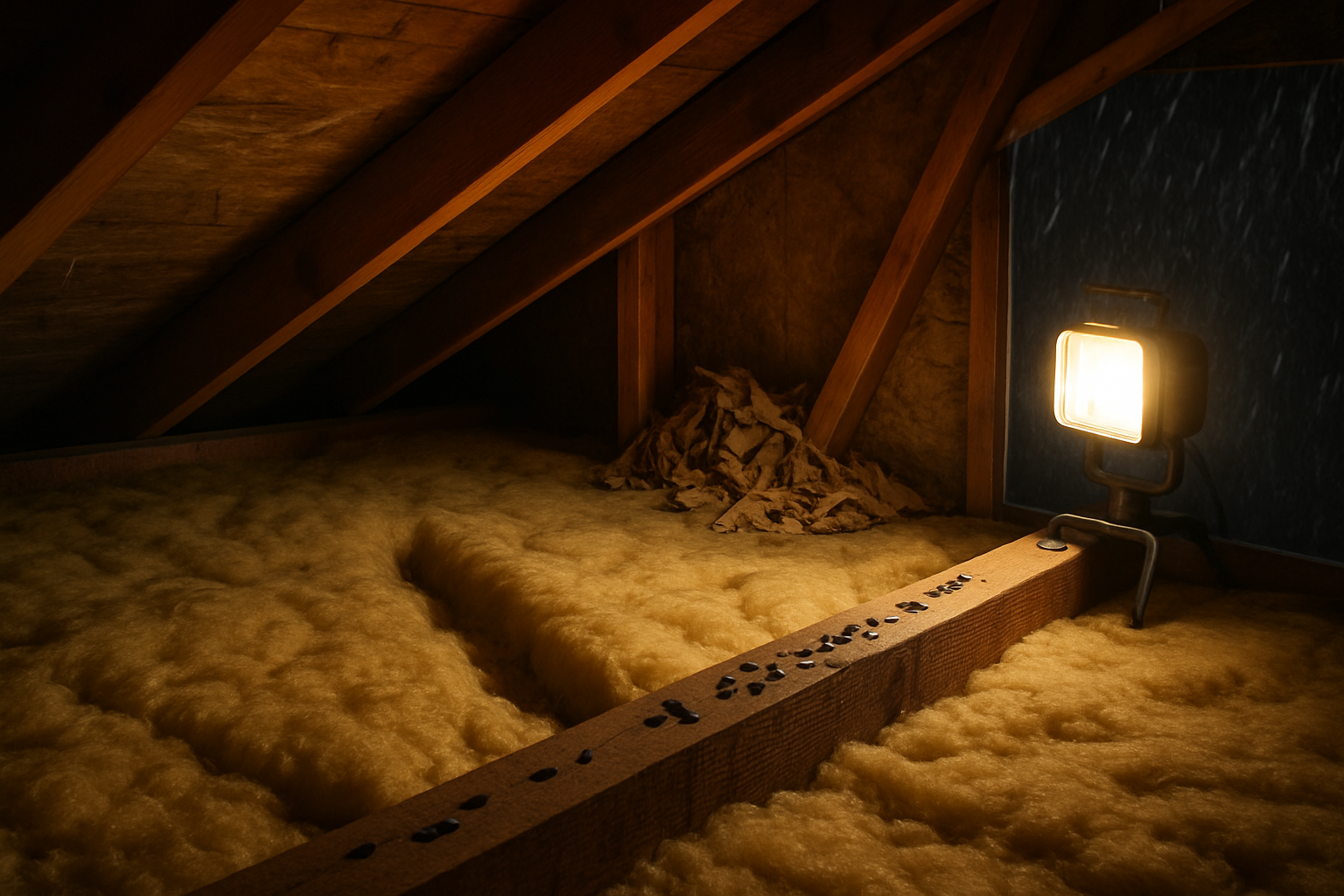
The First Sign Is Almost Always a Sound, Not a Sighting
Almost nobody calls me because they saw a rat. They call because they heard one.
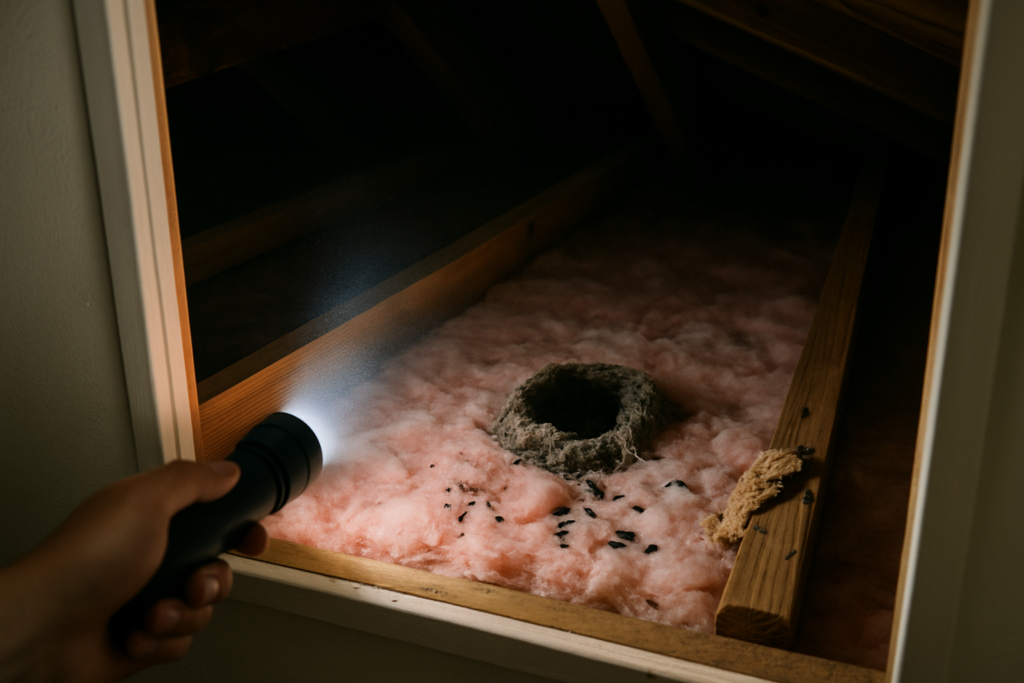
Scratching overhead around 9 or 10 at night. Scurrying across the ceiling. Something rolling or dragging in the wall behind the bed. Most people hear it for days or even weeks before anyone lays eyes on the animal.
That delay matters, because rodents are breeding the whole time you’re deciding whether the sound is real. A pair in the attic in November can be a real population by January.
Here’s what customers typically describe, roughly in the order it shows up:
- Night noise in the attic, ceiling, or crawl space, usually after dark and again before dawn
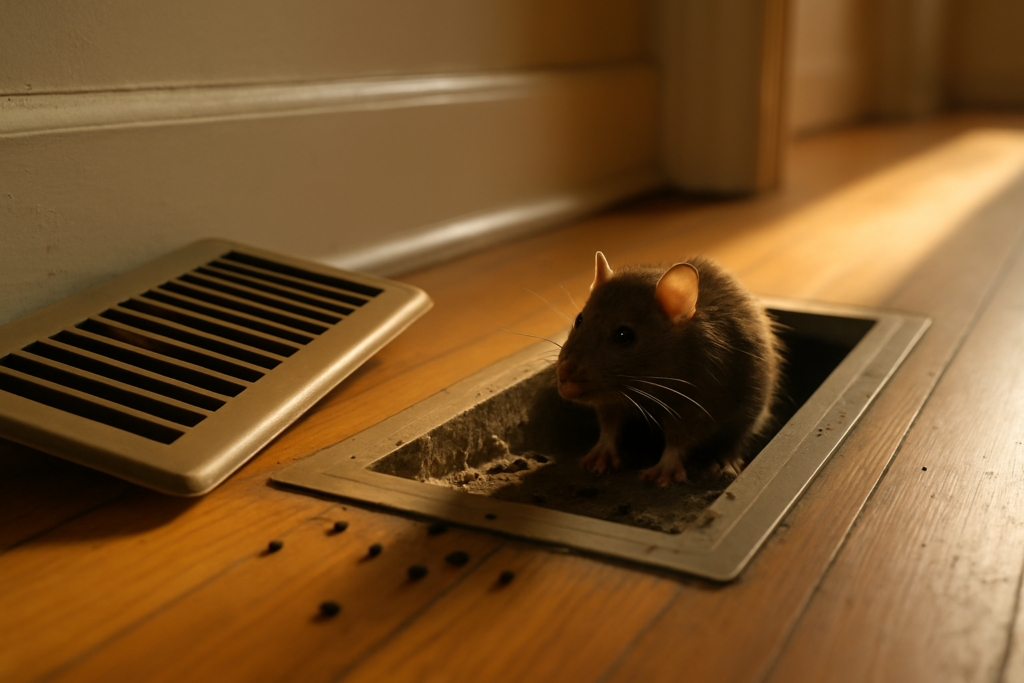
- Droppings in the garage, pantry corners, or on top of water heater platforms
- Gnaw marks on food packaging, plastic storage bins, or wire insulation
- A musky odor near a wall or vent that wasn’t there last month
- Grease smears along baseboards, joists, and pipe runs where they travel the same path nightly
One homeowner reached out this summer because they had pulled the insulation out of both the attic and crawl space after an old rodent issue and could not tell whether anything was still active. That’s a genuinely hard call to make from the outside.
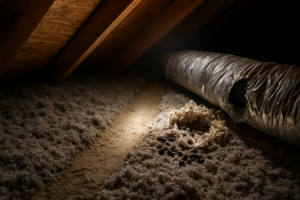
If you’re trying to judge whether the damage above your ceiling needs attention, rat damage in the attic walks through how insulation and ducts get evaluated.
What You’re Hearing and What It Usually Means
Sound alone won’t identify a species, but after enough attics you start to recognize patterns. Here’s the shorthand I use when someone describes noise over the phone.
| What you hear | Where it comes from | What it often points to |
|---|---|---|
| Light, fast scratching after dark | Ceiling or attic | Roof rats traveling along joists and rafters |
| Faint rustling in a wall at night | Wall void, often near kitchen or bath | Mice using plumbing or wiring chases |
| Heavier thumping or dragging | Attic or crawl space | Larger rodent moving nesting material |
| Noise directly under the floor | Vented crawl space | Entry through a torn vent screen or foundation gap |
| Daytime activity in the garage | Garage, stored boxes, car engine bay | Established population, often a larger issue |
| Scratching that stops when you knock | Anywhere overhead | Active rodent, not settling material or wind |
California Changed the Rules, and Trapping Became the Standard
This part surprises a lot of people, so it’s worth being clear about.
California passed AB 1788 in 2020 and AB 2552 in 2024, which together pulled most second generation anticoagulant rodenticides out of general use across the state. You can read the original bill language through the California Legislature’s public bill records.
The reason was the food chain. Poisoned rodents don’t die immediately. They wander, slow down, and get eaten by owls, hawks, bobcats, and neighborhood cats and dogs, which then carry that load themselves.
So the professional playbook shifted. Finding entry points and trapping are no longer the “natural alternative.” They are the standard approach, and honestly they were always the more durable one.
In practice that means:
- Inspection comes first. You cannot solve a rodent problem you haven’t traced.
- Openings get closed. A rat only needs a gap about the size of a quarter.
- Traps are placed on active runways, not scattered randomly.
- Follow up confirms the outcome. Empty traps after sealing is the result you want.
A lot of families in Ben Lomond, Scotts Valley, and the Pogonip side of town call specifically asking for no-poison work. Usually they’re less worried about the rat and more worried about the barn owl nesting two properties over. That’s a reasonable concern, and it lines up with where the law already went. California’s rat poison rules and what changed covers the details for homeowners.
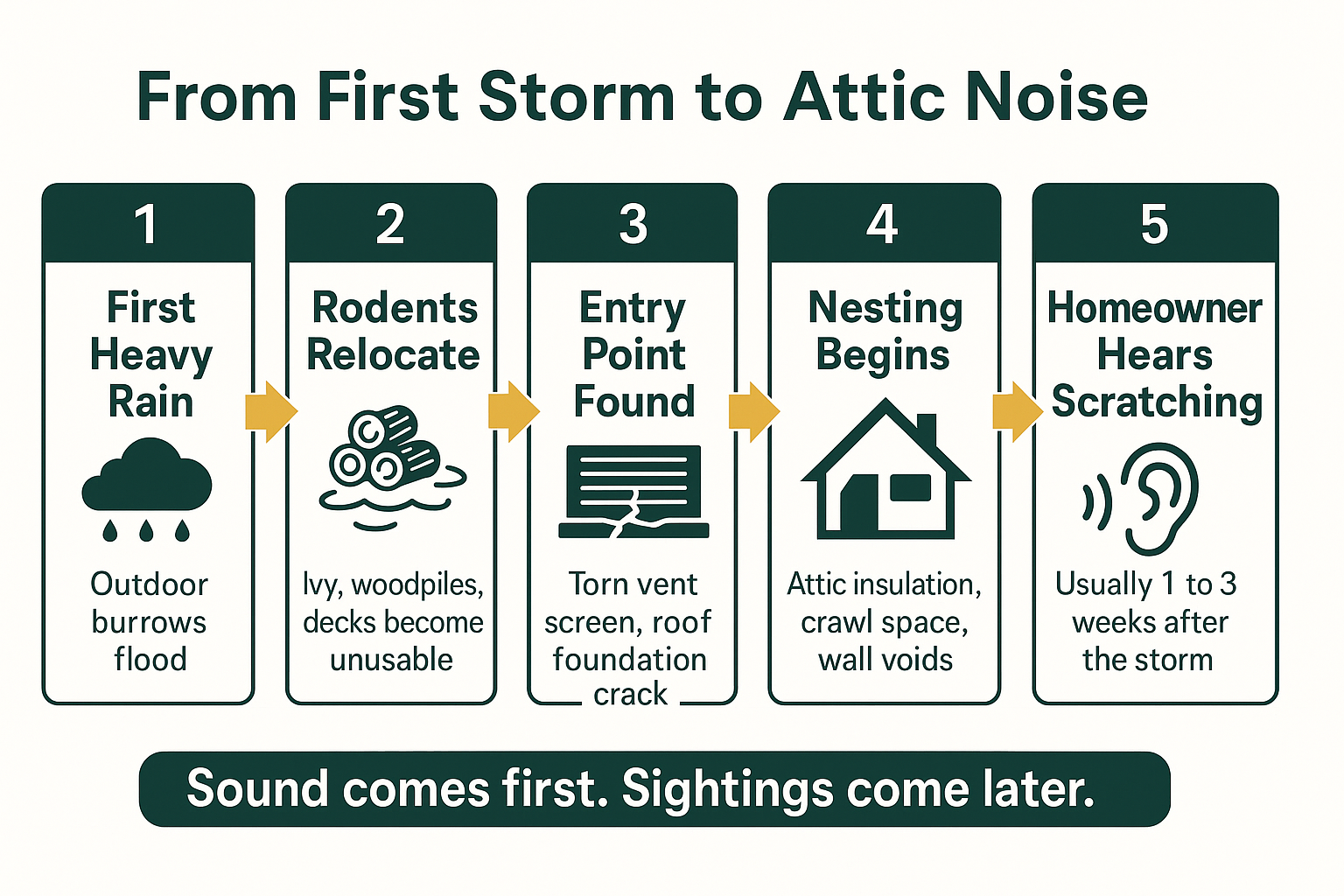
The Storm-to-Attic Timeline
This is the sequence I watch play out every fall in Santa Cruz County, from the first heavy rain to the phone call.
What a Rodent Visit Actually Looks Like in the Field
People picture a technician showing up with a sprayer. Rodent work is nothing like that.
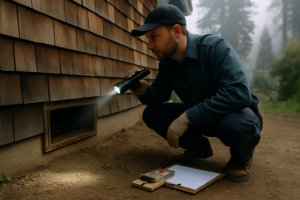
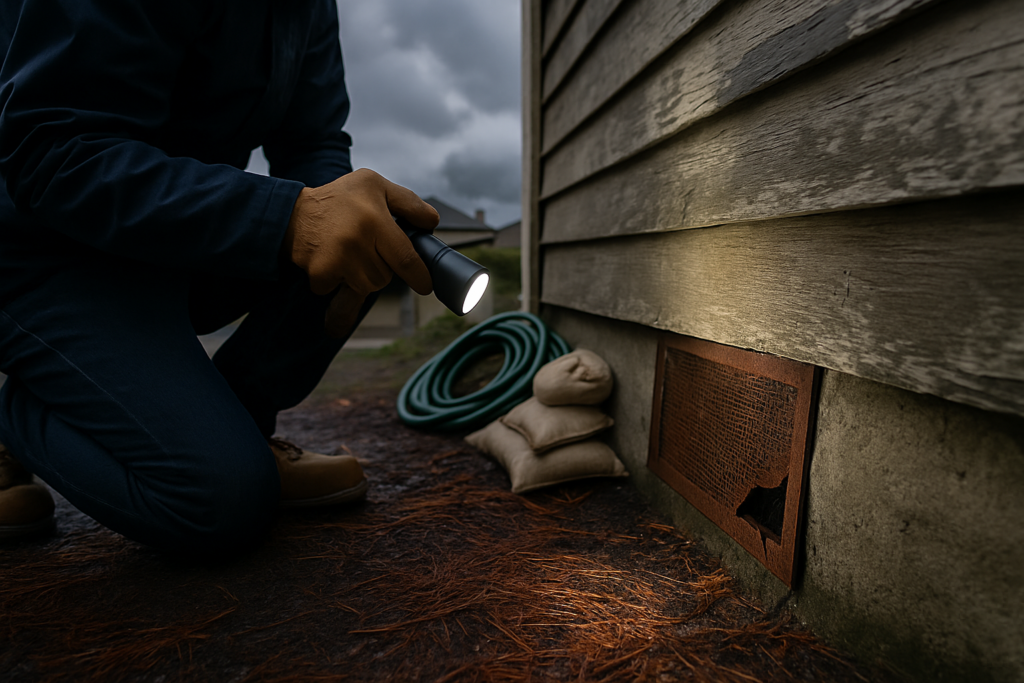
Most of the first appointment is inspection. I’m on the roof, in the crawl space, and on my back under the house with a flashlight, following droppings and grease trails backward to wherever they enter.
That’s the part that takes real time. The trapping is straightforward once you know where the animals travel.
Things I’m specifically looking for:
- Gaps at the roofline, especially where dormers, valleys, and additions meet the original structure
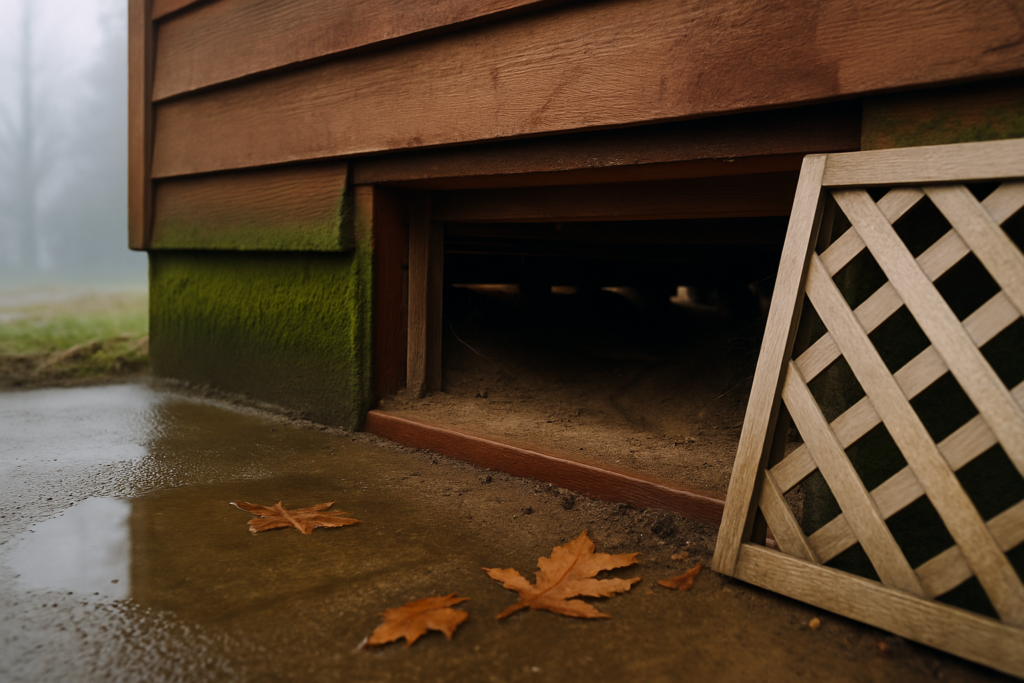
- Torn or rusted foundation vent screens, extremely common on homes built before 1970
- Utility penetrations where plumbing, gas lines, and electrical enter the building
- Garage door corners and seals, one of the most common entries I find
- Tree limbs and fences touching the roof, which give roof rats a bridge
If you’re curious what the walkthrough covers before anyone touches a trap, what pest inspectors actually look for inside your home breaks it down room by room.
On cost, I’d rather explain the drivers than throw out a number. What moves the price is the size of the home, how many separate entry points exist, whether the crawl space and attic are both involved, how accessible those spaces are, and how many follow up visits it takes to confirm the traps stay empty.
A single mouse entry in a small Capitola bungalow is a different job than a two-story Aptos home with rats in both the attic and garage. For a breakdown of the variables, see rat removal costs in Santa Cruz County. For an actual figure on your house, a quote after inspection is the only honest answer.
What You Can Do Before the Next System Rolls In
You don’t need a professional to do the first pass. Walk the outside of your house on a dry afternoon and look at it the way a rat would.
Start low and work up:
- Check every foundation vent screen for rust holes and tears
- Trim branches and ivy back at least a few feet from the roof and walls
- Move woodpiles and stacked materials off the ground and away from the structure
- Pick up fallen fruit from apple, plum, and citrus trees, which is a huge draw in Corralitos and Soquel yards
- Check the garage door seal at both bottom corners, where daylight usually shows through
- Secure pet food and birdseed in metal or hard plastic containers, not bags
One caller this summer described rats moving into raised garden beds that had been built with hollow spaces underneath. That’s a great example of a well-meaning project accidentally creating dry, protected nesting.
Also, a note on DIY poison. Beyond the legal restrictions, poison placed in an attic often means a rodent dies inside a wall void where you cannot reach it. Trapping keeps the animal where you can remove it, which is a practical advantage, not just an environmental one.
Why Finding the Opening Matters More Than Catching the Rat
The customers who stay rodent free are not the ones who caught the most rats. They’re the ones whose entry point got found and closed.
A reviewer put it about as plainly as I could: an inspection turned up one unknown access point, the area was sealed, traps were set inside, and a return visit a week later found those traps empty. That empty-trap follow up is the confirmation that matters.
Another review describes a bad rat problem in a roof and garage that got resolved without a single rat ever being trapped and without any poison used at all. When the door is closed and the interior is clear, the problem ends there.
That’s also why I’m careful about how I talk about outcomes. Nobody can promise a house stays rodent free forever in a county with this much open space, redwood canopy, and winter rain. What’s realistic is resolving the active issue, closing what’s open, and checking again after the next wet stretch.
And if you’ve already had a run-in with recurring pests, the same logic applies across the board. It’s the reason ants come back every summer for so many households in this county. Conditions drive pests, not luck.
Frequently Asked Questions About Storm Season Rodents
How soon after a storm do rats usually show up in the attic?
Often within one to three weeks. The rain floods their outdoor nesting first, they scout for dry shelter next, and by the time you hear scratching overhead they’ve usually been moving in and out for several days.
Is it a rat or a mouse if I only hear noise at night?
Hard to say from sound alone, though rats tend to be louder and heavier overhead while mice make lighter rustling inside walls. Droppings are the better clue. Mouse droppings are about the size of a grain of rice, rat droppings are noticeably larger and blunter at the ends.
Can I just use poison bait blocks from the hardware store?
California restricted most anticoagulant rodenticides through AB 1788 and AB 2552, and what’s left on shelves is limited. Beyond the legal side, poison in an attic frequently means an animal dies inside a wall where nobody can reach it. Trapping is both the legal standard now and the more practical method.
Will one visit take care of it?
Rodent work is rarely one and done. Expect an inspection, entry points addressed, traps set on active runways, and at least one follow up to confirm activity has stopped. The follow up is the part that tells you whether the job actually worked.
I have kids, cats, and a dog. Is any of this safe around them?
Yes, and that concern is a big reason the trapping and exclusion approach makes sense. Traps get placed in attics, crawl spaces, and closed-off areas that pets and children don’t access, and eco-friendly, low-toxicity methods are the default in this work rather than a special request.
Should I wait and see if the noise stops on its own?
I wouldn’t. Rodents breed year round in our mild coastal climate, and a quiet week usually means they shifted location, not that they left. The cost and complexity of a rodent job tends to climb the longer activity continues.
Hearing Something Overhead After the Last Storm?
If the scratching started after the first rains and you want someone to actually trace where they’re getting in, West Pest Co. handles rodent inspections and trapping throughout Santa Cruz County, from the Westside and Capitola out to Aptos, Scotts Valley, Watsonville, and the San Lorenzo Valley. Calls come in to (831) 430-8402, and there’s more background on the approach at westpestco.com. Availability tightens once the wet season gets going, so earlier in the fall is generally easier to schedule.