Direct Answer: Outdoor cockroaches at night are often just foraging insects attracted to moisture and light — but German cockroaches near your foundation almost always mean there’s an indoor population nearby.
You step outside after dark and catch something moving near the foundation — or along the fence line, or scrambling away from your porch light. Your first instinct is probably dread. But before you assume the worst, it’s worth knowing that not every cockroach you see outside at night is a sign your house has a problem.
Santa Cruz County’s climate makes this question more complicated than it would be in other parts of California. The county’s coastal fog, consistently moist soil, and mild temperatures mean outdoor cockroach populations stay active well into fall — and sometimes reappear during warm spells in winter. What looks alarming to someone who just moved here from a drier climate can sometimes be completely normal outdoor insect activity.
The real question isn’t just whether you’re seeing cockroaches outside. It’s which species they are, how close to the house they are, and whether there are any signs they’ve moved indoors. Those three things are what I use to separate a yard pest situation from a home problem that actually needs attention.
The Two Types of Outdoor Cockroaches in Santa Cruz — and Why They’re Different
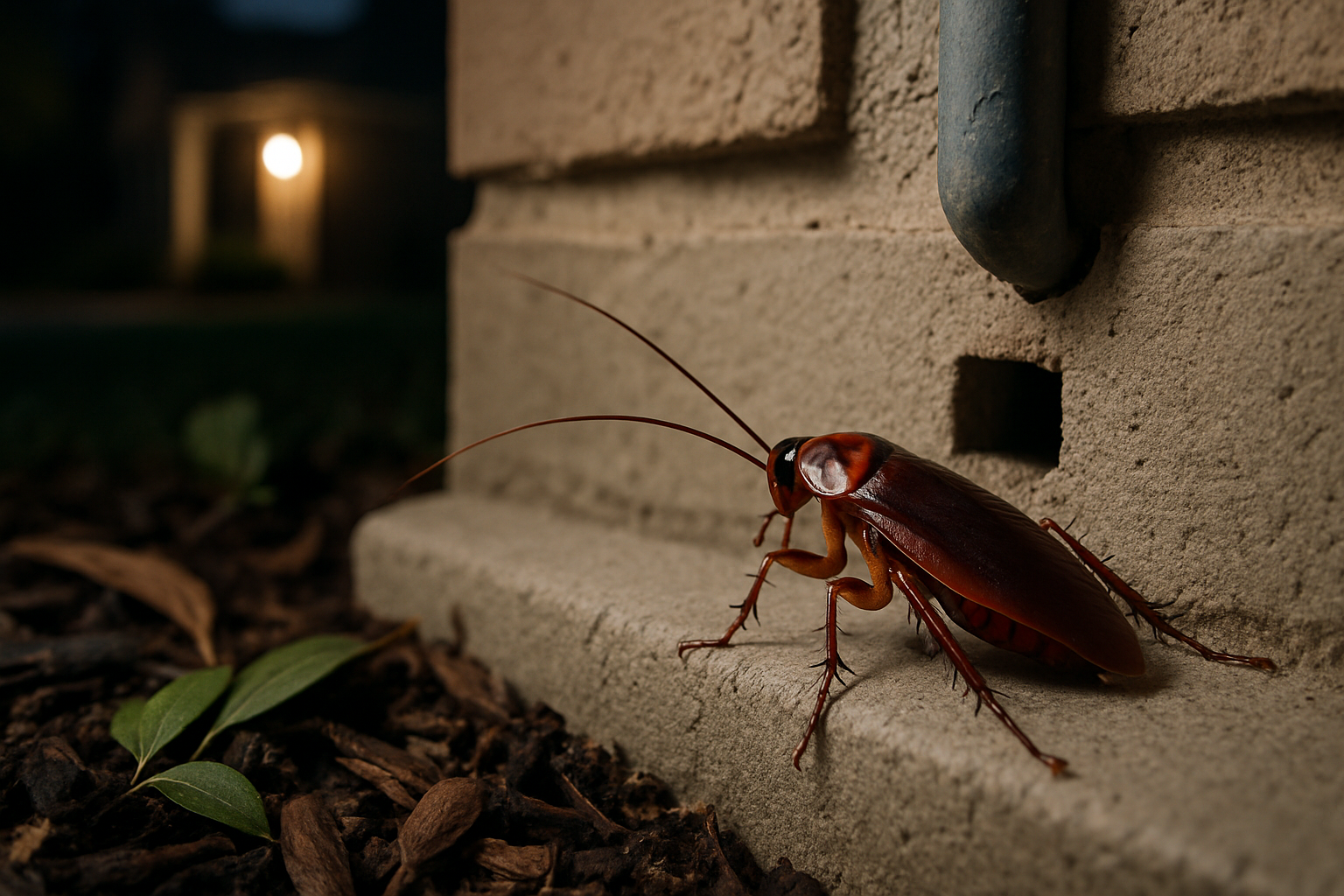
In Santa Cruz County, the cockroaches you’re most likely to see outside at night are American cockroaches and Turkestan cockroaches. Both species genuinely prefer outdoor environments. They forage in mulch, compost piles, garden beds, and areas with decaying organic matter — and they’re drawn to exterior lights the same way moths are.
American cockroaches are hard to miss: they’re 1.5 to 2 inches long, reddish-brown, and oval-shaped. They move fast and can fly short distances when disturbed. Turkestan cockroaches are slightly smaller, and the males have a distinctive pale stripe along the wing edge. Both species thrive in the damp, densely planted yards common in neighborhoods like Capitola, Aptos, and areas near the San Lorenzo River corridor.
Neither of these species is particularly interested in living inside your home. They might wander in through an open door or a gap near a pipe, but they don’t establish indoor colonies the way German cockroaches do. Seeing one or two of these outside at night, especially near a compost bin or a moist garden bed, isn’t evidence of an infestation — it’s evidence that you live in Santa Cruz County.
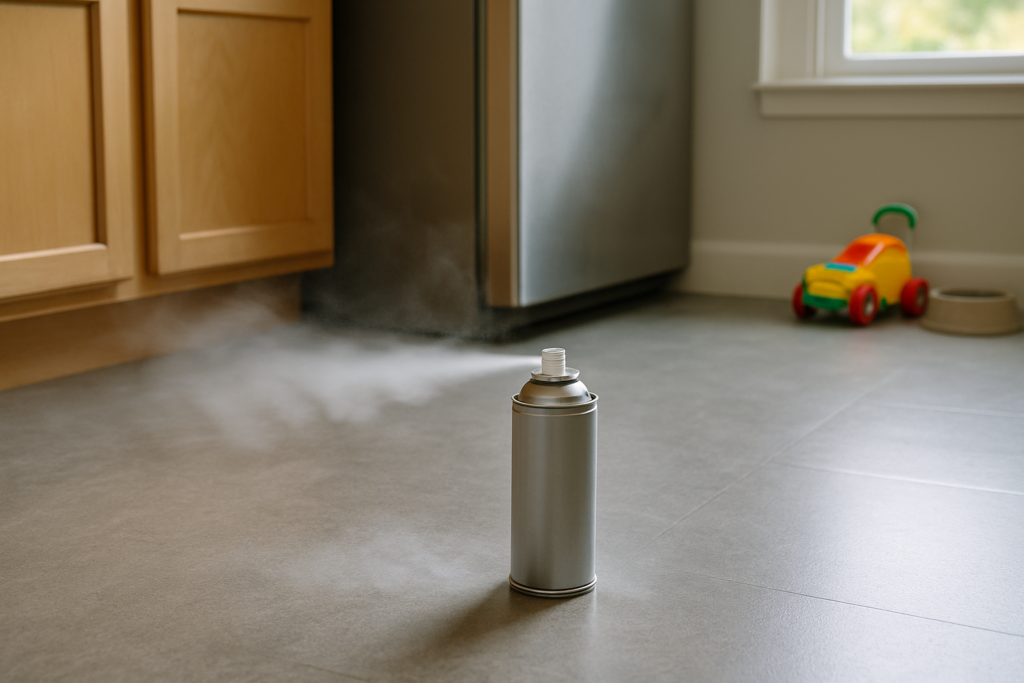
German cockroaches are a different situation entirely. They’re small — about half an inch long — tan to light brown, and they have two dark stripes running down their backs just behind the head. You almost never find them foraging in the yard. If you’re seeing German cockroaches outside, or even just inside near the kitchen or bathroom, that almost certainly means there’s an established population somewhere in the house. This is the species that multiplies fast and is difficult to manage without targeted treatment.
How Close to the House Does It Matter?
Location on your property matters more than people realize. A cockroach near the compost bin at the far end of the yard is a very different situation from one near your crawlspace vent or a gap around an exterior pipe.
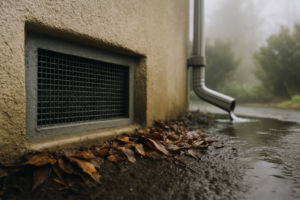
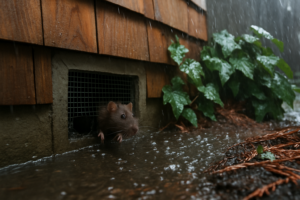
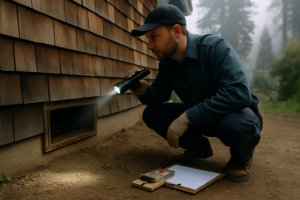
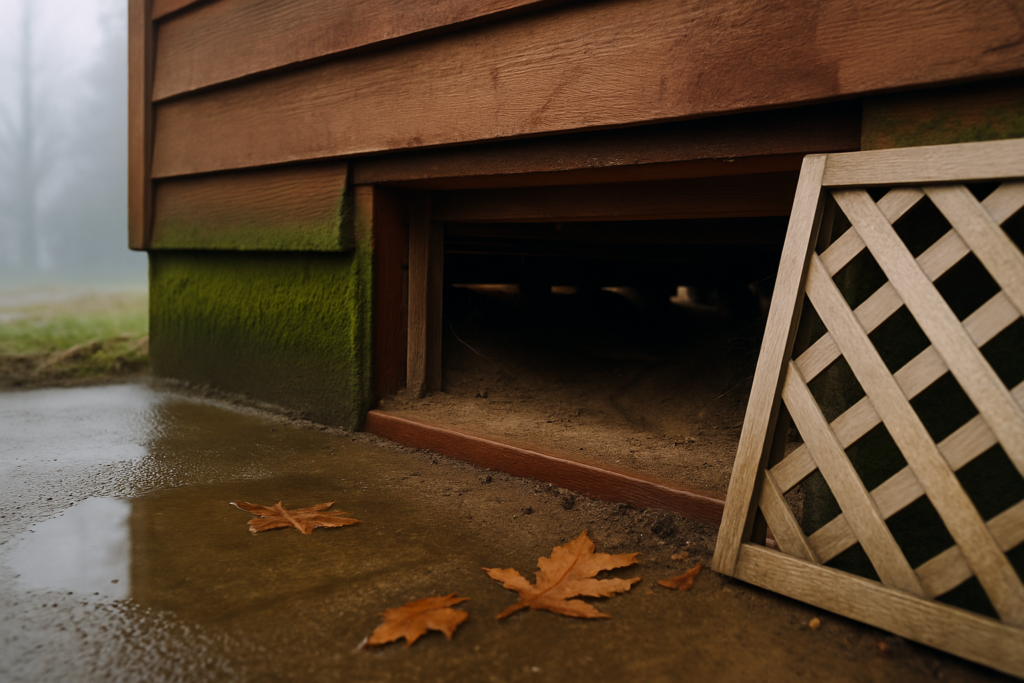
Proximity to entry points is the real variable. American and Turkestan cockroaches will opportunistically enter a structure if conditions inside are favorable — especially if there’s moisture, warmth, or a food source near an opening. If you’re seeing activity right along the foundation, near crawlspace vents, or around utility penetrations where pipes or conduit enter the house, that’s worth paying closer attention to.
The practical steps at this stage are straightforward:
- Check for gaps around exterior pipe penetrations — even small ones — and seal them with an appropriate caulk or foam
- Look for moisture sources near the foundation: dripping hose bibs, poor drainage, or irrigation sprinklers hitting the wall
- Clear leaf litter and dense mulch away from the foundation, especially within two feet of the house
- Make sure crawlspace vents have intact screens with no gaps at the edges
None of this requires a professional — it’s good home maintenance that makes your house less attractive to a range of pests, not just cockroaches. That said, if you’re finding activity at or inside multiple entry points, it’s worth having someone take a closer look at what’s actually getting in. The process of identifying and sealing those gaps is something I write about in more detail in this breakdown of rodent exclusion and sealing — much of the same logic applies to cockroach entry.
Outdoor Cockroach vs. Indoor Problem: How to Tell the Difference
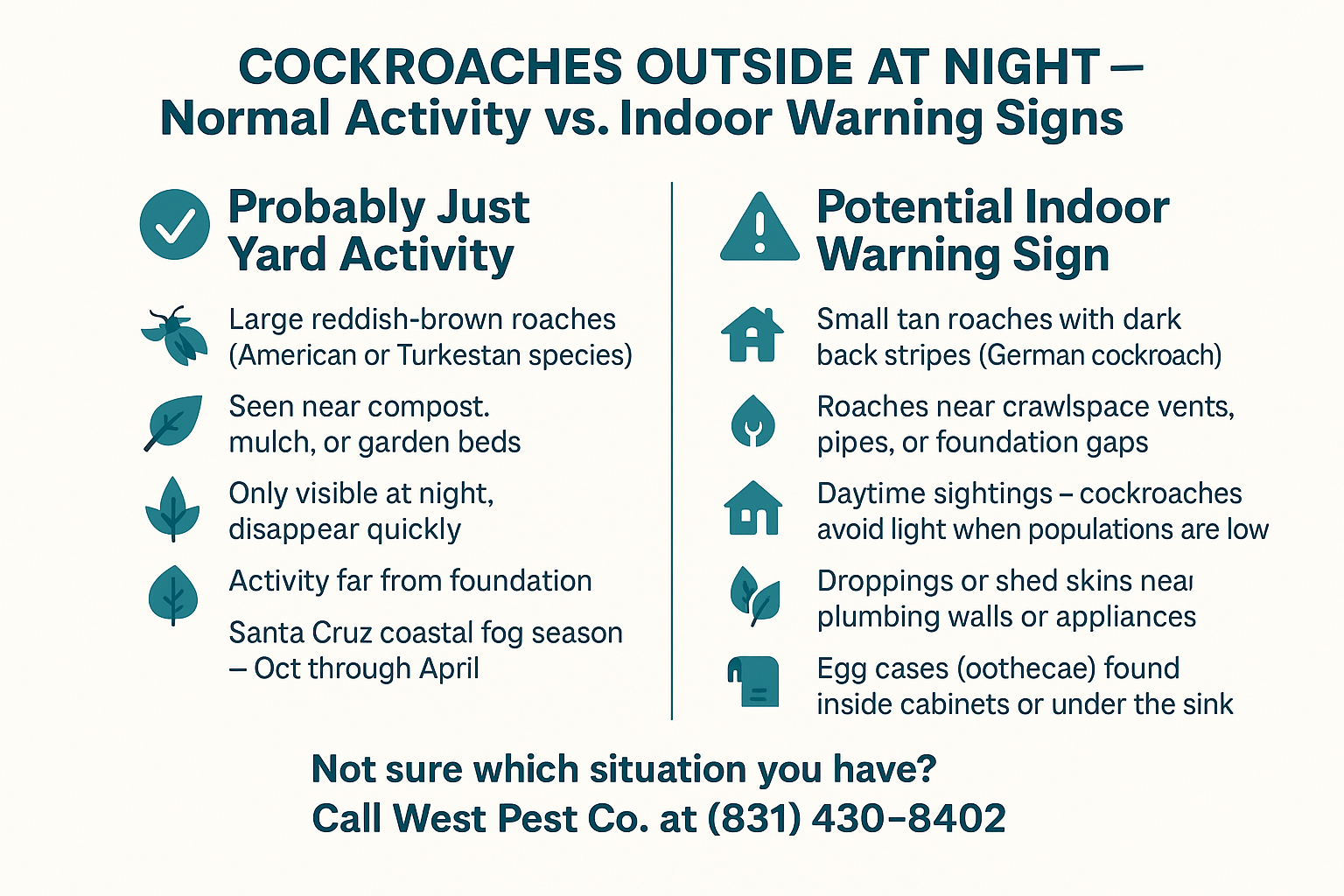
This quick visual summary covers the key indicators that separate normal outdoor cockroach activity from signs that the problem has moved inside.
Warning Signs That Outdoor Activity Has Become an Indoor Problem
This is the part of the diagnostic that actually matters. Outdoor cockroach activity is easy to overlook or rationalize — but a few specific signs inside the house tell you the situation has shifted.
Daytime sightings are the clearest red flag. Cockroaches avoid light by instinct. When populations are small, they stay hidden. When a cockroach shows up during daylight hours — on the kitchen counter, behind an appliance, or on a bathroom wall — it often means the population has grown large enough that competition is pushing individuals out into the open. That’s not a yard problem anymore.
Other signs worth checking for:
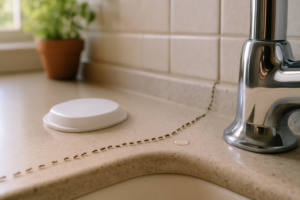
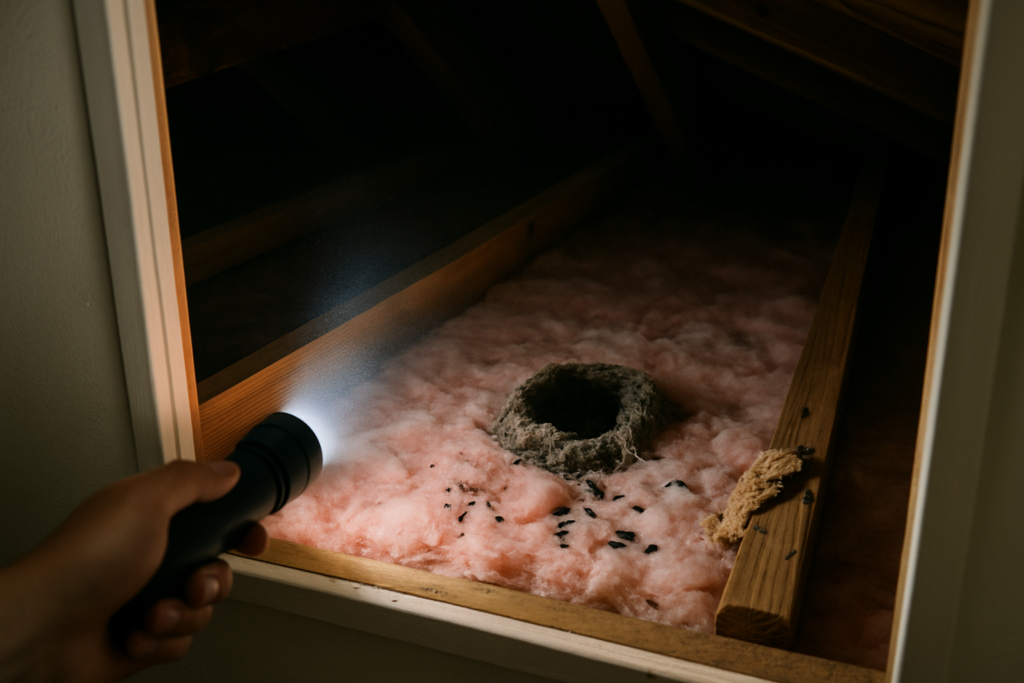
- Droppings: Small, dark, pepper-like specks along the back of cabinets, behind the refrigerator, under the sink, or inside the pantry — different from mouse droppings, which are larger and have tapered ends
- Shed skins: Cockroaches molt as they grow. Finding translucent shed exoskeletons in hidden areas near plumbing walls is a reliable sign of an active population
- Egg cases (oothecae): These are small, dark brown, capsule-shaped cases roughly 8–10mm long. German cockroaches carry them until just before hatching — finding one inside a cabinet or behind a drawer means reproduction is already happening in your home
- A musty or oily smell: Established cockroach populations produce pheromones that create a distinctive odor in confined spaces like cabinets or wall voids
If you’re finding two or more of these signs inside the house, the outdoor activity you noticed at night is almost certainly the tail end of a larger picture. At that point, understanding why cockroaches keep coming back after treatment is worth reading before deciding on next steps.
Quick Species ID: What You’re Likely Seeing
If you can get a decent look at the cockroach — even a quick one — size and color will usually tell you which species it is and what that means.
| Species | Size & Color | Where You See Them | Indoor Risk |
|---|---|---|---|
| American Cockroach | 1.5–2 in., reddish-brown | Yard, mulch, compost, drains | Low — occasional wanderer |
| Turkestan Cockroach | 1–1.25 in., brown with pale stripe | Garden beds, compost, outdoors | Low — outdoor species |
| German Cockroach | 0.5 in., tan with 2 dark stripes | Kitchen, bathroom, near appliances | High — indoor colony indicator |
Santa Cruz’s Climate Extends the Window — What That Means for Homeowners
Most people assume cockroach activity winds down in late fall. In Santa Cruz County, that assumption causes real problems.
The combination of coastal fog, mild temperatures, and persistently moist soil means outdoor cockroach populations here can stay active into November and sometimes beyond. During warm spells in January or February — which happen more often than people expect on the Central Coast — outdoor activity can spike again weeks before most homeowners are thinking about pest pressure.
Neighborhoods near creek corridors, including areas of Aptos, Soquel, and the flats near the San Lorenzo River, tend to see heavier outdoor pressure simply because the microclimate stays wetter longer. Densely planted yards with heavy ground cover are also more likely to support larger outdoor populations year-round.
What this means practically: if you’re seeing cockroaches outside in October or November and assuming it’ll resolve on its own when the weather cools, you may be waiting longer than the calendar suggests. The UC IPM guide on cockroach biology covers how temperature influences cockroach development and activity — a useful reference if you want to understand the biology behind what you’re observing.
Frequently Asked Questions About Cockroaches Outside at Night
I only see them outside — does that mean my house is fine?
Usually, yes — especially if they’re large reddish-brown roaches near mulch or compost. But I’d still do a quick check inside: look behind the refrigerator, under the sink, and inside bathroom cabinet bases for droppings or shed skins. Outdoor activity close to the foundation is worth watching, because entry points don’t have to be obvious to be useful to a cockroach.
How do I know if the cockroach I saw is a German cockroach?
Size is the fastest tell. German cockroaches are small — about half an inch long — and noticeably lighter in color than American cockroaches. Look for two dark parallel stripes running from the head down the back. If the roach you saw was an inch and a half or longer and dark reddish-brown, it’s almost certainly an American cockroach, which is far less concerning indoors.
I saw one cockroach inside near the kitchen. Should I call a professional?
One sighting on its own doesn’t necessarily mean you have a large indoor population — but it’s worth doing a thorough check before deciding. Look for droppings (small dark specks), shed skins, or egg cases in hidden areas: behind the stove, under the dishwasher, inside lower cabinets near the sink. If you find any of those alongside the sighting, a professional inspection makes sense. If it was truly just one roach and you find nothing else, monitor for a week or two before acting.
Is it normal to see this many cockroaches outside in Santa Cruz in the fall?
More common here than most homeowners expect, yes. Santa Cruz County’s climate keeps outdoor populations active later in the year than inland areas. Neighborhoods near creek corridors or with heavily irrigated yards tend to see more activity. That said, if numbers seem to be increasing or you’re finding them right along the foundation, it’s worth tightening up potential entry points.
What’s the difference between what a pest inspector looks for and what I can check myself?
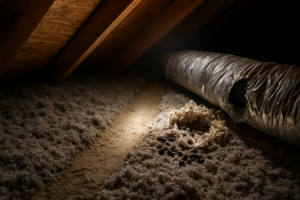
A homeowner can realistically check visible areas: cabinet interiors, under appliances, around pipe penetrations, and crawlspace vents from the outside. What a professional looks at goes further — inside wall voids via inspection tools, the full perimeter of a crawlspace, and areas behind insulation where egg cases often accumulate. If you want a deeper look at what that process actually involves, this article on what pest inspectors look for covers it well.
Not Sure What You’re Dealing With?
If you’ve gone through this diagnostic and you’re still not sure whether what you’re seeing outside is normal yard activity or the start of something more serious, West Pest Co. is happy to talk it through. Matthew West has been working with Santa Cruz County homeowners for years — he’s answered the Readers Choice Best Pest Control award two years running for exactly this kind of straight, honest guidance. You can reach the team directly at (831) 430-8402 or visit westpestco.com to learn more.