Welcome to your guide for a vibrant, pest-free garden in Santa Cruz County. You don't have to use harsh chemicals to get great results. This guide is all about sustainable pest solutions that actually work. It’s built on a simple idea: work with nature, not against it. We'll show you how to build a strong garden that naturally keeps pests away.
Creating a Thriving Santa Cruz Garden Naturally
Living in an eco-conscious place like Santa Cruz County means you can have a gorgeous garden and a healthy ecosystem. You might be tending sunny plots in Aptos or navigating the redwood shade in Scotts Valley. The secret to success is using sustainable pest solutions that focus on long-term garden health.
This smart approach is called Integrated Pest Management (IPM). It’s all about creating a balanced environment where your plants can thrive.
Think of IPM as building a strong immune system for your garden. Instead of just reacting to pests with chemical sprays, you make your garden a less inviting place for them from the start. It’s a better way to garden that focuses on the root causes of pest problems.
The IPM Philosophy
At its heart, IPM is a thoughtful strategy, not a single product. It’s less about killing every single insect. It’s more about keeping pest populations at a level where they aren’t causing real damage. This creates a garden that’s tougher and more self-sufficient.
Here's what that looks like in practice:
- Prevention First: The easiest pest to deal with is one that never shows up. This starts with picking the right plants for our climate and keeping your soil healthy.
- Keep Your Eyes Open: Walk through your garden regularly. This helps you spot potential issues early, long before they become big infestations.
- Intervene Wisely: When you do need to take action, IPM uses non-chemical methods first. This could be physical barriers, hand-picking snails, or even introducing helpful insects.
This simple plan shows how sustainable pest management should always start with a strong foundation of prevention. Direct action is saved for when it's truly necessary.
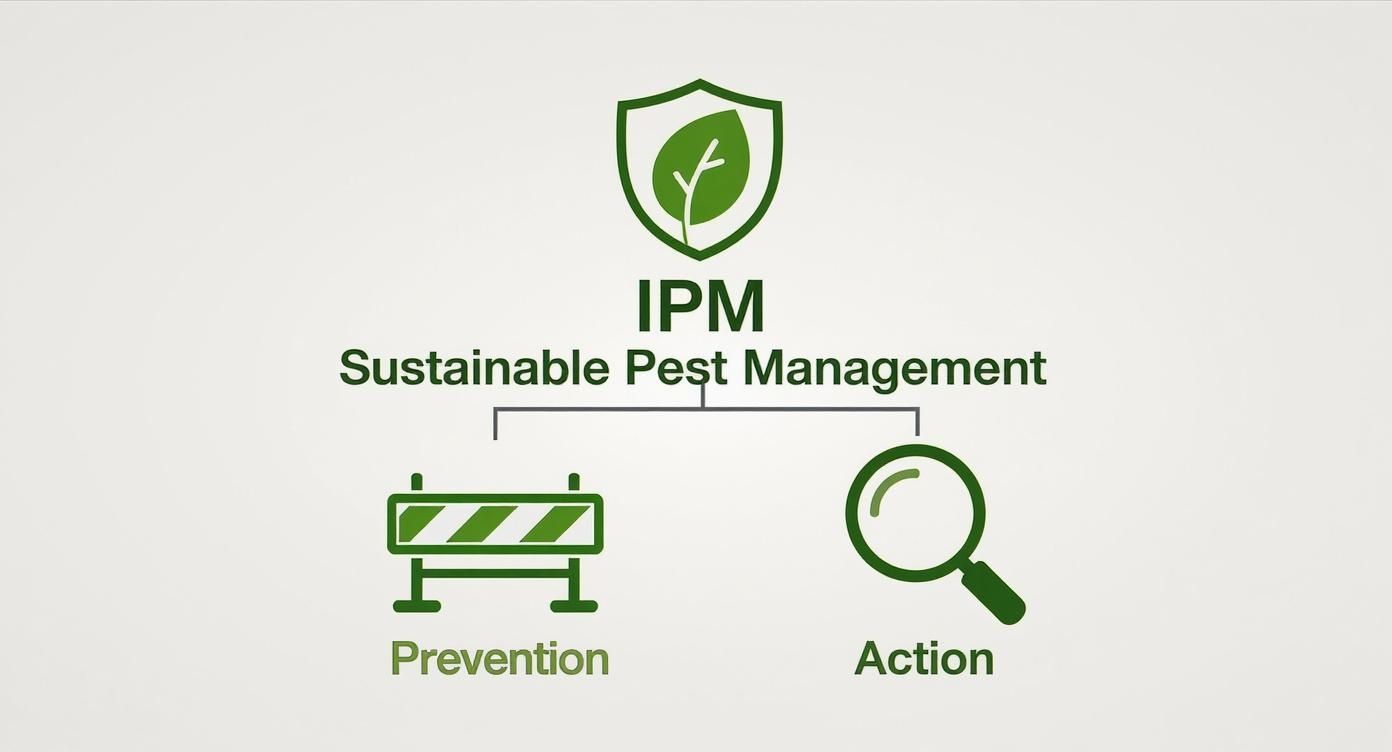
The diagram makes it clear. A solid base of prevention is the most important layer. It dramatically reduces the need for bigger fixes later on.
To help you get started, here's a quick breakdown of these core ideas.
Core Principles of Sustainable Pest Management
| Principle | What It Means for Your Garden |
|---|---|
| Build Healthy Soil | Healthy plants start from the ground up. Rich, organic soil gives your plants the nutrients they need to naturally resist pests. |
| Choose the Right Plants | Select plants that are a good fit for Santa Cruz's unique microclimates. Native plants are naturally tougher here. |
| Encourage Biodiversity | A garden with a variety of plants attracts a variety of life. This includes helpful insects like ladybugs that prey on pests. |
| Monitor Regularly | Walk through your garden a few times a week. Look under leaves and check new growth to catch problems before they grow. |
| Use Safe Interventions | When pests appear, start with the simplest, safest solution. Try a strong spray of water for aphids or introducing helpful insects. |
These principles are the foundation of effective, eco-friendly pest management.
For a closer look at how these ideas work for local pests, you can explore professional garden pest control services designed for Santa Cruz landscapes. By using these sustainable practices, you can handle local pests like aphids, gophers, and snails. This proves that a beautiful garden and an eco-friendly one can go hand-in-hand.
Why Sustainable Pest Control Matters in Santa Cruz County
In Santa Cruz County, our gardening choices have a big impact. From the coastal bluffs of Capitola to the redwood-lined streets of Scotts Valley, what happens in our yards doesn't stay there. A green approach to pest control is more than a trend here. It's a community value that protects our amazing environment.

Think about how close we are to the Monterey Bay National Marine Sanctuary. That connection makes our choices even more important. Every drop of water that runs off our lawns and gardens can end up in this precious marine ecosystem. When we use harsh chemical pesticides, we risk sending toxins into our creeks and the bay. This threatens the delicate balance of marine life.
By choosing sustainable pest solutions, you become a guardian of our local waterways. You help ensure they stay healthy for years to come.
Our County’s Agricultural Roots
We are lucky to live in a place that is a leader in organic farming. In fact, Santa Cruz County is home to 160 registered organic operations. This makes us a major player in a state that produces 36% of all organic food in the United States. The same ideas that make these farms successful can work in your own backyard.
This deep farming history proves that it's possible to manage pests without synthetic chemicals. It’s all about building healthy soil, encouraging different types of plants and animals, and working with our local ecosystem. Your garden can be a small-scale version of this successful model. To learn more, it helps to understand the benefits of an organic approach and see how these big ideas can transform your own patch of green.
Using sustainable pest solutions connects your home garden to the larger story of environmental care in Santa Cruz County. It’s a practical way to support the health of our shared land and water.
Protecting Our Local Pollinators and Wildlife
Sustainable pest management is also about looking out for the smallest members of our garden ecosystems. Bees, butterflies, and other pollinators are vital for healthy gardens and local farms. But they are very sensitive to broad-spectrum chemical pesticides. At the same time, helpful insects like ladybugs act as your garden’s natural security force. They keep pests like aphids in check.
When you spray harsh chemicals, you risk killing these important allies along with the pests. This can throw the natural balance of your garden off, sometimes making pest problems worse in the long run. An eco-friendly approach focuses on targeted solutions that protect this rich biodiversity. This creates a tougher, more self-sustaining garden. For homeowners who want to protect their property safely, West Pest Co. provides expert green pest control services designed for our local environment.
Ultimately, choosing sustainable pest solutions that work in Santa Cruz County is about more than just getting rid of bugs. It’s an investment in the health of your family, your garden, and the beautiful community we all call home.
Building Your First Line of Defense in the Garden
Before you ever think about reaching for a spray, remember this simple truth. The best sustainable pest solutions are the ones that stop problems before they even start. Building your garden’s first line of defense is all about creating an environment in Santa Cruz County where pests just don’t feel welcome.
This proactive mindset relies on smart physical and cultural controls. These are simple, non-toxic tactics that turn your garden into a fortress. Think of it like locking your doors at night. It’s a basic security measure that prevents most issues right away.
Smart Garden Setup for Pest Prevention
A tough garden begins with its design and daily care. Simple choices you make in your setup can dramatically cut down on pest pressure. This will save you a ton of time and stress later. It’s all about working smarter, not harder.
The right foundation makes all the difference. For example, your watering habits can either invite pests or send them packing. Overwatering or using sprinklers that soak plant leaves creates damp conditions. This is perfect for fungal diseases and slugs, especially in our foggy coastal climate.
Here are a few foundational strategies that work wonders in Santa Cruz gardens:
- Water Wisely with Drip Irrigation: Drip systems deliver water straight to the roots. This keeps the leaves dry. This is one of the best ways to prevent common fungal problems like powdery mildew.
- Choose Pest-Resistant Native Plants: Santa Cruz County is home to beautiful native plants like Ceanothus (California Lilac) and Salvia (Sage). They have evolved to thrive here and are naturally tougher against local pests.
- Install Barriers Before You Plant: For certain pests, a physical barrier is the ultimate tool. In places like Scotts Valley and Aptos, installing gopher wire or hardware cloth under new lawns and garden beds is a one-time job that offers permanent protection.
Physical Controls That Actually Work
Once your garden is up and running, physical controls act as your day-to-day security team. These methods physically block, trap, or remove pests without any chemicals. They are a key part of any green gardener's toolkit because they're targeted and safe for the ecosystem.
For example, row covers are a gardener’s best friend during the spring growing season. These lightweight fabric sheets create a shield over young vegetable plants. They keep aphids and other tiny insects from ever reaching your tender seedlings.
The most effective green pest solutions often involve simple, physical actions. By preventing pests from getting to your plants, you solve the problem at its root.
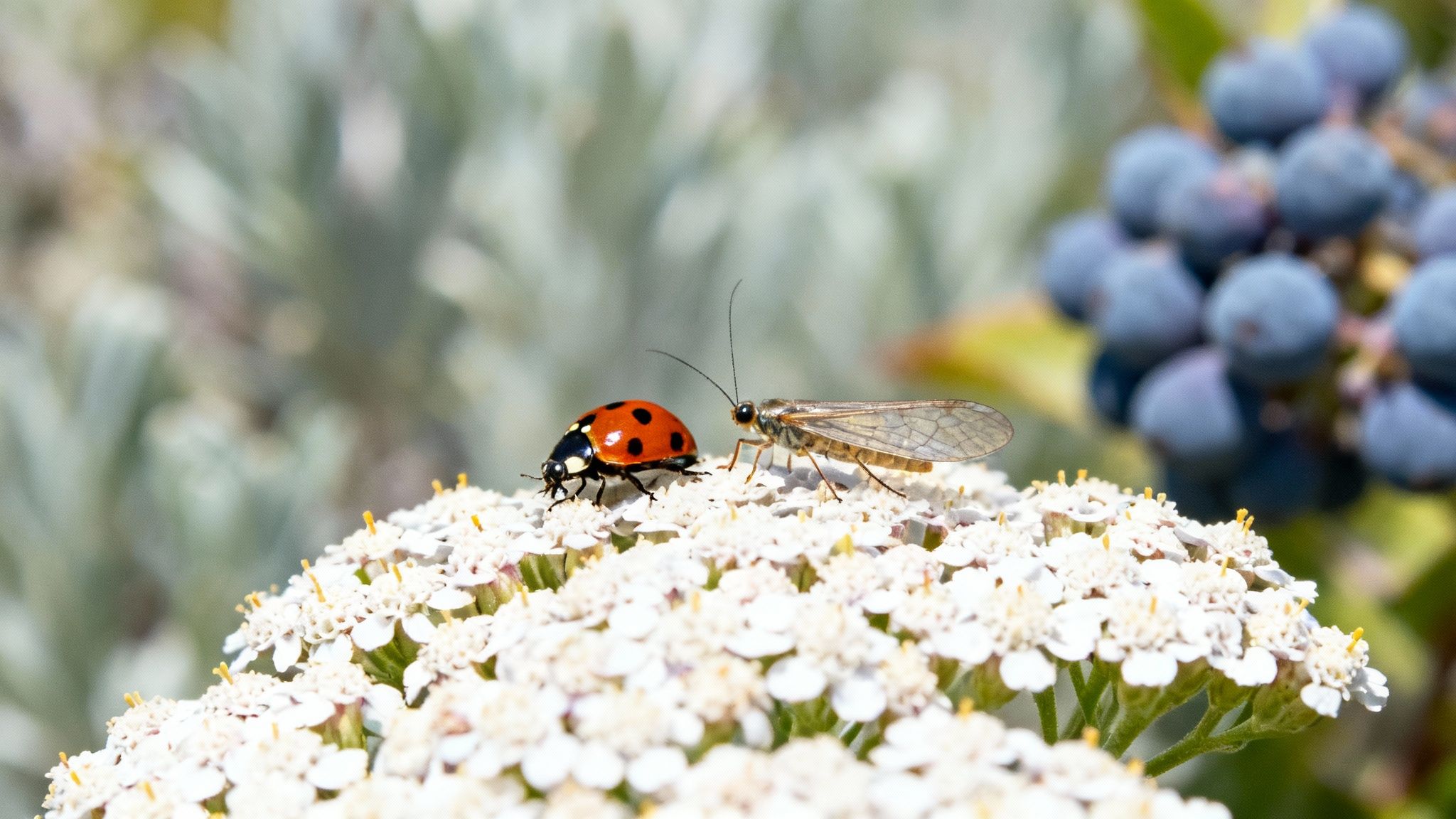
Here in Santa Cruz, many gardeners struggle with snails and slugs, especially in damper areas like Capitola. A great local tactic involves copper. These slimy pests hate crawling over copper surfaces. Placing copper tape around the base of planters or raised beds creates an effective, long-lasting barrier. It’s completely safe for pets, wildlife, and your edible plants.
The table below breaks down some of the most common pests we see locally and the physical controls that stop them.
Common Santa Cruz Garden Pests and Physical Controls
This table offers a practical guide to non-toxic, physical solutions for pests often found in our local gardens.
| Pest | Effective Physical/Cultural Control | Best For |
|---|---|---|
| Aphids | A strong jet of water from the hose; row covers on seedlings | Knocking off small populations; protecting young veggie starts |
| Snails & Slugs | Copper tape around pots/beds; hand-picking at dusk or dawn | Container gardens, raised beds, and targeted plant protection |
| Gophers | Gopher wire baskets or lining entire beds before planting | New garden beds, lawns, and protecting valuable plants like fruit trees |
| Cabbage Moths | Floating row covers secured tightly at the base of plants | Protecting brassicas like broccoli, kale, and cabbage from caterpillars |
| Birds | Bird netting draped over plants or entire beds | Protecting berries, fruit trees, and newly seeded areas |
Using these physical and cultural strategies is a key part of what makes integrated pest management techniques so successful. By building these proactive defenses, you create a healthy, self-sustaining garden that can largely take care of itself.
Recruiting Nature’s Pest Control Team
Imagine having a tiny security force working 24/7 in your Santa Cruz garden. They would protect your plants without you lifting a finger. This isn't a fantasy—it's the power of biological control. This approach is all about recruiting nature's own pest management team to create a balanced garden that thrives.
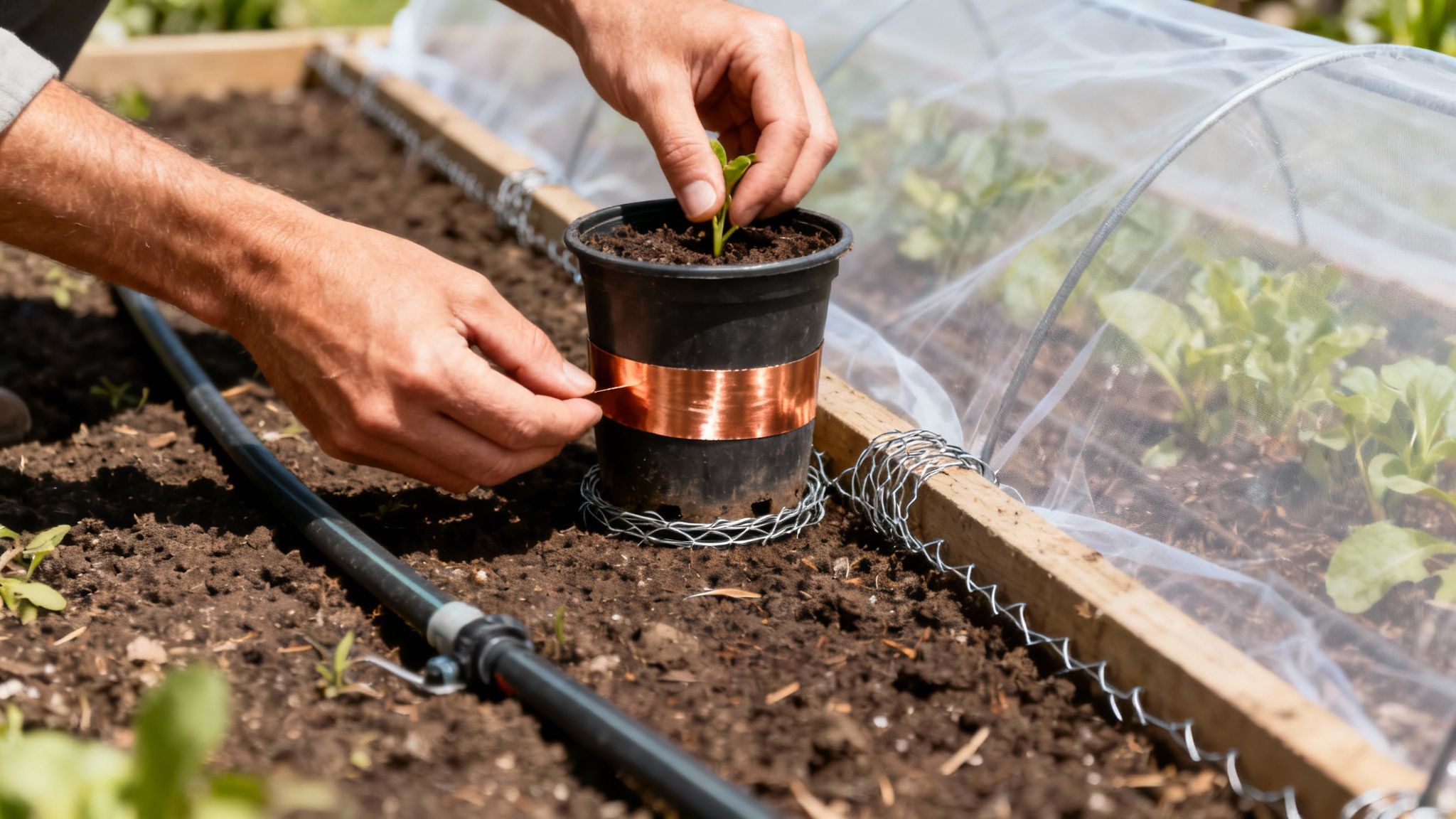
Simply put, biological control means using "good bugs" to fight the "bad bugs." Instead of wiping out everything with a spray, you invite helpful predators to make your garden their home. These natural allies then keep pest populations in check. This creates a healthier ecosystem from the ground up.
Meet Your Garden’s Best Allies
Here in Santa Cruz County, our mild coastal climate is perfect for supporting a year-round population of these helpful critters. Your goal as a green gardener is to roll out the welcome mat for them. Once they arrive, they’ll get straight to work managing common pests like aphids, mites, and whiteflies.
Here are a few key players you'll want on your team:
- Ladybugs: These famous red-and-black beetles have a huge appetite for aphids. A single ladybug can eat up to 5,000 aphids in its lifetime. They are one of the most effective natural pest controllers you can find.
- Lacewings: Don't let their delicate looks fool you. As larvae, they are known as "aphid lions" for a reason. These tiny predators feast on aphids, mites, whiteflies, and other soft-bodied pests.
- Syrphid Flies (Hoverflies): These bee look-alikes are fantastic for your garden. The adult flies are important pollinators. Their larvae are expert aphid hunters, moving along stems to find their next meal.
While many helpful insects patrol your plants, some of the most powerful garden allies live in the soil.
Working with the Unseen Helpers
Beneath your garden lies another team of pest control agents: beneficial nematodes. These microscopic roundworms are naturally occurring soil dwellers. They hunt down and destroy soil-based pests like fungus gnat larvae, cutworms, and root weevils.
Think of them as tiny, targeted missiles for underground pests. You can buy them and apply them easily with a watering can. Once in the soil, they actively seek out their hosts and safely eliminate the pest. It’s completely safe for people, pets, plants, and earthworms. This is a perfect example of a sustainable solution that works with your garden's ecosystem.
How to Attract and Keep Beneficial Insects
Recruiting these natural allies is easier than you might think. The secret is to give them the three things they need most: food, water, and shelter. A diverse garden is a welcoming garden.
"A garden filled with a variety of flowering plants doesn't just look beautiful—it acts as a vibrant, living habitat that supports the beneficial insects essential for natural pest control. It’s about creating an ecosystem, not just planting flowers."
To make your garden a five-star resort for good bugs, focus on planting a mix of native and pollen-rich flowers. Many beneficial insects need nectar and pollen as adults, even if their larvae are the primary predators.
Here’s how to create an inviting environment:
- Plant a Buffet: Include plants with small, accessible flowers. Great choices for our area include yarrow (Achillea), sweet alyssum, and native wildflowers like California poppies and Ceanothus.
- Provide a Water Source: A shallow dish filled with pebbles and water gives insects a safe place to drink without drowning.
- Avoid Broad-Spectrum Pesticides: This is the most important step. Chemical sprays kill helpful insects right along with the pests, undoing all your hard work.
- Offer Shelter: Leave some leaf litter or old plant stalks in place over the winter. This provides a safe spot for your allies to hibernate.
By creating this welcoming habitat, you support a thriving population of natural predators that keep your garden healthy and balanced. This principle extends to the broader ecosystem, too. For instance, you might be surprised to learn what bugs eat mosquitoes, showcasing nature's built-in pest management systems.
Choosing Safe and Effective Eco-Friendly Products
Even with a strong defense and a team of beneficial bugs on your side, sometimes you need a more direct approach. When prevention isn’t quite enough, picking the right eco-friendly product can feel confusing. This guide will help you sort through the options and make smart, sustainable choices.
It’s all about making responsible choices when you need to step in. You want to solve the pest problem without creating a new one for our local ecosystem.
Understanding Product Labels
Walk down the garden aisle, and you’ll see a ton of buzzwords. Terms like "organic," "natural," and "OMRI Listed" are everywhere. But what do they really mean for your garden?
- Organic: This one can be tricky. A product might be approved for organic gardening, but that doesn't automatically make it harmless. Some organic pesticides can still harm good insects if you use them the wrong way.
- Natural: This usually means the active ingredients come from plants or minerals instead of being made in a lab.
- OMRI Listed®: Now this is a label you can trust. The Organic Materials Review Institute (OMRI) is an independent group that checks if a product is okay for certified organic growing. It’s the gold standard for eco-conscious gardeners.
When pests do show up, reaching for a gentle solution like a 100% natural insect spray ensures you're staying true to sustainable principles.
The most important tip? Always read the entire label—not just the flashy claims on the front. The label tells you exactly which pests the product targets and how to apply it safely.
Common Eco-Friendly Pest Control Products
Low-impact products work in very specific ways. They often mess with a pest's life cycle without leaving behind nasty, long-lasting chemicals. They are a key part of any sustainable pest control toolkit, especially for Santa Cruz County gardeners who want to protect pollinators.
Here are a few of the most effective options:
- Insecticidal Soaps: These aren't your average dish soap. They are special formulas that work on contact. They break down the outer shell of soft-bodied insects like aphids and whiteflies, which causes them to dry out.
- Horticultural Oils (Neem Oil): These lightweight oils are great for controlling pests on fruit trees and flowers. When sprayed, they coat and suffocate eggs, larvae, and adult insects like scale and spider mites. Neem oil also has fungicidal properties that help with issues like powdery mildew.
- Bacillus thuringiensis (Bt): This is a natural soil bacteria that’s only toxic to specific insect larvae—most famously, caterpillars. When a caterpillar eats a leaf treated with Bt, it stops eating. The best part? It's harmless to humans, pets, birds, and helpful insects.
The success of these products shows the power of sustainable practices. These practices are also fueling growth in our local agriculture. In fact, the value of farm production in Santa Cruz County recently jumped to nearly $741 million, a 13.3% increase (County of Santa Cruz, 2022). This growth was driven largely by berry crops that rely on similar eco-conscious methods.
Best Practices for Safe Application
Using eco-friendly products the right way is just as important as choosing the right one. The goal is always to maximize the impact on pests while minimizing the impact on everything else.
To protect pollinators and other good bugs, just follow these simple rules:
- Spray at the Right Time: Apply products early in the morning or late in the evening. This is when pollinators like bees are least active.
- Avoid Windy Days: Wind can cause sprays to drift onto plants you didn't mean to treat or hit helpful insects passing by.
- Target Your Application: Only spray the plants that are actually infested. There's no need to spray the whole garden if the problem is small.
- Never Spray Open Blossoms: Bees and other pollinators go straight to flowers. Avoid spraying them directly to protect these essential garden helpers.
By using these targeted, low-impact products, you can stop pest outbreaks and maintain a thriving garden that works in harmony with our beautiful Santa Cruz environment.
When to Call for Professional Green Solutions
You’ve built up your garden’s defenses, recruited helpful insects, and chosen your products with care. But even with the best intentions, some pest problems can spiral out of control. Knowing when to call in a professional is a key part of being a smart, sustainable gardener.
Sometimes, an infestation just becomes too much to handle on your own. This is especially true for pests common to Santa Cruz County, like gophers turning your yard into a minefield. When a problem starts threatening the health of your entire garden, it’s time to bring in an expert.
A Partnership in Sustainable Pest Control
Calling a professional doesn't mean you're giving up on your green principles. A true expert in eco-friendly pest control uses the same Integrated Pest Management (IPM) plan you do. They just bring special knowledge, better tools, and years of experience to the fight. They act as a powerful extension of your own efforts.
Think of it this way: a pro has seen these exact problems hundreds of times across Santa Cruz County. They know the subtle differences in soil and climate from Aptos to Scotts Valley. They can quickly find the root cause of a stubborn infestation. Their job is to use a targeted, effective solution that aligns with your sustainable values. For more guidance, understanding the signs of when to call for professional help can save you time and frustration.
Supporting Our Local Green Community
Choosing sustainable methods—whether you do it yourself or hire a pro—strengthens the values our community holds dear. Santa Cruz County’s dedication to a healthy environment is seen in our amazing local food scene. The area is home to farmers' markets with over 45 growers and 20 artisan food vendors. They are all part of a community that values healthy, eco-conscious living. Learn more about how Santa Cruz supports organics.
When you partner with a professional who shares this commitment, you’re doing more than just solving a pest problem. You’re investing in the same principles that make our local food system and environment so special.
Professional green pest control isn’t just a chemical-free alternative; it’s a strategic partnership. It ensures the job gets done right, protecting your garden and our shared Santa Cruz ecosystem.
At the end of the day, knowing when to ask for help is what ensures your garden will continue to thrive—safely and sustainably—for years to come.
Frequently Asked Questions
H3: Are natural pest solutions safe for my pets and kids?
This is the #1 question we get. While "natural" products are generally much lower in toxicity than synthetic chemicals, the word itself doesn't automatically mean "harmless." It's always critical to read and follow the label instructions on any product you use. The safest solutions are always physical barriers and biological controls, like welcoming beneficial insects.
H3: How long do sustainable pest solutions take to work?
Patience is important in a green garden. Sustainable methods are designed to fix the root cause of a pest problem. This creates lasting results but often takes more time than a quick chemical spray. For example, it might take a few weeks for helpful insects to control an aphid outbreak. The reward is a long-term solution that prevents future problems.
H3: Can green methods handle a major gopher problem?
Yes, but this is one area where professional help makes a world of difference. A severe gopher infestation often needs a more strategic approach than DIY methods can offer. We specialize in effective, eco-friendly gopher control that doesn’t rely on dangerous poison baits. This approach keeps local wildlife, your pets, and your family safe while solving the problem.
H3: Do I need to get rid of every single pest in my garden?
Absolutely not! In fact, a completely pest-free garden is not realistic or even a good thing. A healthy garden is a balanced ecosystem, not a sterile environment. The real goal of green pest control is to keep pest populations below a damaging level, not to wipe them out completely. A few aphids on a rose bush are just food for ladybugs.
H3: Is eco-friendly pest control more expensive?
This is a common myth. Some preventative steps, like installing gopher wire, do have an upfront cost. However, over the long run, sustainable practices almost always save you money. By building healthy soil and a balanced ecosystem, you reduce the need for repeat chemical treatments and costly plant replacements down the road. It's an investment in your garden's long-term health.
Don't let pest problems keep you from enjoying your beautiful Santa Cruz garden. If you're looking for expert help that aligns with your eco-friendly values, West Pest Co. offers professional, sustainable solutions tailored for our local environment.
Visit us at https://westpestco.com to schedule a free estimate and learn how we can help your garden thrive.