Many companies talk about eco-friendly garden pest control like it's an easy, one-time fix. The truth is, it’s more about creating a balanced garden than just spraying a problem away.
The best, long-lasting strategies use integrated pest management (IPM). This is a smart approach that works with your garden's natural defenses, not against them. It also shows why many popular DIY solutions don't work over time.
The Reality of Eco-Friendly Garden Pest Control

Let's be honest about what it takes to keep your Santa Cruz garden healthy without harsh chemicals. When you hear "eco-friendly," you might worry it means "weak," especially when dealing with tough local pests like gophers or aphids. Others think one quick spritz of a natural spray is all it takes.
The truth is, it's a much more strategic process.
Real, sustainable pest control is about building a strong garden. You are playing the long game, focusing on health first instead of just reacting to bugs. This is where the idea of Integrated Pest Management (IPM) comes in.
What is IPM, Really?
IPM is not a product you buy. It is a mindset that uses multiple tactics to manage pests with the least harm to the environment. Prevention is always the first step. You only use targeted, low-impact treatments when truly needed.
This is not just a trend for home gardens. The bigger push for sustainability has made IPM a popular strategy. You can discover more insights about this shift toward eco-friendly pest control and see how it is changing the industry.
So, what does an IPM plan look like for a garden in Santa Cruz? It might include a mix of these things:
- Cultural Controls: This is about changing your gardening habits. Think better soil health, choosing native plants that resist pests, and watering smarter.
- Mechanical Controls: This means using physical tools to solve the problem. This could be hand-picking pests or setting up special gopher traps that don't harm your soil.
- Biological Controls: This means encouraging the "good guys." You can attract helpful insects—like ladybugs—that love to eat pests like aphids.
- Targeted Treatments: When a pest problem gets serious, you might use botanical products. But you only use them where needed and as a last resort.
By focusing on the root causes of pest problems, IPM helps you create a garden that can defend itself. This is the core of professional, green pest control—the kind that gives you lasting results without risking the safety of your family or pets. This is the secret that other providers often leave out.
Why Generic Green Solutions Fail Santa Cruz Gardens
Not all eco-friendly advice is the same. This is especially true in a unique place like Santa Cruz County. A generic "natural" spray you find online might work in a dry valley, but here on the coast, it can be useless—or even make things worse.
This is the secret many other providers miss. Our local environment is the key. It's the number one reason their one-size-fits-all solutions often fail.
The biggest factor is our coastal climate. The constant moisture and fog create a perfect home for fungi, mildew, and certain pests. A solution that works in San Jose might not stand a chance against the pests we see in Capitola or Aptos.
Our Unique Pest Pressures
Santa Cruz gardens face a specific set of pests that love our local conditions. You have probably met some of them.
- Gophers: Our rich, damp soil is a paradise for gophers, especially after winter rains. They can create huge tunnel systems that destroy roots and lawns almost overnight.
- Aphids: The mild springs and new plant growth lead to huge aphid populations. They can quickly take over your roses and vegetable plants.
- Argentine Ants: These invasive ants are a constant problem here. They "farm" aphids for their sweet honeydew and build large colonies that are hard to manage with simple baits.
These pests are tied to our seasons. Understanding these patterns is your first line of defense. You can learn more about getting ahead of them in our guide on seasonal pest control for your Santa Cruz home.
The Hidden Damage of Store-Bought Sprays
When you see a problem, it's easy to grab a bottle from the store labeled "natural." Your goal is good, but these products often cause more harm than good. Why? Because most are broad-spectrum, meaning they kill everything.
A single use of a generic natural pesticide can wipe out helpful insects along with the pests. This means you kill the ladybugs and lacewings that are your garden's best friends.
This creates a bad cycle. Without their natural enemies, pests can come back even stronger. This forces you to rely more and more on sprays.
This is what other providers don't tell you about outdoor infestations. Effective eco-friendly garden pest control is not about finding a magic spray. It's about understanding the local ecosystem and using smart strategies that protect the good bugs while getting rid of the bad ones.
The Professional Eco-Friendly Toolbox
Effective eco-friendly pest control is more about a smart strategy than a single "magic bullet" spray. When you move beyond common DIY methods, you find a world of professional, science-backed tools. These tools handle outdoor infestations without hurting your garden's balance. It's the part of the story other providers often skip when talking about your outdoor space.
This professional approach uses the right tool for the right job. The goal is always to be targeted and have a low impact. A true professional's toolbox includes several key methods that work together to protect your plants, pets, and pollinators.
Understanding The Core Techniques
Instead of using a one-size-fits-all chemical spray, a professional plan uses a few different types of control. Each one has a specific job in managing pests while keeping your garden's ecosystem healthy.
- Mechanical Controls: This is the most direct method. It involves physical barriers or devices to remove pests. A great example is professionally set gopher traps that solve the problem at the source, without any chemicals in your soil.
- Biological Controls: Here, we use nature's own pest police. A specialist can help you introduce or encourage helpful insects—like lacewings and ladybugs—that love to eat pests like aphids. It’s a great, self-sustaining solution that makes your garden's natural defenses stronger over time.
- Botanical Insecticides: When a spray is truly needed, professionals use targeted products made from plants, like chrysanthemum flowers or neem oil. Unlike broad-spectrum chemicals that kill everything, these are chosen because they break down quickly and affect only specific pests. This minimizes harm to bees and other helpful bugs.
This infographic gives you a quick visual of how these professional methods compare for environmental safety.
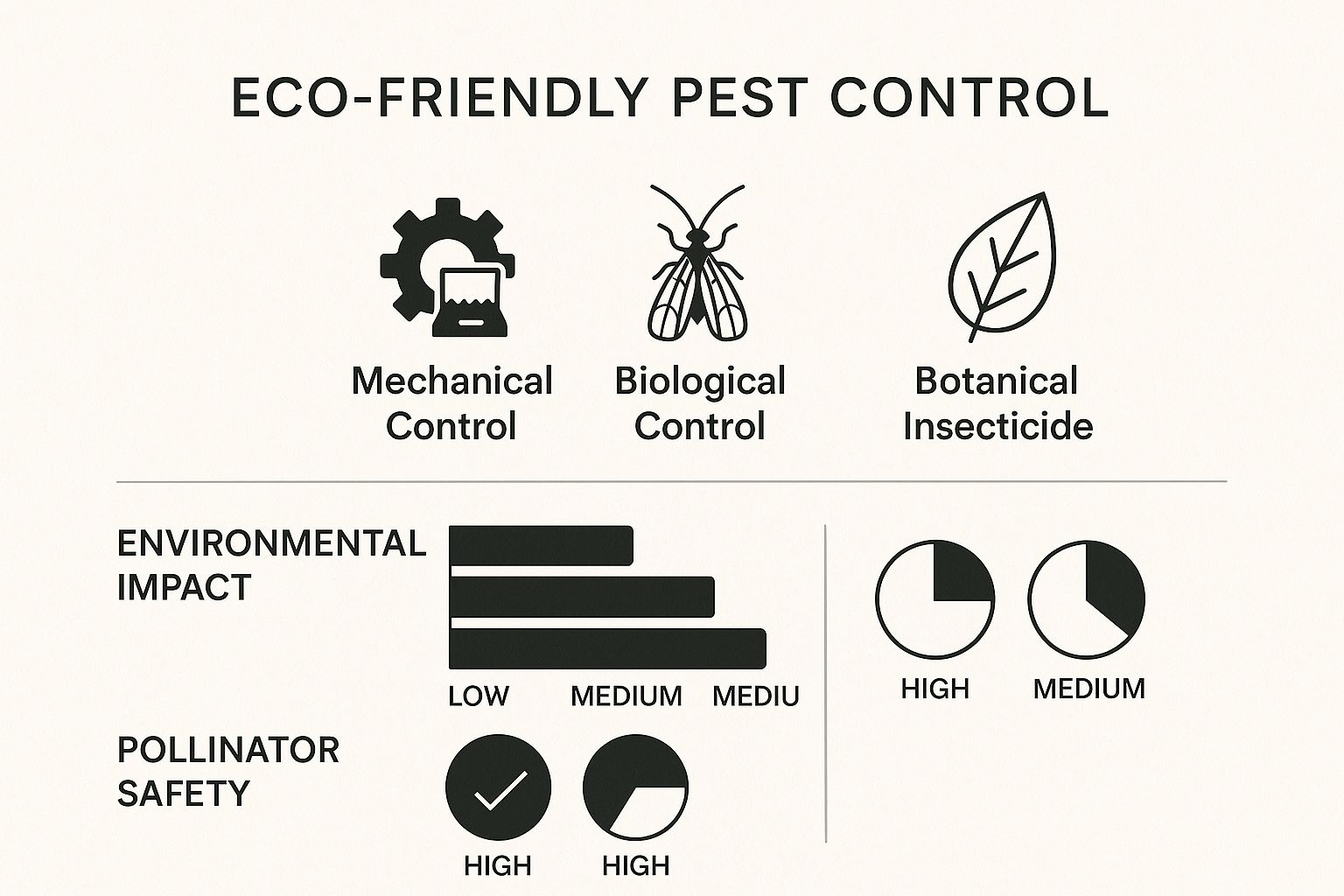
As you can see, professional methods are designed to be safe, especially for the important pollinators your Santa Cruz garden needs to thrive.
The real secret to successful eco-friendly garden pest control isn't a single product. It's the knowledge of how and when to use these different strategies for the best results with the least disruption.
This shift toward smarter, safer pest management is the future of gardening. By minimizing harmful chemicals, these methods protect biodiversity. Think of it as a sustainable investment in the long-term health of your outdoor space.
How to Build a Pest-Resistant Garden Ecosystem

The real secret to long-term, eco-friendly garden pest control is not about reacting to problems. It's about stopping them before they start. Building a strong garden ecosystem is your most powerful tool. It’s about creating an environment where plants thrive and pests can’t get started.
Too many gardeners get stuck treating infestations after the damage is done. The smarter approach is to make your garden a bad place for pests from the beginning. This strategy starts from the ground up, using smart choices for our unique Santa Cruz climate.
Start with Healthy Soil and Smart Watering
Your garden's first defense is under your feet. Healthy, rich soil grows strong plants that can naturally fight off diseases and pests. Weak and stressed plants are an open invitation for pests like aphids.
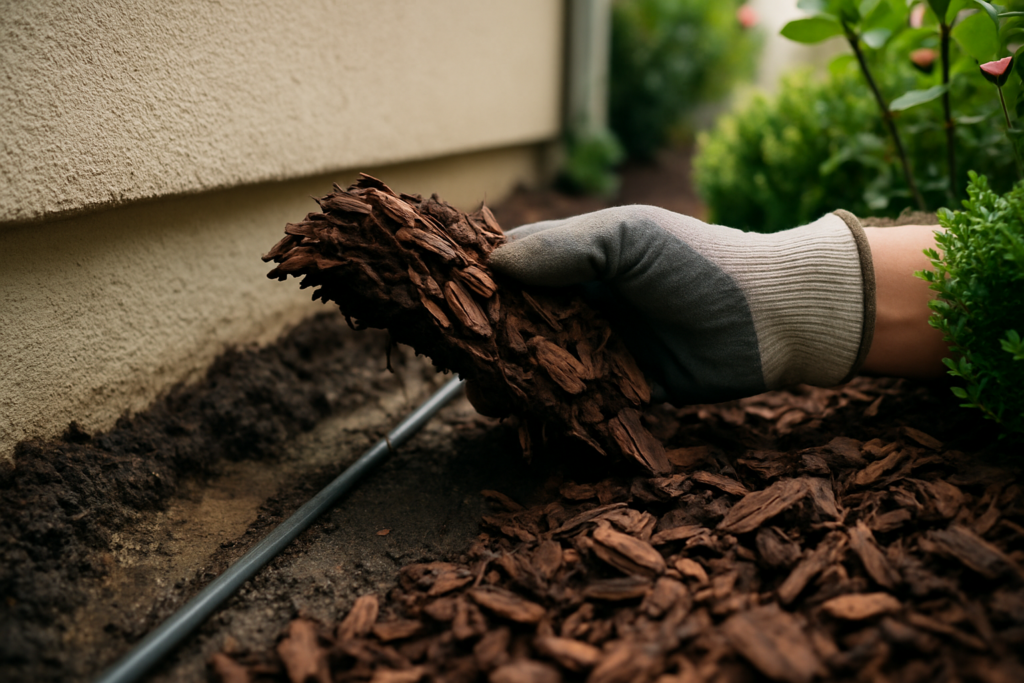
Adding organic compost to your soil is one of the best things you can do. It improves drainage and provides a steady supply of nutrients. This is a core part of Integrated Pest Management techniques, which focus on proactive garden health.
Your watering habits also play a huge role. Overwatering creates a damp environment that is perfect for fungal diseases and pests like slugs.
- Water deeply but less often. This helps roots grow deep and strong.
- Use drip irrigation. It sends water right to the roots, keeping leaves dry and less likely to get sick.
- Water in the morning. This lets leaves dry before night, which reduces the risk of mildew.
Choose the Right Plants for Santa Cruz
Choosing the right plants is key to a pest-resistant garden. Using drought tolerant landscape design strategies and picking native plants is a game-changer. Plants adapted to our coastal conditions need less water and are less likely to have pest issues.
You can also add plants known to repel pests. This is called companion planting. It uses nature’s own defenses to protect your other plants.
By placing certain plants strategically, you can create a natural barrier that confuses and discourages common garden pests. It’s an easy, beautiful, and effective layer of defense.
For example:
- Marigolds release a substance that repels pests in the soil and in the air.
- Lavender and rosemary are beautiful, drought-friendly choices for our area. Their strong smells help repel pests like aphids.
- Nasturtiums act as a "trap crop." They attract aphids away from your prized vegetables like tomatoes.
Building a strong ecosystem takes time. But these steps will greatly reduce your need for pest control later. It helps you work with nature to create a beautiful garden that can defend itself.
Knowing When to Call for Professional Help
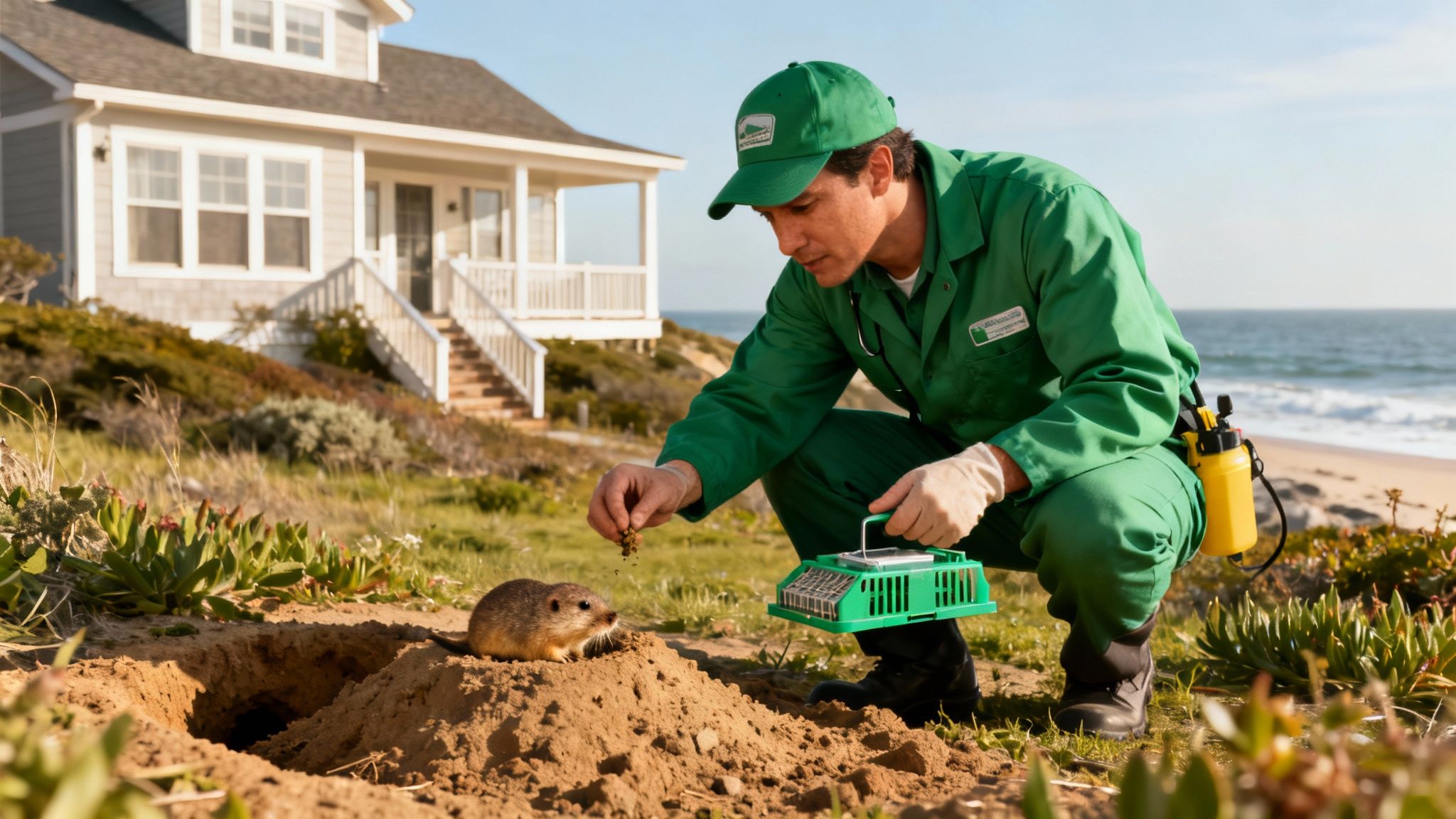
DIY efforts are a great first step in the garden. But sometimes, you face a pest problem that feels overwhelming. Knowing when an issue has grown beyond your control is important. It’s not about giving up; it’s about making a smart move to protect your garden.
Calling a professional for eco-friendly garden pest control means bringing in a specialist when needed. This is especially true if you see the same problems coming back again and again.
Maybe you flattened a gopher mound on Monday, only to find three new ones by the weekend. Or perhaps you sprayed an aphid-covered rose bush, but two weeks later, the pests are back. These issues often point to a deeper problem that simple treatments can't fix.
When the Problem Gets Bigger
Sometimes, the size or speed of a pest problem is the clearest sign you need help. A few aphids are annoying. But a huge population that threatens to ruin your roses or vegetables needs a stronger, faster response.
You should think about professional help when you see these red flags:
- Recurring Infestations: Pests like gophers or Argentine ants that keep returning often mean there is a bigger problem that DIY methods can't solve.
- Rapidly Spreading Damage: If you see pest damage moving quickly from one plant to another, you need to act fast to prevent widespread loss.
- Unidentified Pests: Not sure what's eating your leaves? Guessing the wrong pest can lead to using the wrong treatments, which won't work.
A professional inspection can save you hours of frustrating trial-and-error. More importantly, it can stop a small issue from becoming a major garden disaster by giving you a clear, targeted action plan.
Ultimately, knowing when to call for pest control is about protecting your garden's health and your own peace of mind. It’s the best way to restore balance so you can get back to enjoying your beautiful Santa Cruz garden.
Frequently Asked Questions
Are eco-friendly treatments really safe for my kids and pets?
Yes, they are safe when applied by a trained professional. This is one of the main reasons people choose greener pest control. Our methods are designed to be highly targeted. This means they go after the problem pests and leave everyone else alone. We focus on low-impact solutions like botanical oils and mechanical traps for gophers. Before we do anything, we explain exactly what we will use and why, so you feel completely comfortable.
How long does natural pest control take to work?
Natural pest control works differently than chemicals. Chemical sprays give a fast, immediate knockdown, but the effect is often temporary. Natural pest control is more strategic. It disrupts pest life cycles and restores your garden’s natural balance. Because of this, you will usually see a gradual decrease in pests over a few days or weeks. The goal is not a quick fix but sustainable, long-term control that solves the root problem.
Can natural methods actually get rid of gophers?
Yes, but it requires a special, professional approach. This is one area where DIY solutions almost always fail. Many homeowners in Santa Cruz County have tried sonic spikes or flooding tunnels, only to see new mounds pop up. These methods don't work because they don't remove the gophers. Effective, eco-friendly gopher control uses proven mechanical methods like trapping. A professional knows where to place traps for the best results, removing the animals from your yard without dangerous poisons.
Why do I need a professional if the products are natural?
This is a key point to understand about outdoor infestations: expertise makes a natural product effective. The success of eco-friendly pest control depends almost entirely on the right strategy and application. A professional brings key knowledge, like accurate pest identification, understanding pest life cycles, and precise application that avoids harming helpful insects like bees. Bringing in a professional ensures your eco-friendly approach is not only safe but actually works.
How does Santa Cruz's coastal climate affect garden pests?
Our coastal climate, with its fog and mild temperatures, creates a perfect environment for specific pests like aphids, gophers, and Argentine ants. It also encourages fungal diseases. Generic, one-size-fits-all "natural" solutions often fail here because they aren't designed for our unique moisture levels and pest pressures. Local expertise is critical to choosing the right eco-friendly strategies that will be effective in Aptos, Capitola, and across Santa Cruz County.
Ready to protect your garden the safe and sustainable way? The team at West Pest Co. has the local expertise to solve your toughest outdoor pest problems. Contact us today for a personalized garden pest assessment in your Santa Cruz neighborhood.