Finding the best flea treatment for carpets is about more than just killing the adult fleas you see. It's about a complete plan that wipes out the jumping adults and also deals with the next generation hiding deep in your carpet. A good treatment must break the entire flea life cycle—from egg to adult.
For homeowners here in Santa Cruz, this is a big deal. Our beautiful coastal climate, unfortunately, creates the perfect year-round breeding ground for these pests. Dealing with fleas in your home can be unsettling, but a solid plan will get rid of them for good.
Why Santa Cruz Carpets Are a Flea Paradise
Finding fleas in your home is a frustrating experience. Just when you think you’ve handled it, they seem to reappear. If your carpets have become ground zero for a flea problem, you're not alone. Here in Santa Cruz County, from the coast in Aptos to the hills of Scotts Valley, our mild, humid weather is a paradise for fleas.
Unlike areas with harsh winters that kill off outdoor pests, our climate lets fleas thrive all year. They easily catch a ride inside on our pets or even our pant legs after a walk.
Once inside, your carpet is the perfect nursery. Its dense fibers offer a safe, dark space away from sunlight and your vacuum. This cozy environment allows the flea life cycle to continue undisturbed, quickly turning a few fleas into a major infestation.
The Hidden 95% of the Flea Problem
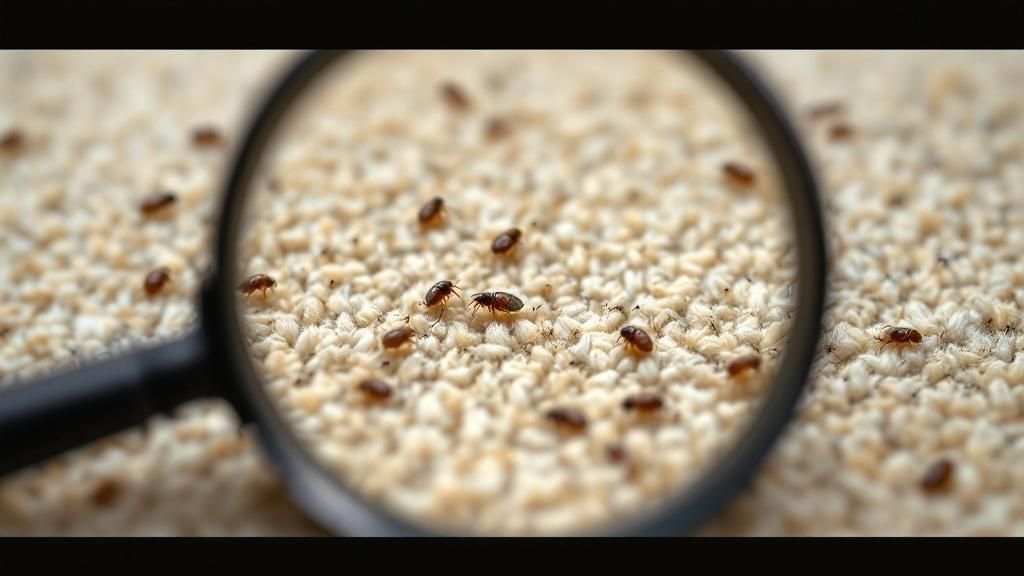
Here’s a fact that surprises most people: the adult fleas you see hopping around are only about 5% of the total flea population in your home. According to the Companion Animal Parasite Council, the other 95% is completely invisible, hiding in your carpet in three stages:
- Eggs: A single female flea can lay up to 50 eggs a day. These tiny white specks aren't sticky, so they fall off your pet and vanish into the carpet. If you're not sure what they look like, our guide on what flea eggs look like can help.
- Larvae: After hatching, these small, worm-like larvae wiggle deeper into the carpet base. They hate light and feed on "flea dirt"—which is the digested blood left behind by adult fleas.
- Pupae: This is the toughest stage. The larvae spin a sticky, nearly indestructible cocoon. Inside this cocoon, they can stay dormant for months, just waiting for a signal like the warmth and vibration of your footsteps to hatch and start the cycle all over again.
This hidden life cycle is why just treating your pet is never enough to solve an infestation. The real battle is in your carpet, where the next wave of fleas is waiting to emerge.
A Growing Concern for Homeowners
The fight against fleas is a big one for families everywhere. The global market for flea, tick, and heartworm products was valued at a massive $7.21 billion in 2024, according to a report from Coherent Market Insights. This number shows just how common this problem is for homeowners.
Fleas aren't just an itchy annoyance; they pose real health risks. They can transmit tapeworms and trigger severe allergic reactions in pets (flea allergy dermatitis). Their bites can also lead to nasty skin infections for both pets and people. A complete treatment plan isn't just a good idea—it's essential for a healthy home.
How to Prepare Your Carpets for Flea Treatment
Before you apply any flea treatment, you need to do some prep work. Skipping these steps is like trying to paint a dirty wall—the treatment won't work well, and the fleas will be back in a few weeks. Proper prep helps the best flea treatment for carpets get deep into the fibers where eggs, larvae, and pupae are hiding.
Taking this time up front ensures you get the most out of any product you use. For a complete list, check out our guide on https://westpestco.com/how-to-prepare-for-pest-control/, which explains everything you should do before a professional visit.
Start With a Deep Vacuuming Session
Think of your vacuum as your first line of defense. A thorough vacuuming can physically remove a huge number of adult fleas, eggs, and larvae before you even use a treatment. Don't skip this step.
This doesn't mean a quick pass over the middle of the room. You need to be strategic and get into all the spots where fleas love to hide.
- Pet Resting Areas: Focus on any spot where your dog or cat sleeps. Flea eggs fall off your pet as they move around, turning these areas into flea nurseries.
- Under Furniture: Flea larvae hate light. They crawl to dark, hidden places, so you have to move cushions and use the vacuum wand under sofas, chairs, and tables.
- Along Baseboards and Edges: Use your vacuum’s crevice tool and run it along every baseboard. This is a prime hiding spot for all stages of the flea life cycle.
Crucial Tip: As soon as you finish vacuuming, take the vacuum outside. If it uses a bag, remove it, seal it tightly in a garbage bag, and put it in your outdoor bin immediately. For bagless models, empty the canister into a sealed bag, then wash the container with hot, soapy water. This keeps the captured fleas from escaping back into your house.
The Power of Steam Cleaning
If you want to take your prep work to the next level, use a steam cleaner. The high heat—usually well over 140°F—is instantly deadly to fleas at every life stage. It kills eggs, larvae, pupae, and adults on contact without any chemicals.
This step is a game-changer for heavy infestations. It can wipe out a large portion of the population before you apply a long-lasting treatment.
This is also a great time to switch to pet-safe cleaning products to keep your furry family members safe. When you start with a clean and prepped space, you give any treatment the best possible chance to succeed.
Choosing the Right Carpet Flea Treatment
Walking down the pest control aisle can be overwhelming. You'll see sprays, powders, and foggers all promising to solve your problem, but how do you know which one will actually work? Picking the right carpet flea treatment isn't just about killing adult fleas; it’s about breaking their life cycle for good.
There's a reason the market for these products is so big. As more people own pets, the demand for effective treatments grows.
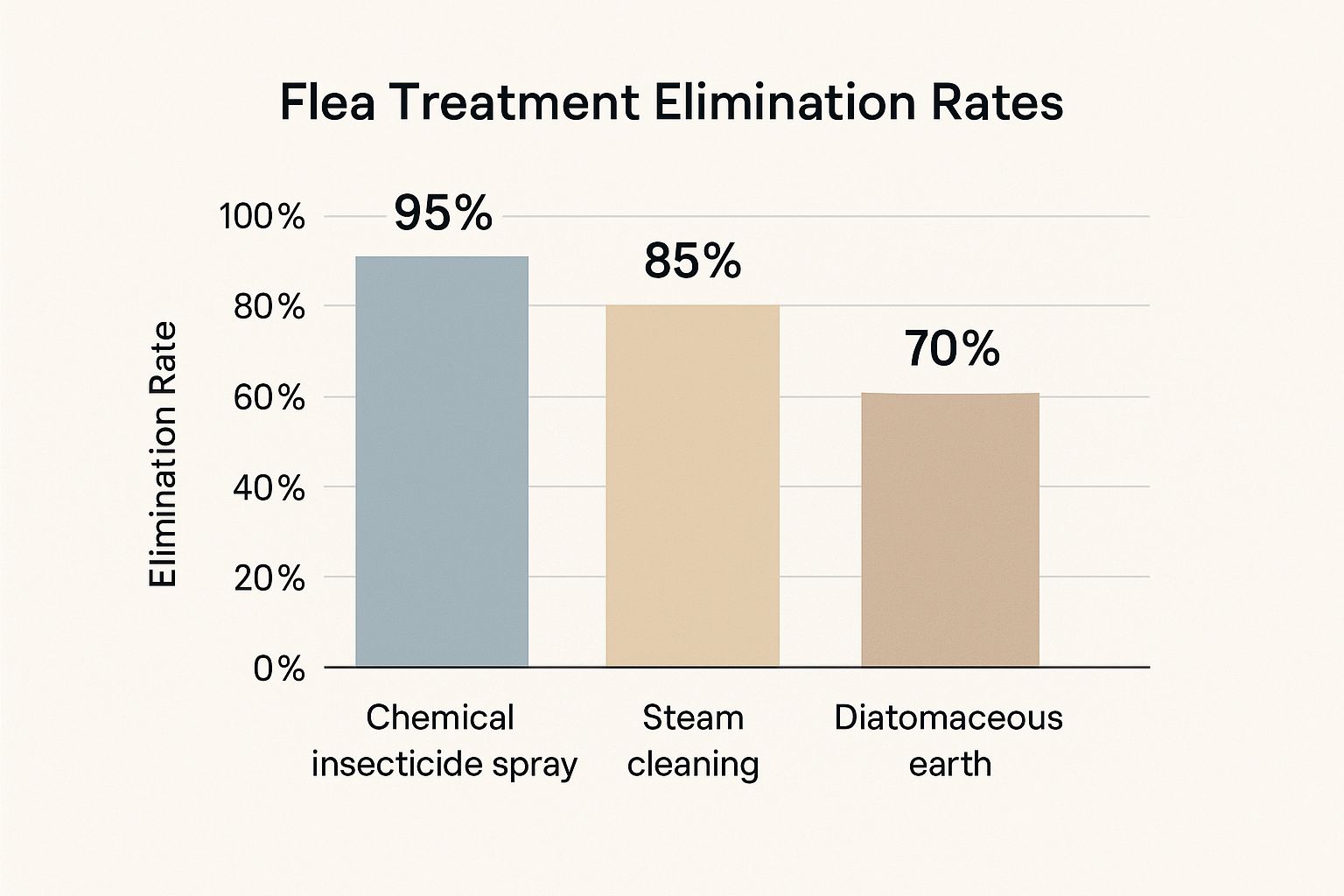
As you can see, different methods give you different results. While some DIY options can help, professional-grade sprays often provide the most complete and lasting solution.
Sprays with Insect Growth Regulators (IGRs)
Flea sprays are a popular choice because they’re easy to use and work fast. But here’s the key: the most effective sprays contain a special ingredient called an Insect Growth Regulator, or IGR.
Think of an IGR as flea birth control. It doesn't kill adult fleas directly. Instead, it interrupts their life cycle, preventing eggs from hatching and stopping larvae from growing into biting adults. This is how you stop the next generation from taking over your Santa Cruz home.
When you're shopping, look for a quality home furniture flea spray with IGR that’s made for carpets and upholstery. The best products combine an adulticide (which kills adult fleas) with an IGR. This powerful combo wipes out the current infestation and keeps new ones from starting for months.
Carpet Powders and Their Role
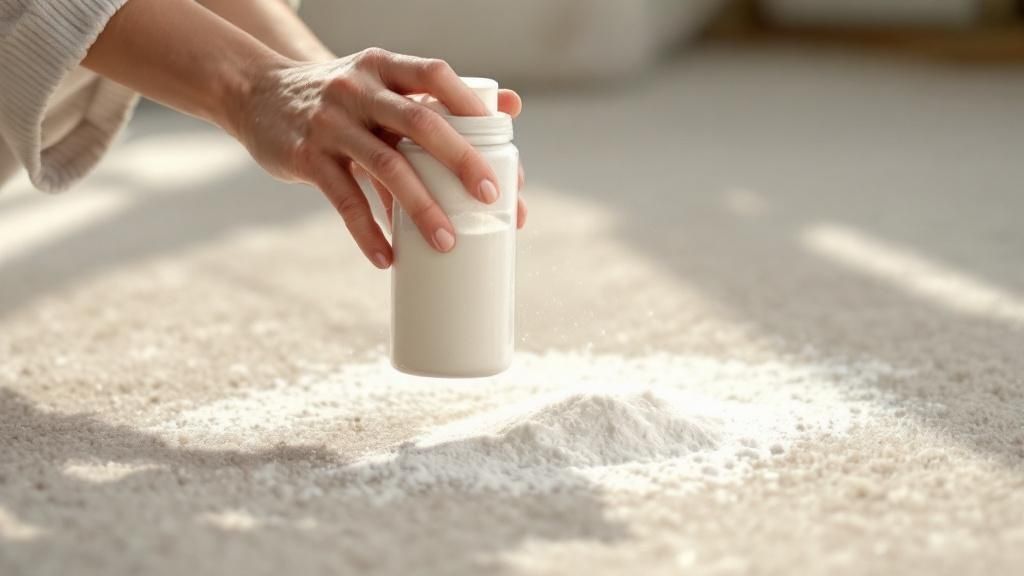
Flea powders are another common option. The process is simple: you sprinkle the powder on your carpet, let it sit for a while, and then vacuum it up. Most contain an insecticide that kills fleas on contact.
They can be effective, but they also have some downsides:
- They're messy. It's hard to get an even layer of powder, and the fine dust can easily get on your furniture.
- There's an inhalation risk. You need to wear a mask and keep kids and pets out of the room until every bit has been vacuumed up.
- Coverage can be spotty. The powder might not get deep enough into thick carpets to reach all the larvae hiding at the bottom.
Because of this, powders are often best for small, contained areas or as a backup to a stronger treatment plan.
Eco-Friendly and Natural Options
For homeowners in communities like Capitola and Aptos who prefer greener solutions, natural alternatives are appealing. The most well-known is diatomaceous earth (DE).
Diatomaceous earth is a fine powder made from fossilized algae. On a microscopic level, its particles are very sharp. They kill fleas by scratching their waxy outer layer, which causes them to dry out and die.
Just know that it’s not a quick fix. DE only works on adult fleas and larvae that crawl through it; it does nothing to eggs or pupae. You’ll need to reapply it several times. Always use food-grade DE, as the industrial version is harmful if inhaled. While natural methods can help, serious infestations almost always need a stronger solution.
Carpet Flea Treatment Comparison
This side-by-side look at common flea treatments can help you decide which is best for your home and family.
| Treatment Type | How It Works | Best For | Safety Considerations |
|---|---|---|---|
| Sprays with IGR | Kills adult fleas on contact while the IGR prevents eggs and larvae from developing. | Moderate to severe infestations; long-term prevention. | Ventilate the area well during and after application. Keep pets and kids away until dry. |
| Carpet Powders | Insecticides in the powder kill fleas on contact. The powder is vacuumed up after a set time. | Small areas or light infestations; supplementing other treatments. | Can be messy. Risk of inhalation; wear a mask and keep the room clear until vacuumed. |
| Diatomoaceous Earth (DE) | Abrasive particles physically damage the flea's exoskeleton, causing dehydration and death. | Minor issues or for those seeking a non-chemical option. | Use food-grade DE only. Slow-acting and requires multiple applications. |
| Professional Treatment | Uses professional-grade products, often including potent IGRs and adulticides, applied by a trained expert. | Severe, persistent, or overwhelming infestations; guaranteed results. | The safest option, as professionals handle all application and safety protocols. |
Ultimately, the best choice depends on how bad your flea problem is and your family's needs.
If you’re facing a problem that just won’t go away, a professional flea and tick treatment for your home is often the safest, most effective, and longest-lasting answer.
Applying Carpet Treatments Safely and Effectively
You’ve picked out the best flea treatment for your carpets. Great. But that’s only half the job. How you apply the product is what separates a successful treatment from a waste of time and money.
The most important rule is to read and follow the product label exactly as written. This isn't a suggestion—it's your guide for safety and success. The label tells you everything, from how much to use to how long you need to keep pets and kids out of the room.
Best Practices for Application
Don't just start spraying and hope for the best. To get even, thorough coverage, you need a plan. This ensures you don't miss any hidden spots where flea larvae are developing.
Here’s a good method:
- Test a Hidden Spot First: Before you treat the whole room, spray a small, out-of-the-way area. Try inside a closet or under a sofa. Let it dry completely to make sure it doesn't discolor your carpet.
- Work in a Grid Pattern: Start in the corner of the room farthest from the door and work your way backward. This simple trick keeps you from walking on the freshly treated carpet.
- Keep the Air Moving: Open the windows and turn on fans to get a cross-breeze. Good ventilation helps the treatment dry faster and clears out any fumes. This is a critical safety step.
Safety First: Always keep children and pets out of the room while you’re applying the product and while it’s drying. Don't let them back in until the carpet is completely dry to the touch. The drying time can vary, so check the label for specifics.
Common Mistakes to Avoid
Even with good intentions, it’s easy to make small mistakes that ruin your efforts. A classic mistake is using too much product, thinking more is better. It's not. Over-applying can leave your carpets sticky, attract dirt, and even be a safety risk. Stick to the recommended amount.
Another common slip-up is vacuuming too soon after treatment. Just as pre-treatment vacuuming is important, post-treatment patience is key. You need to let the product sit and do its job, killing any newly hatched fleas that emerge.
While tools like flea traps can show you how bad the infestation is, they are not a substitute for a full treatment. Our guide on whether flea traps work can give you more details. For now, trust the process and follow the product label's instructions on when to start vacuuming again.
When to Call a Professional for Flea Infestations
You’ve done everything right. You vacuumed, used store-bought treatments, and washed every piece of pet bedding in hot water. And yet, a week or two later, you see them again. Those tiny black specks are back.
The itching starts again, and you realize the fleas have returned.
This is a story we hear all the time from homeowners in Santa Cruz. Sometimes, a flea infestation is just too widespread for DIY products to handle. Over-the-counter solutions might knock down the adult fleas, but they rarely have enough power to eliminate the tough eggs and pupae that keep the cycle going.
Signs Your Flea Problem Needs a Professional
When is it time to stop going to the hardware store and call for help? There are a few red flags that mean a flea population is too established for standard treatments.
Catching these signs early can save you weeks of stress and wasted money.
- Fleas Keep Coming Back: You’ve treated your carpets multiple times, but the fleas reappear within a few weeks. This is a classic sign your treatment isn't breaking their life cycle.
- The Infestation is Widespread: You aren't just finding fleas in one room. You’re spotting them in multiple rooms, on different floors, and even on the furniture.
- You Have Sensitive Family Members: If anyone in your home—human or pet—suffers from flea allergies, asthma, or chemical sensitivities, using store-bought chemicals isn't worth the risk. A professional approach is much safer.
A persistent flea infestation is more than just an annoyance. It is a constant threat to the comfort and health of your family. When DIY methods fail, it’s a clear sign that the problem needs a more powerful and strategic solution.
The West Pest Co. Advantage
When you're facing a stubborn infestation, professional pest control offers two things you can’t get from a store: expertise and access to better products.
Our technicians are locals who understand the challenges of flea control in our Santa Cruz climate. We know exactly where fleas hide and how to treat those forgotten spots for the best results.
We use advanced, low-impact products designed to eliminate all stages of the flea life cycle, while keeping your family and pets safe. Instead of just putting a temporary fix on the problem, we solve it for good.
If you’re tired of fighting an endless battle, it’s time to let an expert take over. For reliable flea & tick control in Santa Cruz County, we have the tools and local knowledge to make your home a comfortable, pest-free space again.
Frequently Asked Questions About Carpet Fleas
Here are a few of the most common questions Santa Cruz homeowners ask us when they’re trying to get fleas out of their carpets.
How Long Does It Take to Get Fleas Out of My Carpet?
Completely getting rid of a flea infestation can take anywhere from a few weeks to a couple of months. While a good treatment will kill adult fleas quickly, the real fight is against the eggs, larvae, and pupae that continue to develop for weeks.
Consistency is your best weapon. You have to stick to a strict treatment schedule and vacuum every day. This routine is key for catching newly hatched fleas before they can lay more eggs.
Are Flea Carpet Treatments Safe for My Kids and Pets?
Many treatments are safe, but only if you use them exactly as directed on the label. The first thing you should always do is read the entire label carefully.
To keep everyone safe, follow these simple rules:
- Keep your kids and pets out of the room until the product has completely dried.
- Open windows or use fans to ventilate the space during and after application.
- Store all pest control products securely where children and pets can't reach them.
If you’re worried about using chemicals, the professional, eco-friendly treatments we offer at West Pest Co. are a great alternative that puts your family’s health first.
Do I Need to Treat My Whole House or Just One Room?
Yes, you really do need to treat the whole house. Fleas are tiny and sneaky. They'll hitch a ride on pets, socks, or pant legs to get from one room to another.
If you only treat the room where you first saw them, you leave the door open for fleas to survive elsewhere and re-infest the area you just cleaned. A whole-home approach is the only way to get rid of them for good.
Can I Just Vacuum and Get Rid of Fleas That Way?
Vacuuming is a critical part of the battle, but it’s almost never enough on its own. A powerful vacuum can suck up a surprising number of adult fleas, eggs, and larvae from your carpet.
However, some will always be left behind. The pupae, in particular, are sticky and hidden so deep in the carpet that a vacuum can’t always reach them. For the best results, you must combine daily vacuuming with an effective flea treatment.
How Often Should I Treat My Carpets for Fleas?
How often you need to treat depends on the product you're using and how bad the infestation is. For most DIY carpet treatments, you will need to do a follow-up application about two to three weeks after the first one.
This second round is absolutely essential. It’s designed to kill the new wave of fleas that have hatched since you first treated the area. Skipping this step is one of the most common reasons DIY flea treatments fail.
Remember, treating your carpets is only one piece of the puzzle. Ongoing pet care prevents fleas from coming back. For more information on your pet’s health, you might find these useful pet care tips helpful. A good prevention plan is your best defense.
If you're fed up with the endless cycle of vacuuming and treating but the fleas keep coming back, it’s time to call in the pros. The team at West Pest Co. has the professional-grade tools and local Santa Cruz know-how to solve your flea problem safely and for good. Contact us today for a free estimate and take back your home.