As a parent, your first instinct is to protect your kids. So when you spot a creepy-crawly in your home, it's easy to go into full-blown panic mode and reach for the strongest chemical spray on the shelf. But hold on—there's a much smarter, safer, and more effective way to handle pests.
The key is to shift your thinking from being reactive to proactive. This is where a strategy called Integrated Pest Management (IPM) comes in. It’s a commonsense approach that prioritizes preventing pests from getting inside in the first place and only using the least-toxic solutions when absolutely necessary. It’s all about safety first, which is exactly what you want with little ones around.
Building a Foundation for a Safe and Pest-Free Home

Finding pests is stressful enough, but that anxiety skyrockets when you have children. IPM isn't about waging an all-out war on every bug; it’s about creating a practical, long-term framework that gives you peace of mind. It's the same method experienced pest control professionals use to keep homes safe and pest-free.
Understanding Your "Action Threshold"
A core idea in IPM is the action threshold. This is simply the point where a pest problem becomes unacceptable and you need to do something about it. Your threshold will be personal to your family and your home.
For instance, if you have a toddler, seeing a single cockroach might be your action threshold. Why? Because they're known to trigger asthma and carry germs. On the other hand, a few ants on the back patio might not be a big deal at all.
Deciding on your thresholds ahead of time helps you avoid overreacting. It empowers you to make calm, rational decisions instead of panicked ones, ensuring the solution actually fits the problem.
The Mindset Shift: From Killing to Preventing
The real power behind child-safe pest control is prevention. It’s a complete shift in thinking, moving from asking, "How do I kill these pests?" to "Why are they here in the first place?"
Pests are always looking for three things: food, water, and shelter. By focusing on what attracts them, you can make your home a much less appealing target.
By adopting an IPM mindset, you’re not just managing pests; you’re cultivating a healthier living environment for your children. This proactive stance is the single most important step toward lasting security and confidence in your home's safety.
This awareness is spreading. As families increasingly prioritize health, the global pest control market is projected to surge from USD 25 billion in 2023 to over USD 44 billion by 2031. This growth is driven by a huge demand for safer, family-focused solutions. You can discover more insights about this expanding market and see how it reflects the growing desire for cleaner living environments.
To simplify this, I’ve broken down the core principles of a child-safe IPM approach. Think of this as your new playbook for keeping your home secure without unnecessary risks.
Child-Safe Pest Control Core Principles
| Principle | What It Means for Your Family | Example Action |
|---|---|---|
| Prevention First | Focus on making your home unattractive to pests. | Seal cracks in the foundation and around windows. |
| Set Action Thresholds | Decide how many pests are too many before you act. | A single rodent triggers action, but a few gnats do not. |
| Monitor & Identify | Know what you’re dealing with before choosing a solution. | Use sticky traps to identify the type of crawling insect. |
| Use Low-Risk Controls | Always start with the safest method available. | Choose non-toxic baits or physical traps over chemical sprays. |
| Strategic Chemical Use | Use targeted chemicals only as a last resort. | Apply gel bait in a hidden crack instead of fogging a room. |
Ultimately, these principles work together to create a system that’s both highly effective and designed with your family's well-being as the top priority.
Identifying Pests and Understanding the Real Risks

Before you can pick the right child-safe pest control, you have to play detective in your own home. Knowing exactly what you’re up against is the single most important step. It keeps you from reaching for a harsh, aggressive product when a much simpler, targeted fix would have done the job.
Proper identification starts with getting a little closer than you might want to. Don't just sweep up droppings—look at them. Are they tiny and scattered, almost like coffee grounds? You could be looking at cockroaches. Are they larger, spindle-shaped, and all in one spot? That’s a classic sign of mice. The same goes for the pests themselves. Pay attention to their size, shape, and where you keep finding them.
Common Household Pests and Their Telltale Signs
Figuring out the difference between a simple nuisance bug and a genuine threat is absolutely key. A lot of insects that wander inside are harmless, but others carry specific risks that are much more serious in a home with kids.
Here’s a quick guide on what to look for:
- Cockroaches: You’ll almost always find them near water sources in kitchens and bathrooms. Keep an eye out for small, dark droppings, shed skins, or a distinct musty, oily smell. Cockroaches are a huge concern because their saliva, droppings, and decomposing bodies contain allergens known to trigger asthma attacks in children.
- Rodents (Mice & Rats): Telltale signs include gnaw marks on food boxes or baseboards, little nests made of shredded paper, and of course, droppings. Rodents can contaminate food and countertops with dangerous bacteria and are notorious for carrying diseases.
- Ants: While most common house ants are just an annoyance, carpenter ants can cause real structural damage. You can identify their work by finding small piles of coarse sawdust (called "frass") near wood structures like window sills or deck supports.
Understanding these differences gives you the power to gauge the true level of infestation and the real risks involved. This knowledge is your best tool.
A single line of ants heading for a juice spill is really just a cleanup issue, not a full-blown crisis. But finding rodent droppings in the pantry? That demands immediate and more serious action because of the health risks.
Assessing the Threat to Your Children
Once you’ve identified the pest, you need to think about the specific dangers it poses in your home. These aren't just theoretical risks; they have real-world consequences for your family’s health.
Consider your child's daily routine for a moment. A toddler crawling on the floor is far more likely to come into contact with whatever residues pests—or certain treatments—leave behind. They explore the world with their hands and mouths, which makes them incredibly vulnerable to picking up contaminants.
This is exactly why a proportional response is so vital. You wouldn't set off a chemical fogger for a few ants, just like you wouldn't rely on a single trap to handle a serious roach problem. By correctly identifying the pest and its specific risks, you can choose a solution that’s both effective and, most importantly, keeps your little ones safe.
Fortifying Your Home: The First Line of Defense
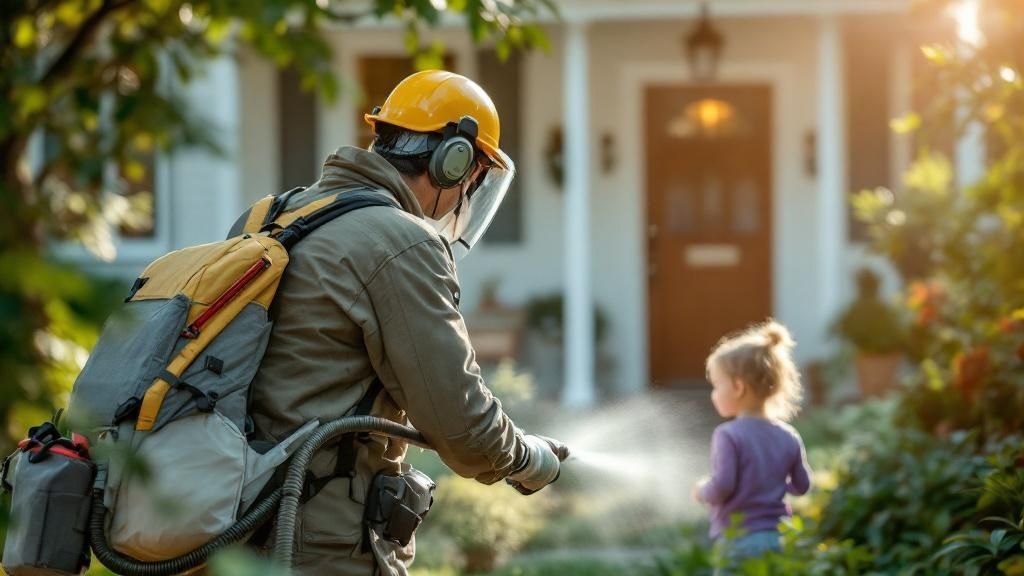
The best child-safe pest control has nothing to do with treatments and everything to do with prevention. It starts long before you ever spot a scurrying roach or a line of ants. By turning your home into a fortress, you’re essentially rolling up the welcome mat for insects and rodents.
This proactive strategy boils down to two simple but powerful concepts: exclusion (blocking pests from getting in) and sanitation (removing the things that attract them).
Think of exclusion as your home’s security system against tiny intruders. It takes a little detective work, but it's one of the most effective, chemical-free methods out there. You have to get into the mindset of a pest. A mouse can slip through a hole the size of a dime, and plenty of insects only need a paper-thin crack to find their way inside.
This preventative mindset is catching on in a big way. The green pest control market, which is all about non-toxic methods, is booming as people and regulations demand safer options. It was estimated at USD 3.72 billion in 2024 and is expected to nearly triple by 2033. In fact, data shows around 80% of consumers are now leaning toward these greener solutions.
Sealing Off All Entry Points
Your home’s perimeter is where the battle is won or lost. Take a walk around the outside and then the inside, keeping a sharp eye out for any gaps or cracks that could become a pest superhighway.
Your doors are a major weak point. A fundamental first step is installing secure exterior doors that have tight, weatherproof seals. You’ll also want to add snug-fitting door sweeps at the bottom to stop crawling insects in their tracks.
Here’s a quick checklist for other common weak spots:
- Utility Lines: Check where pipes, wires, and vents come into your house. Shove steel wool into any gaps—rodents can’t chew through it—and then seal it up with caulk.
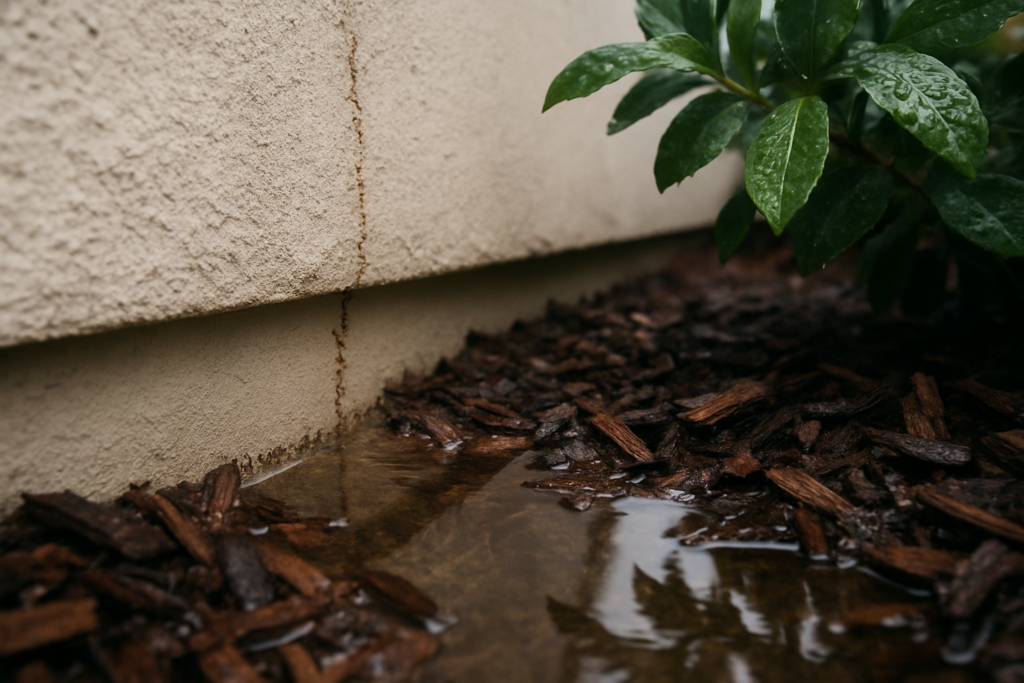
- Foundation and Siding: Scan your foundation for cracks and your siding for gaps. Use caulk or cement to fill every hole, no matter how tiny it looks.
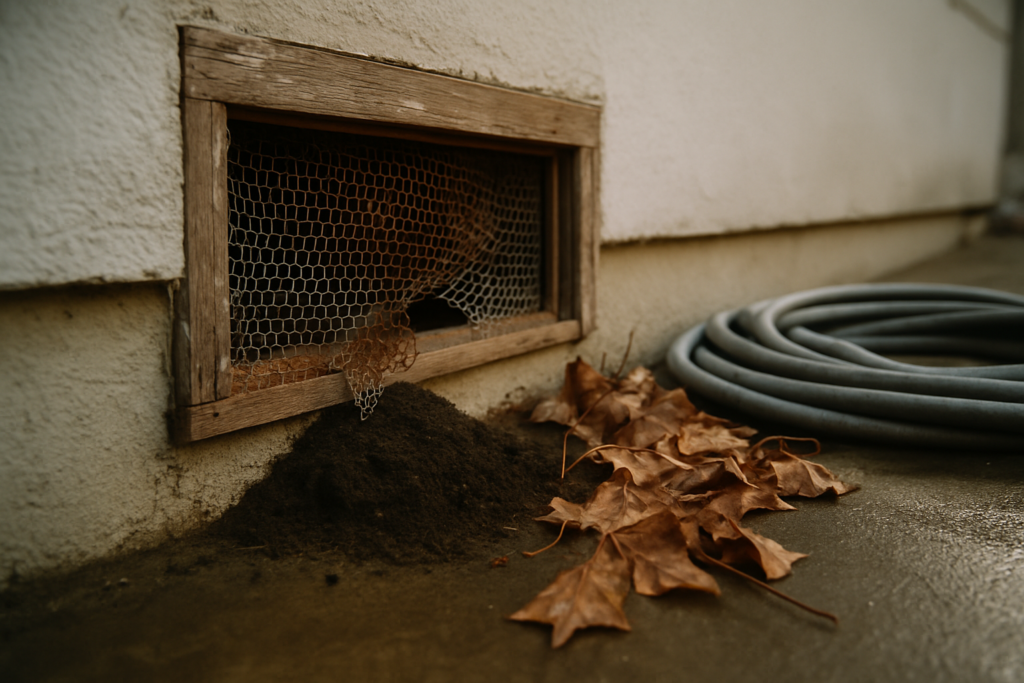
- Windows and Vents: Make sure every window screen is in perfect condition, with no rips or tears. It's also a good idea to cover dryer vents and attic vents with a fine mesh screen to keep out bugs and even birds.
Making your home physically impenetrable is the ultimate non-toxic pest solution. It solves the problem at its source, preventing infestations before they have a chance to begin and reducing the need for any future treatments.
Eliminating Food and Water Sources
Even a perfectly sealed home can become a target if it offers a free, all-you-can-eat buffet. This is where sanitation comes in, and it's especially critical in homes with kids, where crumbs and spills are just part of the daily routine.
The goal is to make your home as unappealing as possible to pests. These simple actions are a key part of any good preventative pest control measures.
Focus on the Kitchen and Dining Area:
- The High Chair Zone: This spot is ground zero for fallen food. After every single meal, make it a habit to sweep or vacuum around the high chair. Ants and roaches love those easy snacks.
- Smarter Food Storage: Move all your pantry items like cereal, crackers, and grains into airtight containers. Hard plastic or glass is best, as pests can chew right through cardboard boxes and thin plastic bags.
- Cut Off the Water Supply: Fix leaky faucets and pipes right away. Don’t leave water sitting in the sink, and always wipe down counters to get rid of moisture that thirsty pests seek out.
When you combine thorough exclusion with diligent sanitation, you’re building a powerful defense that keeps your family safe without a single drop of chemicals. This is the foundation of any truly effective and child-safe pest management plan.
Choosing Effective Non-Toxic and Low-Toxicity Solutions
So, you’ve sealed up the cracks and kept the kitchen spotless, but a few determined pests have still found their way inside. What now? It doesn't mean you have to abandon your commitment to keeping things safe for your kids. It just means shifting gears from prevention to treatment—and choosing your tools wisely.
Fortunately, the world of non-toxic and low-risk solutions is bigger than most people think. Many of these methods work on a mechanical level, disrupting a pest’s body or life cycle instead of relying on potent neurotoxins. This makes them fundamentally safer to use in a home with curious toddlers and pets.
Prioritizing Physical and Mineral-Based Tools
One of my go-to recommendations for families is food-grade diatomaceous earth (DE). It’s a fine powder made from fossilized aquatic organisms, and while it feels soft to us, it's incredibly sharp and abrasive to insects like ants, roaches, and fleas. DE works by absorbing the waxy outer layer of an insect's exoskeleton, causing them to dry out and die. It's a physical takedown, not a chemical one.
Another powerful tool, when used correctly, is boric acid. I know, the name sounds harsh, but it's a naturally occurring compound that acts as a highly effective, low-toxicity stomach poison for pests like cockroaches and ants. The absolute key here is strategic placement.
- Applying Diatomaceous Earth: Use a small duster or puffer bottle to apply a very thin layer in areas you’ve seen activity. Think behind appliances, deep under cabinets, and along hidden baseboards—places kids can't reach.
- Placing Boric Acid Safely: This needs to go deep inside cracks, crevices, and wall voids. It should never be sprinkled on open countertops or floors where a child could possibly touch it.
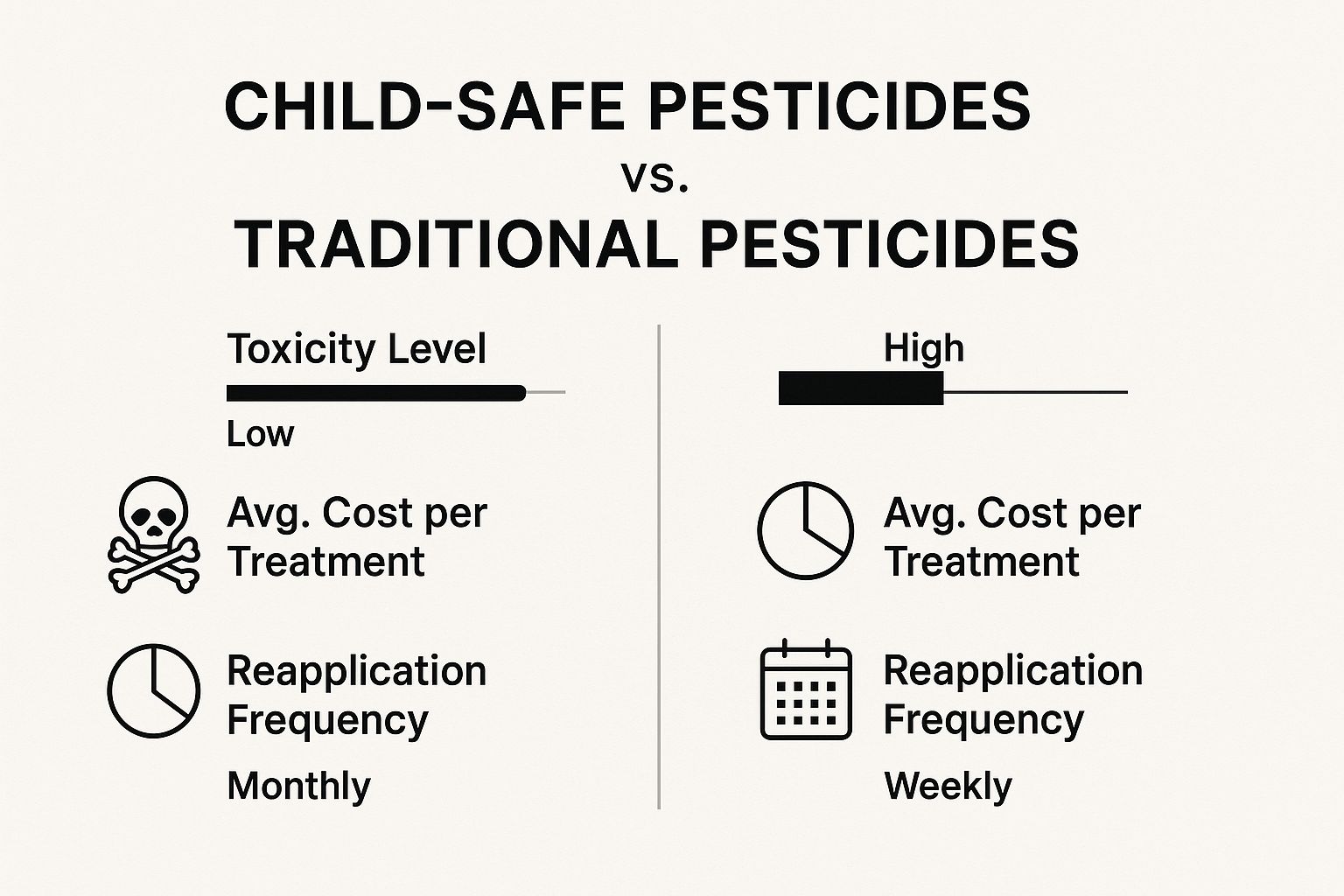
As you can see, even though safer options might need to be applied a bit more thoughtfully, their drastically lower toxicity levels make them the clear winner for families.
Separating Myth From Reality in Natural Repellents
Natural repellents have exploded in popularity, especially essential oils. And while some definitely have their place, it’s important to be realistic about what they can do. Oils like peppermint and eucalyptus can be fantastic deterrents for pests like spiders and mice who hate the strong scent. But they are deterrents, not extermination tools. They’re best used as another layer in your defensive strategy.
A quick word of caution: "Natural" doesn't automatically mean "safe for kids." Some essential oils can be irritating to sensitive skin or harmful if ingested. Always dilute them properly and only use them in spots that are out of reach of little hands.
For a more in-depth look at these types of solutions, our guide on natural pest control has more detailed tips and recipes.
When it comes to seeing real results, sometimes simple is best. Physical traps—like snap traps for rodents and sticky traps for insects—let you monitor and control pest populations with zero chemicals. The golden rule is always placement. Position traps inside tamper-proof bait stations or in locations children absolutely cannot access, like behind a heavy dresser or inside a sealed-off attic space.
To get a better idea of how these low-toxicity products stack up, I've put together a quick comparison table.
Comparing Low-Toxicity Pest Control Methods
This table breaks down some common child-safe products, what they're best used for, and how to think about them from a safety perspective.
| Method | Best For | Child Safety Consideration | Effectiveness Score (1-5) |
|---|---|---|---|
| Diatomaceous Earth | Crawling insects (ants, roaches) | Use food-grade DE. Apply as a fine dust in inaccessible areas. | 4 |
| Boric Acid | Roaches, ants, silverfish | Critical placement. Use only in wall voids, deep cracks. Toxic if ingested. | 5 |
| Essential Oil Sprays | Repelling spiders, mice, ants | Dilute properly. Some oils can irritate skin or be harmful if swallowed. | 2 (as a repellent) |
| Sticky Traps | Monitoring crawling insects, spiders | Place where kids/pets can't step on them. Non-toxic adhesive. | 3 |
| Mechanical Rodent Traps | Mice, rats | Must be in a tamper-proof station or completely inaccessible location. | 5 |
Ultimately, choosing the right tool comes down to understanding the pest you're dealing with and the layout of your home. By leaning on these effective but lower-impact solutions, you can handle most common pest issues confidently.
And remember, keeping a healthy home goes beyond just pests. Integrating practices like non-toxic carpet cleaning methods can complement your efforts, creating an all-around safer environment. Arming yourself with knowledge about these solutions lets you manage pest issues without ever compromising your family’s well-being.
Sometimes, no matter how much you clean and seal, a pest problem just gets out of hand. That's when calling in a professional is the smart move. But finding a company that truly puts your family’s safety first requires a little homework. Just grabbing the first name that pops up online is a gamble you don't want to take with your kids' health.
Your goal isn't just to find an exterminator who defaults to a one-size-fits-all spray. You're looking for a partner in pest management—someone who treats your home with the same care you do. The initial phone call should feel like a collaboration, not a sales pitch.
One of the most telling questions you can ask right off the bat is, "Do you practice Integrated Pest Management (IPM)?" A true pro will light up, ready to explain their process, which always starts with inspection and non-chemical solutions.
Questions to Ask a Potential Pest Control Company
A company genuinely committed to child-safe practices will welcome your questions and give you transparent answers. If someone seems impatient or dismisses your concerns, that’s your cue to hang up and call someone else.
Here are the essential questions to ask before you agree to any service:
- Can you start with non-chemical options? You want to hear them suggest things like sealing entry points, setting physical traps, or recommending sanitation changes before they ever mention a chemical spray.
- Can I see the Safety Data Sheet (SDS) for every product you propose? They should provide this without a second thought. An SDS breaks down a product's ingredients, potential risks, and all necessary safety precautions.
- What is the specific re-entry time for my family after treatment? For any spray application, they must give you clear, written instructions on how long everyone needs to stay out of the treated area.
- How do you protect toys, play areas, and food surfaces? A professional will have a clear protocol for covering, moving, or otherwise protecting these sensitive items to prevent any contact with treatments.
A huge red flag is any company that immediately pushes a universal, broad-spectrum spray for every single problem. This outdated approach often misses the root cause and unnecessarily exposes your family to chemicals. True professionals diagnose before they treat.
Keeping Up with a Changing Industry
While chemical control still makes up a big piece of the pie—around 61% of product use—the tide is definitely turning. More and more parents are aware of the risks of childhood chemical exposure, and stricter regulations are pushing the industry toward biological agents and less toxic formulas.
This trend, heavily influenced by safety-first sectors like healthcare, is making safer residential options more accessible than ever. You can read more about these pest control market trends to see how consumer demand is reshaping the industry for the better.
By asking the right questions and demanding total transparency, you give yourself the power to choose a pest control partner who shares your values. When you do need expert help, our guide to selecting professional pest control services can walk you through even more specifics. This ensures that when you bring in a pro, they're an extension of your commitment to keeping your home a safe, healthy haven for your children.
Your Child-Safe Pest Control Questions Answered
When you’ve got little ones running around, questions about pest control are bound to come up. It's totally normal. You want to get rid of pests, but you need to know your kids are safe. Let's cut through the noise and get you the straightforward answers you need to make confident decisions for your family.
Are "Natural" Pest Control Products Always Safe For Children?
Not always. This is a huge misconception I see all the time. The word "natural" on a label doesn't automatically mean a product is harmless, especially for curious toddlers and kids.
For instance, some essential oils can be pretty potent irritants if they get on a child’s skin or, worse, if they're accidentally ingested. Likewise, products like diatomaceous earth and boric acid come from natural sources and work wonders on pests, but their safety is all about correct and strategic application. They should never be placed where children or pets can access them.
The bottom line is to treat every pest control product—natural or not—with respect. Read the label, follow the instructions to the letter, and make sure it’s placed where little hands and paws absolutely cannot get to it.
How Long Should We Stay Out Of The House After A Treatment?
This is one of the most critical questions a parent can ask, and the honest answer is: it completely depends. There’s no universal rule. The specific product and how it's applied will determine the re-entry time, which is why clear communication with your pest control pro is non-negotiable.
A reputable company that practices Integrated Pest Management (IPM) will always give you a precise re-entry interval for any liquid treatment.
- Low-Toxicity Baits: If the treatment involves gel baits or bait stations tucked away in cracks, crevices, or wall voids, you might not need to leave at all. There’s often no re-entry period for these types of applications.
- Liquid Applications: If any kind of liquid spray is used, even a low-toxicity one, the professional is required to give you clear, written instructions. This could be just a few hours until the product is completely dry, or it could be longer, depending on what was used.
Always demand this information before the service starts. A trustworthy technician will be transparent and prioritize your family’s safety and schedule above all else.
What Is The Most Important First Step I Can Take Today?
Without a doubt, the single most impactful thing you can do right now is to focus on sanitation and exclusion. These two non-chemical actions are the foundation of any good child-safe pest control plan. Why? Because they remove the food and shelter that pests need to survive in the first place.
Start in the kitchen. Do a deep clean under the fridge and stove, get all the crumbs from around the high chair, and check near pet food bowls for any stray kibble. Then, move all your pantry food—cereal, flour, pasta—into airtight glass or hard plastic containers.
Next, put on your detective hat. Walk the perimeter of your house, inside and out. Look for and seal any small cracks or gaps you find around pipes, vents, and along the foundation. These simple, proactive steps will make your home dramatically less inviting to pests and can seriously reduce the need for chemical treatments down the road.
When you need a professional partner who gets it, you can trust West Pest Co. to provide responsible, effective, and child-safe pest control solutions. Learn more about our low-impact options and get a free inspection at https://westpestco.com.