That first line of ants marching across your counter means it's time for a swift, smart response. To kill kitchen ants effectively, you need a two-pronged attack: first, wipe out the scouts you see with a simple soap and water spray, and then, deploy slow-acting ant baits to take down the hidden colony. This strategy hits both the immediate problem and the root cause of the infestation.
Your Immediate Action Plan for Ant Invasions
When you spot that first trail of ants, your gut instinct might be to grab the harshest chemical spray you can find. Hold that thought. Blasting them with a strong, repellent spray is often a huge mistake. This can trigger a survival response called "budding," where the colony scatters and splits into several new nests. Suddenly, one problem has multiplied. A calm, strategic approach is always more effective.
Before you do anything else, just watch them for a minute. Your first step isn’t killing—it’s detective work. Where are they coming from? Where are they headed? Are they disappearing into a tiny crack in the baseboard or under the lip of the countertop? Pinpointing these entry points is absolutely crucial for long-term success.
Identify and Seal Entry Points
Ants are masters at finding tiny, unseen entryways into our homes. You need to think like an ant and inspect the common trouble spots.
- Around Windows and Doors: Check for worn-out seals or small gaps in the frames.
- Baseboards and Trim: They love to travel along the edges of walls, completely hidden from view.
- Utility Lines: Look where pipes and wires enter the kitchen, especially under the sink.
- Cracks in Grout: Damaged tile grout on your floor or backsplash is like an open invitation.
Once you find a potential highway, seal it up with caulk or putty. This one simple action makes any treatment you use far more effective by cutting off reinforcements.
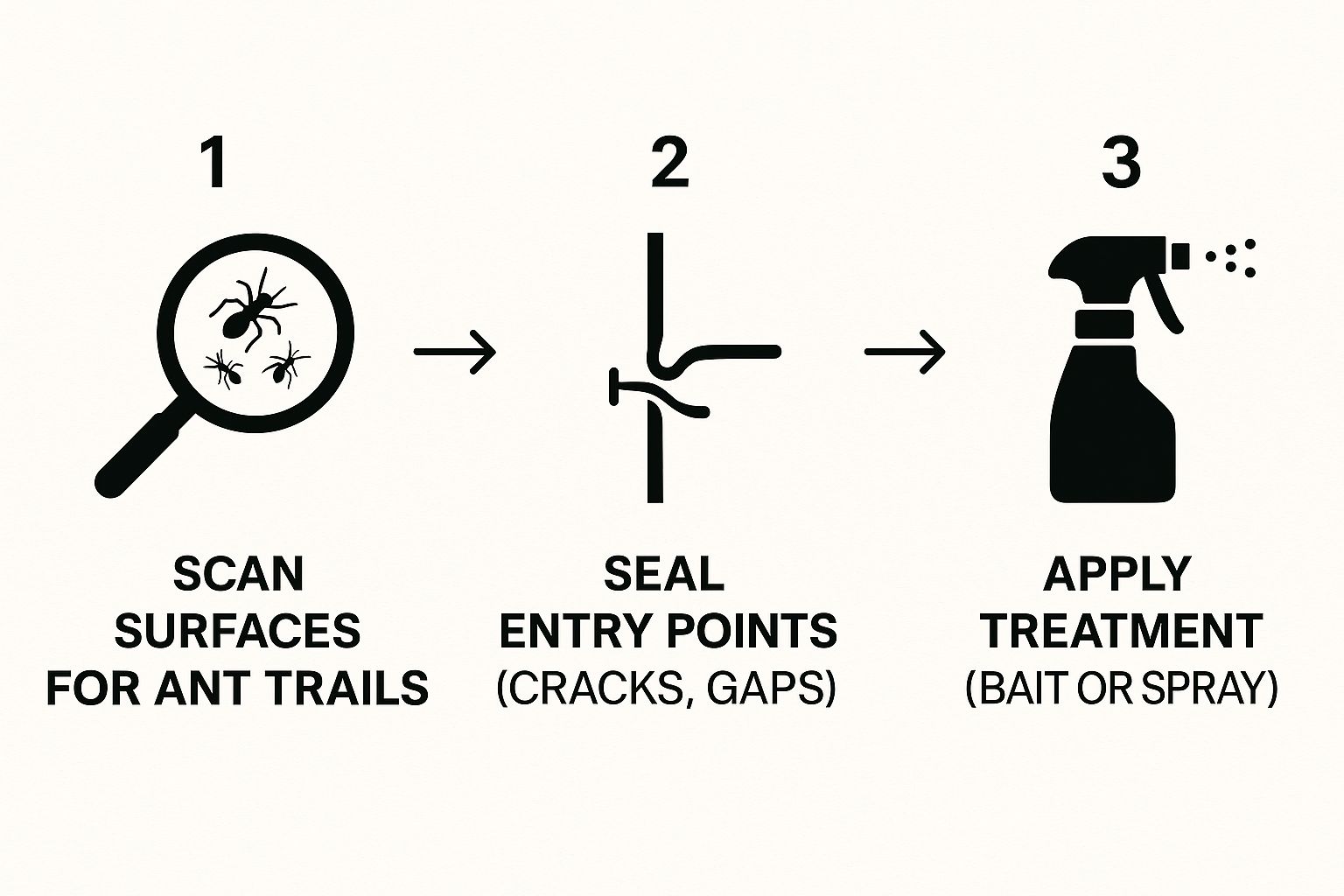
This process is straightforward: spot the trail, seal their path, and then apply your treatment. Sealing those entry points is the critical step that prevents new waves of invaders from showing up tomorrow.
Choose Your First Move Wisely
After you’ve sealed the entryways, it's time to decide how to handle the ants that are already inside. This choice really comes down to immediate cleanup versus a long-term, strategic solution.
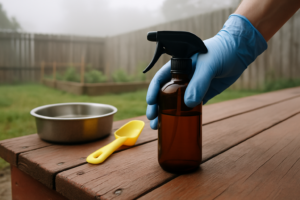
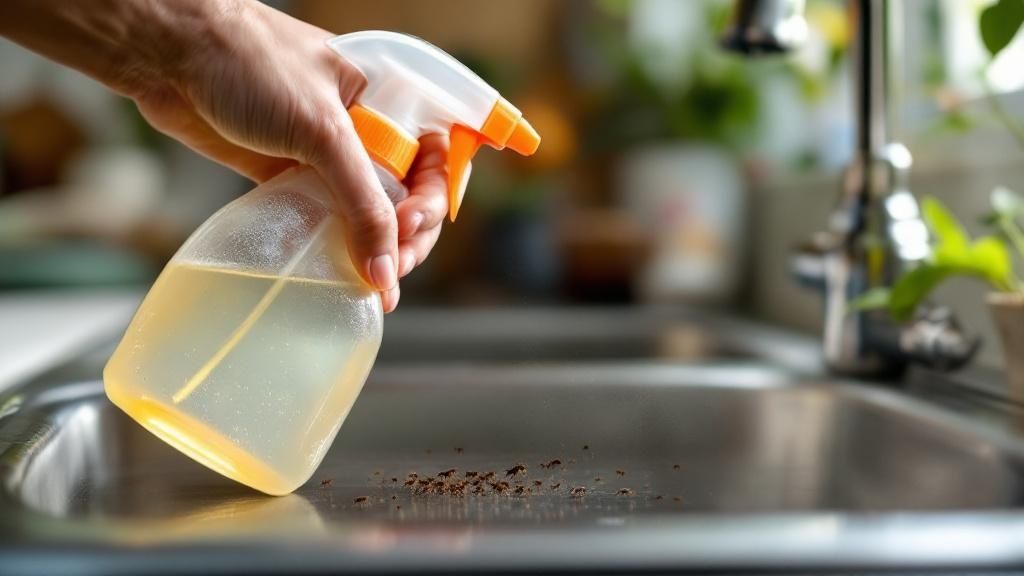
For the ants you can see, a spray bottle of soapy water is your best friend. It kills them on contact without leaving behind harmful chemical residues or causing that dreaded "budding" effect. This is purely for wiping out the visible foragers and their chemical trails.
But for the real problem—the nest you can't see—you need to bring in the heavy hitters: ant baits. These are designed to be slow-acting, giving the worker ants plenty of time to carry the poisoned "food" back to the colony. They share it with the others, eventually eliminating the queen and the entire nest from the inside out.
For a clearer picture, it helps to compare these two very different approaches.
Immediate vs. Strategic Ant Control Methods
Choosing between a quick spray and a patient baiting strategy can feel confusing. One offers instant gratification, while the other provides a lasting solution. Here’s a breakdown to help you decide which tool is right for the job.
| Method Type | Effectiveness | Best For | Potential Drawback |
|---|---|---|---|
| Surface Sprays | Instantly kills ants on contact. | Wiping out visible trails on counters, floors, and non-food surfaces. Cleaning up scouts. | Doesn't affect the nest; some harsh chemical sprays can cause the colony to scatter ("budding"). |
| Bait Stations | Eliminates the entire colony, including the queen, over several days or weeks. | Solving the root problem of a persistent or large-scale infestation. | Requires patience; you may see more ant activity initially as they swarm the bait. |
In short, use sprays for the immediate cleanup of a few scouts, but always follow up with baits to ensure the colony doesn't just send more soldiers your way tomorrow.
The constant battle against household ants has fueled a massive industry. The global ant control market was valued at around $606.51 million in 2024 and is projected to climb to nearly $874 million by 2033. This growth underscores just how common and frustrating this problem is for homeowners everywhere. You can learn more about these market trends on Market Data Forecast.
Understanding Why Ants Are In Your Kitchen
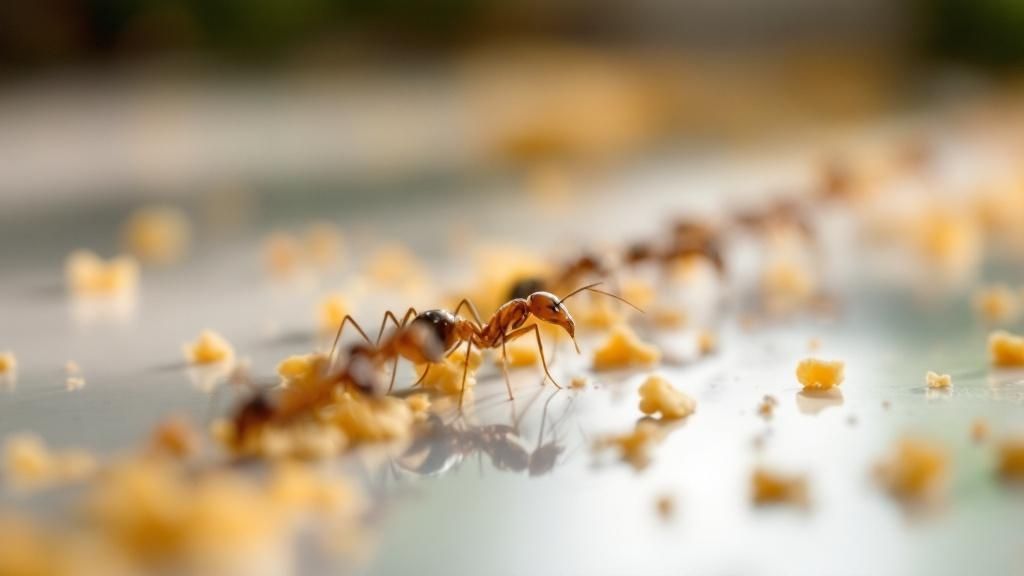
To win the war against kitchen ants, you have to start thinking like one. An ant’s entire world is driven by a simple, powerful mission: find resources and get them back to the colony. To them, your kitchen isn't just a room in your house; it's a treasure trove of everything they need to survive and expand.
The first ant you see isn't just a random visitor. It's a scout on a calculated mission. Once that scout identifies your home as a reliable source of food, water, or shelter, it's only a matter of time before a single wanderer becomes a full-blown invasion. Understanding what they're after is your first line of defense.
This hunt for resources is happening on an unbelievable scale. As of 2025, experts estimate there are a mind-boggling 20 quadrillion ants on Earth—that breaks down to about 2.5 million ants for every person. As our cities grow and climates shift, our homes become even more appealing targets. If you're curious about this massive population boom, Merlin Environmental offers some fascinating insights.
The Search For Food Sources
The number one reason ants march into your kitchen is, of course, food. What we see as a few stray crumbs, they see as an all-you-can-eat buffet. Their tastes are surprisingly varied and can even shift depending on what the colony needs most at that moment.
- Sugars for Energy: Sweet, sticky spills are a five-star meal for the most common house ants. That drop of honey on the pantry shelf, a little juice spatter behind the coffee maker, or the sweet residue in an unrinsed soda can is more than enough to trigger the call for backup.
- Proteins for Growth: When the colony is in a growth phase, its workers will switch gears and hunt for protein. Greasy residue on the stovetop, pet food left out too long, or a tiny morsel of meat on the floor provides the fuel the queen and her larvae need to thrive.
You have to look beyond the obvious messes. It’s often the forgotten smear of jam on the side of the jar or the fine dusting of flour inside a cabinet that keeps an infestation going for weeks.
Key Insight: Pay attention to what the ants are eating. It can tell you what kind of bait to use. If they're all over a drop of honey, a sweet-based bait will work best. If they're targeting greasy spots, a protein-based bait is your better bet.
The Critical Need For Water
Like every other living thing, ants need water. Your kitchen is an oasis, full of reliable water sources that you might not even notice. A damp sponge left in the sink, condensation on pipes under the sink, or a faucet with a slow drip can provide all the moisture a nearby colony needs to survive.
Even your pet's water bowl can become a central watering hole for thirsty ants. During dry spells, the consistent moisture in your kitchen makes it an incredibly desirable destination. It's no coincidence that you'll often see ant trails leading straight to the sink or dishwasher.
Seeking Safe Shelter
Finally, ants might be in your kitchen because they’re looking for a safe, stable place to build a nest. From their perspective, your home's walls, floors, and appliances are prime real estate, offering protection from predators and bad weather.
Common nesting spots inside a house include:
- Behind walls or under floorboards, especially if there's a moisture source nearby.
- Inside houseplant pots, where the soil offers a perfect, sheltered habitat.
- In quiet, undisturbed spots, like the back of a cabinet you rarely open.
Once a colony establishes a nest inside your home, the problem gets a lot harder to solve. The foragers now have a short, safe commute to your kitchen's resources, allowing the colony to grow at an alarming rate. This is exactly why a proactive strategy is so critical—it stops them before they can truly move in.
Powerful DIY Ant Killers from Your Pantry
You don't always have to run out and buy a commercial spray the moment you see ants in the kitchen. In fact, your own pantry probably has everything you need to whip up some surprisingly powerful—and often safer—homemade ant killers. With a little kitchen chemistry, you can mix up both instant-kill sprays and slow-acting baits designed to wipe out the entire colony from the inside.
The real beauty of these DIY methods is the control they give you. You know exactly what's in them, which is a huge relief if you've got curious kids or pets sniffing around. Better yet, you can customize your approach depending on whether the ants are marching toward your sugar bowl or a greasy frying pan.
The Classic Sweet Borax Bait
One of the most trusted and effective homemade ant killers is a simple blend of borax and sugar. Borax is a naturally occurring mineral that acts as a slow-acting stomach poison for ants. When you mix it with sugar, it becomes a five-star meal that worker ants can't wait to haul back to the nest to share with the queen and the rest of the colony.
Here’s how to make it:
- Combine one part borax with three parts powdered sugar. Using powdered sugar is the secret here; its fine texture blends perfectly with the borax, so the ants can't just pick out the sweet stuff.
- Slowly add just enough water to create a thick, syrupy paste. You want it liquid enough for them to drink but not so watery that it makes a mess.
- Place small dabs of this paste onto pieces of cardboard or inside bottle caps. Position these little "bait stations" right along the ant trails you've spotted, but make sure they're well out of reach of children and pets.
Now comes the hard part: patience. You’ll probably see more ants at first as they swarm the bait. Don't panic—this is a good sign! It means they're taking the poison back home. Fight the urge to squish them; they're doing the dirty work for you.
A Protein-Based Alternative for Grease Ants
Not every ant has a sweet tooth. Some species, often called grease ants, are after proteins and fats instead. If you find ants gathering near your pet’s food bowl or around the stove, a sugary bait might not do the trick. For these guys, you’ll need to switch up the menu.
Simply mix a small amount of borax with a high-protein, fatty food like peanut butter. Use the same strategy, placing small bits of this protein bait near their lines of travel. A little observation goes a long way—once you know what they're craving, you can create a custom bait they won't be able to resist.
The Instant Dish Soap Contact Spray
While baits are your long-term strategy for the colony, sometimes you just need to deal with the scout ants you see right now. A simple mix of dish soap and water is incredibly effective for this. The soap breaks down the waxy coating on their exoskeletons and, just as importantly, washes away the invisible pheromone trails they leave behind.
Making the spray is as easy as it sounds:
- Fill a clean spray bottle with water.
- Add a few healthy squirts of liquid dish soap.
- Shake it gently to combine.
Spray this directly on any ants to kill them on contact. Then, use it to wipe down all the surfaces where you've seen them—countertops, floors, and baseboards. Erasing their chemical roadmaps will disorient the colony and prevent reinforcements from following the same path.
Expert Tip: Wiping away pheromone trails is just as important as killing the visible ants. Without these chemical signals, the invasion loses its organization, making your baiting strategy even more effective.
If you’ve tried these methods and the ants just keep coming back, it might be a sign of a much larger, more established infestation. When DIY efforts aren't enough, it's time to bring in a professional. A local expert can identify the specific ant species and use targeted treatments that are both safe and effective. For those in Santa Cruz County, getting a professional opinion on ant control and extermination options can offer a more permanent end to the problem.
Using Diatomaceous Earth as a Physical Barrier
Another fantastic tool from nature's pest control cabinet is food-grade diatomaceous earth (DE). This isn't a poison but a mechanical killer. DE is made from the fossilized remains of tiny aquatic organisms, and under a microscope, it’s covered in microscopic sharp edges. These edges scratch the waxy outer layer of an ant's body, causing it to dehydrate and die.
You'll want to apply a very thin layer of DE in dry areas where you know ants travel. Think:
- Along baseboards and in corners
- Underneath appliances like the fridge or dishwasher
- In wall voids where pipes enter the room
- On windowsills and along door thresholds
It's critical to use food-grade DE and apply it as a fine, barely-visible dust. Ants will just walk around thick clumps, so a light dusting is much more effective. And remember, DE only works when it's completely dry, making it perfect for indoor cracks and crevices but not for damp spots.
Choosing Commercial Baits That Actually Work
So, you’ve tried the DIY route, but the ants are still marching. When your homemade solutions just aren't making a dent, stepping up to a commercial ant bait is the right call. The shelves at the store are packed with options, and it’s easy to feel overwhelmed. But here’s the secret: success isn't about grabbing the fanciest box. It’s about understanding what makes a bait do its one critical job—getting carried back to the nest to wipe out the entire colony.
This is where baits are fundamentally different from contact sprays. A spray only kills the foragers you see, which is just a fraction of the problem. Baits are a long-term, strategic weapon. They’re designed with slow-acting active ingredients, giving worker ants just enough time to find the "food," haul it back home, and share it with everyone, including the queen. This is how you get the entire nest to collapse from the inside out.
Decoding the Active Ingredients
Flipping over a box of ant bait and seeing a list of chemicals can be intimidating. Don't worry. You only need to know a few key players that are proven performers in the pest control world. Knowing what they are and how they work will help you pick a product that actually gets results.
-
Fipronil: This is a powerhouse, non-repellent insecticide. Ants don't detect it, so they walk right through it or eat it, becoming carriers. They then spread it to others through touch and feeding. It attacks their central nervous system, leading to colony collapse in a few days to a week.
-
Indoxacarb: What makes this one unique is that it only becomes toxic after an ant ingests it and their own enzymes break it down. That built-in delay makes it incredibly effective for colony-wide elimination.
-
Hydramethylnon: You’ll often find this in granular baits. It works by stopping an ant's ability to convert food into energy. It's slow, which is a good thing here, giving workers plenty of time to spread it far and wide within the nest.
-
Boric Acid/Borax: Yes, this is also a DIY ingredient, but the commercial versions are professionally formulated and refined for maximum impact. It slowly messes with an ant's digestion and damages their exoskeleton.
Crucial Tip: Whatever you do, resist the urge to spray other insecticides or even all-purpose cleaners near your bait stations. Ants rely on invisible pheromone trails to find food. If you spray near the bait, you’re essentially erasing the road map they need to find the poison you’ve set out, making your efforts completely useless.
Because ant infestations are such a common headache, the market for control products is huge. In fact, the demand in the Asia Pacific region alone accounts for about 23.44% of the projected global market revenue of $1,160.68 million in 2025. This just goes to show how urgent it is for homeowners everywhere to control kitchen ants. You can dig into more stats on the global ant control market from Cognitive Market Research.
Now, let's look at the different types of baits and when to use them.
Matching the Bait Type to Your Kitchen Scenario
Ant baits aren't a one-size-fits-all product. They come in different formats, and each is suited for specific situations and spots in your kitchen. Picking the right format is just as important as picking the right active ingredient.
Here’s a breakdown of the most common types and where they shine:
1. Enclosed Plastic Bait Stations
These are probably the most common and are the safest bet for homes with kids and pets. The bait is safely contained inside a small plastic puck, and ants crawl in through tiny holes.
- Best For: Placing on countertops, inside cabinets, and under sinks. They're a perfect self-contained, no-mess solution.
2. Liquid Ant Baits
These are extremely attractive to sugar-loving ants, which covers most of the common kitchen invaders. They usually come in pre-filled stations or in a bottle you can use to put drops into your own shallow dishes.
- Best For: When you’ve found a very clear ant trail. Place the bait directly in their path to intercept them.
3. Gel Baits
Typically sold in a syringe-style applicator, gel baits give you pinpoint control. You can squeeze a bead of gel directly into cracks, crevices, along baseboards, or up under cabinets—all the sneaky places ants love to travel.
- Best For: Targeting those hard-to-reach entry points and even vertical surfaces. The gel’s consistency helps it stay put.
For the best shot at success, use several bait stations at once. Place them anywhere you see ant activity—under the sink, behind the coffee maker, near the pet food bowls (out of reach, of course), and inside the pantry. More bait stations mean more chances for foraging ants to find them quickly, which speeds up the whole process and helps you kill kitchen ants for good.
Active Ingredient Effectiveness in Commercial Baits
The active ingredient in a bait determines how it works and how quickly you'll see results. Some are fast-acting, while others are designed for a slow, steady takeover of the colony. This table breaks down the most common ones you'll see on the shelf.
| Active Ingredient | How It Works | Speed of Action | Best For |
|---|---|---|---|
| Fipronil | A non-repellent that disrupts the central nervous system. | Fast (Days to a week) | Quick knockdown of colonies when you need fast results. |
| Hydramethylnon | A slow-acting stomach poison that stops energy production. | Slow (1-2 weeks) | Thorough elimination of large, established colonies. |
| Indoxacarb | Converted into a toxin by the ant's own enzymes. | Slow (1-2 weeks) | Complete colony kill, as the delay ensures it spreads widely. |
| Boric Acid | A slow-acting poison that damages the digestive system. | Very Slow (Weeks) | Environmentally-conscious control and targeting persistent sugar ants. |
Ultimately, choosing the right ingredient comes down to your situation. If you have a massive infestation and need relief fast, Fipronil is a great choice. For a more patient but thorough approach that guarantees the colony won't bounce back, a slower-acting bait with Hydramethylnon or Indoxacarb is often the smarter long-term play.
How to Create an Ant-Proof Kitchen Environment
Once you've managed to kick out an active ant invasion, your focus has to shift from a quick battle to a long-term prevention strategy. Winning the war means making your kitchen so unappealing that no scout ant would ever recommend it to its colony. The goal is to turn your space from an ant’s five-star resort into a barren wasteland.
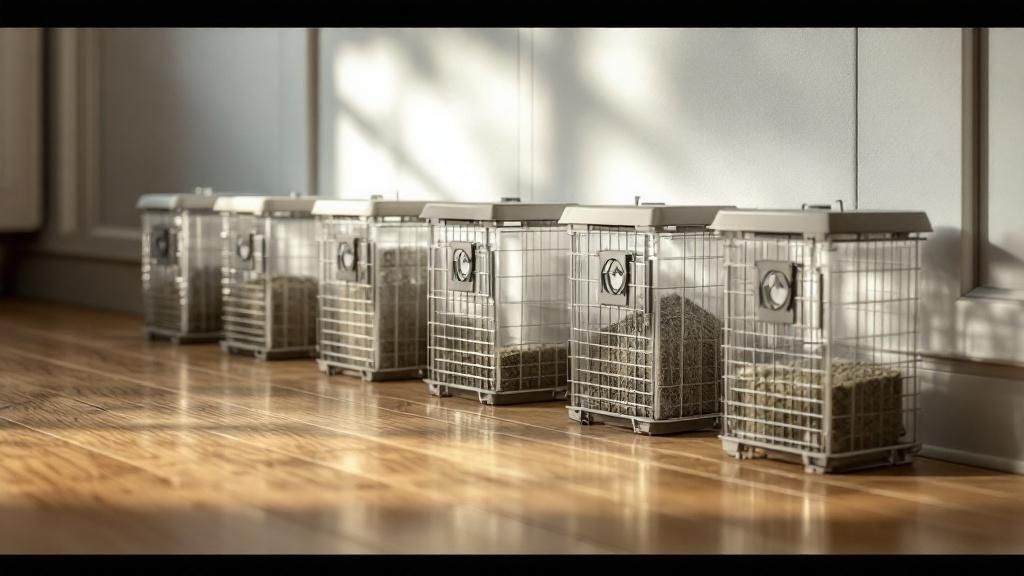
This is about more than just wiping down counters. True ant-proofing requires a deeper level of diligence, focusing on cutting off the three things every ant colony needs: food, water, and shelter. When you systematically remove their access to these resources, you’re not just cleaning—you’re building a fortress.
A proactive approach is the only way to find lasting peace. It only takes one successful foraging ant to re-establish a pheromone trail, and you'll be right back where you started.
Mastering Deep Cleaning for Ant Prevention
Your standard cleaning routine keeps the kitchen looking nice, but ant prevention demands a forensic level of deep cleaning. Ants are masters at finding the tiny food sources we completely overlook.
This is where you need to focus your efforts, hitting the often-neglected ant hotspots:
- Under Appliances: It's time to pull out your refrigerator and stove. You'll probably be shocked at the collection of crumbs and sticky spills that have become a permanent buffet for pests.
- Inside Cabinets and Pantries: Don't just rearrange things. Take everything out and vacuum every shelf. Then, wipe them down to get rid of any stray flour, sugar, or other food particles.
- Trash Cans: Taking out the bag isn't enough. Get in the habit of washing the entire bin, inside and out, with hot, soapy water to eliminate any sticky residue that attracts them.
To make sure you don't miss a single spot, following a detailed guide can be a game-changer. This ultimate kitchen deep cleaning checklist is a fantastic resource for hunting down those hidden food traces.
Key Takeaway: The whole point of deep cleaning is to create a "food desert." If a scout ant wanders your kitchen for hours and finds absolutely nothing to eat, it will report back that the area is a bust.
Securing Food and Managing Pet Areas
Even a spotless kitchen can attract ants if food isn't stored properly. Their sense of smell is incredible, and they can easily detect food through flimsy cardboard boxes or thin plastic bags.
Airtight Food Storage is Non-Negotiable
This is a hard and fast rule. Transfer all your pantry staples—cereal, flour, sugar, pasta, and snacks—into genuinely airtight containers. Glass or hard plastic works best. This not only locks ants out but keeps your food fresher, too. And don't forget to wipe down the outside of sticky jars like honey, syrup, or jam after every single use.
The Pet Food Hotspot
Pet food is basically an all-you-can-eat buffet for ants, offering the perfect mix of protein, fats, and carbs.
- Use a Feeding Schedule: Avoid leaving food out all day long. Put the bowl down at specific meal times, and pick it up once your pet is finished.
- Clean the Area Daily: Make it a habit to wipe up crumbs and spilled water around your pet’s station every single day. No exceptions.
- Create a Moat: This is a simple but brilliant trick. Place the food bowl inside a slightly larger, shallow dish, then add a small amount of water to the outer dish. Ants can't swim, creating an effective little barrier.
Fortifying Your Kitchen’s Exterior Defenses
The final piece of the puzzle is stopping ants before they even get a chance to come inside. A little bit of work on your home's exterior can make a massive difference. Honestly, the most effective way to handle kitchen ants is to prevent them from becoming kitchen ants in the first place.
Seal Every Possible Entry Point
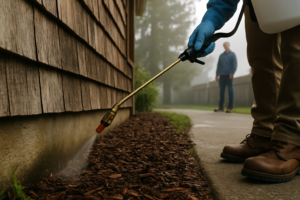
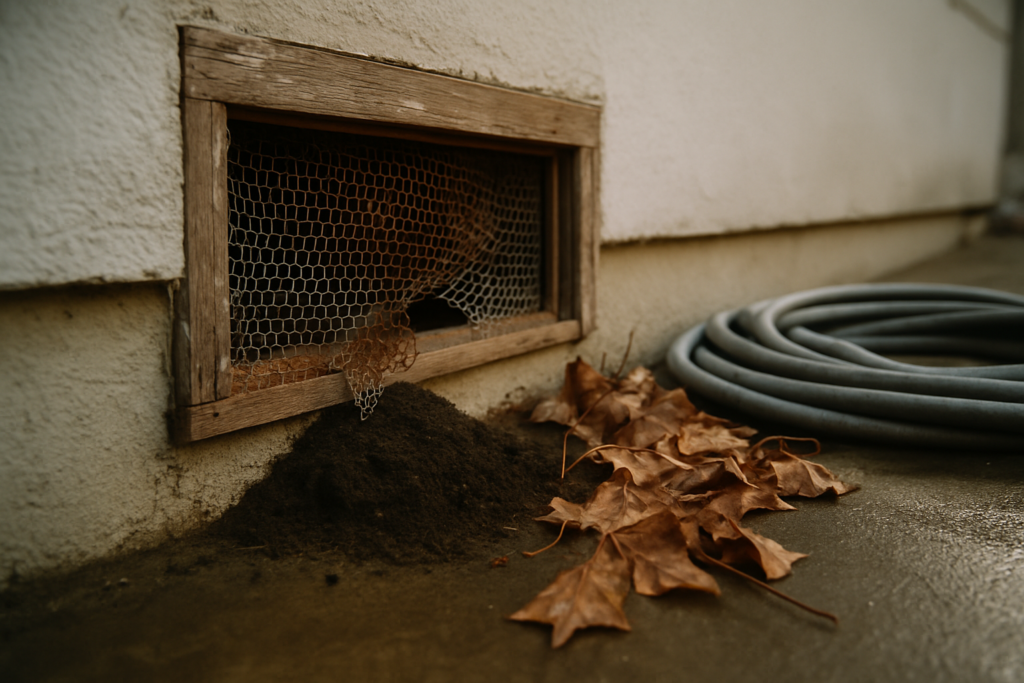
Do a careful walk-around of your home’s exterior, paying close attention to the foundation and walls, especially around the kitchen area. Use silicone caulk to seal any cracks you find, no matter how tiny they seem. Give extra attention to the spots where utility lines, pipes, and faucets enter the house.
Manage Your Landscaping
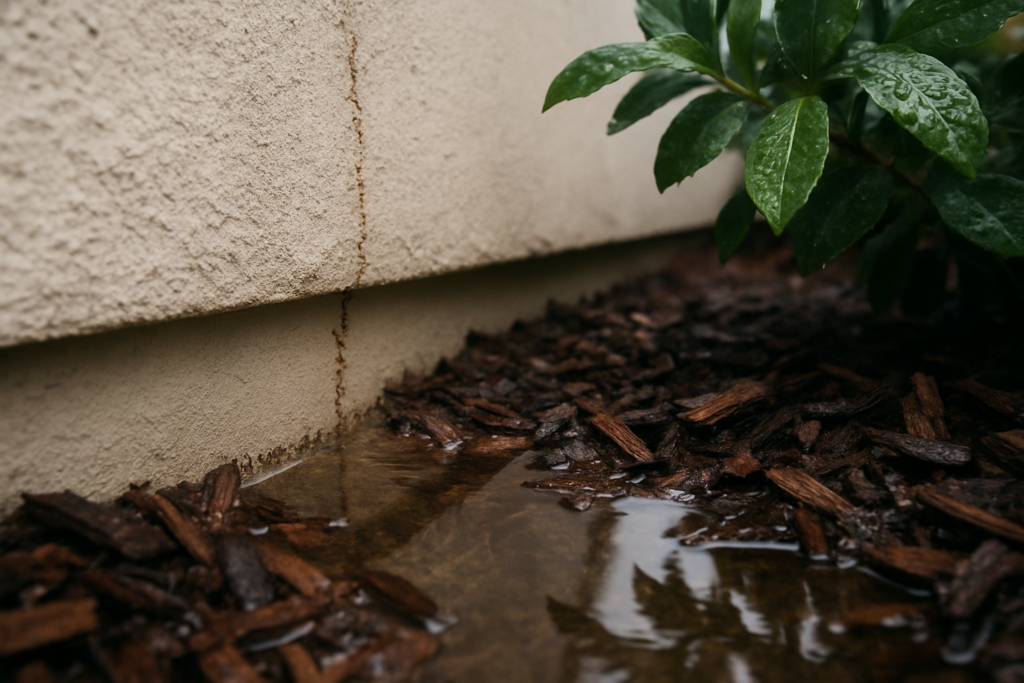
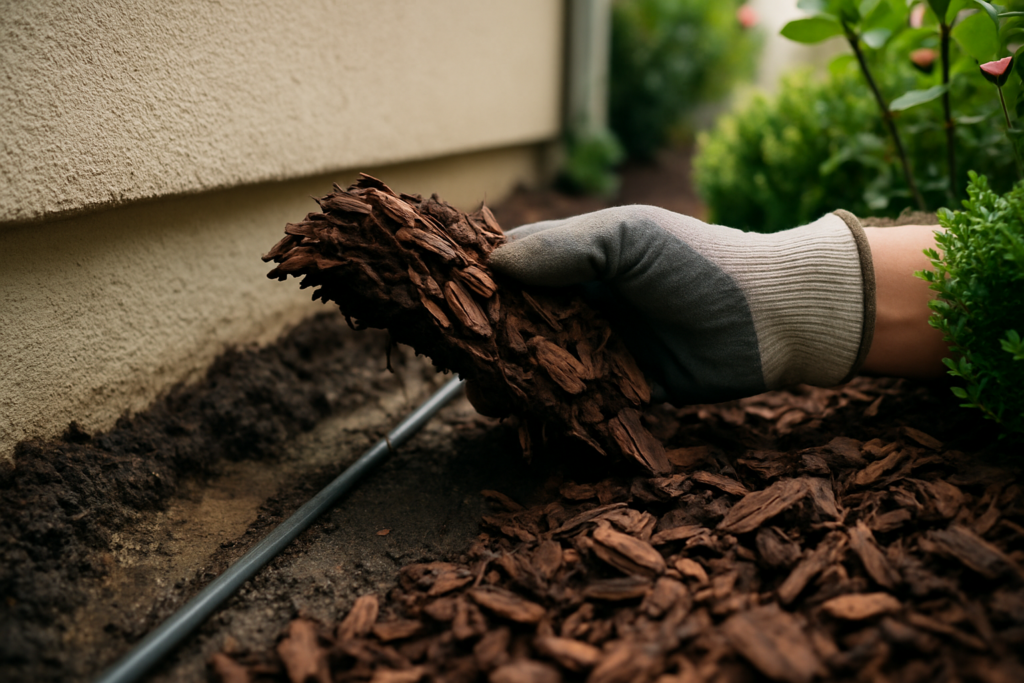
Your beautiful garden can sometimes act as a bridge for ants to march right into your home. Trim back any tree branches or overgrown shrubs that are touching the house. You'll also want to maintain a buffer zone of at least a foot between any mulch or vegetation and your foundation.
If you’re looking for more professional-grade tips on securing your home from the outside, you can find a ton of great info on how to keep ants away. This two-pronged approach—inside and out—is what truly creates a long-lasting, ant-free zone.
Your Questions About Killing Ants Answered
It’s one of the most frustrating feelings: you've followed every piece of advice, but the ants just keep coming back. The battle against kitchen ants can feel like a nonstop cycle of cleaning, baiting, and seeing that dreaded trail reappear the next morning.
Let's tackle some of the most common questions and sticking points homeowners run into. Sometimes, all it takes is a small adjustment in your strategy to finally get the upper hand.
Why Do Ants Keep Returning After I Clean Everything?
You’ve wiped down every counter, swept up every crumb, and scrubbed the floor until it shines… yet the ants are back. It's enough to drive anyone crazy. The hard truth is that while sanitation is absolutely critical, it’s only one part of the puzzle.
Ants have an unbelievable sense of smell and can detect food sources you’d never even notice. That one tiny crumb that fell behind the toaster or a nearly invisible sticky spot inside a cabinet? To an ant scout, that’s a five-course meal.
Even more importantly, if a colony has already set up shop inside your walls, under your floors, or in a nearby planter, they have a very short and easy commute to your kitchen. Cutting off their food for a day won’t stop them from sending out new scouts to see if the "all-you-can-eat buffet" has reopened. This is why sealing up their entry points and using baits to destroy the colony are just as important as keeping things clean.
A Common Misconception: Cleaning alone isn't an ant-killing strategy. Think of it as a crucial prevention strategy that makes your main attack—baiting—far more effective. When there are no other food options, they’re forced to go for the poison.
Can Vinegar Really Kill an Entire Ant Colony?
Vinegar is a fantastic tool to have in your ant-fighting arsenal, but it’s important to understand its limits. A quick spray of white vinegar and water is excellent for killing ants on contact. More importantly, it wipes away the invisible pheromone trails they use to navigate.
By erasing their chemical roadmaps, you disorient the foragers and make it much harder for reinforcements to follow. However, vinegar is a surface-level solution. It will not eliminate the nest. The queen and thousands of her workers will remain perfectly safe in their colony, ready to send out a whole new crew tomorrow. To get rid of the source, you have to use a slow-acting bait that the workers will carry back home.
How Long Should I Wait for Ant Baits to Work?
Patience is probably the hardest, yet most essential, part of using ant baits. It goes against every instinct, but you have to resist the urge to kill the ants you see swarming the bait station. Those ants are your secret weapon—they're the ones carrying the poison back to the nest to share with the colony and queen.
Here’s a realistic timeline for what to expect:
- Initial Activity: You should see ants actively feeding on the bait within 24-48 hours. This is a great sign! It means they’ve accepted it as food.
- Noticeable Decline: It can take anywhere from a few days up to two weeks to see a major drop in the ant population.
- Colony Elimination: The time it takes for the entire colony to collapse depends on its size, but you should give the baits at least a couple of weeks to work before deciding they’ve failed.
If you don't see any ants near the bait after a couple of days, try moving it to a new spot directly on their trail. You might also need to switch from a sweet gel bait to a protein-based one, as their dietary needs can change.
When Is It Time to Call a Professional?
If you’ve been diligent—you’ve tried different types of baits, sealed every crack you can find, and kept your kitchen spotless for weeks with no real improvement—it’s probably time to call in the pros.
A persistent infestation often signals a massive, well-established colony or even multiple "satellite" nests hidden in places that DIY methods just can't reach. A professional can correctly identify the specific ant species you're dealing with and has access to more advanced treatments to solve the problem quickly and safely. Learning more about when to seek ant extermination near you can save you a ton of time, money, and frustration in the long run.
When you need a solution that’s guaranteed to work, West Pest Co. offers expert, eco-friendly pest control designed for your home's specific needs. Don't let ants take over your kitchen—contact us today for a pest-free tomorrow at https://westpestco.com.