Direct Answer: In Santa Cruz County, chemical and non-chemical wasp nest removal usually cost about the same. Access, nest size, and how many nests you have move the price far more than the method does.
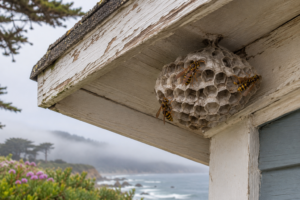
You can see it from the driveway. A small gray umbrella tucked up under the eave, a few wasps crawling across it, and nobody in the house wants to stand under that spot anymore.
One homeowner put the question to us plainly this summer: “I am curious about the difference in cost between traditional and non-chemical wasp removal.” She had at least two nests under her eaves and was getting the house ready to sell.
Here is my honest answer after a lot of ladder time in Santa Cruz County. The method you choose usually moves the price less than you expect. Access, nest size, and how many nests you have move it a lot more. This article walks through what I am actually pricing when I look at your eaves, what the gentler option really involves, and why waiting until October costs you money.
What I’m actually pricing when I look at your eaves
The product in the tank is a small slice of the bill. Most of what you are paying for is physical: how hard it is to get to that nest safely and how much colony is waiting when I do.
Here is the mental checklist I run through. You can run it on your own house before you call anyone for a number.
- Height and reach. A nest at 8 to 10 feet over a flat patio is a short ladder and a quick setup. A second story eave above a sloped yard is a longer ladder, more time spent setting footing, and sometimes a second set of hands.
- Open eave or hidden gap. A nest hanging in plain sight under a rafter tail is the straightforward version. Once the colony has pushed into a soffit gap or behind a fascia board, the work slows down and the price follows.
- How far the colony has developed. A few dozen workers in June is a different job than a mature nest in September.
- How many nests. The second and third nest on the same property usually cost less than the first, because the ladder, the gear, and the drive are already paid for.
- Footing and obstacles. Deck railings, dense hedges, and the hillside lots you see all over Ben Lomond and Scotts Valley all add setup time.
Most pest companies around here publish nothing at all about what drives their pricing, which is why quotes feel arbitrary. The same cost logic shows up in other services too, and the breakdown in our piece on how ant treatment is priced in Santa Cruz County follows the same pattern: access and severity, not the product label.
As a general sense of the local market, a single reachable nest on an open eave tends to land in the low hundreds, while multiple nests, second story work, or a colony tucked into a void push toward the upper end. Treat that as context, not a quote. Nobody can give you a real number until they have seen the eave.
What non-chemical wasp removal actually involves
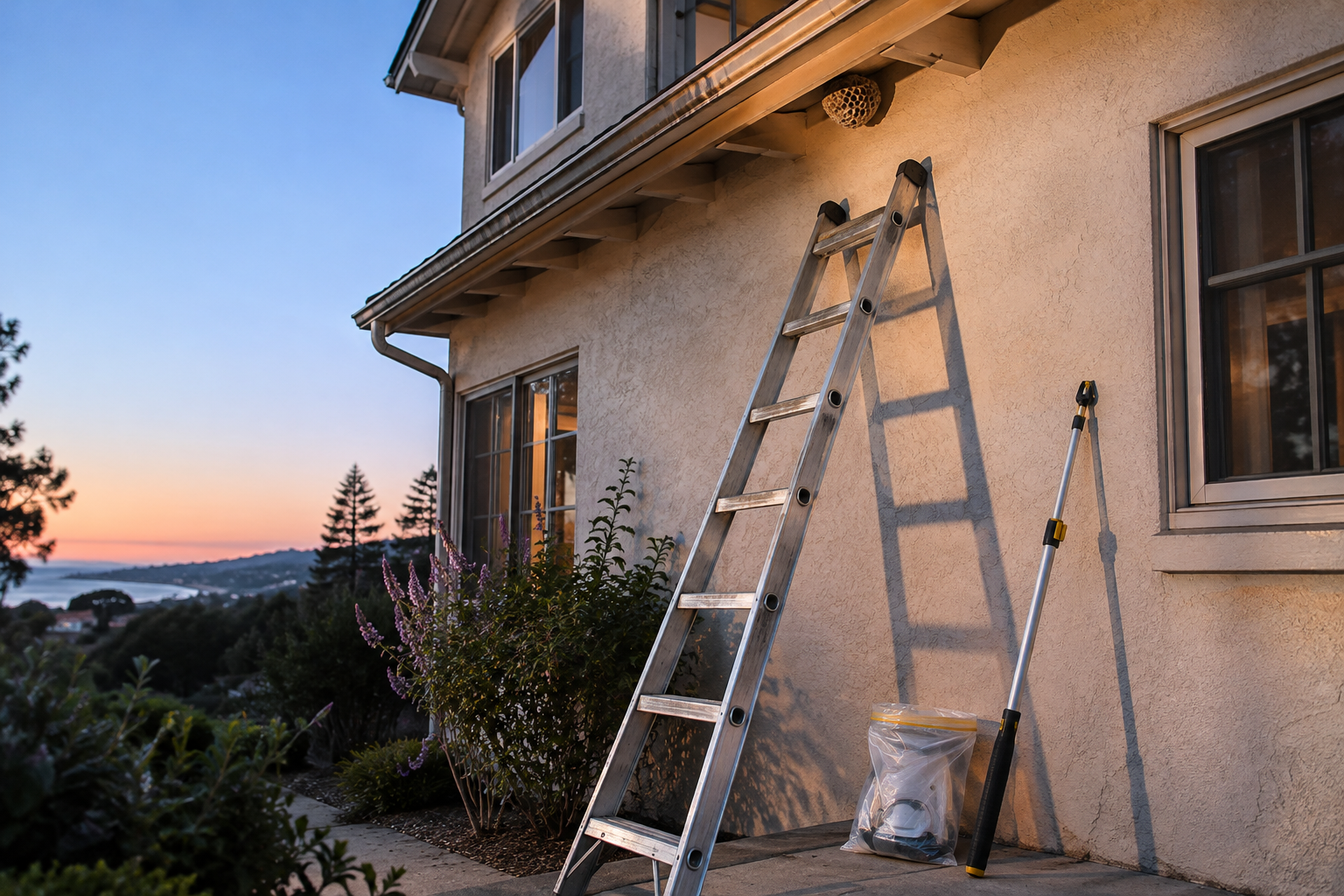
Non-chemical removal of a paper wasp nest is mostly about timing. I work at dusk or just after dark, when the foragers are back and the whole colony is clustered on the comb.
The nest gets detached, bagged, and taken off the property. Nothing is left behind on the siding, the stucco, or the soil below. That matters if you have kids under that eave, a dog that drinks from a bowl on the patio, or vegetable beds along that wall.
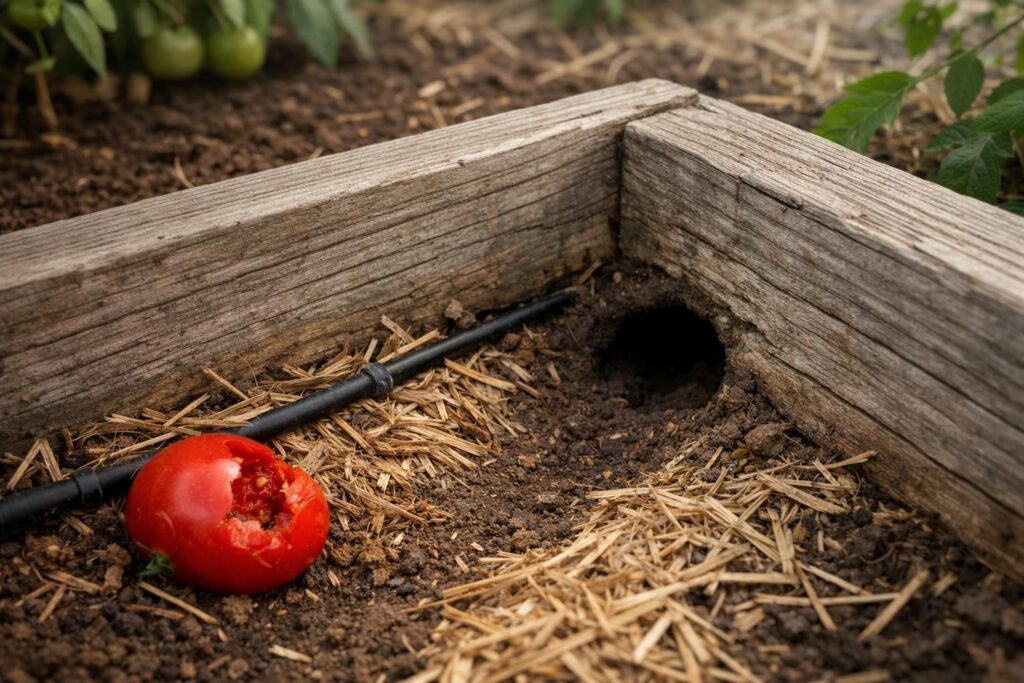
That last one comes up constantly. A homeowner wrote in this summer asking whether her organic vegetable garden out back would limit her treatment options. It does not rule much out, but it absolutely shapes where and when I work.
The tradeoff is real, and I would rather you hear it now. With a physical removal, there is no residual left on the eave. A south facing overhang that was good real estate for a queen this year is still good real estate next year, so a return visit is a fair thing to price into your decision.
A targeted chemical application leaves a small amount of product right at the nest site, which can discourage a rebuild in that exact spot for a while. It does not make the eave permanently unattractive to wasps. No approach does, and anyone who tells you otherwise is selling something.
What I have seen matter far more than the product category is placement and hour. A precise treatment applied when the colony is home beats a broad spray of something harsher applied at noon when half the workers are out. Product choice is worth asking about either way, and California’s new pesticide ingredient disclosure rules are making those conversations easier for homeowners.
One customer summed up the standard I aim for: “Everything he used was pet, plant and kitchen safe.”
What pushes a wasp nest quote up or down
Use this to figure out roughly which end of a range your eave falls on before anyone gives you a number.
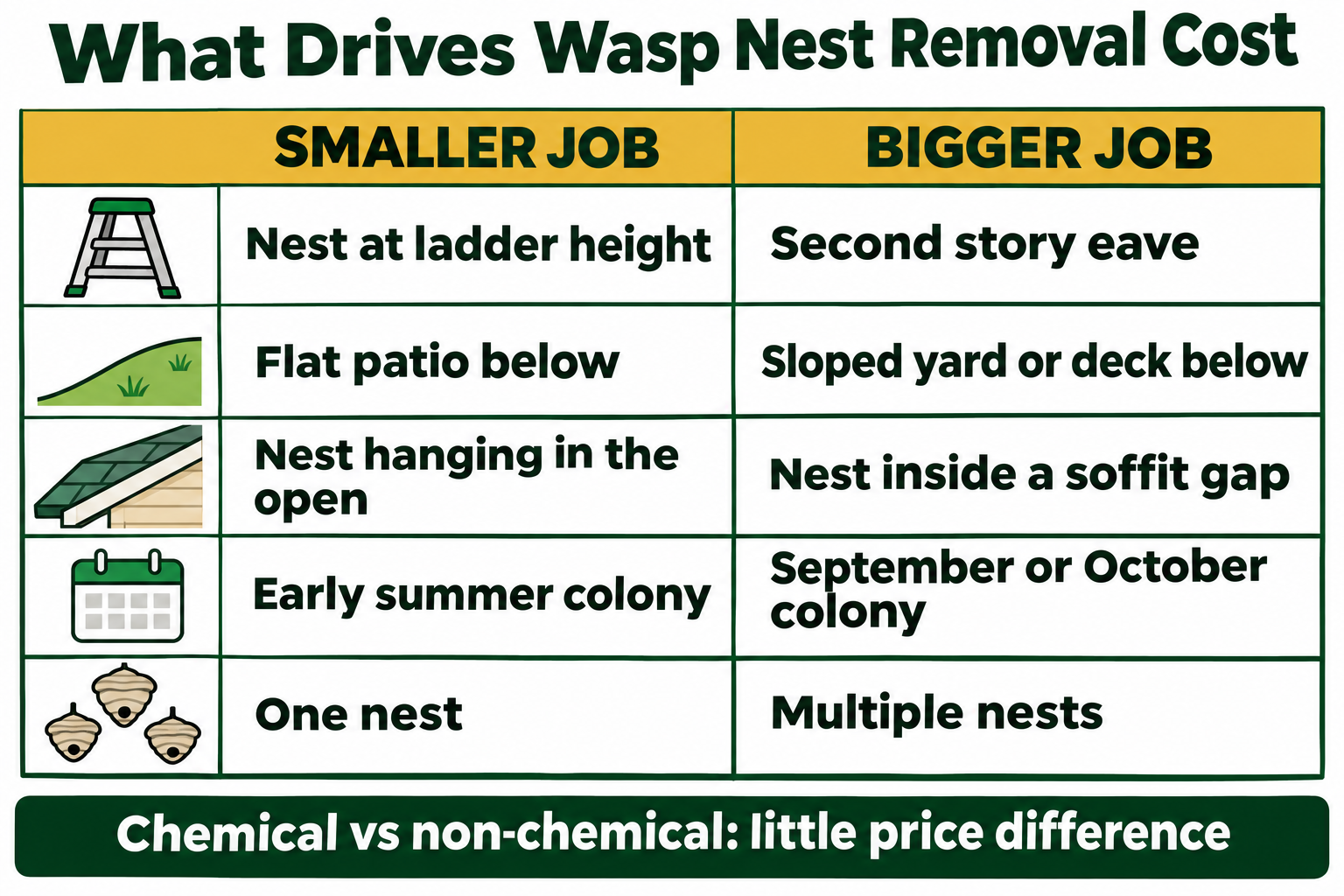
| Factor | Lower end of the range | Higher end of the range |
|---|---|---|
| Height | 8 to 10 feet, reachable from a standard ladder | Second story eave or steep roofline |
| Ground below | Flat patio or level driveway | Sloped yard, deck railing, or dense landscaping |
| Nest location | Hanging in the open under a rafter | Tucked into a soffit gap or behind fascia |
| Time of season | Early summer, few dozen workers | September or October, peak population |
| Number of nests | One, clearly visible | Several spread across different elevations |
| Method | Minimal difference either way | Minimal difference either way |
The cost drivers, at a glance
Most homeowners assume the chemical question decides the price. These five physical factors decide far more of it.
Why September costs more than June on the Central Coast
The cleanest rule I can give you is this: the price tracks the size of the colony. Noticing a nest early is the cheapest thing you will do all season.
A paper wasp nest in early summer is a founding queen and a handful of workers. By early fall, that same nest can hold hundreds of wasps and takes longer, slower, more careful work to remove.
National articles will tell you wasp season winds down in late August. That is not how it runs here. Our fog and mild fall temperatures keep activity going well past what inland California sees, and some of the busiest stinging insect calls land in late September and October.
If you want a sense of how paper wasps build and when colonies peak, the UC Statewide IPM Program’s pest note on social wasps is a solid, non-commercial read.
One homeowner in Aptos wrote in during late July because she saw wasps starting up near her front door and wanted it handled before the nest grew. That instinct is exactly right, and it is why her job stayed small. If you are seeing ground activity instead of eave activity in fall, that is a different insect and a different job, which we covered in what fall yellow jackets in the yard mean.
The hardware store can, honestly
An aerosol wasp spray usually runs well under twenty dollars. Compared to a service visit, that math looks obvious, and plenty of people try it first.
Sometimes it works. On a small, fully exposed nest at arm’s reach, a jet spray at dusk can finish the job.
Where it goes sideways is predictable. Here is what I see most often after a failed attempt:
- The spray knocks the visible nest down but does not reach brood deep in the comb cells, and a new nest appears within a couple of weeks
- The nest was partly inside a soffit gap, so most of the product hit the fascia board instead of the colony
- The homeowner was on a ladder, one handed, with agitated wasps overhead, which is the part I genuinely would rather you skip
When it fails, you have bought the can, lost the weeks, and now you are hiring someone anyway, often in September when the colony is twice the size. That is the real cost of the cheap option when it does not land.
One homeowner told us she was not sure her situation counted as an emergency, but she wanted it done correctly the first time. That is a reasonable way to think about it. If you can reach the nest standing on the ground, the can is a fair gamble. If you are getting on a ladder, or the nest is tucked into a gap you cannot see into, the professional visit usually ends up being the cheaper path.
Frequently Asked Questions About Wasp Nest Removal Costs
Does non-chemical wasp removal cost more than a traditional treatment?
In most cases the difference is small, and both land in a similar range for the same nest. The physical realities of the job, meaning height, access, and colony size, drive the number much more than the method does. The one thing worth budgeting for with a non-chemical removal is the possibility of a return visit, since nothing is left behind to discourage a rebuild on that same eave.
Can I just spray the nest down with the hose?
I would not. Water rarely destroys the comb, it almost always agitates the colony, and you are standing directly underneath while it happens. You usually end up with the same nest and angrier wasps.
If I have three nests, am I paying three times?
Usually not. The first nest carries the drive time and setup, so additional nests on the same property are typically priced lower. Nests at very different heights or on opposite sides of the house can change that, since each one needs its own ladder setup.
Will removing the nest stop wasps from coming back to that eave?
Not permanently. A sheltered, south facing overhang is attractive to a founding queen every spring, and nobody can make it otherwise. What removal does is end this colony before it reaches peak size, and checking that eave each May or June keeps the next one small.
How fast does this usually need to happen?
If the nest is over a doorway, a walkway, or a kid’s play area, sooner is better, and same day visits are often possible. If it is on a back corner of the house nobody walks under, you have more room to schedule it, though the colony keeps growing either way.
Want someone to take a look at the eaves?
We cover Santa Cruz County from the Westside through Capitola, Soquel, Aptos, Scotts Valley, and Watsonville, and the same person who inspects the eave is the one who quotes it and does the removal. That is why the explanation of the price holds up when you ask questions about it. If you want a real number for your house, the phone is (831) 430-8402 and the site is westpestco.com.