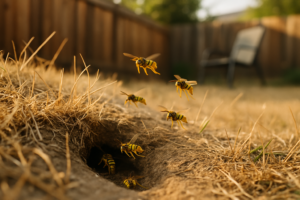
Direct Answer: Wasps streaming in and out of a single hole in the ground are almost always yellow jackets nesting underground. The colony is biggest in fall, defends the entrance hard, and sits a foot or more below the surface.
You keep walking past the same spot in the yard, and the traffic never stops. Insects going in, insects coming out, all day, from one small hole in the dirt. Maybe it’s six feet from the front walkway, maybe it’s out near the fence line.
I get these calls every September and October across Santa Cruz County. One homeowner described wasps burrowing into the dirt and sand right beside the front door. Another had steady activity about 100 feet out in the backyard and just wanted to know if it mattered.
The answer depends almost entirely on one thing: whether you’re looking at a hole in the ground or a papery nest overhead. Those two situations behave differently, get treated differently, and carry different risk. This article is about the first one, and about why fall is when you finally notice it.
Ground Hole or Paper Nest? That’s the First Read
When someone describes wasp activity to me over the phone, this is the question I ask before anything else.
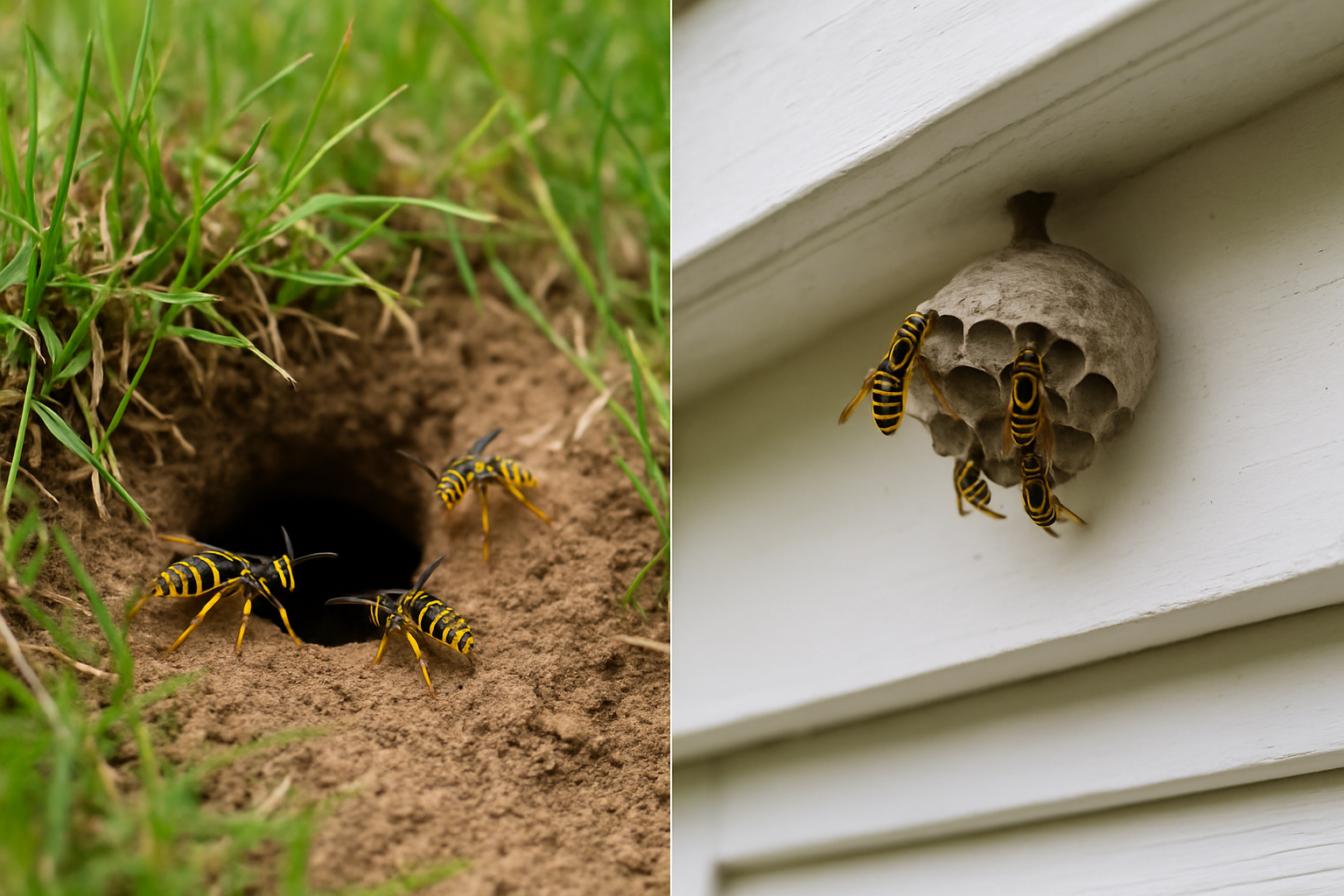
A single hole in a lawn, a dry slope, or a bare patch of dirt with a constant in-and-out stream is almost always a ground nesting yellow jacket colony. They’ll take over an old rodent burrow, a gap under a retaining wall, or a loose spot under mulch. You’ll see them flying low and fast, following the same line in and out.
A gray papery cone tucked under an eave, a soffit, or a deck rail is a paper wasp nest. Those are usually smaller, you can see the comb cells from below, and the wasps hang on the outside of it rather than disappearing into the dirt.
Why it matters for you:
- Paper wasps are generally slower to defend. People often mow and garden near one for weeks without a sting.
- Ground nesting yellow jackets defend the entrance hard, and vibration alone can set them off.
- A ground nest is invisible. You can’t judge its size by looking, because the chamber is below the surface.
- Paper nests you can at least see and plan around. Ground nests you have to mark and avoid.
If you’ve got the visible papery kind instead, I wrote about what to do before you touch a visible wasp nest separately.
Why You Suddenly Notice a Yellow Jacket Ground Nest in Your Yard in October
Here’s what surprises most people: that nest has been there since spring.
A single queen starts it in April or May with a handful of cells. All summer the colony grows quietly underground. By late September and early October, it can be hundreds of workers strong, and the food demand has shifted from protein to anything sugary.
That’s why the backyard barbecue, the trash cans, and the fallen apples or plums suddenly turn into a wasp magnet. The colony didn’t show up overnight, it just got big enough and hungry enough to be obvious.
Santa Cruz County makes this worse in a specific way. When the summer fog finally lifts and we get that warm, dry stretch in September and early October, activity spikes right as people are spending more time outside. Our mild coastal climate stretches wasp season later than inland California, so a nest that would be winding down in the Central Valley is still busy here.
One more thing worth knowing: once yellow jackets find a food source, they keep coming back to that area even after the food is gone. Pulling the trash can inside doesn’t reset them. They’ve already mapped the spot.
What You’re Looking At, and What It Means
This is the quick read I walk homeowners through before I ever get to the property.
| What you see | What it likely is | What that means for you |
|---|---|---|
| Steady traffic in and out of one hole in dirt, lawn, or a slope | Ground nesting yellow jacket colony | Defended aggressively. Stay well back and keep mowers away. |
| Gray papery cone with visible cells under an eave or deck rail | Paper wasp nest | Less reactive, but risky when it’s over a doorway or walkway. |
| Enclosed gray paper ball in a shrub, tree, or wall void | Aerial yellow jacket nest | Size is hidden. Treat the whole area as active. |
| Calm cluster of bees hanging on a branch, no hole, no aggression | Honeybee swarm | Not a pest control situation. Goes to local beekeepers. |
Why the Hardware Store Fix Usually Goes Sideways
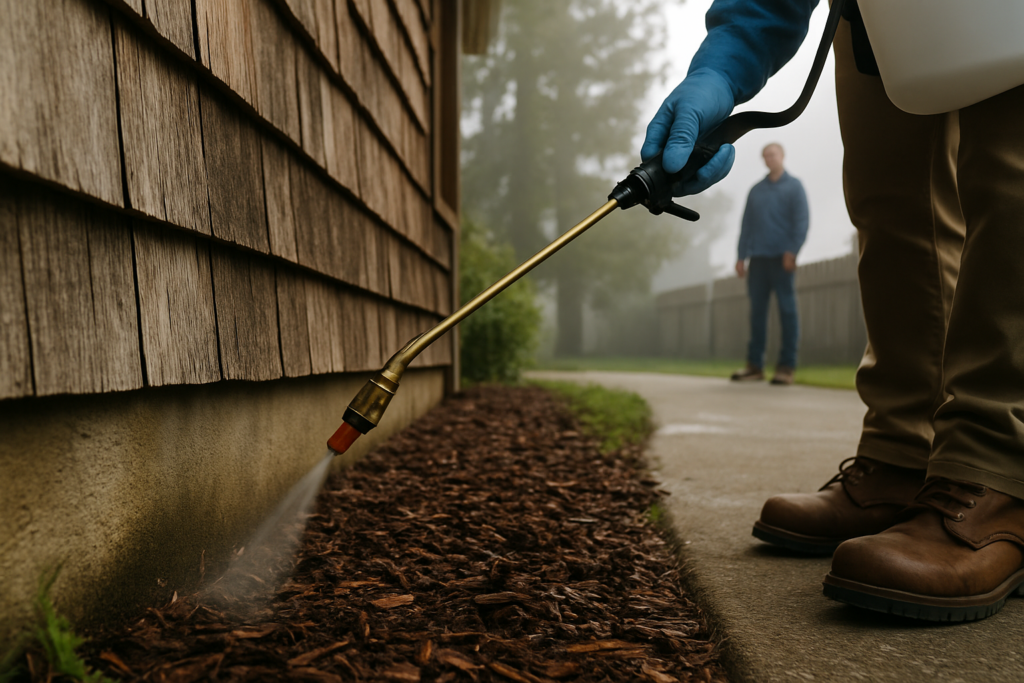
The standard homeowner move is to wait until dusk and either pour something down the hole or empty a can of jet spray into it. I understand the logic. It works often enough that people keep trying it.
Here’s what I’ve seen go wrong:
- Ground nests often have more than one exit. You hit the hole you can see, and workers come out of one you can’t.
- The nest chamber is usually a foot or more down. A surface treatment rarely reaches it, which means you’ve made the colony defensive without reducing it.
- Vibration triggers them. Stepping near the entrance, running a string trimmer, or spraying directly into the hole all register as an attack.
- Dusk helps but doesn’t disable them. Yellow jackets still respond at night, just more slowly.
A homeowner near Scotts Valley wrote in last year because the nest sat close to the front door. She was clear that it wasn’t an emergency, she just didn’t want to risk doing it wrong with people coming and going. That’s a reasonable call, especially with kids, pets, or anyone in the house who reacts badly to stings.
What you can safely do right now:
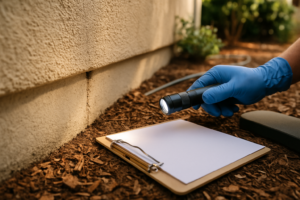
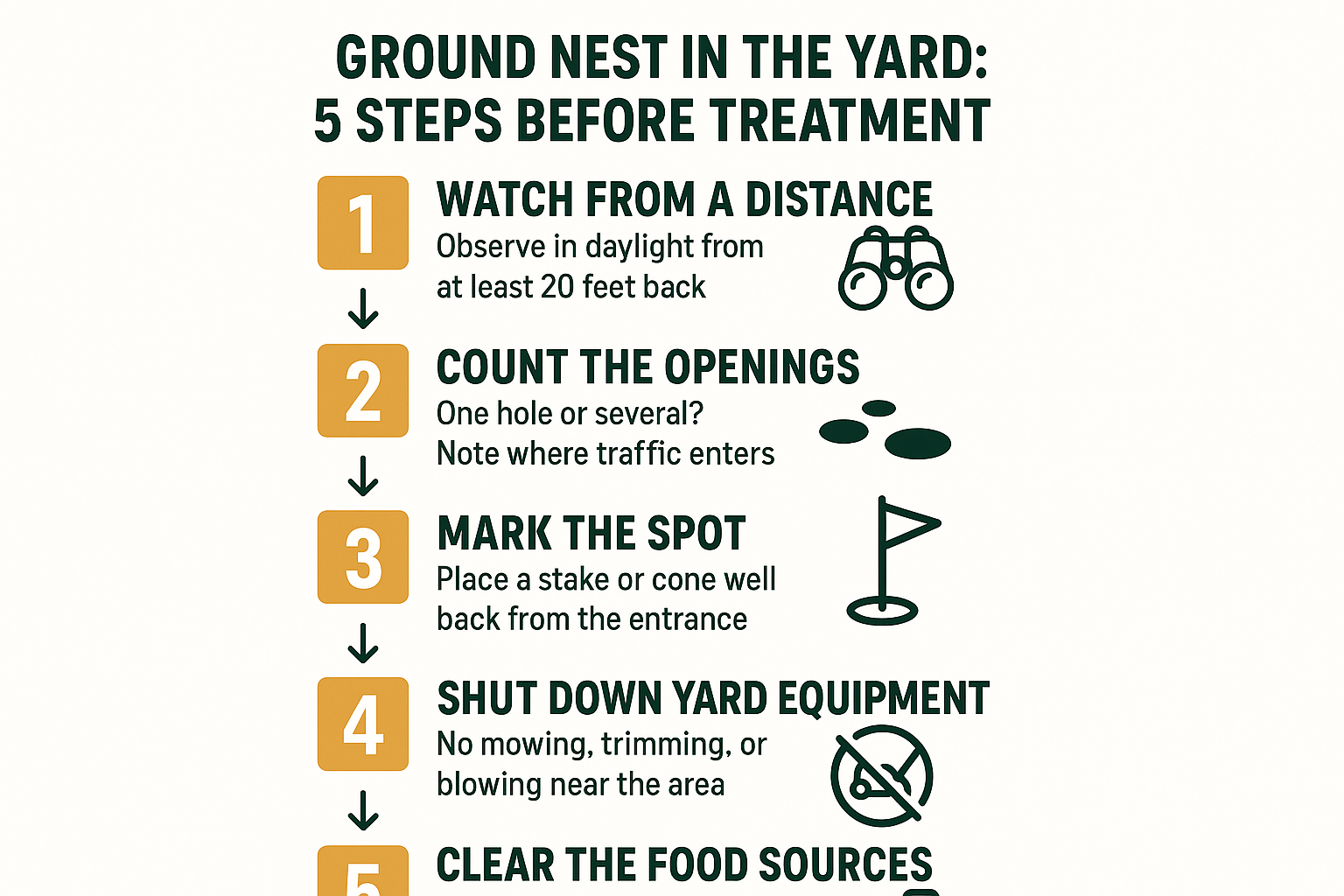
- Mark the spot from a distance during daylight with a stake or a cone, well back from the entrance.
- Keep mowers, trimmers, and leaf blowers away from that section of yard entirely.
- Watch and note whether the traffic uses one hole or several. That tells a technician a lot before arriving.
- Move food, drinks, and open trash away from the flight path.
What to Do Before Anyone Treats a Ground Nest
A simple sequence that keeps you safe while you figure out next steps.
What Actually Drives the Cost of Stinging Insect Work
Homeowners ask me about this directly, and almost nobody in this market explains it. One seller getting her house ready for listing wanted to know the difference in price between a conventional treatment and a lower toxicity approach before anyone showed up.
Fair question. The honest answer is that nobody can give you a real number until they’ve looked at the nest. But I can tell you exactly what moves the price:
- Where the nest sits. Open ground is the simplest. A wall void or an attic space is a different job.
- How reachable it is. A nest under a second story eave means ladder work and more time.
- How many are active. Two paper nests under the eaves plus a ground colony is three separate problems.
- Which method fits that location. A low toxicity approach is appropriate in some spots and not others, and that affects labor and product.
- Whether a follow up visit is likely. Ground colonies sometimes need a second look.
For general market context, stinging insect work in our area tends to land in a modest range for a single accessible nest, with multi-nest or hard-to-reach jobs running higher. Treat any number you hear over the phone as a rough placeholder, not a quote. The only accurate figure comes from someone who has stood in your yard and watched the traffic.
If chemical exposure is the thing you’re weighing, how integrated pest management works in homes with kids and pets covers the thinking behind product choice.
Who Handles What in Santa Cruz County, and Protecting the Bees
A lot of residents assume the county handles any wasp nest. That’s only half right.
Santa Cruz County Mosquito and Vector Control responds to problem yellowjacket and wasp nests in public areas like parks. On private property, they can advise you or refer you to a list of licensed pest control operators. They also route honeybee swarms to the local beekeepers guild and avoid pesticides around pollinators to protect area agriculture.
That last point comes up constantly with the gardeners I work with in Soquel, Corralitos, and the Westside. They want the wasps at the front door handled, and they do not want anything happening to the bees working their flowers.
The identification has to happen first:
- Honeybee swarm: a calm, hanging cluster on a branch or fence post, fuzzy brown bodies, no hole, no defensive behavior. That’s a beekeeper call.
- Yellow jacket ground colony: smooth, bright yellow and black, fast low flight, defending a hole in the dirt.
Those are not the same situation, and nothing should get treated until you know which one you have.
What a Local Tech Actually Brings to the Call
By the time most people reach out about a ground nest, they’ve already decided it isn’t a weekend project. What they want is someone who will explain what they’re treating and why, instead of spraying and leaving.
That’s the part customers mention most often. As one review put it: “He’s on time, very efficient, and knows a TON about the bugs.”
Fall brings more than one thing indoors and underfoot around here. If you’ve also noticed more spiders showing up in September or ants pushing inside after the first real rain, that’s the same seasonal shift at work.
Frequently Asked Questions About Yellow Jacket Ground Nests
Will the nest die off on its own over winter?
Mostly, yes. In a typical year the colony collapses once cold weather sets in and only new queens survive to start fresh elsewhere. But our coastal winters are mild, so activity can drag later here than inland, and a nest near a doorway or play area is usually not worth waiting out.
How far back is a safe distance from a ground nest?
I tell homeowners to stay at least 20 feet away and never stand in the flight path. Watch it from a window or across the yard if you can.
Can I just mow around it carefully?
I’d skip mowing that section entirely until it’s handled. Mower and trimmer vibration is one of the most common reasons people get stung, and it travels further through the soil than you’d think.
What if the wasps are coming out of a wall instead of the ground?
That’s a different situation. Insects appearing inside the house or at a gap in the siding usually mean a nest in a wall void or attic space, which is harder to reach and should not be sprayed from the outside. Note where they’re entering and leave it alone.
They keep swarming my trash cans even after I cleaned everything. Why?
Once yellow jackets lock onto a food source, they keep returning to that spot even after the food is gone. The behavior is tied to the location, not just the garbage, which is why removing the attractant alone rarely stops the traffic.
Still Watching That Hole in the Lawn?
West Pest Co. handles wasp and yellow jacket work for homes and businesses throughout Santa Cruz County, from the Westside and Capitola out to Aptos, Scotts Valley, and Watsonville. If you’ve got questions about what you’re seeing in the yard, or you’d rather have someone identify it before anything gets treated, you’re welcome to call (831) 430-8402 or visit westpestco.com.