Direct Answer: When nearby fields are tilled, tarped, or harvested, the insects and rodents living there lose food and shelter at once, and they move to the closest house with water, fruit, or garden beds.
A homeowner outside Watsonville reached out to us last month with ants inside the house, ants outside, ants in her trees, and ants in the ground. She figured that when the farmers around her tarp the ground for pests, they all run to her house.
She was right. Around here, pest activity near working farmland tracks the field calendar more than it tracks how clean your kitchen is.
If you live in Watsonville, Freedom, Corralitos, Las Lomas, Pajaro, Amesti, or Interlaken, this article walks through why that happens, when it peaks, and what is actually worth checking on your property when the field next door gets worked.
Why Pests Move From Farm Fields Into Watsonville Area Homes
Soil in a berry field or row crop is not empty. It holds ant colonies, beetles, earwigs, sowbugs, and rodents living under crop cover and drip line moisture.
When that ground gets tarped, tilled, harvested, or turned between plantings, two things vanish at the same time: food and shelter. The residents do not die off quietly. They walk.
And they walk toward the nearest place that still has both. In South County neighborhoods that abut open ground, that place is almost always a house, because a house offers:
- Irrigation and drip lines that keep soil damp year round
- A compost pile or green waste bin
- Fruit trees dropping apples, plums, or lemons on the ground
- Raised garden beds with loose, moist soil
- Pet food, chicken feed, or birdseed stored in a garage
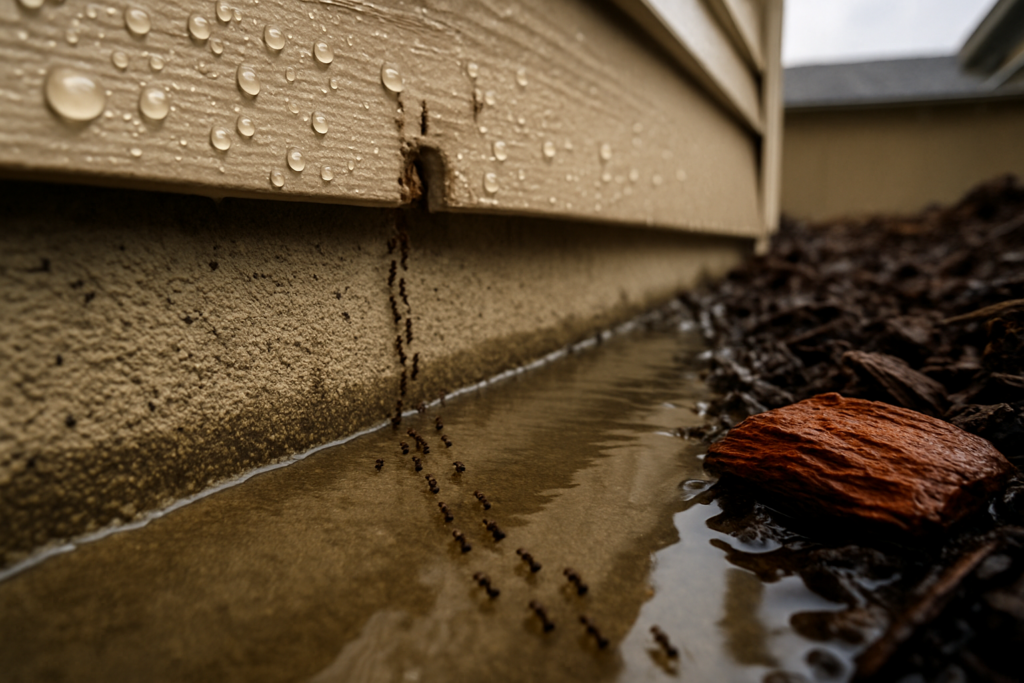
This is relocation pressure from the outside. It is not a sign that anyone let the house go. I have walked spotless homes off Riverside Drive and found ant trails running up the weep screed because the field across the fence line had been turned over nine days earlier.
September and October: Two Waves Landing at Once
Field turnover and harvest activity in the Pajaro Valley clusters in late summer and fall. That is also the stretch when rats and mice start pushing toward structures ahead of cooler, foggier nights.
So residents near fields often catch both at the same time. Ants surge first, usually within days of visible field work. Rodents follow over the next few weeks as nights cool off.
The practical window I give people: the two to three weeks right after you see equipment, tarping, or harvest crews working the ground nearby. That is when a walk around your perimeter pays off most, because you are catching the movement while it is still outside the walls.
What the second wave looks like in this part of the county:
- Rats nesting in raised garden boxes, especially boxes built with a hollow skirt or double wall
- Activity under decks and low porches
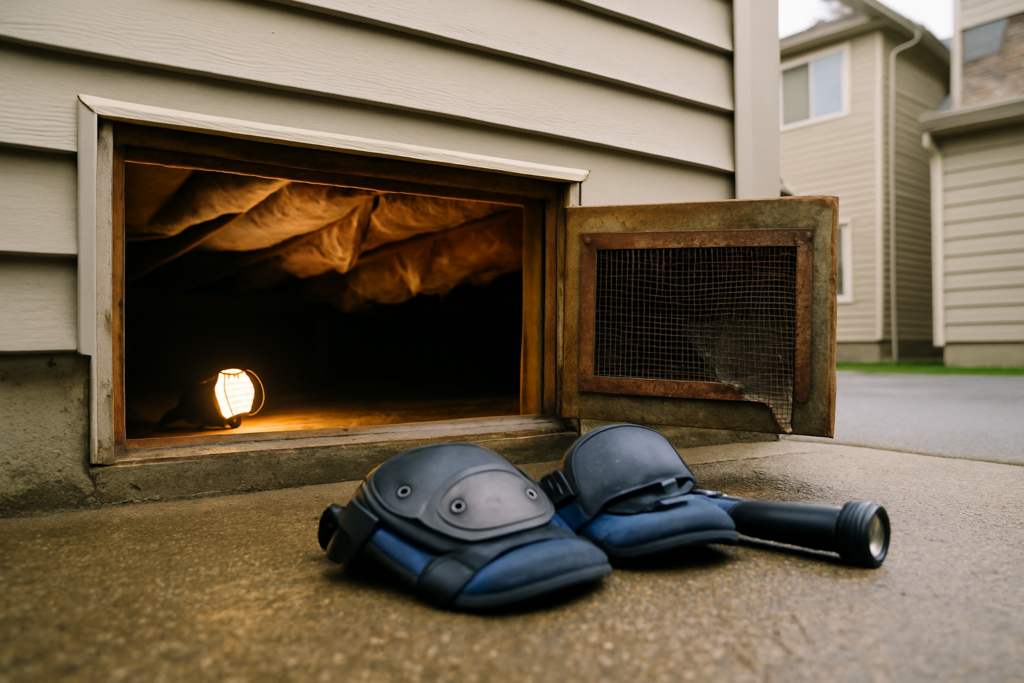
- Rodents under mobile and manufactured homes, which are common housing stock around Watsonville
- Droppings showing up in a garage before anyone hears anything in the attic
If you are hearing activity overhead or in a wall cavity, that is a different stage of the problem. Rats in the walls covers what is usually drawing them in and what to do about it.
What Shows Up, When, and Where
This is the pattern I see most often on South County properties that border open ground.
| Pest | Trigger next door | Where it shows up at the house |
|---|---|---|
| Ants | Tarping, tilling, irrigation shutoff | Kitchen, bathrooms, living room, mulch beds, tree trunks |
| Rats and mice | Harvest, crop removal, cooling nights | Garden boxes, under decks, garages, crawlspaces, under manufactured homes |
| Spiders | Insect surge from field work | Eaves, window frames, patio furniture, garage corners |
| Earwigs and sowbugs | Soil disturbance and loss of ground cover | Door thresholds, planter boxes against siding, damp mulch |
| Aphids and garden pests | Crop removal leaving host plants scarce | Roses, citrus, vegetable beds, ornamental shrubs |
Your Post-Field-Work Perimeter Check
Here is the short list I run through on a property that shares a fence line with farmland.
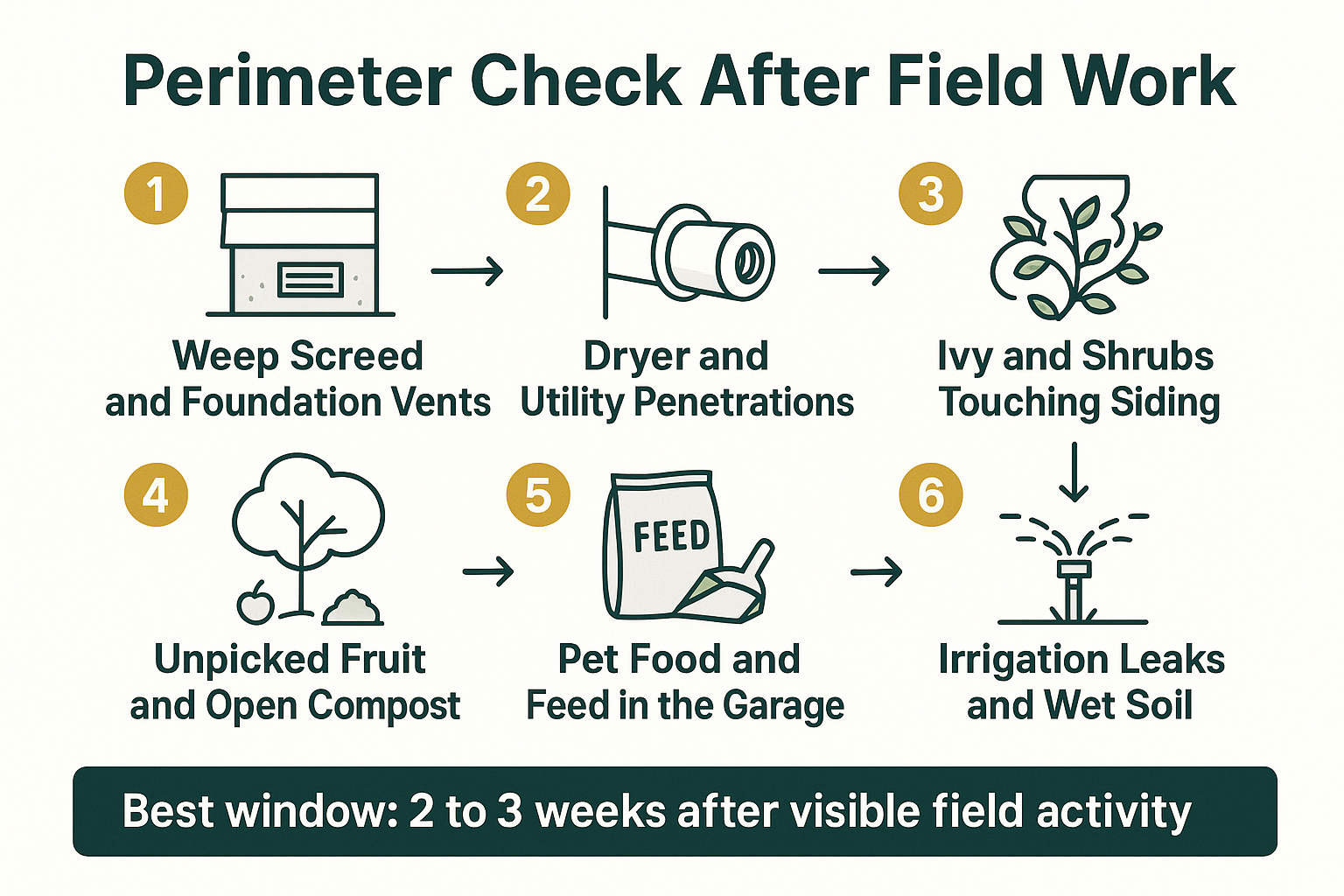
What I Actually Look At on a Property That Borders Open Ground
An inspection on a field-adjacent home is different from one in a Westside Santa Cruz neighborhood. I am looking for the handoff points where outside pressure becomes an indoor problem.
The usual list:
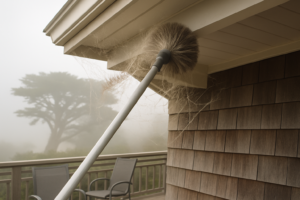
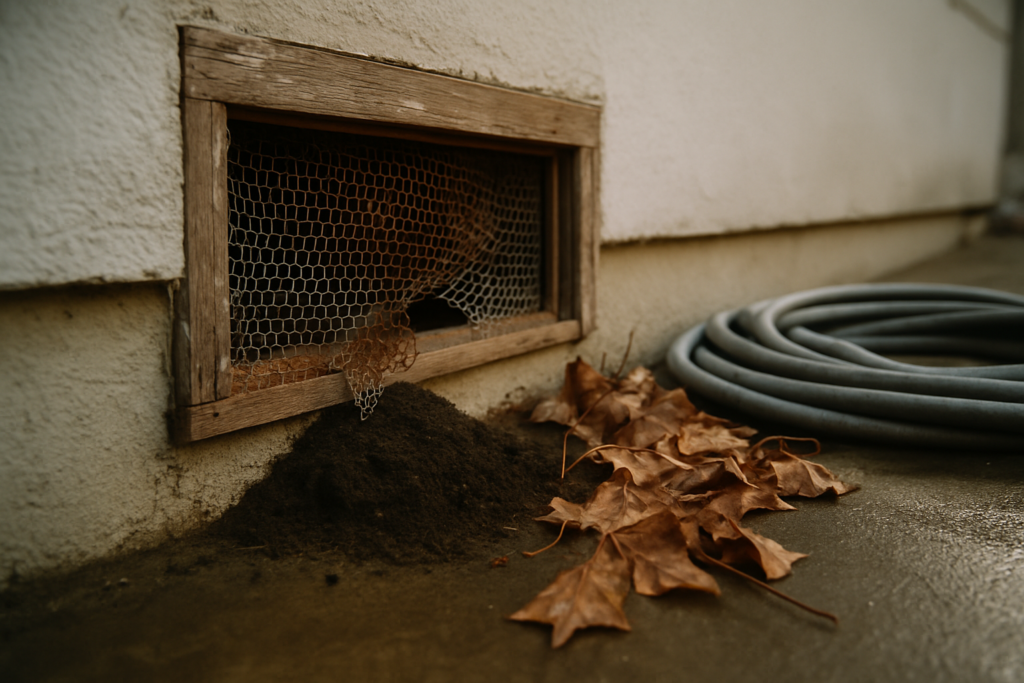
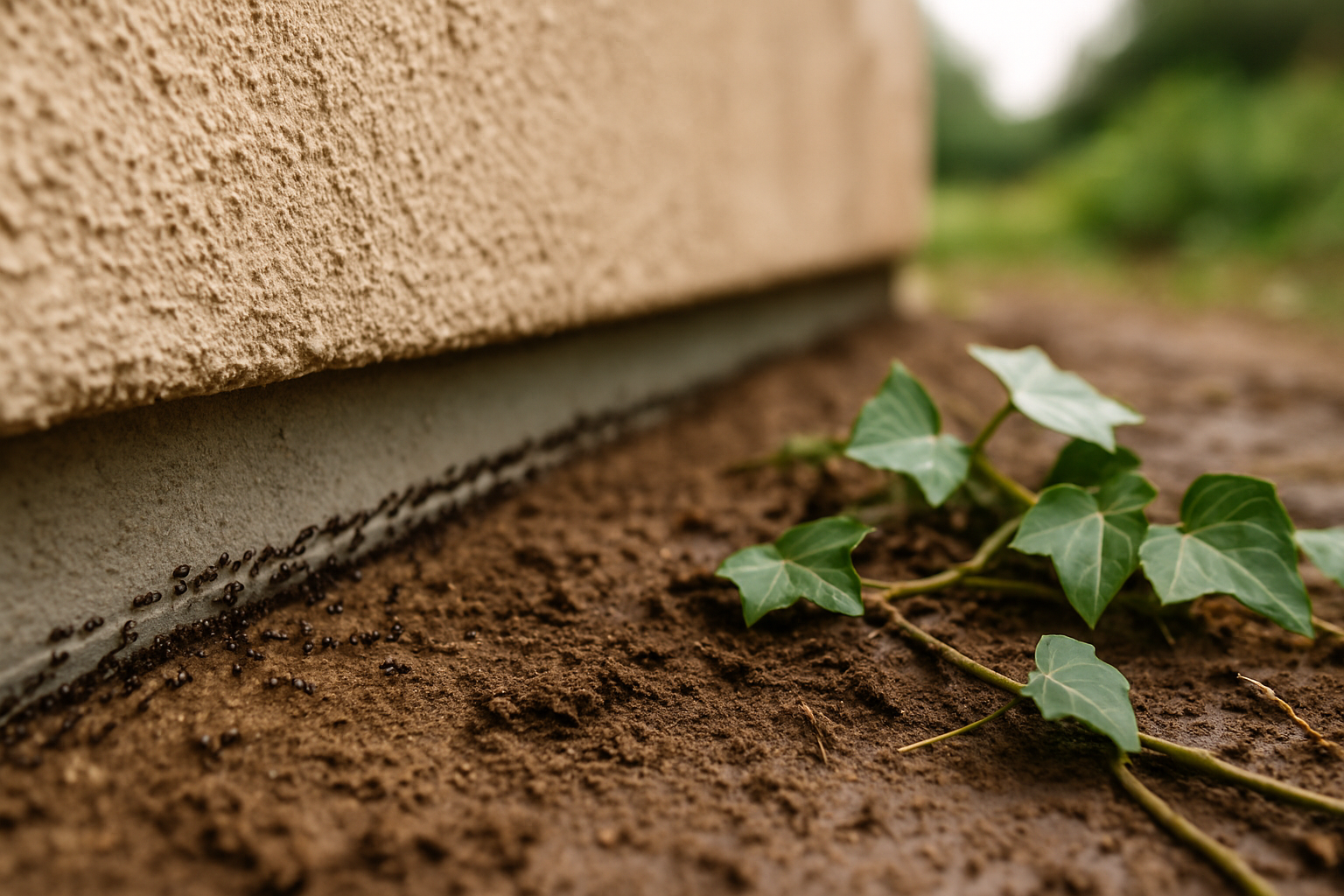
- Weep screed and foundation vents. The gap where stucco meets the slab is the number one ant highway in this part of the county.
- Dryer and utility penetrations. Rodents find the gap around a dryer duct or a water line long before you do.
- Ivy, jasmine, and dense shrubs touching siding. Anything that bridges the ground to the wall removes the need for a pest to find a ground-level opening.
- Fruit on the ground and open compost. Plum and apple drop in Corralitos yards is a reliable rodent magnet in September.
- Pet food, chicken feed, and birdseed in the garage. Paper and plastic bags are not storage, they are packaging.
- Irrigation leaks. Chronically wet soil is exactly where ants build, and a leaking valve box next to a foundation keeps the pressure on all year.
Here is the part I say out loud on every one of these visits: a home next to farmland stays under pressure no matter what gets treated. The honest goal is reducing what makes your house the most attractive option on the block and treating what is active right now, not clearing the area permanently.
That is also why I am direct about what an inspection can and cannot tell you. What pest inspectors actually look for inside your home gets into the specifics.
The Organic Garden Question, Answered Straight
This one comes up constantly in South County. A homeowner had her front yard landscaped with wood mulch, then found ants swarming every time she dug into it. Her question was whether her organic vegetable garden in the back would limit what could be treated.
Short answer: no, and it should not have to.
A targeted approach on an ant problem like that looks like this:
- Identify the species and find the actual trail, not just the spots where you see them
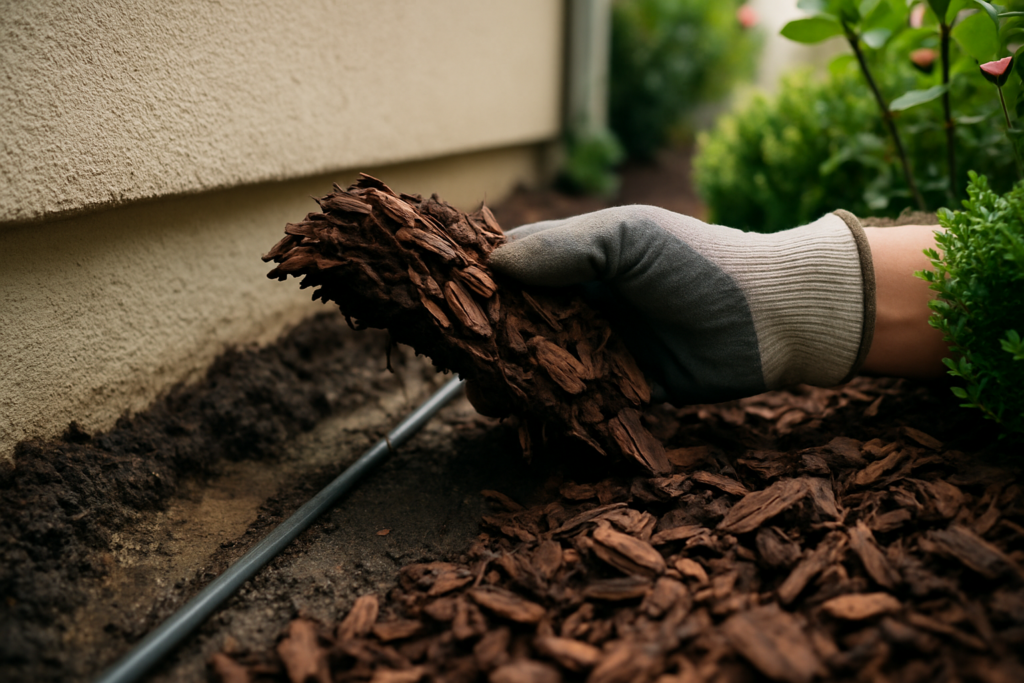
- Locate the nest or nesting zone, often under mulch, in a valve box, or at the foundation line
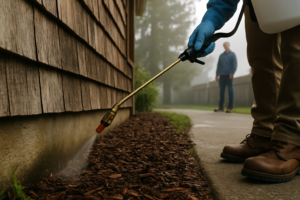
- Treat along the structure and the entry route where the ants are actually traveling
- Leave vegetable beds and pollinator plants alone instead of blanket spraying the yard
Blanket spraying a whole yard is the lazy version, and on a property that borders fields it does not even solve the problem, because next month’s field work sends a new group. Treating the structure and the route is what holds up.
Product choice matters just as much as placement. One customer put it this way in a review: “he adjusted his recommendations due to my wife’s lung sensitivity and still provided a safe, effective treatment that’s used in hospitals and veterinary clinics.” That flexibility is the whole point of an IPM approach in homes with kids and pets.
What Is Changing in the Fields Next Door
If you watch field schedules because they affect your house, this is worth knowing. In August 2026, California’s Department of Pesticide Regulation announced a pilot project in Santa Cruz County exploring steam as an alternative to chemical soil treatment in berry fields.
I would not read that as a prediction about what happens at any one house. Soil disturbance still displaces whatever is living in that soil, whatever method is used.
But it is useful background for anyone living alongside working farmland, and it is a reminder that the practices on the other side of your fence are not static.
Frequently Asked Questions About Farm Field Pest Pressure
Does living next to a farm field mean I will always have pests?
It means you will have recurring pressure, which is different. The pests are not permanent residents of your house, they are arrivals. Reducing what draws them in and treating activity when it shows up is what keeps it manageable. Anyone promising to clear the area for good is not being straight with you.
My house is clean and I still have ants in three rooms. What am I doing wrong?
Probably nothing. I hear this constantly from South County homeowners, and the common thread is moisture and proximity, not crumbs. Ants in the kitchen, bathroom, and living room at the same time usually points to a nest near the foundation with several entry routes, not a food source inside.
What does ant or rodent service typically cost in the Watsonville area?
Pricing varies a lot based on lot size, how many structures are involved, and whether you are dealing with one active trail or property-wide activity. Many homeowners in the area see initial service somewhere in the low hundreds, with ongoing management priced differently, but that is general market context and not a quote. Call for an exact number on your property.
I live in a mobile home park near the fields. Is it a different situation?
Yes. The skirting, the space underneath, and the shared utility runs between units change how ants and rodents move, and a neighbor’s activity affects yours. We wrote about that specifically for Watsonville manufactured homes.
How soon after field work should I have someone come out?
If you are already seeing activity, sooner is better, since ant colonies relocating into a structure get harder to deal with once they establish. If you are just being proactive, the two to three weeks after visible field activity is the useful window.
Living Next to the Fields in South County?
We are owner operated, and Matthew does the inspections himself across Watsonville, Freedom, Corralitos, Las Lomas, Pajaro, and the rest of the Pajaro Valley on both sides of the Monterey County line. He is usually the one who answers the phone, too. West Pest Co. was voted Best Pest Control in Santa Cruz in the 2023 and 2024 Readers Choice awards, and if you want a look at what is coming off the field next door, the number is (831) 430-8402 or you can find us at westpestco.com.