Direct Answer: Yes, but not permanently. Treatment clears webs and drops spider activity for weeks at a time. Spiders follow the insects they eat, so results hold longest when bug traffic around the house drops too.
A homeowner up in Aptos Hills wrote in this summer with a line I hear almost word for word every August: “I’m constantly cleaning off spider webs from the house, windows, outdoor furniture, etc.”
That is the real spider complaint in Santa Cruz County. It is rarely one scary spider in the bathtub. It is a weekly chore on the outside of the house that never seems to end, and another local homeowner put it even plainer by asking for spider abatement and ongoing maintenance.
So this article answers one question honestly: what does spider treatment actually change, and what does it not change. No promises about a spider-free yard, because that promise is the reason a lot of people stopped trusting pest companies in the first place.
Do Exterminators Get Rid of Spiders? The Honest Version
Spiders are predators. They set up where the food is and where there is shelter from wind and rain, which on the Central Coast means eaves, porch lights, railings, and the gap behind your patio furniture.
That biology sets the ceiling on what any treatment can do. Knock the population down and the yard stays quiet for a stretch, but the ones from the neighbor’s fence line will test your eaves again once the bugs come back. The University of California’s pest notes on spiders make the same point: management means reducing shelter and food, not clearing a property for good.
So here is what a treatment visit realistically delivers:
- A clean set of surfaces, with existing webs and egg sacs knocked down
- Lower spider pressure on the outside of the house for a stretch of weeks
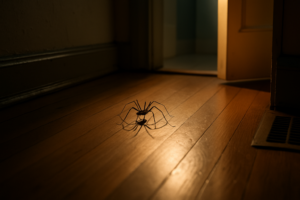
- Fewer spiders wandering inside through window tracks and door sweeps
- A clear read on where activity is heaviest on your particular lot
What it does not deliver is a yard with zero spiders in it. Anyone selling that is overselling, and you will know it the first warm week in September.
What Actually Happens on a Spider Treatment Visit
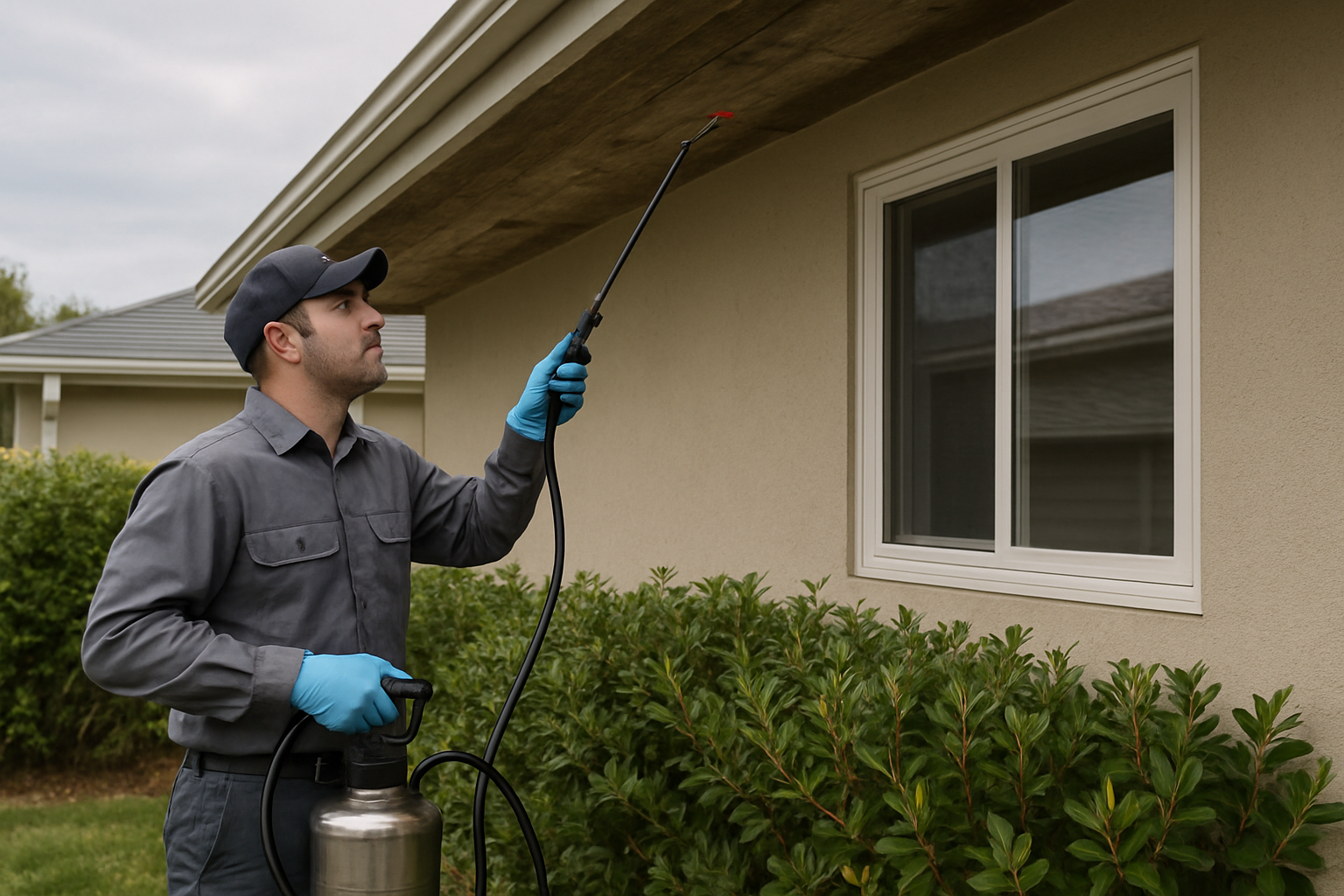
Most people picture a fogger and a whole house full of mist. That is not how a spider visit goes.
Inside, the work stays targeted at the places spiders actually sit:
- Room corners and ceiling junctions
- Garage perimeters and shelving edges
- Storage areas, closets, and under stairs
- Window tracks and door thresholds
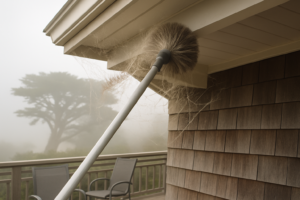
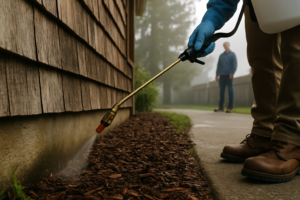
Outside, it follows the shelter line around the structure: eaves, soffits, window frames, doorways, railings, and the undersides of patio furniture. Existing webs and egg sacs get knocked down so the surfaces start clean.
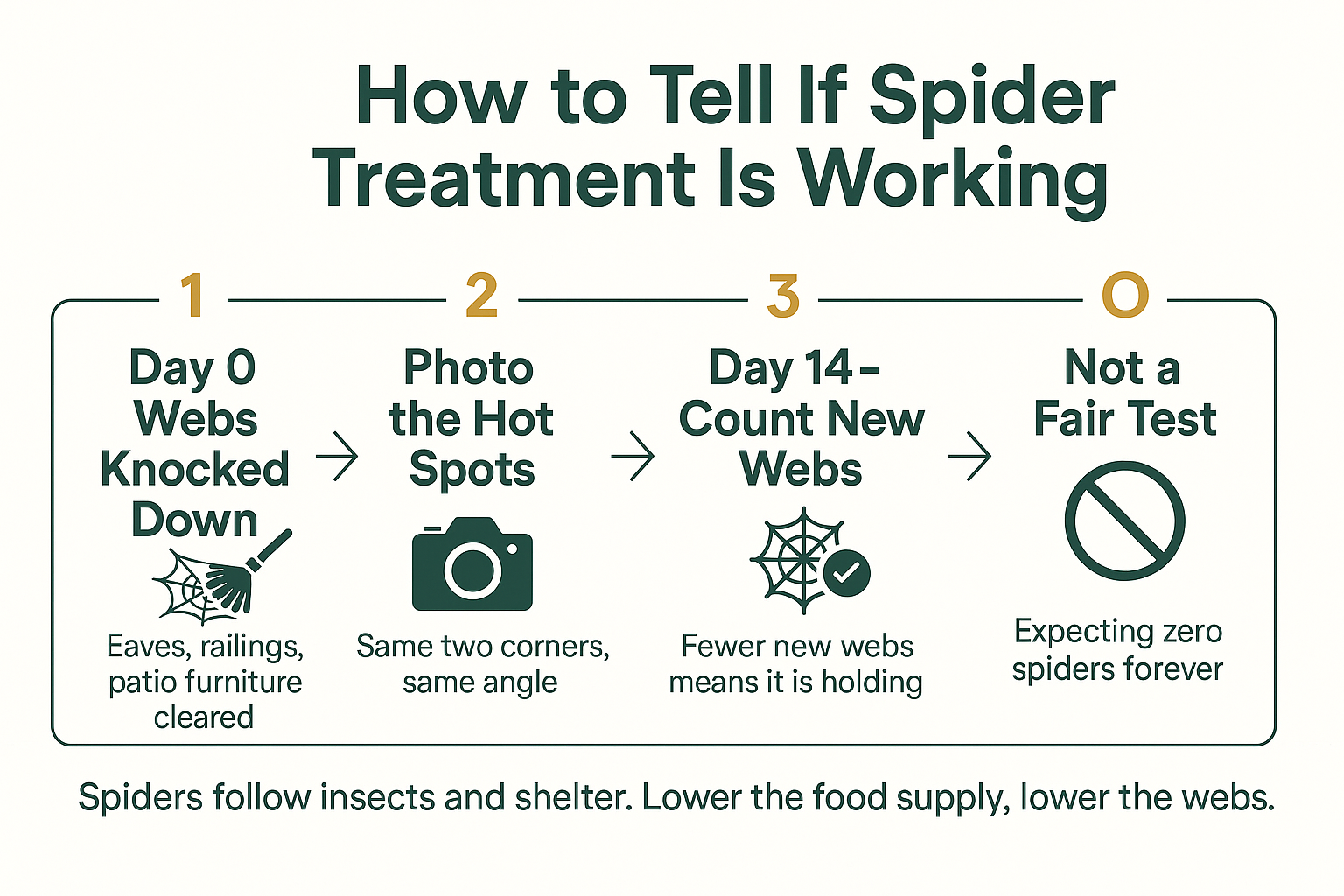
That web knockdown matters more than people expect. Once the old webs are gone, any web you see next week is new activity, and that is how you read whether the treatment is holding instead of guessing.
I tell homeowners to take a quick phone photo of the worst eave before and after. It sounds basic, but two weeks later it settles the argument about whether anything changed.
What Spider Treatment Changes and What It Doesn’t
Expectations are where most of the frustration comes from. Here is the split as I see it in the field.
| What you’re dealing with | What treatment changes | What it won’t change |
|---|---|---|
| Webs covering eaves and window frames | Surfaces come back clean and stay clearer for weeks | Spiders from fence lines and trees will keep testing the house |
| Egg sacs tucked in corners and under railings | Sacs get knocked down before they hatch out | New sacs can be built again in a warm stretch |
| Spiders wandering indoors at night | Fewer crossings at window tracks and door lines | Doors left open on a warm evening still invite traffic |
| Black widows in the garage or woodpile | Activity drops in treated harborage areas | Clutter and stacked storage keep offering new hiding spots |
| Moths and midges swarming the porch light | Nothing, unless the light and landscaping change | The food supply that draws spiders back in the first place |
Most Spider Problems Are Insect Problems Wearing a Different Name
Look at how people describe this when they reach out. A Capitola homeowner listed rats, spiders, and occasional ants together as one problem, and that grouping is more common than you would think.
Spiders are a symptom of the bug traffic on the outside of your house. Three things keep that traffic running on most properties around here:
- Exterior lights that pull moths and midges all night long
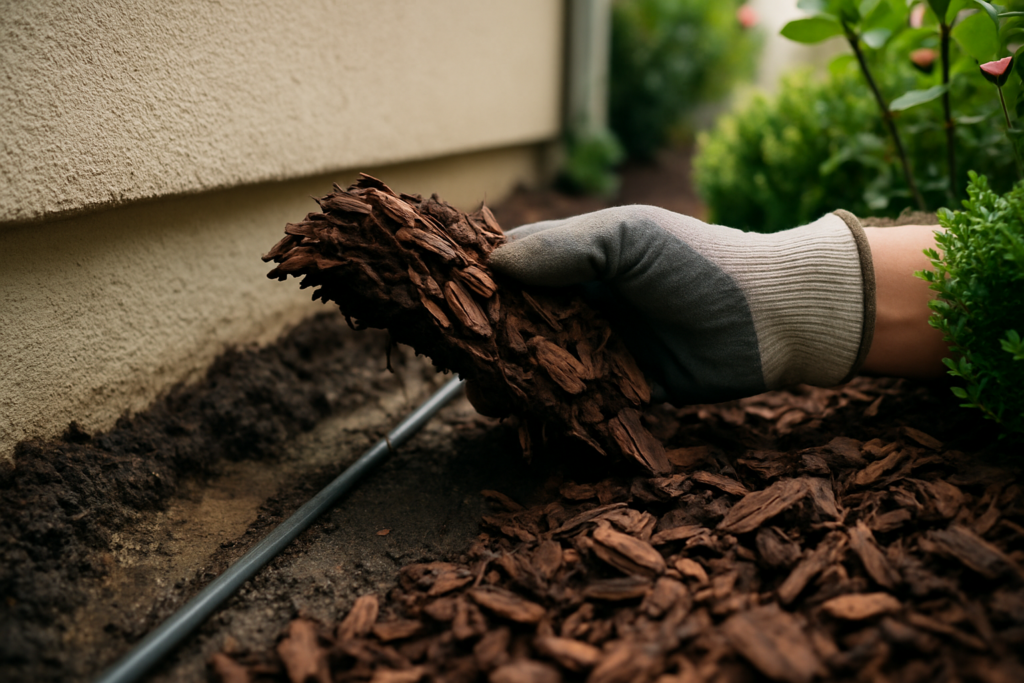
- Damp mulch beds pushed right up against the siding
- Dense foundation plantings that hold moisture and give insects cover
Fix nothing about those and you are signing up for web duty every weekend, treated or not. Swapping porch bulbs to a warmer, less attractive tone and pulling mulch back a few inches from the siding does more over a year than any amount of chasing webs with a broom.
This is the same pattern behind ants that keep coming back after treatment. The product works on what is there. The conditions decide what shows up next.
How to Tell If Spider Treatment Is Working
A simple way to judge results in the two weeks after a visit, without taking anyone’s word for it.
Timing: Why the Fog Belt Puts Us on a Different Schedule
Inland California gets a cold enough winter to slow things down. We do not. The fog belt keeps humidity and insect activity running far later into the year, which keeps the spider food supply going too.
Late summer into early fall is when it gets loud. Spiders reach full size, webs get big enough to catch the morning light, and suddenly the front porch looks neglected. Homes on the Westside, up in Aptos Hills, and along the Rio del Mar side tend to see it first, usually because of tree cover and heavy landscaping against the structure.
Treating before egg sacs go up beats reacting after the eaves are covered again. A rough rhythm that works for most properties:
- Heavy vegetation against the house, shaded lot, lots of trees: service every 2 to 3 months through the warm half of the year
- Open lot, less foundation planting, good sun exposure: twice a year is often enough, timed for late spring and late summer
If you want the seasonal side of this in more detail, spider sightings spike every September covers why that month hits so hard. And if you are trying to sort out which spiders in the garage deserve attention, black widows in Santa Cruz homes is the one worth reading.
Kids, Dogs, and the Vegetable Beds
This question comes up on nearly every exterior job. One homeowner asked flat out whether an organic vegetable garden in the back would limit treatment options.
The honest answer is that it changes product choice and placement, not whether the work can be done. Treating the soffit line above a deck is a different decision than treating a railing three feet from raised beds, and a careful tech treats those two spots differently.
What you should expect, regardless of who you call:
- To be told exactly what is going where and why
- A clear re-entry window for kids and pets before anyone is back on the patio
- Beds, bowls, and toys covered or moved before anything is applied nearby
- Low-toxicity options discussed openly when there is a sensitivity in the household
Kids, dogs, and treatment day walks through those precautions in more depth if you want to know what to prep before a visit.
The Difference Is Explanation, Not Spray Volume
After enough of these visits, the pattern is obvious. The jobs that hold are the ones where somebody traced the source, explained the mechanism, and adjusted the plan to the house instead of running a standard route.
One customer put it this way in a review of Matthew West: “he adjusted his recommendations due to my wife’s lung sensitivity and still provided a safe, effective treatment that’s used in hospitals and veterinary clinics.” That is the job, honestly. Read the property, pick the right approach, say out loud what you are doing.
So when you are deciding whether spider treatment is worth it, judge it by fewer new webs in the two weeks after a visit, and by whether the person who showed up could tell you why they were spraying one spot and skipping another.
Frequently Asked Questions About Spider Treatment
How much does spider treatment cost in Santa Cruz County?
Costs vary a lot by property, so treat any number you see online as a ballpark. What drives the price is square footage of the structure, how many stories and how hard the eaves are to reach, how much vegetation sits against the house, and whether you want a one-time visit or a recurring interval. Recurring visits usually price lower per stop than a single call. The only way to get a real figure is to have someone look at the property.
How long before I stop seeing webs?
Existing webs come down during the visit, so the surfaces look clean the same day. New web construction usually drops off noticeably within the first week to two weeks.
Do I need the inside treated too, or just the outside?
For most homes here the exterior is where the work matters. Interior treatment makes sense when you are finding spiders regularly in the garage, basement, or storage areas, and it stays targeted to corners and perimeters rather than the whole living space.
Will one treatment handle it for the year?
Not around here. Our mild, damp coastal conditions keep insect activity going almost year round, so spider pressure rebuilds. A single visit is a reasonable choice for a specific problem spot, but a house with heavy landscaping against it does better on a repeating interval.
Is it safe to spray if I have a dog that is in the yard all day?
Yes, with the right product choice and a re-entry window observed. Ask specifically how long to keep the dog off treated surfaces and whether water bowls need to be moved. Any tech who cannot answer that clearly is not paying close enough attention.
Ready to get a straight read on the webs around your house?
West Pest Co. works throughout Santa Cruz County, from the Westside and Capitola out through Aptos, Soquel, Scotts Valley, and Watsonville, and the conversation usually starts with a look at where the activity is heaviest on your lot. Questions about spider treatment, timing, or what is safe around a garden can go to (831) 430-8402 or westpestco.com.