Direct Answer: Rats in a crawl space usually get there through a rusted foundation vent or a burrow along the stem wall. Signs outside include fresh soil, rub marks, and droppings near the access door.
Most of the crawl space calls I take do not start with scratching overhead. They start with something seen outside: a hole at the base of the foundation, a vent screen hanging loose, or droppings sitting on top of the crawl space access door.
That is a different situation than rats in your ceiling, and it is honestly a better one. Activity in the subarea means the rodents are living under your floor but have not made the last step into the walls or living space yet.
This one stays below the floor. I want to show you what the outside of your foundation can tell you, how to separate fresh activity from twenty years of old history, and why coastal air off Monterey Bay is the reason so many older homes here fail at the vent line.
Rats under the house crawl space activity: what it actually means
On a raised foundation home, the subarea is its own little world. It is dark, dry, protected from wind, and it sits directly under an insulated floor. From a rat’s point of view, that is better than anything in your yard.
Homes on the Westside, in Seabright, and in the older parts of Capitola and Soquel almost all have this space. A newer slab home does not, which is why those calls tend to come in as wall or garage problems instead.
Two stories I hear over and over frame this well. One Westside homeowner described rodents burrowing under the foundation and eventually getting into the walls, with the sounds starting in the mornings. A property manager over near Pleasure Point called after tenants reported evidence of rats under the house but nothing inside yet, and several foundation and crawl space vent screens had rusted through.
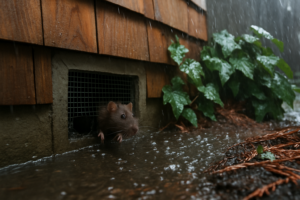
Those are the two doors in. Rats either dig a burrow that comes up inside the stem wall line, or they walk through a vent screen that stopped being a screen years ago. Once they are under there, the path into the house is short: a plumbing penetration, a gap where the water heater vent passes up, or a soft spot in the subfloor.
That is also why rats keep coming back for some homeowners even after traps go out. The subarea kept the invitation open.
What you can read from outside without crawling under anything
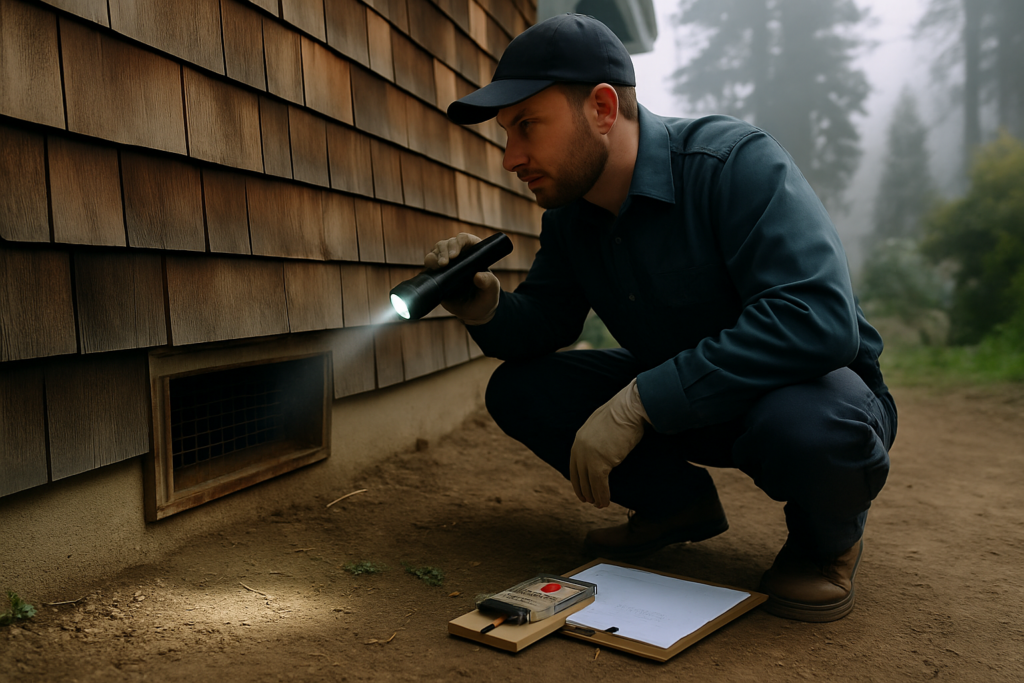
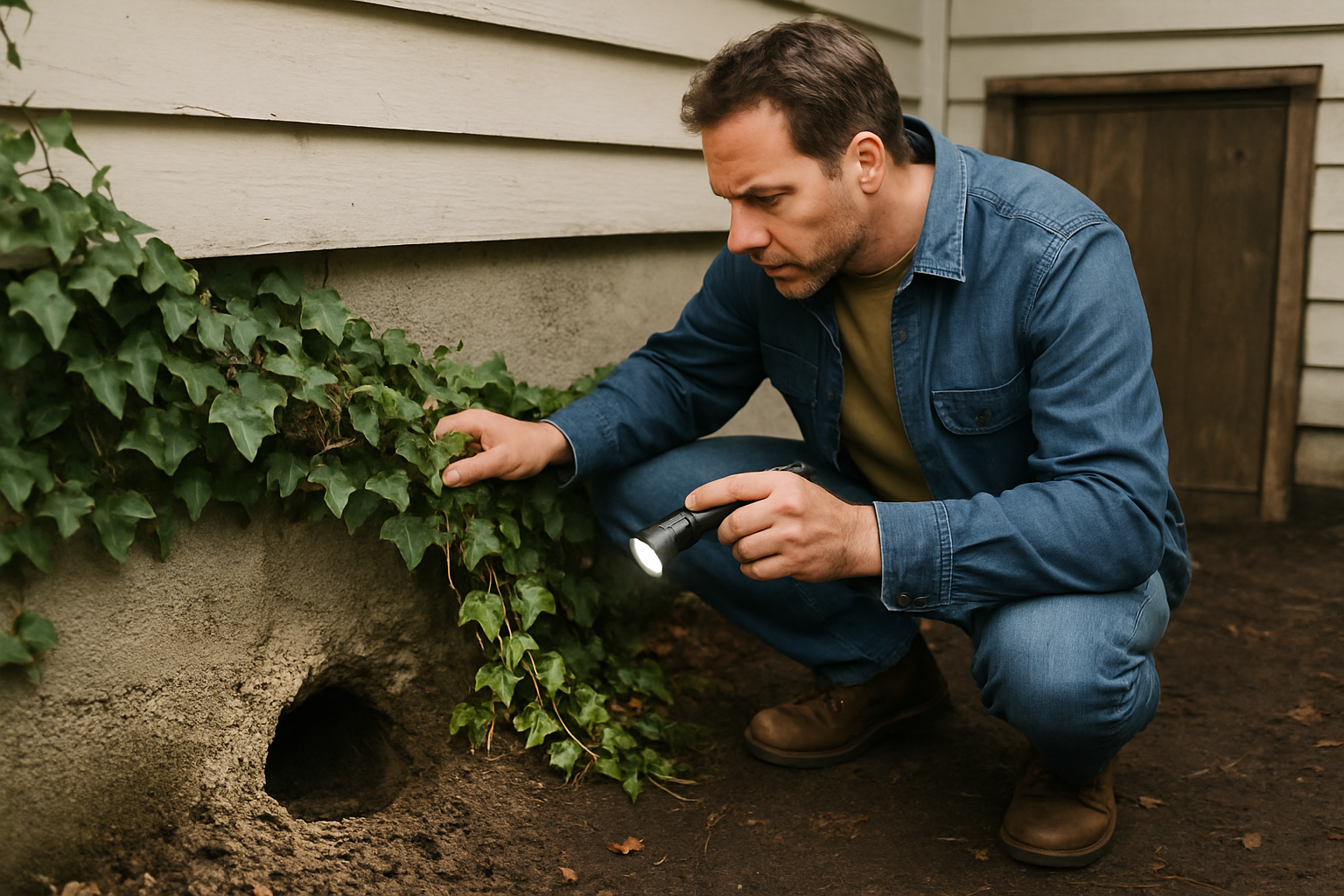
You do not need to open the hatch and get on your back to learn a lot. Walk the full perimeter of the house slowly, on your knees if you can, and look at the bottom 12 inches of the wall.
Here is what I look at first:
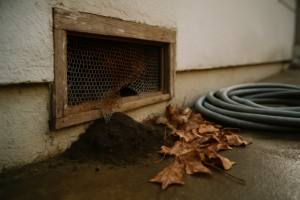
- Fresh soil pushed out at the base of the foundation, usually a fan shape of loose dirt beside a hole the size of a golf ball or bigger
- Greasy rub marks along the stem wall or the edge of the siding, dark smudges where oil from fur has built up on a travel route
- Chewed or corroded vent screens, especially screens that flex when you press them or have a torn corner
- Gnawed foam insulation on hose bibs, shredded and pulled into a wad
- Droppings on top of the crawl space access door or on the ledge of the foundation, which tells you the route runs right past there
- Tunnels through dense ivy or a path worn under a woodpile that ends at the wall
Droppings near the access door are the sign people miss most. Rats travel along edges, and that door frame is an edge.
If you find any of this, resist the urge to stuff the hole with steel wool and call it done. Plugging one opening on a house with an active subarea population usually just moves the traffic to the next weak spot.
New Activity vs. Old History Under the Floor
Plenty of Santa Cruz County homes carry decades of rodent history under the floor. Telling fresh from finished changes what you do next, so here is how I read each sign in the field.
| Sign | Recent activity looks like | Old history looks like |
|---|---|---|
| Droppings | Dark, slightly soft, with a faint sheen | Gray, dusty, crumbles when pressed |
| Burrow opening | Loose damp soil fanned out, clean edges | Crusted over, cobwebs or leaf litter inside |
| Rub marks | Slick and tacky, feels slightly oily | Dry, dull, sometimes painted over |
| Chew marks on wood | Pale, light-colored fresh wood exposed | Weathered gray, same tone as surrounding wood |
| Vent screen damage | Bent metal with bright cut edges | Rusted through evenly with no bend |
| Insulation from below | Hanging in fresh tufts, no dust on it | Sagging and gray with settled dust |
The simple test that settles it
When I cannot tell fresh from old, I stop guessing and set a clock on it. Sweep or scrape away every dropping at one spot, note the burrow openings, and check the same places in three to five days.
New droppings or re-opened soil means an active population. Nothing new means you are looking at history, and the money belongs in repairs instead of trapping.
This matters because the treatment is different. An active subarea population needs trapping and follow-up visits. An old, empty crawl space needs the openings dealt with and the conditions fixed so it stays empty.
It also helps to know what you are dealing with. Roof rats and house mice leave very different droppings and use different routes, and our guide on telling mice and rats apart walks through that read.
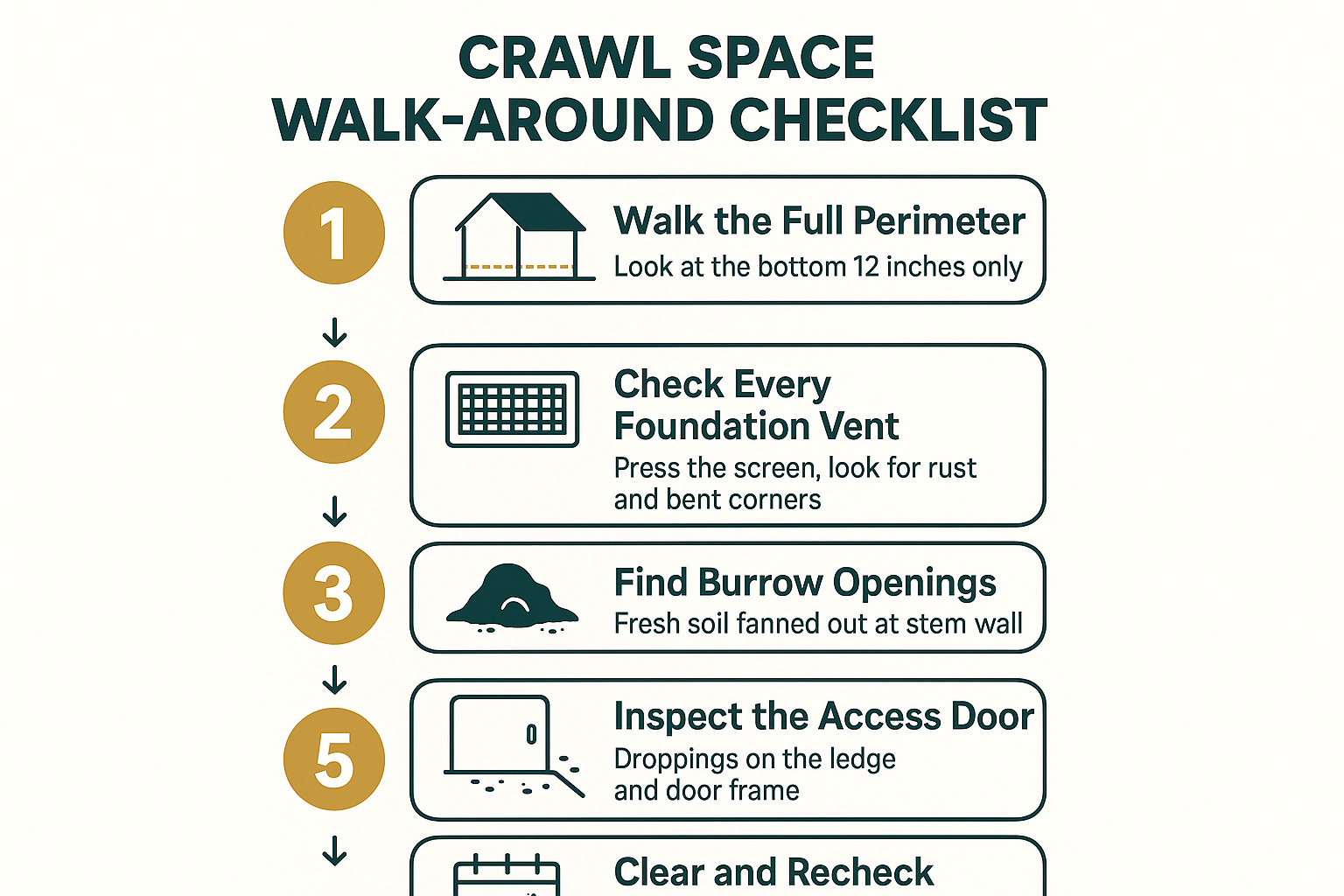
A Walk-Around Checklist for Your Foundation Line
This is the order I work a perimeter in when a homeowner tells me they think something is under the house.
Why vents fail here and not inland
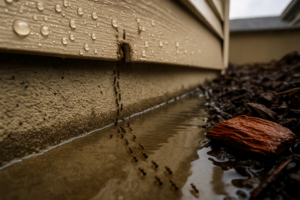
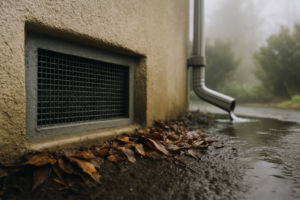
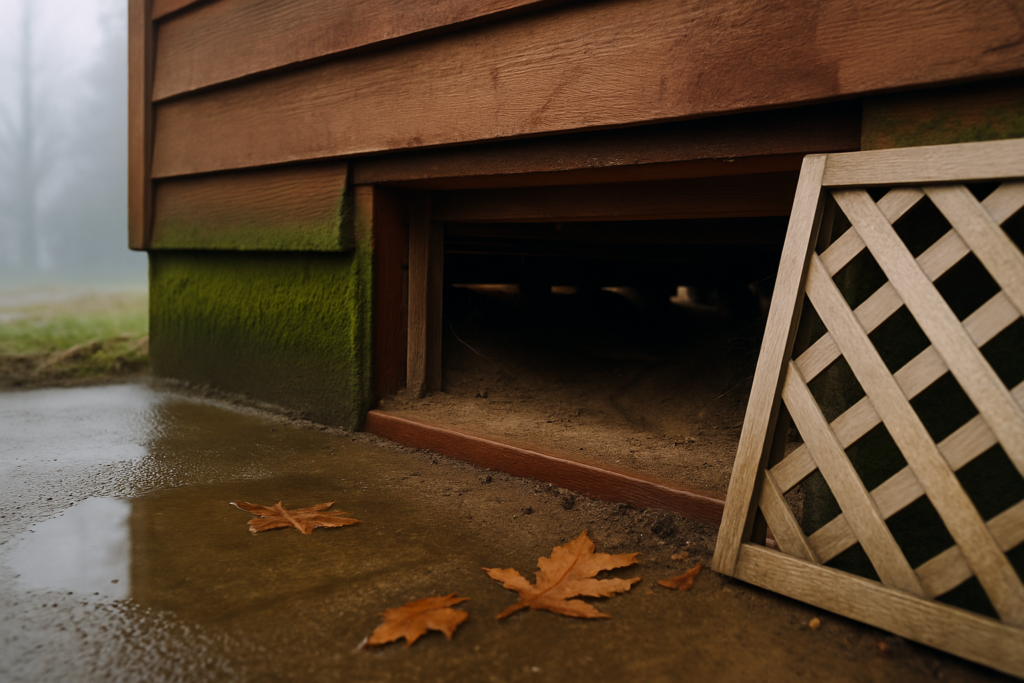
Salt air and year-round fog off the bay are hard on metal. Galvanized vent screens on a 1940s or 1950s house corrode from the inside out, so hardware that looked solid ten years ago is often the exact opening a rat is using today.
I have pressed on vent screens in Seabright that crumbled like a cracker. The homeowner had no idea, because from six feet away it still looked like a screen.
Wooded lots add a second factor. In Aptos, Ben Lomond, and up in the mountains, redwood duff, stacked firewood, and thick ivy grow right up to the vent line and give rodents cover the whole way there.
Seasonal timing runs earlier here too. Cool coastal nights arrive before inland valleys cool off, so the subarea is usually the first place activity shows up, and the first real storms of the season push whatever is under there to look for somewhere drier. Moisture under the floor makes it worse, since a damp crawl space draws rodents and holds the nesting material they want.
The poison question, answered straight
Almost every homeowner asks about bait, and usually in the same breath as a worry about the owls in the neighborhood or the dog in the yard. It is a fair concern and worth taking seriously.
Two real problems come with bait in a subarea situation. A poisoned rat can die inside a wall void or under the floor where nobody can reach it, and predators that eat the rat, including owls, hawks, coyotes, and outdoor cats, can be affected too.
California has also narrowed which rodenticides homeowners can buy and apply at all. University of California advisors summarize the current limits in their rodenticide restrictions guidance, and the practical result is that a crawl space problem is handled with trapping, sanitation, and closing off the routes in.
I will be honest about the ceiling on this. No house on a wooded lot is ever permanently rodent proof. The goal is to clear what is active and take away the easy path back, then keep an eye on it.
What a real subarea inspection covers
The inspection matters more than the treatment. I have heard from several homeowners whose previous company sprayed a perimeter and left without ever opening the crawl space hatch, which is exactly why the problem repeated.
A proper look under the floor includes:
- Species identification from dropping size and shape, plus the runways in the dirt
- Mapping the burrow entrances so you know how many ways in there really are
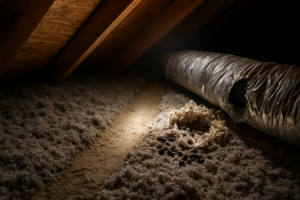
- Checking insulation and ductwork from below for staining, tears, and nesting material
- Noting moisture problems, standing water, or a leaking drain line that made the space attractive to begin with
- A read on the vent screens from the inside, where the corrosion actually shows
Questions worth asking any technician before they start:
- Are you going into the crawl space today, or only treating the outside?
- How many burrow openings did you find, and where are they?
- What did the insulation and ducts look like from underneath?
- What repairs does this house need, and who does that work?
- How many follow-up visits come with this, and what are you checking on each one?
Cost depends on the size of the crawl space, how many openings there are, and how many return visits the trapping takes, so anything you read online is a guess. Locally, homeowners often tell me they expected a rodent inspection and trapping program to land somewhere in the low hundreds to start, with repair work priced separately, but the only real number comes from someone who has been under your house.
Frequently Asked Questions About Rats in a Crawl Space
If rats are under the house, will they eventually get inside?
Often, yes. The subarea shares walls, plumbing penetrations, and vent chases with your living space, and rats explore constantly. That is why activity under the floor is worth handling before you hear anything in a wall or ceiling.
Can I just cover the foundation vents with hardware cloth myself?
You can improve a vent, but do it in the right order. If rats are active under there and you close everything at once, you can trap them inside, and a rat sealed in a crawl space will chew upward looking for a way out. Clear the activity first, then handle the openings.
How do I know if it is rats and not something else under there?
Droppings tell you most of it. Rat droppings run about the size of a rice grain or larger with blunt or tapered ends, mouse droppings are much smaller, and a raccoon or skunk leaves something you will not confuse with either. Burrow size helps too, since a rat opening is usually 2 to 3 inches across.
My tenants say there are rats under the house. What is my responsibility as the owner?
Rental situations have their own set of expectations for inspection, treatment, and habitability. Our rental property guide covers how those conversations usually go between landlords and tenants in Santa Cruz County.
Does a damp crawl space really make a difference?
It does. Moisture from coastal fog, a slow plumbing leak, or poor drainage keeps insulation soft and holds nesting material together. Fixing the water problem is often what keeps a cleared crawl space clear.
Wondering what is really going on under your floor?
The part that decides whether a crawl space problem gets solved is whether someone actually goes under there, and Matthew does that himself rather than sending a rotating technician. One homeowner put it simply in her review: “he took the time to go under our house and find the source of the problem” (Lisa H.). West Pest Co. works throughout Santa Cruz County and the communities along the north end of Monterey Bay, and can be reached at (831) 430-8402 or westpestco.com if you want a look at your subarea.