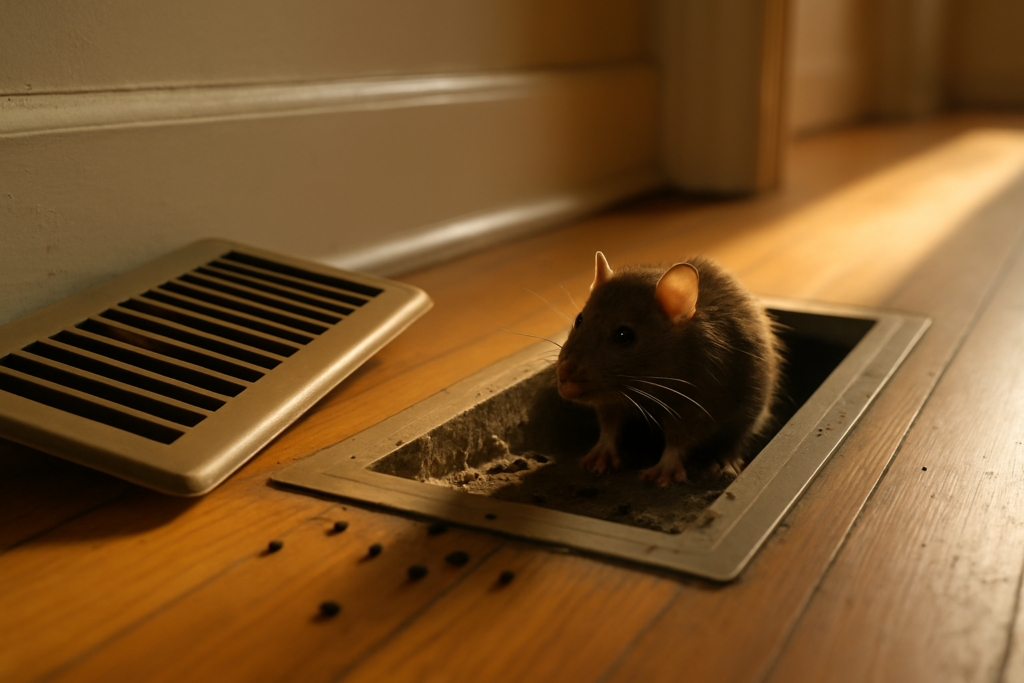
Direct Answer: Roaches slow down when it gets cold and dry. Along the Monterey Bay coast it stays mild and damp all winter, so they keep feeding, breeding and moving indoors.
Most people expect bugs to disappear once the rain starts and the nights turn cold. Then they see a roach cross the kitchen floor in January and assume something is badly wrong with their house.
Usually nothing is wrong with the house. What’s wrong is the assumption, because a coastal winter here never gets cold enough or dry enough to shut roaches down. Fog, damp soil and mild overnight lows keep them going straight through the season.
I want to walk through three things in this article: why the seasonal slowdown doesn’t happen along the Monterey Bay, why the products at the hardware store were built for a different climate, and how to read a single sighting so you know whether you’re looking at a nuisance or the start of something.
Why a Cold, Foggy Winter Doesn’t Push Roaches Out
Cockroaches don’t need heat so much as they need moisture and a stable temperature. A hard freeze knocks populations back inland. We don’t get that here.
A typical January night in Santa Cruz, Capitola or Aptos sits in the low 40s. Under a house, behind a water heater or inside a wall near a slow drip, it’s warmer and wetter than that.
That’s the part homeowners miss. The pest isn’t living outside in the weather, it’s living in the pocket of your property that never dries out:
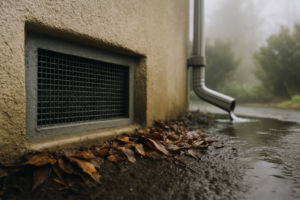
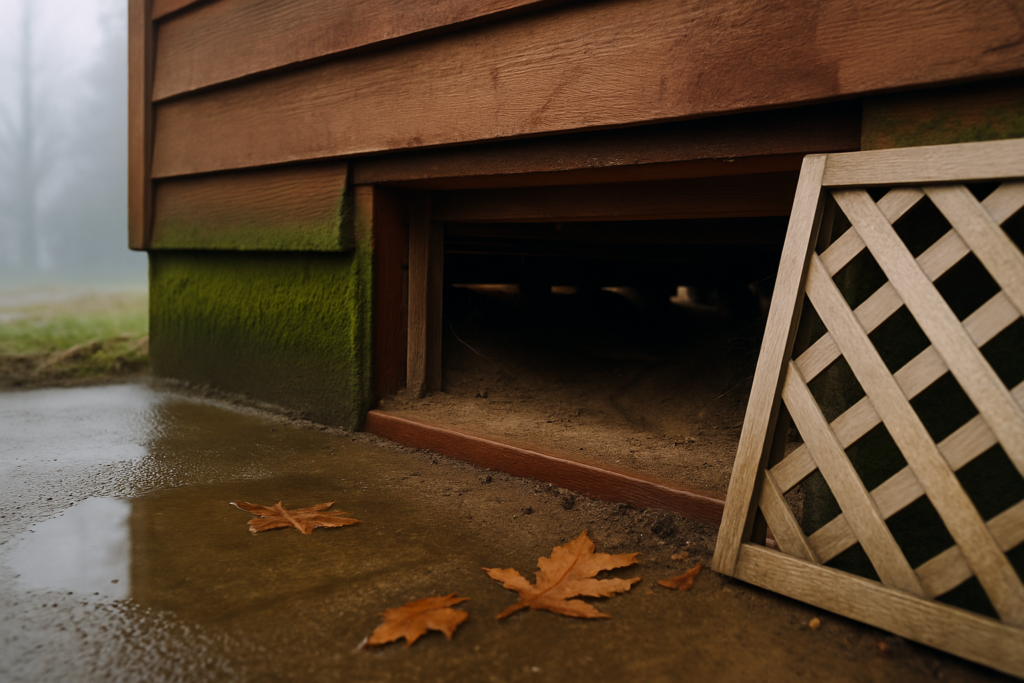
- Crawlspaces with bare dirt floors, common in older homes on the Westside and in Soquel
- Water meter boxes, irrigation valve boxes and French drains
- Leaf litter and mulch piled against a foundation after winter storms
- Wood piles, green waste bins and the damp ground underneath them
- Sewer cleanouts and floor drains that stay wet year round
The University of California’s pest program notes that our common outdoor species favor damp, dark harborage and move indoors when conditions outside get less comfortable, not more. You can read their species breakdown in the UC IPM cockroach pest notes.
So winter rain doesn’t drive them off. It pushes them toward the driest warm spot available, which is often the inside of your home.
Why Store Bought Roach Products Underperform Near the Coast
Almost every customer I meet has already tried something. Gel baits, boric acid, sticky traps, peppermint spray, cedar, diatomaceous earth. Sometimes all of it.
I’m not going to tell you those products are junk. Plenty of them work fine. The issue is that most consumer products are designed to close the gap until the season ends the problem for you.
That’s the built in assumption: knock the numbers down, wait for the cold snap, done by spring. In a foggy, moisture rich climate there is no cold snap doing the second half of that job.
Here’s what that looks like in practice:
- A bait station clears the roaches you see, but the ones under the house keep breeding and refill the kitchen in three weeks
- Scent based repellents move activity to the next room instead of reducing the population
- Powders clump and stop working in damp crawlspaces and under sinks, which is exactly where they were placed
- Sticky traps catch the wanderers and tell you nothing about the harborage
One customer told me they’d been doing the same bait rotation every month for most of a year and felt like they were running in place. They were. The product was working. The climate was undoing it.
I go deeper on this in why cockroach deterrents work differently in a coastal climate.
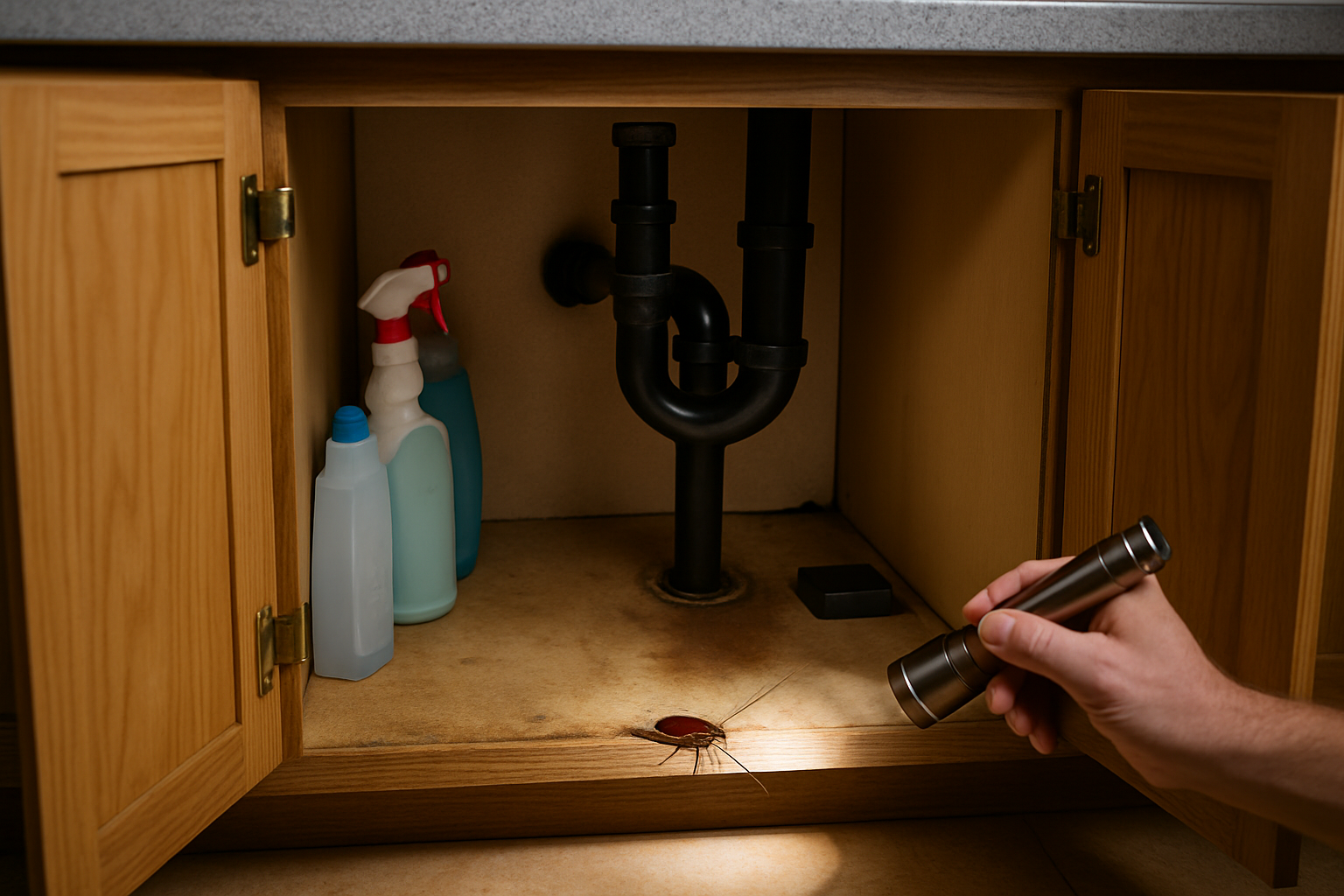
One Roach at Night: How I Read the Sighting
The most common call I get starts the same way. Someone saw one roach, and now they can’t sleep.
A single sighting on its own tells me very little. Where and when you saw it tells me almost everything.
Outdoors, after dark, near a trash can or a wet planter bed is normal behavior for the outdoor species we have here. One customer emailed after seeing their first one at night and wanted an estimate immediately because they had two cats and a dog. That’s a reasonable reaction, and the honest answer in a case like that is often that the sighting is routine and the follow up matters more than the panic.
Indoors, in daylight, in a kitchen or bathroom is a different signal. Roaches avoid open light. Seeing one in the middle of the day usually means the hiding spots are crowded.
These are the details I ask about on the phone:
- Time of day and whether lights were on
- Room, and how close it was to a water source
- Size and color, since a small light brown one indoors is a different conversation than a big dark one in the garage
- Whether you’ve seen droppings that look like coffee grounds, or noticed a musty smell
- Whether it was alone or you’ve seen several over a week
I broke the outdoor version of this down further in cockroaches outside at night: when it’s normal and when it’s a warning.
Reading a Roach Sighting by Time and Place
This is roughly how I sort the calls that come in during the wet months. It isn’t a diagnosis, but it’s a better starting point than the sighting alone.
| Where and when you saw it | What it usually points to | Reasonable next step |
|---|---|---|
| Outside at night near trash, mulch or a water box | Normal outdoor activity for the local species | Check drainage and clear damp debris off the foundation |
| Garage or crawlspace at night, dark and large | Outdoor species using a damp void as harborage | Look for standing water and gaps around pipes and vents |
| Kitchen or bathroom in daylight | Crowded harborage nearby, population likely established | Get eyes on it before treating, and don’t rely on baits alone |
| Several sightings in a week, different rooms | More than one harborage site | Professional inspection, since guessing wastes weeks |
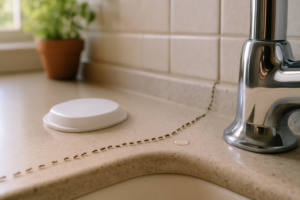
| Small, light brown, near appliances or the coffee maker | An indoor breeding species that spreads fast | Act quickly, these do not resolve on their own |
| One sighting, outdoors, never repeated | A wanderer | Watch for two weeks before spending money |
A Wet Winter Changes the Math Even More
In a heavier rain year, everything I just described gets stronger. More moisture in the soil, more saturated mulch, more standing water in low spots along a foundation.
That matters because moisture is the limiting factor for roaches here, not temperature. Add moisture and you extend the window they stay active.
After a string of real storms, I tend to see:
- Crawlspace activity in homes that never had an issue before
- Roaches moving up into the living space when the space under the house takes on water
- More activity in garages on properties with poor drainage or a downhill grade
- Sightings in Ben Lomond, Boulder Creek and other wooded pockets where the ground stays wet for weeks
If you’re timing your response around the idea that things calm down after the holidays, a wet winter will make that timing look wrong. The same pattern shows up with other pests people assume are seasonal, which I covered in do fleas die off in winter.
The practical takeaway is simple. Judge the season by how wet your property is, not by the date on the calendar.
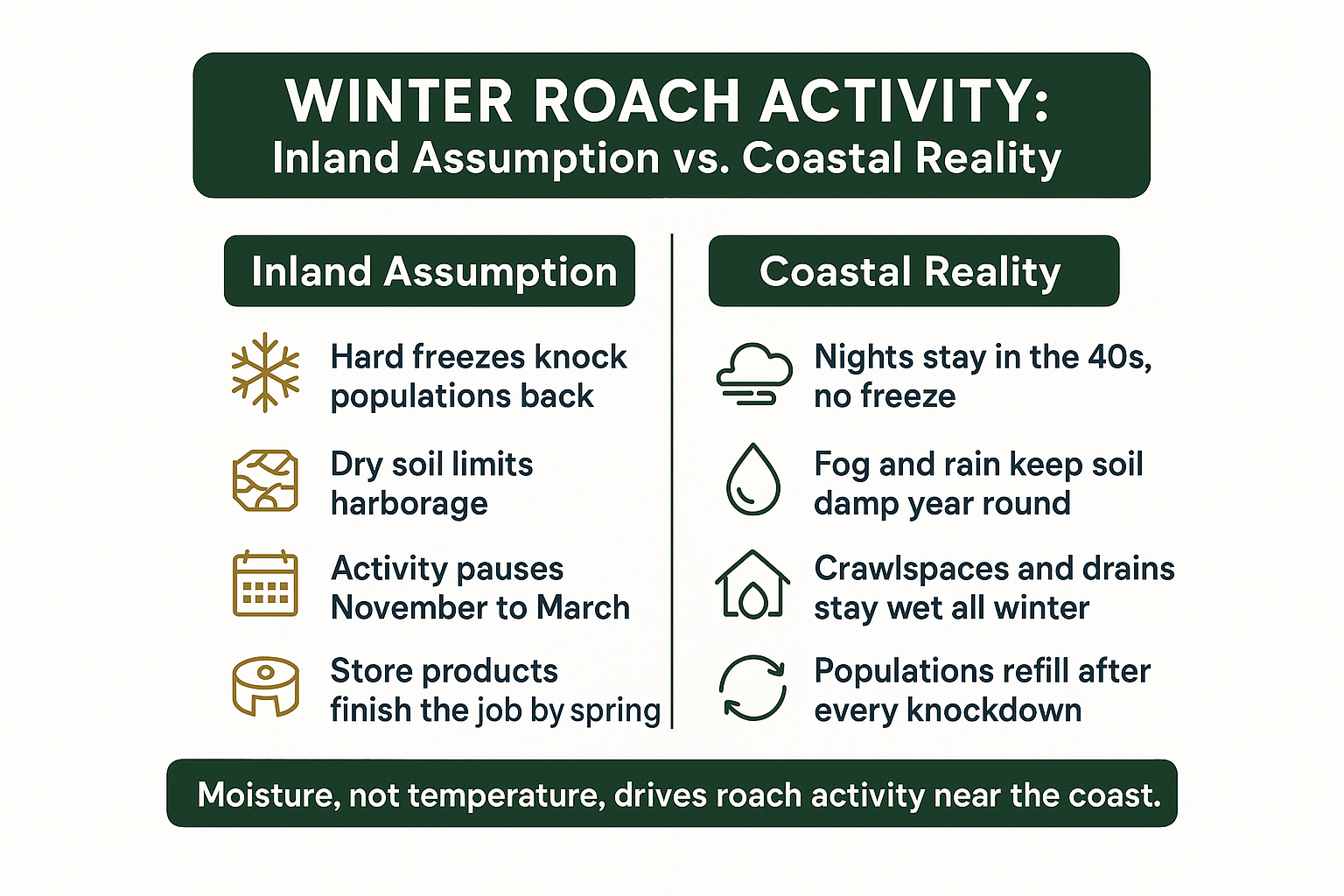
Inland Winter Assumptions vs. Coastal Winter Reality
Here’s a side by side of what homeowners expect a winter to do to roach activity and what actually happens along the coast.
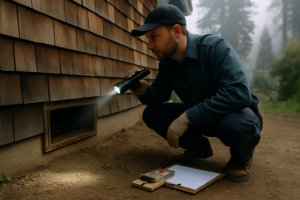
What I Actually Look At During a Winter Walkthrough
When I come out, I spend more time with a flashlight than a sprayer. Treating without knowing where they’re living is how people end up repeating the same service every few months.
The list I work through on a damp season visit:
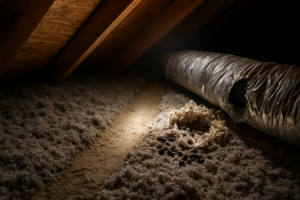
- Moisture first. Slow drips under sinks, sweating supply lines, a water heater pan that never dries, condensation on crawlspace ducting.
- Grade and drainage. Where does roof runoff go, and does it sit against the foundation.
- Harborage. Cardboard stored on a garage floor, stacked firewood, thick mulch beds, ivy against the siding.
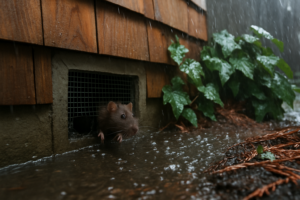
- Openings. Gaps around pipe penetrations, torn crawlspace vent screens, weather stripping that’s given up. I’ll show you where they’re getting in and explain what repairs belong on your list.
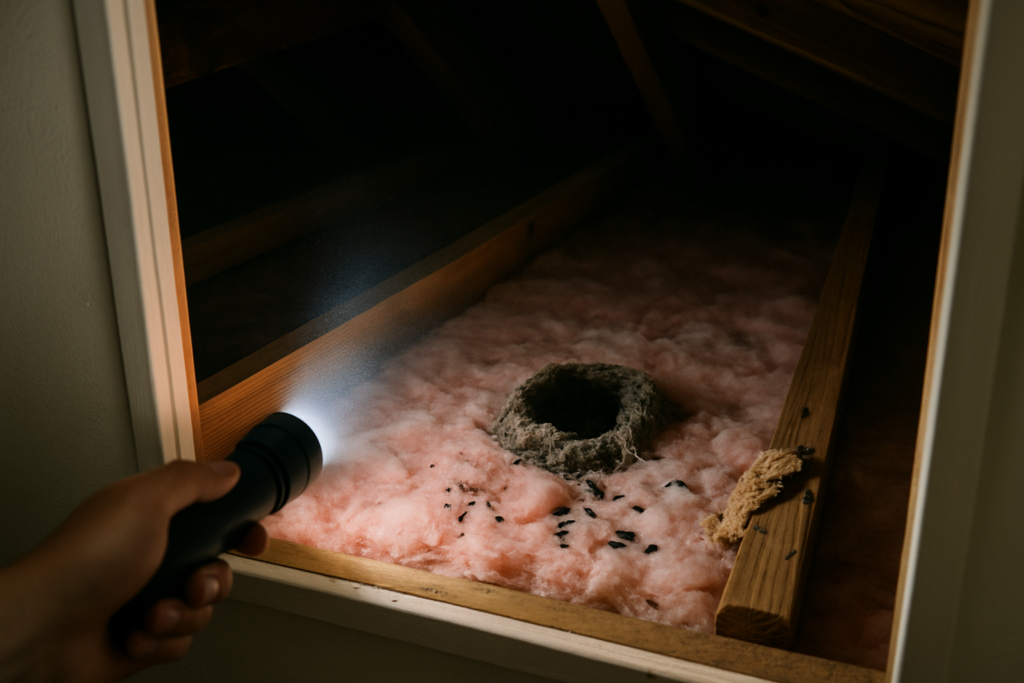
- Evidence. Droppings, smear marks along baseboards, egg cases in cabinet corners, that musty smell in a closed cabinet.
Then treatment is targeted at the places that came up, using low toxicity products chosen with kids and pets in mind. That’s the whole reason the inspection comes first.
Most of this is the same work described in what pest inspectors look for that homeowners usually miss.
What Moves the Cost Up or Down
People want a number before they call, and I understand why. Honest answer is that roach work prices off conditions, not off square footage alone.
Around the Monterey Bay, a one time interior roach treatment on a small, contained problem often lands in the lower few hundred dollars, while an established population spread across a house and crawlspace can run well past that. Treat those as general market context, not a quote.
The things that actually move the price:
- Species. An indoor breeding species takes more visits than an outdoor one wandering in.
- How long it’s been going. Six months of sightings is a different job than six days.
- Access. A tight crawlspace with standing water takes longer than an open garage.
- Number of harborage sites. One damp cabinet versus four separate areas.
- Follow up. Some situations need a return visit to confirm the drop in activity, and that gets built in.
- Property conditions. Drainage problems and heavy mulch beds mean more work outside.
If you’ve already spent a few hundred dollars on store products across a year, it’s worth putting that against the cost of getting it identified once and treated where it lives. A useful comparison on how local pricing gets built is in rat removal costs in Santa Cruz County.
Why It Matters Who Shows Up
One thing I hear constantly is that a previous technician sprayed, left a door hanger and never explained anything. The homeowner was left with no idea what was treated or why it came back.
On our jobs, the same person handles every visit. I walk you through the entry points and the moisture sources I found before anything gets applied, so you know what you’re paying for and what’s still on your side of the fence.
That also keeps expectations honest. Roach work in a damp coastal climate is about getting active populations down and keeping conditions unfavorable, not about one visit ending the subject forever. Anyone promising otherwise hasn’t spent a winter under these houses.
If you’ve already tried everything and you’re tired of guessing, why cockroaches keep coming back covers the most common reasons that cycle repeats.
Frequently Asked Questions About Winter Cockroach Activity
I only saw one roach. Do I really need someone to come out?
Not always. If it was outdoors at night near trash, mulch or a wet planter, that’s normal and worth watching for a couple of weeks. A roach indoors in daylight is the one I’d take seriously, because it usually means the hiding spots are already crowded.
Why did my bait stations stop working after a few weeks?
They probably didn’t stop working. They cleared the roaches that reached them while a separate group kept breeding somewhere damp, often under the house or behind a wall. Bait handles what it touches, and in a wet climate there’s usually more to reach.
Is it safe to treat for roaches with kids and pets in the house?
Yes, when the products and placements are chosen with that in mind. I use low toxicity options and put material in voids and cracks rather than on open surfaces, and I’ll tell you exactly what went where and how long to stay off treated areas.
Does heavy rain make a roach problem worse or better?
Worse, most of the time. Saturated soil and water in a crawlspace push activity up toward the living space, which is why I see new calls from homes that never had an issue after a big storm stretch.
Should I wait until spring to deal with it?
There’s no reason to. Waiting only helps in a climate where winter thins the population for you, and that isn’t what happens here. Two or three months of waiting usually means a larger population and a longer job.
Still Seeing Roaches in the Middle of Winter?
If sightings are continuing through the damp months and the products you’ve tried aren’t holding, having someone identify the species and find the moisture source is usually the step that breaks the cycle. West Pest Co. works across Santa Cruz County and the wider Monterey Bay area, including Monterey County, CA, and the same person who inspects the property is the one who explains what’s going on. Reach us at (831) 430-8402 or westpestco.com when you want a straight answer.