Direct Answer: No. Fleas do not die off in a Santa Cruz County winter. Our coastal cold is too mild and too damp to stop development, and heated homes keep indoor fleas active year round.
The biting stopped sometime in December. The dog quit chewing at her back legs, nobody woke up with itchy ankles, and it felt like the cold finally did its job.
Then a warm stretch shows up in late February and the whole thing starts over. I get these calls every year, and the homeowner almost always says the same thing: “I thought they were gone.”
They were not gone. On the Santa Cruz County coast, fleas do not get the hard shutdown that flea advice on the internet assumes. Below I will walk through why our winter does not kill them, where they actually wait it out, and what you can check yourself on a rainy January afternoon.
Do Fleas Die in Winter Here? Almost Never
Flea eggs and larvae need warmth and humidity to keep developing. In places that get a real freeze, weeks of frozen ground and dry air wipe out the outdoor population, and that is where most of the “fleas die in winter” advice comes from.
We do not get that. A Santa Cruz County winter runs cool, gray, and wet, and the ground under a deck or a raised house sits in a mild range for months. Fog and rain keep humidity high, which is exactly what flea larvae want.
Indoors it is even easier for them. Once the heat kicks on, your carpet and the dog’s bed sit in a comfortable range all season long.
So what actually changes in January is the pace, not the presence:
- Adult fleas emerge more slowly in cold outdoor soil
- Pupae can sit in the carpet or dirt for weeks waiting for warmth and vibration
- Fewer adults means fewer bites, so people assume the problem ended
- The first warm week gives the waiting pupae their cue
That gap between December quiet and February itching is the single most misread thing about fleas on this coast.
Where Fleas Ride Out a Coastal Winter
When I get under a house in January, I am not looking in the middle of the yard. I am looking at the sheltered, shaded, protected spots that stay mild through storm season.
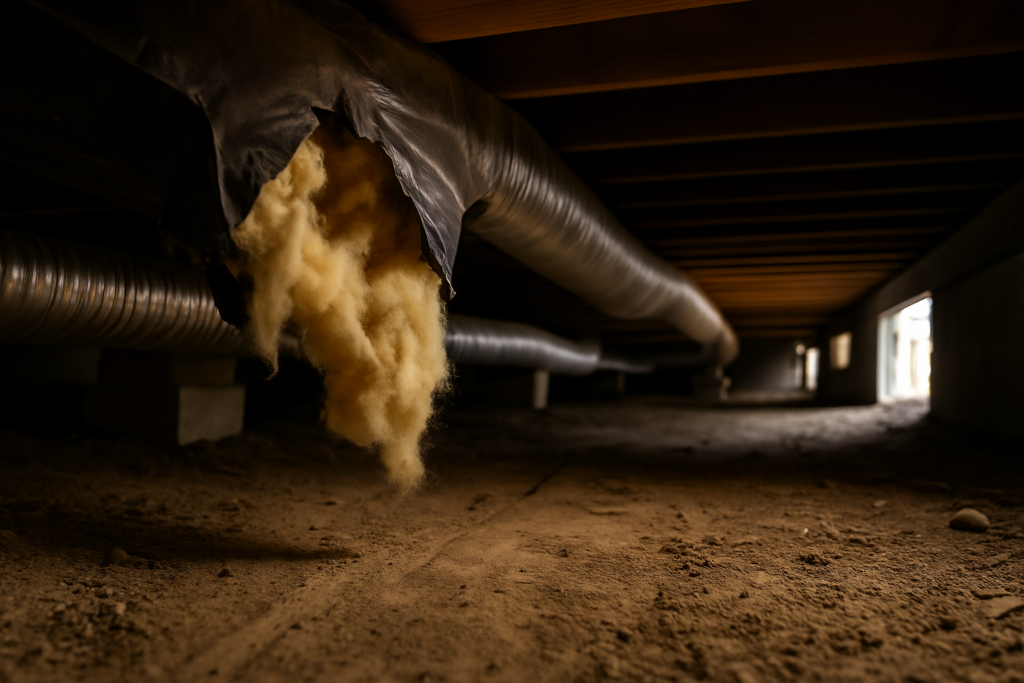
Santa Cruz County has a lot of older raised homes, and that underfloor space is the piece people never think about. Westside cottages, Live Oak bungalows, and the mountain homes up around Ben Lomond and Boulder Creek all tend to sit on a raised foundation with dry, powdery dirt underneath.
That dirt stays out of the rain, holds a steady temperature, and collects the hair and organic debris flea larvae feed on. It is one of the better winter nurseries a flea could ask for.
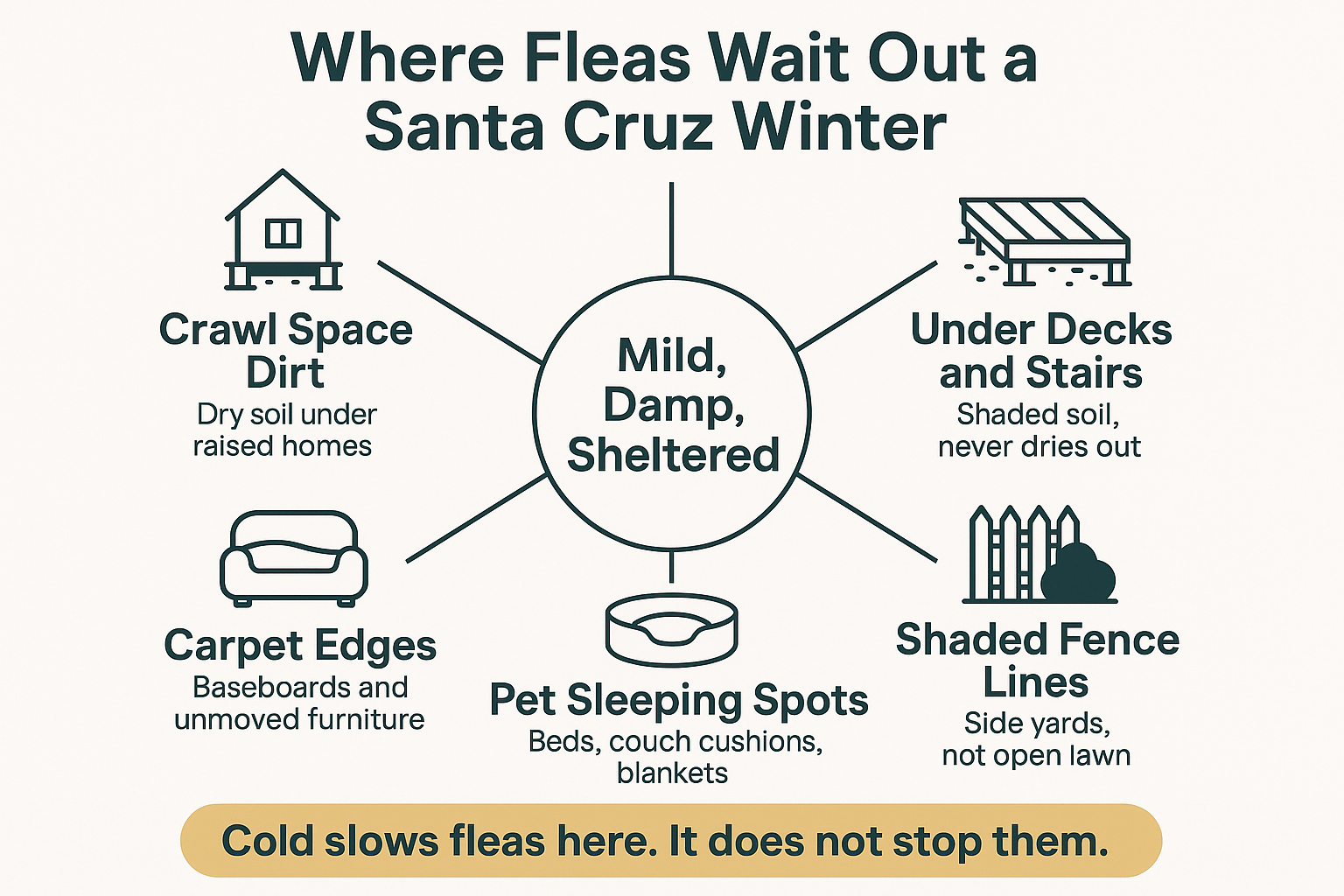
The short list of places I check first:
- Crawl spaces and underfloor dirt, especially where an animal has worn a path
- Under decks, porches, and stairs where the soil never gets sun
- Shaded fence lines and side yards, not the open lawn
- The pet’s regular sleeping spots, including the couch cushion nobody admits the dog uses
- Carpet edges along baseboards and under furniture that never gets moved
The population did not leave in December. It slowed down in a place nobody was looking.
The Part Most Homeowners Miss: Wildlife Keeps the Yard Stocked
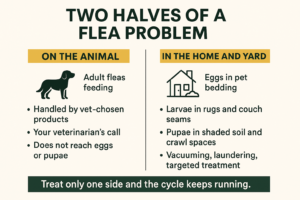
Here is the thing I end up explaining on nearly every flea call. You can treat the dog perfectly, wash every blanket, and still have fleas showing up, because the yard is being restocked from the outside.
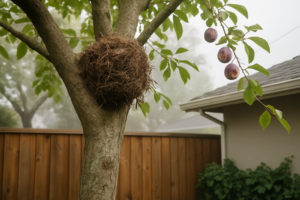
Opossums, raccoons, feral cats, and rats all shelter under decks and in crawl spaces during our wet months. They drop flea eggs everywhere they travel, and those eggs land in the exact protected soil described above.
So a flea problem that keeps restarting is often a wildlife or rodent access problem wearing a different costume. That overlaps directly with the calls I get about scratching under the house or something burrowing along a foundation.
If your fleas keep coming back on a cycle, ask a different set of questions:
- Is anything sleeping under the deck or the shed?
- Are there droppings, worn trails, or a musty odor in the crawl space?
- Does a neighbor feed outdoor cats along a shared fence line?
- Is fruit dropping in the yard and drawing rats?
Until that answer changes, the yard stays under pressure. That is also why one flea treatment often is not enough to break the cycle, especially on properties with wildlife traffic.
Standard Flea Advice vs. What Happens on the Central Coast
Most flea articles are written for climates with a hard freeze. Here is how that advice lines up against a Santa Cruz County winter.
| Common advice | What it assumes | What actually happens here |
|---|---|---|
| “Fleas die off in winter” | Weeks of freezing ground and dry air | Coastal soil stays mild and damp under decks and crawl spaces |
| “Stop flea prevention in November” | No outdoor adults until spring | Wildlife keeps dropping eggs in the yard through storm season |
| “No bites means no fleas” | Population is gone | Pupae wait in carpet and dirt for the next warm stretch |
| “Treat the pet and you’re done” | Pet is the only source | Opossums, raccoons, feral cats, and rats re-seed the property |
| “Indoor pets are safe in winter” | Fleas cannot get inside | Heated carpet and pet bedding stay in the ideal range year round |
Where Fleas Wait Out a Santa Cruz Winter
These are the five spots I check first on a January flea inspection, and none of them are the open lawn.
Why Vets Push Year Round Prevention Instead of a Summer Routine
Vets on the Central Coast tend to recommend flea prevention twelve months a year, and it is not an upsell. It comes down to the fact that fleas here move between wildlife and pets on a continuous basis.
The California Department of Public Health notes that flea-borne typhus is spread by the common cat flea and the rat flea, which are carried by rats, opossums, and free-roaming cats. It is described as endemic in parts of Los Angeles and Orange counties, with cases reported occasionally elsewhere in the state. Los Angeles County reported a record 220 cases for 2025, up from 187 the year before.
Santa Cruz County is not an outbreak area, and this is not a reason to worry about your living room. The reason I bring it up is simpler: public health guidance pairs pet flea control with keeping rats and opossums away from the home, which is the same two-part answer I give homeowners here. You can read the details in the CDPH flea-borne typhus fact sheet.
Fleas that ride wildlife are a year round animal, not a July animal. That is the whole point.
What You Can Check This Afternoon
You do not need equipment to get a decent read on whether fleas are still active in January. Three checks cover most of it.
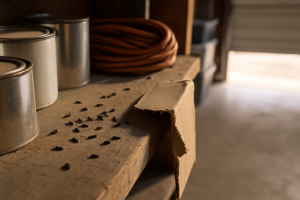
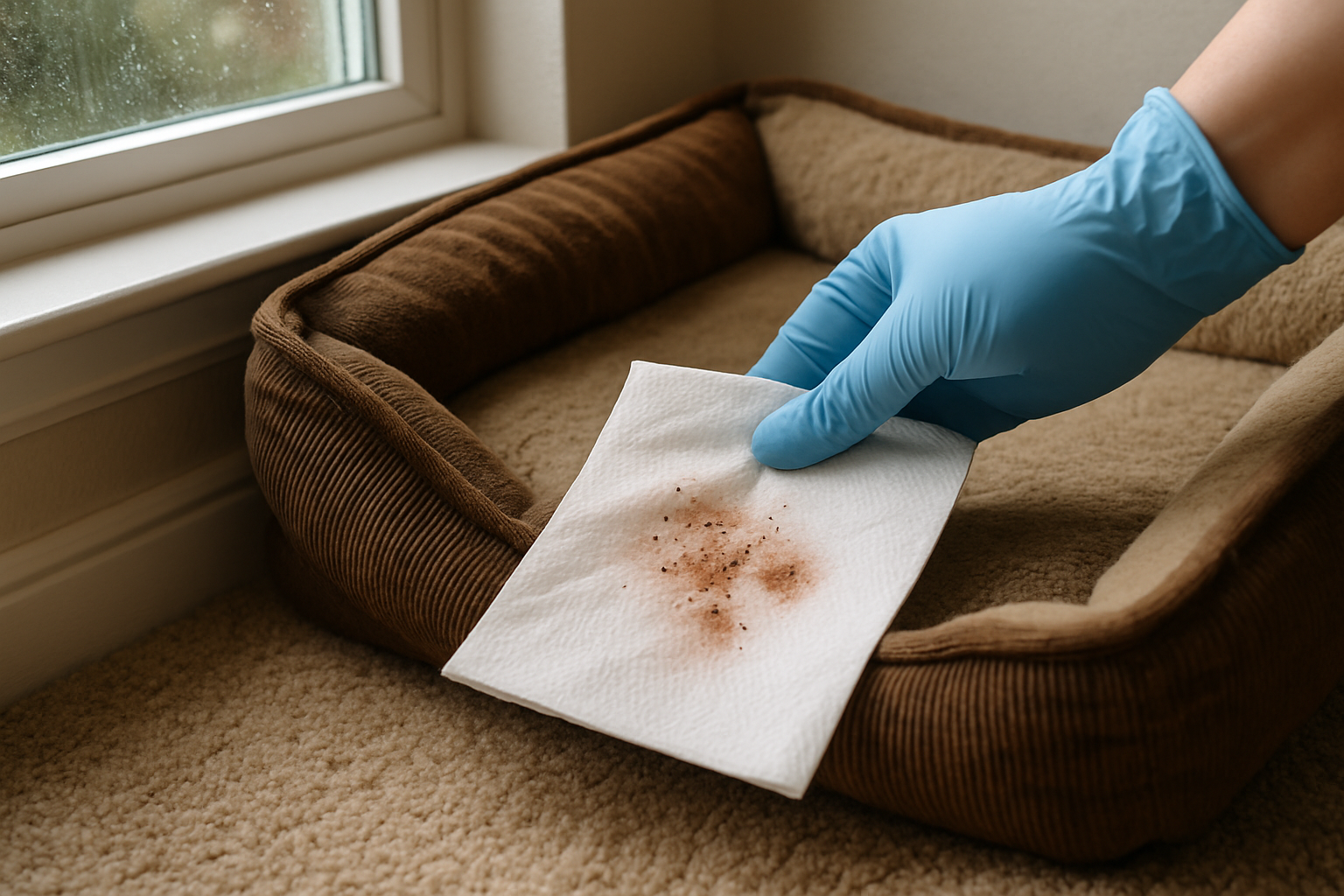
- The sock or towel test. Pull a white sock over your hand or use a damp paper towel, and rub it across the pet’s favorite sleeping spot. Black specks that smear reddish brown are flea dirt, which is digested blood.
- The baseboard check. Run your fingers along the base of the carpet where it meets the wall, and look under the furniture that never moves. Larvae and pupae stay down in the fibers, away from foot traffic.
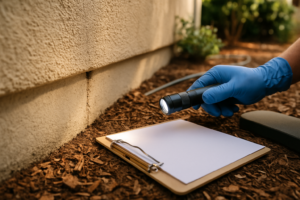
- The shade walk. Skip the open lawn. Walk the shaded, sheltered parts of the yard and look for worn animal paths, droppings, and gaps under decks or skirting.
If you find white specks and are not sure what they are, this guide on telling flea eggs from other debris is worth two minutes.
What a professional inspection adds is the underfloor and the perimeter. I am checking where the pet and the wildlife actually travel instead of treating rooms at random, because a flea problem is a map problem before it is a product problem.
And I will be straight with you about the outcome. Treatment addresses the active population. Homes with pets, wildlife pressure, or a shared fence line stay under pressure regardless, which is why follow-up matters more than strength.
The Safety Questions People Ask Before They Ask About Price
In Santa Cruz County, the safety question comes first almost every time. One homeowner wrote in asking for the least toxic approach possible because of a young Labrador puppy, and wanted to know whether targeted work was used instead of routine spraying everywhere.
That is a fair question and it deserves a plain answer.
- Targeted over blanket. Products go where fleas actually develop, meaning pet resting areas, carpet edges, and sheltered outdoor soil, not every square foot of every room.
- Pet-safe, low-toxicity materials. Our flea work leans on eco-friendly products chosen with kids and animals in the house.
- Re-entry timing. Expect to keep people and pets off treated surfaces until everything is fully dry, which is commonly a couple of hours indoors depending on airflow and how damp the day is. Foggy Santa Cruz mornings slow drying down, so ask for the specific window at the time of service.
- Prep helps more than product strength. Vacuuming before and after, and washing pet bedding in hot water, does real work on the eggs and pupae that no spray reaches well.
On cost, flea service in this county varies quite a bit with square footage, number of pets, whether the crawl space is involved, and how many follow-ups the situation needs. I would rather quote your actual house than throw a number at you, so treat any figure you read online as rough market context only.
Frequently Asked Questions About Fleas and Winter in Santa Cruz County
It’s January and the biting stopped. Do I still have fleas?
Possibly. Cold slows adult emergence, but pupae can sit dormant for weeks in carpet and sheltered soil. Run the paper towel test on the pet’s bed before you call it over.
My pets are on year round flea medication. How are fleas still in the house?
Flea medication kills fleas that bite your pet. It does not treat the eggs and larvae already in the carpet or the dirt under the deck, and it does nothing about the opossum or the neighborhood cats restocking your yard. That is why an infestation can keep going even with a perfectly protected pet.
Can I get fleas if I don’t own a pet at all?
Yes, and it happens here more than people expect. Wildlife under the house, a previous tenant’s pet, or rodents in the crawl space can all bring them in. There is a full breakdown in our article on how fleas get into a home with no pets.
Is winter a bad time to treat for fleas?
Not at all. Working on a smaller, slower population in January is often easier than chasing a peak one in August. The advantage is that fewer adults are emerging while treatment and vacuuming knock down what is waiting in the carpet and soil.
How long before we can walk on the carpet after treatment?
Keep off treated areas until they are completely dry, usually a couple of hours indoors, longer on a damp coastal day with the windows closed. You will get an exact window before the technician leaves.
Why did my fleas come back three weeks after treatment?
That timing usually points to pupae hatching out after the first knockdown, which is normal and expected. If it keeps repeating on a cycle, I start looking at the yard and the crawl space for an animal that is re-seeding the property.
Still Seeing Fleas in the Middle of Winter?
Most of the flea calls I take come from people who already tried everything at the hardware store first. One Santa Cruz customer put it plainly in her review: “Trying everything I could I could not manage the fleas that infested my home.” West Pest Co. is owner operated by Matthew West, voted Best Pest Control in Santa Cruz in the Readers Choice awards for 2023 and 2024, with a 5-star Google rating built on exactly those situations. If you have questions about what you are seeing in your house this January, you are welcome to call (831) 430-8402 or visit westpestco.com.