Direct Answer: The glassy-winged sharpshooter is a large leafhopper that spreads a fatal bacterial disease to grapevines and other plants. Santa Cruz County issued an official alert in May 2026 after infested vines were sold at local Costco locations.
In late May 2026, the Santa Cruz County Agricultural Commissioner issued an official alert about a confirmed glassy-winged sharpshooter outbreak tied to grapevines sold at Costco locations across Northern California between late April and mid-May. If you bought grapevines labeled ‘Growers Pride’ or ‘Burchell Nursery’ during that window, this article is worth reading carefully.
Most Santa Cruz homeowners I talk to have never heard of this insect. That’s partly what makes it a problem. It can move through a garden quietly, doing serious damage before anyone realizes what’s causing it.
This isn’t a story about calling a pest control company. It’s about knowing what to look for, understanding what’s at stake for your yard, and knowing exactly who to contact first if you think you’ve found it.
What the Glassy-Winged Sharpshooter Actually Is
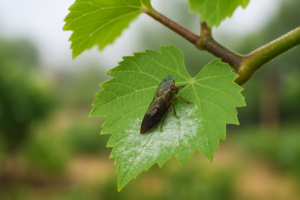
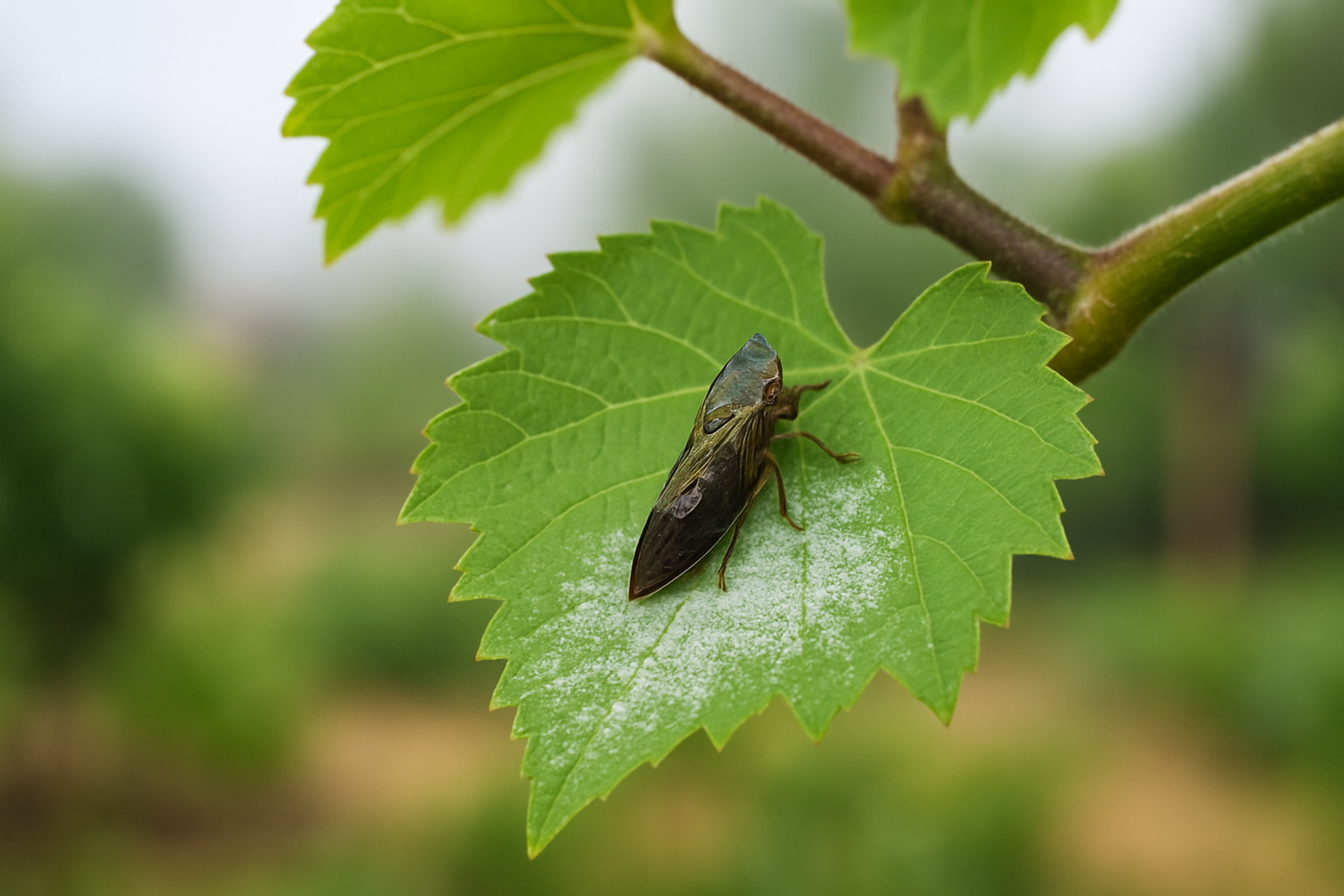
The glassy-winged sharpshooter is a large leafhopper, roughly half an inch long, with a dark brown body, translucent wings, and yellow or red markings on its underside. It’s noticeably bigger than most leafhoppers you’d find in a garden, which makes it easier to spot if you’re looking closely.
What makes it dangerous is not the feeding itself. It’s what it carries. The sharpshooter spreads Xylella fastidiosa, the bacterium responsible for Pierce’s disease, which is fatal to grapevines and has no known cure. A vine infected with Pierce’s disease typically declines over two to five years before dying completely.
Grapevines are the primary concern, but this pest also feeds on:
- Citrus trees
- Almond trees
- Oleander shrubs
- Ornamental landscape plants commonly found in Santa Cruz yards
Santa Cruz’s mild, humid coastal climate is exactly the kind of environment where an introduced pest like this can quietly establish itself. We don’t get the hard freezes that slow insect populations in inland California, so a new arrival has a much easier path to becoming a real problem.
Signs to Look For in Your Yard Right Now
This is where most homeowners go wrong. The signs of a sharpshooter infestation are easy to misread as drought stress, fungal disease, or just normal summer wilting. Knowing what you’re actually seeing changes everything.
The most recognizable sign is a whitish, chalky residue on leaves and fruit. The sharpshooter feeds heavily on plant fluids and expels large amounts of liquid waste, which dries into a powdery white coating. If you’ve seen what looks like a white film on your vines or citrus leaves and assumed it was mildew or dust, look again.
Other signs worth checking for:
- Wilting or scorching on small plants during warm stretches, even when soil moisture is adequate
- Spotty white deposits on cars parked under heavily infested trees, which often gets blamed on birds or sap
- Leaf scorch patterns on grapevines starting at the margins, which is a classic symptom of Pierce’s disease progressing through the plant
The Santa Cruz County Agricultural Commissioner’s official May 2026 alert urges residents to take immediate precautions, especially anyone who purchased plants during the affected Costco window. If you still have the plant receipt or tags, hold onto them.
If you’re already in the habit of monitoring your yard for unusual leaf damage, you’re ahead of most people. That habit matters year-round here, not just during outbreak events. Santa Cruz gardens can pick up hitchhiker pests from large retailers in ways that aren’t obvious until the damage is already spreading.
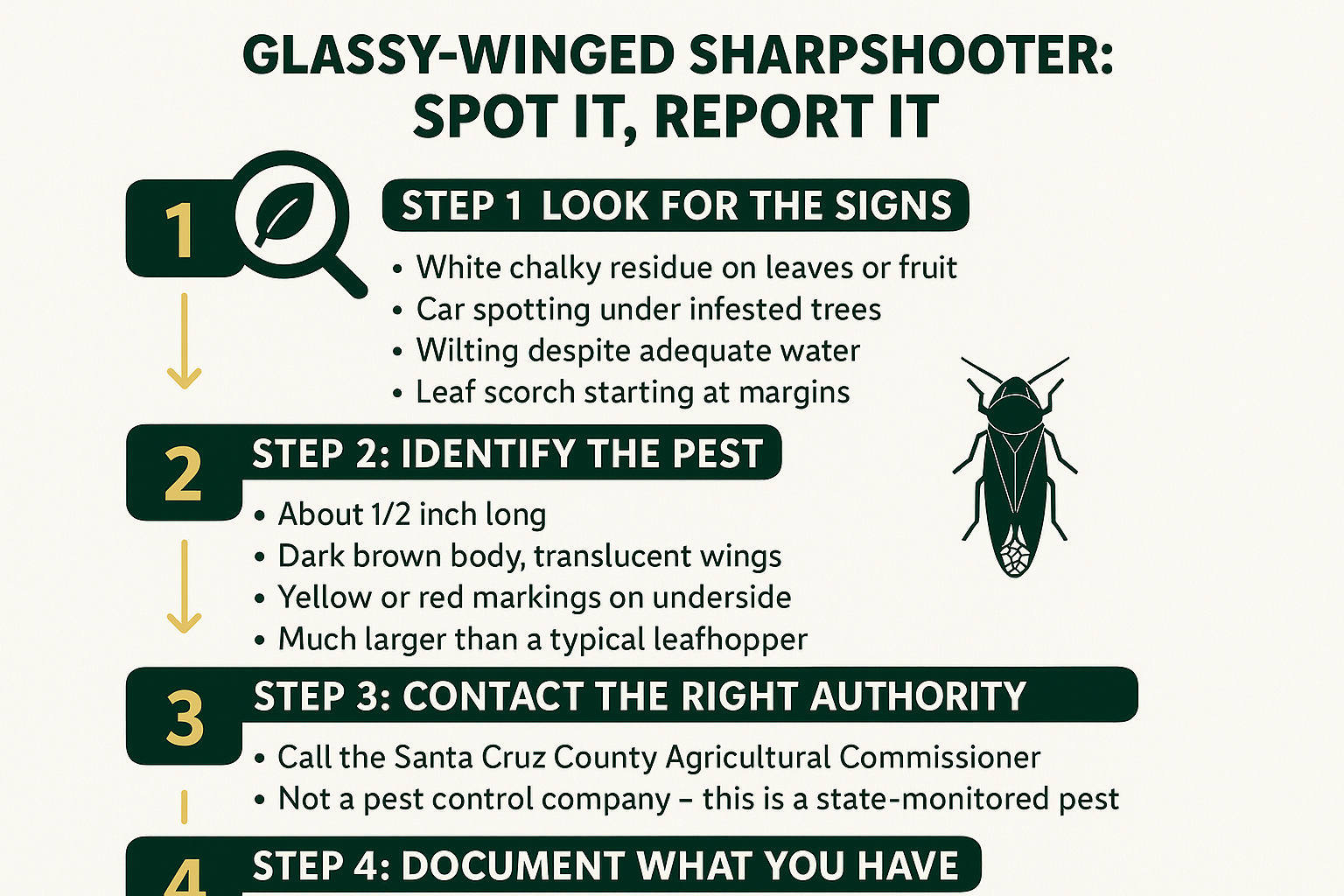
Glassy-Winged Sharpshooter: What to Look For and What to Do
This quick-reference guide covers the key identification signs and the correct steps to take if you spot them in your Santa Cruz yard.
Who to Call First – and Why It Matters
I want to be direct about this: if you suspect a glassy-winged sharpshooter infestation, your first call should be to the Santa Cruz County Agricultural Commissioner, not a pest control company.
This pest is under active state monitoring. The California Department of Food and Agriculture has protocols specifically for tracking and managing it, and those protocols require coordination with county agriculture officials. A responsible local expert will tell you the same thing.
Contacting the Agricultural Commissioner serves two purposes. First, it gets trained eyes on your property to confirm whether what you’re seeing is actually a sharpshooter infestation. Second, it feeds into the county’s ability to track the spread and respond appropriately, which protects your neighbors’ gardens too.
This is a case where the correct chain of response matters. Skipping it doesn’t help anyone.
For general yard pest questions that fall outside the sharpshooter situation, West Pest Co. is available to help Santa Cruz homeowners figure out what’s going on with their gardens and surrounding property.
Glassy-Winged Sharpshooter vs. Common Garden Pest Confusion Points
These are the misread signs I hear about most often from Santa Cruz homeowners dealing with plant damage they can’t explain.
| What You See | Common Misread | What It May Actually Be |
|---|---|---|
| White film on leaves or fruit | Powdery mildew or dust | Sharpshooter liquid waste residue |
| White spots on parked cars | Bird droppings or tree sap | Sharpshooter excretions from overhead foliage |
| Wilting despite watering | Drought stress or root problem | Pierce’s disease progressing in the plant |
| Leaf scorch starting at edges | Sunburn or fertilizer burn | Classic Pierce’s disease symptom on grapevines |
| Small insects on undersides of leaves | Aphids or whiteflies | Juvenile sharpshooters feeding on plant fluid |
The Bigger Lesson for Santa Cruz Gardeners
The sharpshooter situation is a good reminder of something I see play out in this county regularly. Plants purchased from large retail chains can carry hitchhiker pests that aren’t visible at the point of sale and don’t show symptoms right away.
Santa Cruz’s climate amplifies this risk. Our year-round mild temperatures and consistent coastal humidity mean that an introduced insect doesn’t face the same population checks it might in a drier or colder region. If something establishes itself here, it can spread through neighboring gardens before anyone connects the dots.
The habit worth building is straightforward. Walk your yard regularly and look at your plants, not just for obvious damage, but for residue, discoloration, unusual spots, or insects you don’t recognize. You don’t need to be an entomologist. You just need to notice when something looks off and not assume it’s drought or disease before ruling out insects.
If you’re dealing with aphids or other garden pests alongside your monitoring, aphid and garden pest treatments are worth understanding before you decide whether to call a professional. And if you’re seeing other yard activity alongside plant damage, knowing when to stop handling a pest problem on your own can save you a lot of wasted effort.
Frequently Asked Questions About the Glassy-Winged Sharpshooter in Santa Cruz
I bought grapevines from Costco in April or May 2026. What should I do?
Hold onto your receipt and any plant tags if you still have them. Inspect your vines carefully for white chalky residue on leaves, leaf scorch starting at the margins, or wilting that doesn’t respond to watering. Then contact the Santa Cruz County Agricultural Commissioner directly. They are the right first point of contact for this specific situation.
Can Pierce’s disease be treated if we catch it early?
No. Pierce’s disease has no known cure. Once a grapevine is infected, the outcome is decline and eventual death, typically over two to five years. Removing infected plants and controlling the sharpshooter population around remaining plants is the primary management approach.
Does the glassy-winged sharpshooter only affect grapevines?
No. While grapevines are the most commonly cited host, the sharpshooter also feeds on citrus, almond, oleander, and a range of ornamental landscape plants. Santa Cruz yards with diverse plantings can be affected beyond just wine grapes or backyard vines.
What does the insect itself look like?
It’s larger than most leafhoppers you’d spot in a garden, roughly half an inch long, with a dark brown body and translucent wings. The underside has yellow or reddish markings. If you see an insect that matches this description on your vines or citrus, photograph it and contact the Agricultural Commissioner.
Is this something a pest control company handles?
Not as a first step. The glassy-winged sharpshooter is under active state monitoring, and the county has specific protocols for confirming and responding to infestations. The Santa Cruz County Agricultural Commissioner should be your first call. A pest control company can help with many garden and yard pests, but state-regulated agricultural pests require coordination with the appropriate government authority.
Should I be checking other plants besides grapevines?
Yes. Walk your citrus, oleander, and any ornamental plants you have near the affected vines. Look for the white chalky residue on leaf surfaces, and check the undersides of leaves for small insects. The sharpshooter moves between host plants, so limiting your inspection to just one plant type can leave you with an incomplete picture.
Questions About What’s Happening in Your Yard?
If you’re seeing plant damage or insect activity in your Santa Cruz County garden and aren’t sure what you’re dealing with, West Pest Co. is a local resource for sorting through what’s actually going on. Matthew West has served Santa Cruz County homeowners for years, earning back-to-back Readers Choice Best Pest Control awards in 2023 and 2024, and he answers the phone himself. Reach out at (831) 430-8402 or visit westpestco.com to learn more.