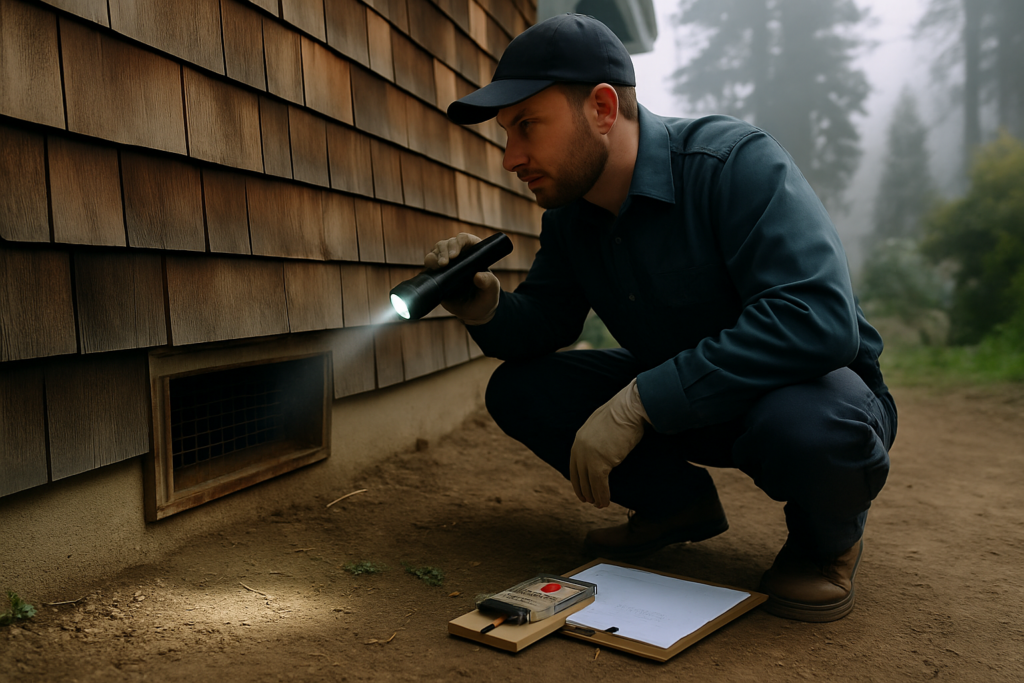
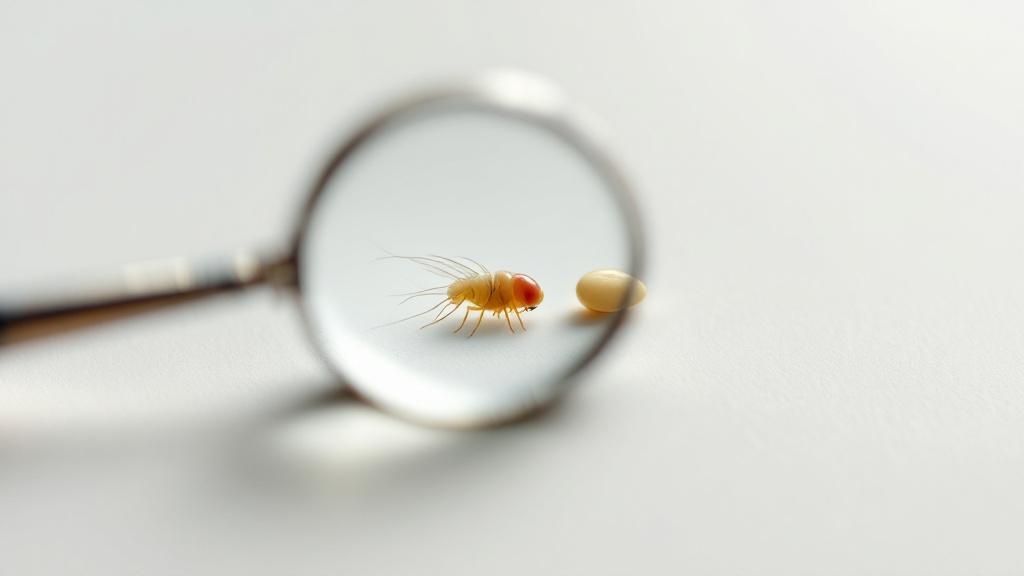
So, what do flea eggs really look like? Many people think they will be easy to spot, but the truth is they are very sneaky. Imagine tiny grains of salt or small specks of dandruff scattered on your pet's bed or in your carpet.
They are oval-shaped, smooth, and a creamy off-white color. They are also very small—only about 0.5 mm long. This makes them almost impossible to see unless you know what to look for.
Identifying Flea Eggs in Your Santa Cruz Home
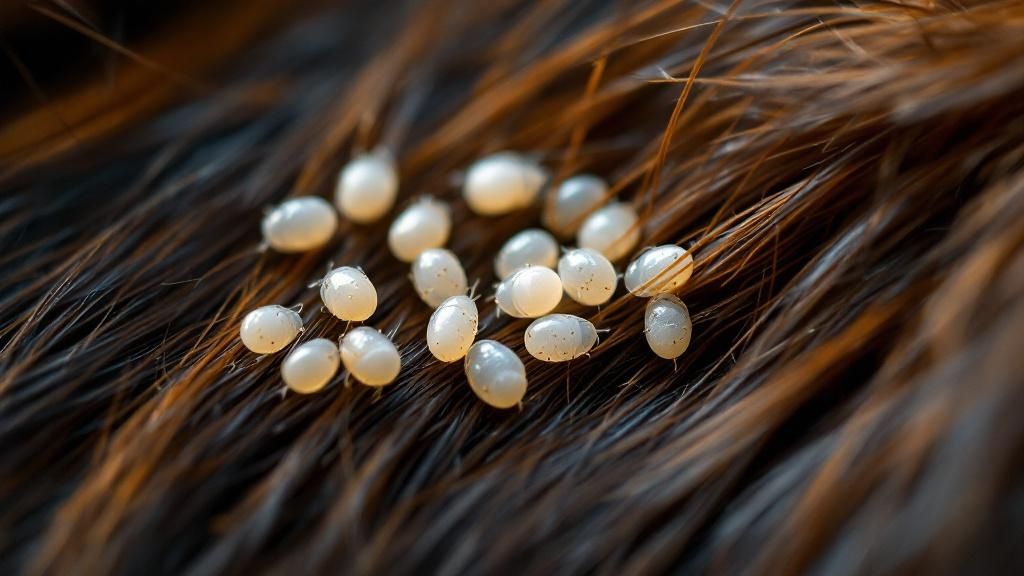
Finding a single flea on your dog or cat is upsetting. But that one flea is usually a sign of a bigger problem. The real issue starts with the hundreds of tiny eggs they leave behind in your home. For homeowners here in Santa Cruz, spotting these nearly invisible eggs is the first step to stopping a major infestation.
A common sign of a flea problem is the "salt and pepper" look. This is a mix of white flea eggs (the salt) and dark specks of flea dirt (flea feces). Check your pet’s bed, their favorite spot on the couch, or the rugs where they sleep.
H3: Key Characteristics to Remember
Flea eggs are tiny, measuring just 0.5 millimeters long. To give you an idea, they are barely visible to the naked eye.
- Shape: They have a smooth, oval shape with two rounded ends.
- Color: Fresh eggs are nearly see-through but turn a pearl-like white as they get older. You can learn more from the flea experts at FleaScience.
- Texture: Unlike dandruff flakes, flea eggs are smooth and all look the same. They are not sticky, which is why they fall off your pet and into your home.
Here is a quick chart to help you identify them.
Flea Egg Identification at a Glance
This table breaks down what flea eggs look like, so it is easier to tell them apart from other tiny things in your home.
| Characteristic | Description | Common Comparison |
|---|---|---|
| Size | About 0.5 mm long; very hard to see. | A single grain of table salt. |
| Color | Translucent to pearly, off-white. | Tiny, polished grains of rice. |
| Shape | A uniform, smooth, oval shape. | A microscopic chicken egg. |
| Texture | Smooth and not sticky; they roll easily. | Smooth like a tiny seed bead. |
Knowing these details helps you confirm what you are seeing. You can stop guessing and start taking action.
Because the eggs are not sticky, a flea problem is not just about your pet. It is about treating your whole house. The eggs that fall into carpets and furniture are where the next generation of fleas comes from.
By learning how to spot these tiny eggs, you can act fast before a small issue becomes a huge infestation.
Where Do Flea Eggs Hide in Your House?
You might think fleas lay their eggs on your pet, but that’s just the beginning. A single female flea can lay up to 50 eggs per day. But these eggs are not sticky.
As your pet moves around your Santa Cruz home, those tiny oval eggs fall off. It’s like a salt shaker spreading future fleas everywhere. This is why just treating your pet will never solve a flea problem. The real battle is in your house.
Common Flea Egg Hotspots
Knowing where to look is half the battle. Flea eggs hide in places your pets love to hang out. To control an infestation, check these common spots:
- Pet Bedding and Crates: This is the main spot. The warmth and your pet’s presence make their bed a perfect incubator for flea eggs.
- Carpet Fibers and Rugs: Deep in your carpets, flea eggs are safe from vacuums and foot traffic. It's a safe place for them to hatch.
- Upholstered Furniture: Every time your pet jumps on the couch, they may be dropping eggs into the cushions. These dark, safe spots are prime real estate for fleas.
- Cracks in Hardwood Floors: The tiny gaps between floorboards can collect dust, pet hair, and flea eggs. These hidden pockets are easy to miss.
Finding mysterious tiny bugs in your home can be unsettling. If you're not sure if you have fleas or something else, it helps to know what to look for. Check out our guide on what bugs are in your house for help.
By focusing on these areas with good cleaning and treatment, you can break the flea life cycle.
Distinguishing Flea Eggs From Other Specks
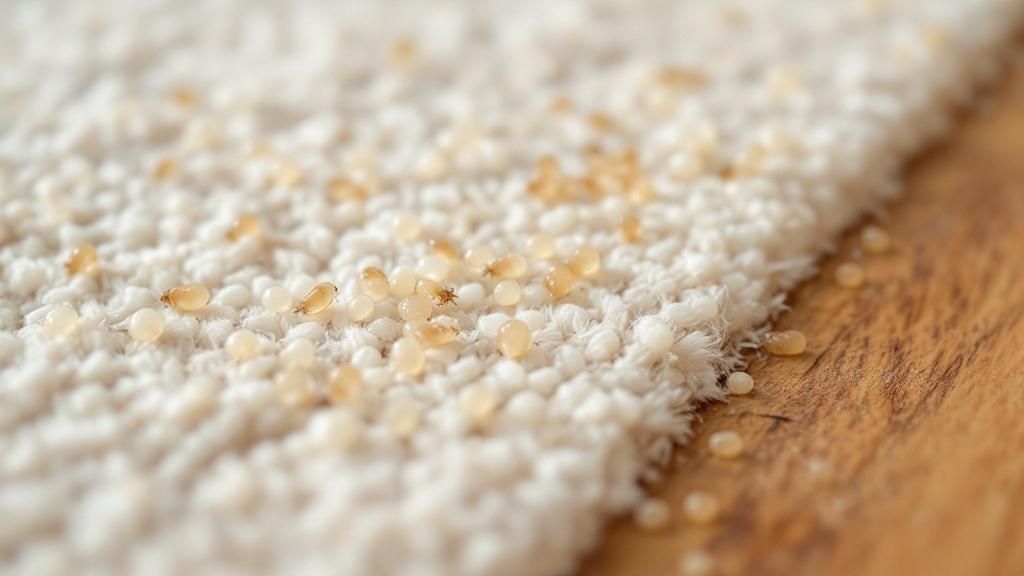
Is that a speck of sand from a day at the beach in Aptos? Or is it a flake of your pet’s dander? It could also be the start of a flea infestation. It is easy to misidentify the tiny white particles you find in your home.
Thinking flea eggs are just harmless dust can give an infestation a head start. When you can tell the difference, you can act fast. This is very important when you consider the long flea life cycle. A few missed eggs can lead to months of trouble.
Common Household Look-Alikes
Many things in your home can be mistaken for flea eggs. Here’s a quick guide to help you tell them apart:
- Dandruff or Dry Skin: These flakes are usually flat and have irregular shapes and sizes. Flea eggs are always oval and look the same.
- Sand or Dirt: Sand grains from our Santa Cruz beaches have sharp, angular edges. Flea eggs are smooth and rounded with no sharp points.
- Spilled Salt or Sugar: Salt and sugar crystals have a blocky or cubic shape. A flea egg is clearly oval, like a tiny bird's egg.
The biggest difference is the texture and shape. If you roll a speck between your fingers, a flea egg will feel smooth and hard. Dandruff will crumble, and salt will feel gritty.
The table below offers a simple comparison to make it even clearer.
Flea Eggs vs Common Household Specks
This table breaks down the key features of flea eggs compared to other specks often found in homes.
| Item | Shape | Color | Texture | Where It's Found |
|---|---|---|---|---|
| Flea Eggs | Uniform, smooth oval | Pearly, off-white | Smooth, hard, non-sticky | Pet bedding, carpets, furniture |
| Pet Dander | Irregular, flaky | White to yellowish | Soft, crumbles easily | Pet bedding, floors, furniture |
| Sand | Crystalline, sharp edges | Varies (tan, clear, black) | Gritty, hard | Tracked in from outdoors |
| Salt | Cubic or irregular | Bright white | Gritty, dissolves in water | Kitchen floors, dining areas |
Knowing these details is your best defense. If you find real flea eggs, it's time to take action.
How Flea Eggs Quietly Fuel a Massive Infestation
Finding what looks like a tiny grain of salt might not seem like a big deal. But it could be the first sign of a serious problem. Each one of those flea eggs is a future biting adult. Understanding their life cycle shows how fast a few fleas can become a huge infestation in your Santa Cruz home.
A single female flea can lay about 20 eggs every single day. These eggs are not sticky. They fall off your pet and scatter into carpets, furniture, and bedding. This quietly seeds your whole home with the next generation of fleas.
The Four Stages of a Flea Takeover
The flea life cycle has four parts, which makes them hard to get rid of. It starts with the egg, which hatches into a larva, becomes a pupa, and finally emerges as an adult flea. Breaking this cycle is the only way to get rid of them for good.
The infographic below shows how quickly a few fleas can lead to thousands of eggs in your home.
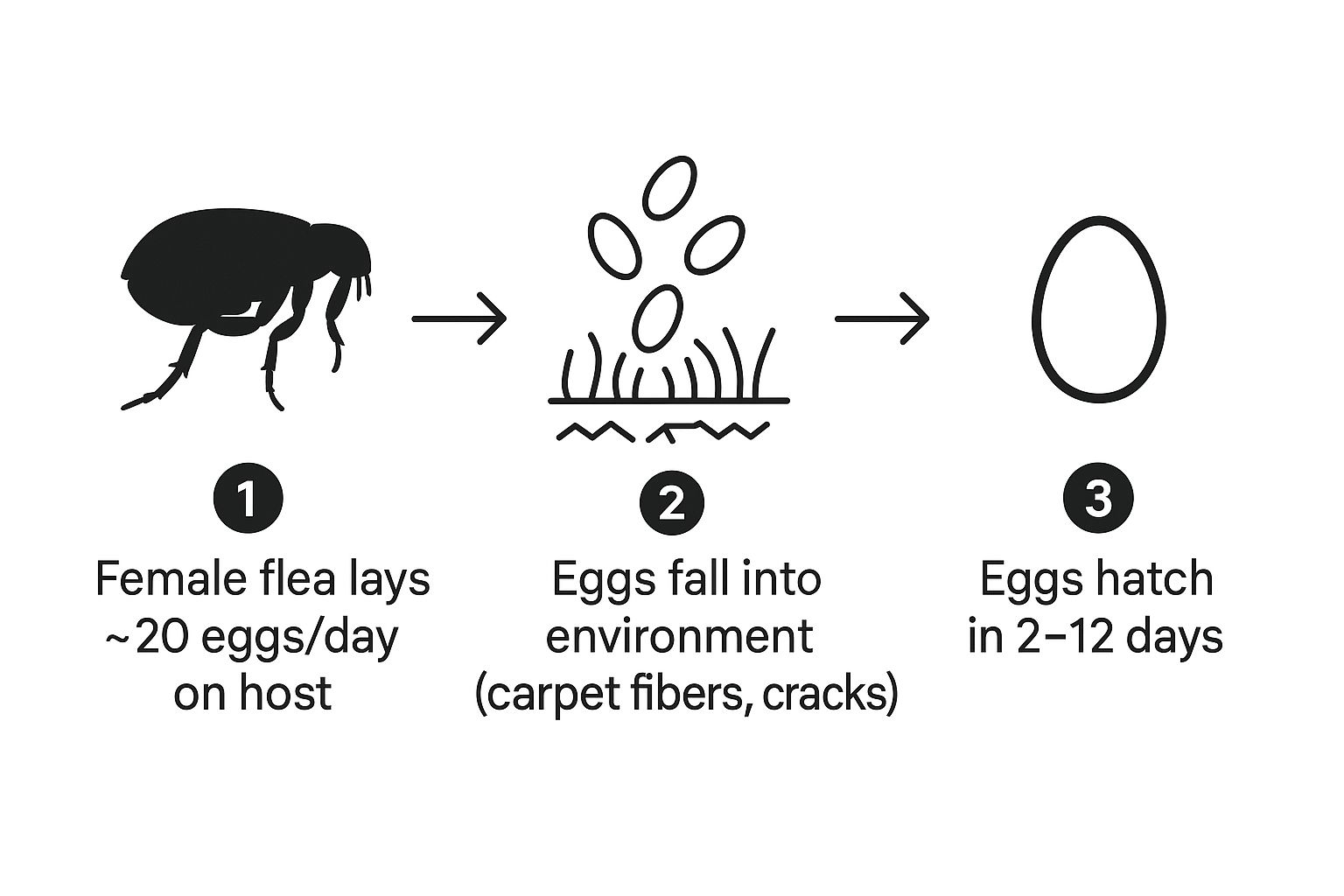
This cycle can turn a small issue into a nightmare. A single flea lays hundreds of eggs that contaminate your home. This leads to a nonstop loop of hatching, feeding, and re-infesting that feels impossible to stop.
Our mild coastal climate in Santa Cruz County is often perfect for fleas. An egg can hatch in just 1 to 10 days. This releases a tiny larva that looks like a caterpillar. These larvae burrow into carpets and eat flea dirt (flea feces). You can learn more about the flea life cycle from the experts at WCVVM.
After the larval stage is the pupa stage, where the flea spins a protective cocoon. This is where things get really tough for homeowners.
The pupa is the flea’s secret weapon. Inside its cocoon, it is safe from most sprays and can stay dormant for weeks or months. It waits for a signal—like the warmth or vibrations from a passing pet or person—to emerge as a hungry adult. This is why fleas can seem to reappear long after you thought you solved the problem.
This stubborn life cycle is why most store-bought foggers fail. They may kill adult fleas, but they leave protected eggs and pupae behind to restart the infestation. For a real solution, you need a plan that targets every stage. Check out our complete guide to flea and tick prevention to learn more.
Getting Rid of Flea Eggs in Your Home for Good
Okay, you've found what looks like flea eggs. Now what? The key is to act fast. For Santa Cruz homeowners, taking quick action can prevent a major infestation. Let’s focus on proven methods that target the places where eggs and larvae hide.
Your vacuum cleaner is your best tool in this fight. A powerful, thorough vacuuming of carpets, rugs, and furniture will remove a large number of eggs and larvae. Don't just do a quick pass; go over busy areas several times.
When you are done, seal the vacuum bag in a plastic trash bag and put it in an outside bin. If you have a canister vacuum, empty it outside and wash the canister with hot, soapy water. Do not skip this step!
Turn Up the Heat with Washing and Steam
Heat is another great weapon against fleas. Hot water and steam can kill flea eggs and larvae instantly.
- Wash Everything You Can: Collect all pet bedding, blankets, and removable cushion covers. Wash them in the washing machine on the hottest cycle possible. Then dry everything on the highest heat setting.
- Bring in the Steam Cleaner: For carpets and furniture that you can't wash, a steam cleaner works well. The hot steam gets deep into the fibers, killing flea eggs and larvae on contact without chemicals.
For those who prefer to avoid chemicals, you can explore other natural flea treatment options.
These steps are important, but sometimes they are not enough. If you have cleaned everywhere and still see signs of fleas, the infestation may be too big for DIY methods. Knowing when to call for help is key. Our guide to flea and tick treatment for your home can help you decide what to do next.
When to Call a Professional for Flea Control
Trying to solve a flea problem on your own can feel like a losing battle. DIY efforts might help for a short time, but breaking the flea life cycle is very difficult. So, when is it time to call in the professionals?
If you have deep-cleaned your home many times but still find what looks like tiny grains of salt, the infestation has probably taken hold. Another clear sign is when your pets keep scratching even after treatment. And if your family starts getting bites around the ankles, it's a full-blown home infestation.
Signs It's Time for Expert Help
Calling for backup is the smartest move when you see these signs:
- You keep finding new flea eggs: Despite constant vacuuming and washing, those tiny white specks keep appearing.
- DIY treatments fail: Store-bought foggers and sprays are not working.
- The problem spreads: You are now seeing fleas in multiple rooms, not just where your pet sleeps.
According to a 2021 study, the common cat flea (Ctenocephalides felis) is responsible for over 90% of flea infestations on both cats and dogs in North America. This isn't just a local problem; it's a challenge for homeowners everywhere.
At West Pest Co., we offer eco-friendly flea and tick control for Santa Cruz County homes that targets every stage of the flea life cycle. It's also important to remember that fleas are more than just an itchy problem. They can give tapeworms to your pets. Learning the signs of tapeworms in dogs can help you protect your pet’s health.
Don't let fleas take over your home. Contact us today for a free estimate! and let our team handle the rest.
Flea Egg FAQs: What Santa Cruz Residents Ask Us
When you're dealing with a flea problem, you will likely have questions. Here are answers to some of the most common questions we hear from homeowners in Santa Cruz County.
Can You See Flea Eggs with The Naked Eye?
Yes, but it is very hard. You have to know what you are looking for. A single flea egg is only about 0.5 mm long, so it looks like a tiny speck of salt or a grain of sand.
They are much easier to see when they are in a pile against a dark background, like on a dark-colored pet bed.
Are Flea Eggs Sticky?
No, they are not sticky at all. Flea eggs have a smooth, dry surface. This is why they fall right off your pet's fur as they move around your home.
This is a very important detail. It explains why treating only your pet will not solve the problem. You must also treat the environment where the eggs have fallen.
How Quickly Do Flea Eggs Hatch?
In the warm conditions inside most Santa Cruz County homes, flea eggs hatch very fast. Sometimes it takes only one to ten days.
This quick life cycle is how just one or two fleas on a pet can turn into a major infestation almost overnight.
Does Vacuuming Get Rid of Flea Eggs?
Vacuuming is one of the best things you can do to fight fleas. It is very effective at removing flea eggs, larvae, and pupae from carpets, rugs, and furniture.
The most important step is to immediately seal the vacuum bag in a plastic bag and throw it away in an outdoor trash can. If you don't, the fleas will just hatch and come right back out.
For persistent flea problems that keep cycling back, professional pest control in Santa Cruz can break the flea life cycle at every stage — including the ones vacuuming misses.
If you're tired of the endless cycle of cleaning with no results, it's time to let the professionals take over. The team at West Pest Co. uses eco-friendly flea control solutions that target every stage of the flea life cycle, from egg to adult. We'll help you get your home and your peace of mind back. Contact us today for a free estimate!
.lwrp.link-whisper-related-posts{
margin-top: 40px;
margin-bottom: 30px;
}
.lwrp .lwrp-title{
}.lwrp .lwrp-description{
}
.lwrp .lwrp-list-container{
}
.lwrp .lwrp-list-multi-container{
display: flex;
}
.lwrp .lwrp-list-double{
width: 48%;
}
.lwrp .lwrp-list-triple{
width: 32%;
}
.lwrp .lwrp-list-row-container{
display: flex;
justify-content: space-between;
}
.lwrp .lwrp-list-row-container .lwrp-list-item{
width: calc(25% – 20px);
}
.lwrp .lwrp-list-item:not(.lwrp-no-posts-message-item){
}
.lwrp .lwrp-list-item img{
max-width: 100%;
height: auto;
object-fit: cover;
aspect-ratio: 1 / 1;
}
.lwrp .lwrp-list-item.lwrp-empty-list-item{
background: initial !important;
}
.lwrp .lwrp-list-item .lwrp-list-link .lwrp-list-link-title-text,
.lwrp .lwrp-list-item .lwrp-list-no-posts-message{
}@media screen and (max-width: 480px) {
.lwrp.link-whisper-related-posts{
}
.lwrp .lwrp-title{
}.lwrp .lwrp-description{
}
.lwrp .lwrp-list-multi-container{
flex-direction: column;
}
.lwrp .lwrp-list-multi-container ul.lwrp-list{
margin-top: 0px;
margin-bottom: 0px;
padding-top: 0px;
padding-bottom: 0px;
}
.lwrp .lwrp-list-double,
.lwrp .lwrp-list-triple{
width: 100%;
}
.lwrp .lwrp-list-row-container{
justify-content: initial;
flex-direction: column;
}
.lwrp .lwrp-list-row-container .lwrp-list-item{
width: 100%;
}
.lwrp .lwrp-list-item:not(.lwrp-no-posts-message-item){
}
.lwrp .lwrp-list-item .lwrp-list-link .lwrp-list-link-title-text,
.lwrp .lwrp-list-item .lwrp-list-no-posts-message{
};
}