So, you want to know how long fleas live? The real answer is a bit more complicated than a single number. Their lifespan hinges entirely on their surroundings and, most importantly, whether they can find a meal. A flea that gets lucky and finds a host can live for over 100 days, but one that doesn't might only survive for a few.
Getting a grip on this "it depends" answer is the first step to winning the war against them in your home.
The Real Lifespan of an Adult Flea
Once a flea becomes an adult, its life turns into a frantic race against the clock. Its one and only mission? Find a blood meal. Its lifespan isn't set in stone; it's a sliding scale that's completely determined by its success in this mission. It’s best to think of it as two very different timelines.
The Best-Case Scenario (For the Flea)
Imagine a flea’s paradise: a warm, cozy home with a furry pet that offers an all-you-can-eat buffet. In this perfect world, a flea can live a long and very productive life.
With a constant supply of blood, the average adult flea will live for about 2 to 3 months. This steady food source does more than just sustain it; it supercharges its ability to reproduce. A single female can lay hundreds of eggs in her lifetime, which then fall off your pet and settle into your carpets, furniture, and bedding, kicking off the cycle all over again.
Key Insight: An infestation isn't just about the fleas you spot on your pet. It's about your home becoming a full-blown breeding ground that lets fleas live out their maximum lifespan and multiply like crazy.
The Desperate Search for a Host
Now, let's flip the script. An adult flea hatches from its cocoon and finds itself in an empty house. There’s no pet, no person, no food source in sight. The clock starts ticking, and it’s ticking fast.
Without a blood meal, an adult flea's life is cut dramatically short. Most will starve to death within just a few days, maybe a week at most. While some sources claim they can stretch it to two weeks, the flea gets weaker and weaker, making it almost impossible to find and jump onto a host. You can find more details on flea survival from the Library of Congress.
This massive difference in survival time is exactly why getting rid of a host is a critical part of any effective flea control plan.
To make it simple, here’s a quick breakdown of how a flea’s environment dictates its lifespan.
Flea Lifespan Under Different Conditions
| Condition | Average Adult Flea Lifespan |
|---|---|
| Ideal: Warm home with a pet (host) | 2 to 3 months |
| Moderate: Warm home, intermittent host access | Several weeks |
| Poor: No host, no blood meal available | A few days to 1 week |
As you can see, a host makes all the difference. Without one, a flea's life is short and unproductive. With one, it becomes a long-term problem for you and your pets.
Uncovering the Four Stages of the Flea Life Cycle
To really get a handle on how long fleas live, you have to look past the adult you might spot on your pet. The real battle isn’t against those visible, jumping adults; it’s against the hidden 95% of the population developing right inside your home. Just killing the adults without tackling the other stages is like plucking dandelions—the problem will just keep coming back.
The flea life cycle is less of a circle and more of a relentless pest production line. A single female can lay up to 50 eggs per day, and they aren't sticky. They fall off your pet like tiny grains of salt, scattering into carpets, pet bedding, and the cracks in your floor.
This infographic gives a great visual of how they progress from egg to adult.
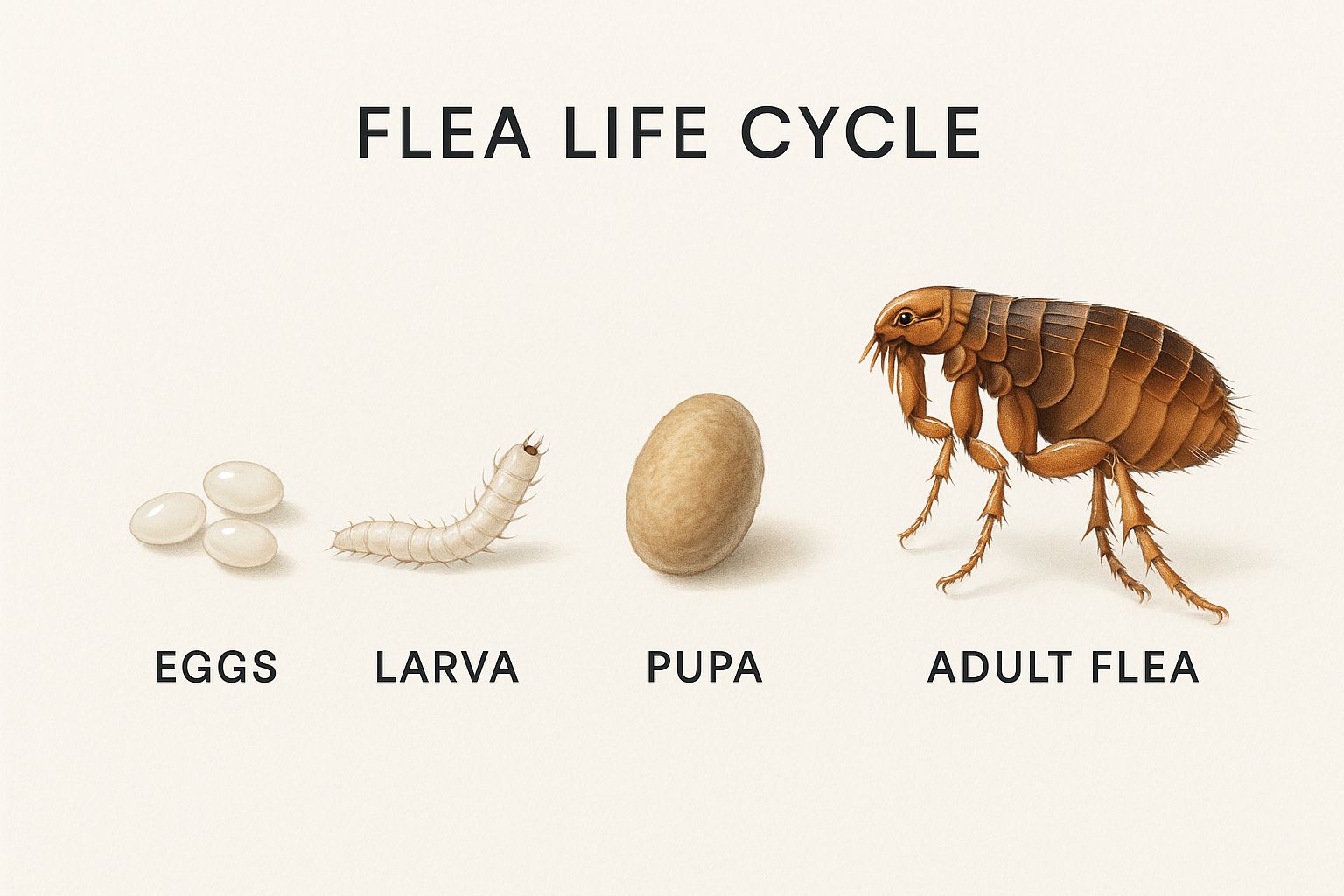
You can see just how different each stage looks, which is exactly why a single type of treatment rarely wipes out an entire infestation for good.
From Hidden Egg to Armored Pupa
Once those eggs tumble into your carpet, they hatch into larvae in just a few days. These tiny, worm-like creatures have one mission: get away from the light. They burrow deep into carpet fibers, furniture cushions, and dark corners, munching on organic debris and “flea dirt” (which is really just the digested blood from adult fleas).
This larval stage lasts for about one to two weeks before they deploy their secret weapon.
The pupal stage is the flea’s superpower. The larva spins a sticky, silk-like cocoon that immediately gets camouflaged with surrounding dust and debris, making it almost invisible and tough to remove with vacuums or sprays.
Tucked away inside this protective shell, the developing flea is completely safe. This is the main reason infestations seem to reappear out of nowhere, weeks after you thought you solved the problem. A pupa can stay dormant for weeks or even months, just waiting for the right signal—vibrations, heat, or the carbon dioxide from a passing pet or person—to hatch into a hungry adult, ready to jump and bite. This is exactly why a one-time spray often fails to deliver a permanent solution.
The Pupa Stage: The Secret Weapon of Flea Infestations
If fleas have a superpower, it's definitely the pupal stage. This is where a flea infestation gets its frustrating staying power. After the larva has finished feeding, it spins a sticky, silk-like cocoon to begin its final transformation. But this isn't just any cocoon; it’s an armored shell that immediately picks up dust, carpet fibers, and other debris from its surroundings. This makes it perfectly camouflaged and incredibly difficult to spot or remove.
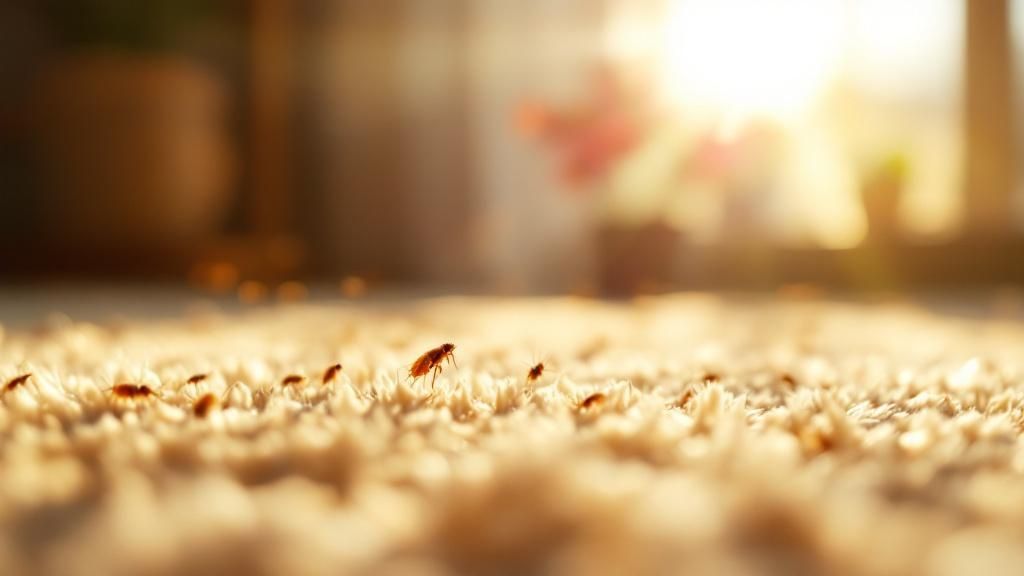
Tucked away inside this protective casing, the developing flea is almost invincible. It's highly resistant to most insecticides and can easily survive a quick pass with the vacuum cleaner. This near-impenetrable defense is exactly what makes getting rid of fleas for good so challenging.
The Waiting Game
What truly makes the pupa stage remarkable is its patience. A developing flea doesn't just emerge on a set schedule. Instead, it lies in wait, listening for the perfect signals from the environment that tell it a meal is nearby.
These triggers are the flea's "go" signals:
- Vibrations from footsteps or your pet plopping down for a nap.
- Body heat from an animal or person passing by.
- Carbon dioxide that we and our pets exhale with every breath.
Once it detects these signs, the fully formed adult flea can burst from its cocoon in seconds, ready to jump and feed. This is why a home can seem completely flea-free for weeks, only to suddenly experience a massive explosion of pests right after you return from vacation or a new pet joins the family. The fleas were there all along, just waiting.
Key Insight: Flea pupae can stay dormant for months—sometimes up to a year—patiently waiting for a host. This extended dormancy is the reason infestations can reappear long after you thought you solved the problem.
The duration of this stage is wildly unpredictable. Depending on the temperature and humidity, the pupal phase can last anywhere from a few days to an entire year, creating a long-term threat hidden deep within your carpets, furniture, and pet bedding. Getting rid of this resilient stage is non-negotiable for lasting relief, which often requires professional flea & tick control for your Santa Cruz County home to ensure every single life stage is properly eliminated.
How Long Do Fleas Live Without a Host
It’s one of the most common questions I hear, especially from families moving into a new place or those trying to starve out an infestation after treating their pets. The answer is both straightforward and dangerously misleading. An adult flea that has just wiggled out of its cocoon is on a desperate, one-way mission: find blood, fast.
Without a host, its clock is ticking. Most adult fleas will starve to death in just one to two weeks. Since they are completely dependent on blood to live and lay eggs, an empty house sounds like a perfect, simple solution. This belief, however, is a huge and costly mistake. You can read more about how a host impacts flea survival on PetMD.com.
The real enemy isn't the handful of adult fleas you might spot. It's the silent, unseen majority—the 95% of the infestation hiding in plain sight.
The Hidden Infestation in Waiting
While adult fleas die off pretty quickly on their own, the immature stages are experts at waiting you out. An empty home is a goldmine for them, filled with hundreds or thousands of flea eggs, larvae, and pupae lurking deep in your carpets, between floorboards, and inside furniture. These stages don't need a blood meal at all.
The Dangerous Misconception: Believing an infestation will simply die on its own is a recipe for failure. The dormant pupae can wait for months, ready to hatch the second they detect a new host has arrived.
This is exactly what makes fleas so incredibly persistent. The immature stages create a "time-release" infestation that can spring to life long after the original adult fleas are dead and gone.
- Flea Eggs: These tiny specks can survive for several days before hatching into larvae.
- Flea Larvae: They munch on organic debris in your home (not blood) and can develop for weeks.
- Flea Pupae: This is the game-changer and the most resilient stage. Wrapped in a tough, sticky cocoon, pupae can remain dormant for up to a year, just waiting for the right signal—your body heat, the vibrations of your footsteps, or even the carbon dioxide you exhale—to emerge as hungry adults.
This is why a new family or pet moving into a seemingly clean, empty house can suddenly trigger a massive flea outbreak. The infestation never went away; it was just on pause.
How Your Home Environment Fuels a Flea Takeover
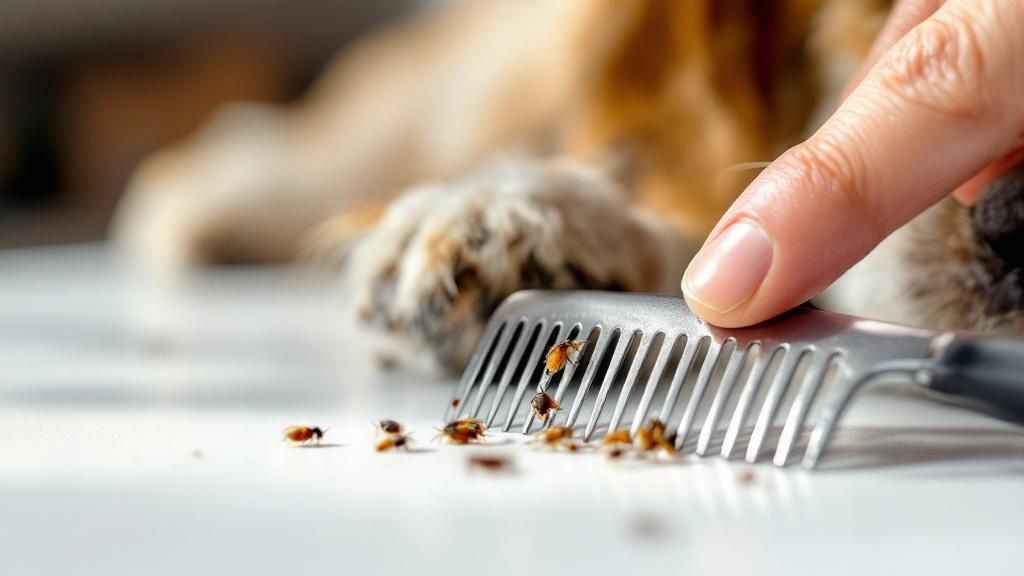
It’s a frustrating reality for many homeowners: your house can accidentally become the perfect flea incubator, turning a few unwelcome hitchhikers into a full-blown takeover. The question of how long fleas live and thrive has less to do with the fleas themselves and much more to do with your indoor climate.
Their entire life cycle is ruled by two things: temperature and humidity.
Fleas are warm-weather pests at heart. They absolutely flourish in temperatures between 70°F and 85°F (21°C and 29°C) with humidity levels hitting 70% or higher. This is exactly why infestations often feel like they explode overnight during the warm, humid summer months, shrinking the journey from egg to biting adult down to just two or three weeks.
The catch? Your climate-controlled house can provide these ideal conditions all year long, creating a never-ending breeding season right under your roof.
Flea Hotspots Hiding in Plain Sight
While you might see your entire home as the problem, fleas are strategic. They seek out specific micro-climates that give them the best shot at survival. These spots offer the darkness, warmth, and protection that their immature stages—eggs, larvae, and pupae—need to develop without being disturbed.
Think of these areas as flea nurseries. You’ll find them in:
- Plush Carpets and Rugs: Their dense fibers are a dream for fleas. Eggs can fall in easily, and larvae can burrow deep to hide from light and the vacuum.
- Pet Bedding: This is ground zero. It’s warm, full of shed skin cells for larvae to eat, and offers a permanent, all-access pass to your pet.
- Upholstered Furniture: Couches and armchairs are full of dark, protected real estate. Fleas love the cracks, crevices, and the dark underside for development.
- Undisturbed Corners and Baseboards: Any low-traffic area where dust and debris pile up creates an ideal, undisturbed habitat.
To give you a clearer picture of how much your home's climate matters, let's look at how quickly things can escalate.
Environmental Impact on Flea Life Cycle Speed
This table shows just how dramatically temperature and humidity can speed up or slow down a flea infestation.
| Environmental Condition | Life Cycle Duration (Egg to Adult) | Survival Impact |
|---|---|---|
| Ideal: 70-85°F, 70%+ Humidity | 2-3 Weeks | High. This is peak season. Development is rapid, and survival rates are excellent. |
| Moderate: 60-70°F, 50-70% Humidity | 4-8 Weeks | Medium. The cycle slows down, but development continues steadily. |
| Poor: Below 60°F or Above 95°F | Months (or Halts) | Low. Development is extremely slow or stops completely. Few will survive to adulthood. |
As you can see, a cozy home is a flea's best friend, allowing them to multiply at an alarming rate.
Key Takeaway: The flea life cycle can complete up to 50% faster in a warm, humid home compared to a cool, dry one. Controlling your indoor environment is just as crucial as treating your pet.
Understanding how to disrupt these perfect conditions is a core part of any successful flea control plan. For more in-depth strategies, our guide on flea and tick prevention provides practical steps to make your home far less welcoming to these stubborn pests.
Common Questions About Flea Survival
Even when you know the flea lifecycle inside and out, practical questions always pop up. Let's tackle some of the most common myths and frustrations homeowners and pet owners run into when a flea problem takes hold.
Can Fleas Live on Humans?
It's a creepy thought, but thankfully, the answer is no. While a hungry flea will absolutely bite a human if it's the only meal around, they can't actually survive and reproduce on us.
We simply don’t have the dense fur they need for protection and to create the humid, sheltered environment where they lay their eggs. Think of yourself as a temporary, and frankly disappointing, snack bar for a desperate flea—not a permanent home. They might bite your ankles, but they won’t be moving in.
Does Washing My Pet Kill All the Fleas?
Giving your pet a good scrub with flea shampoo is a great first step. It feels productive, provides your furry friend with immediate relief, and successfully drowns the adult fleas crawling on them. But this is only a temporary fix.
Key Insight: A bath only deals with the 5% of the flea population—the adult fleas. The other 95% of the problem (the eggs, larvae, and pupae) are hiding out in your carpets, furniture, and pet bedding, completely unharmed.
This is exactly why fleas seem to magically reappear a few days after a bath. You’ve only knocked out the most visible part of the infestation, while the hidden majority continues to develop.
Why Did More Fleas Appear After I Vacuumed?
This is one of the most counterintuitive and maddening parts of fighting fleas. You spend an hour meticulously vacuuming every corner, only to see a fresh wave of them emerge a day later. This isn't a sign that you failed; it's actually proof that you're on the right track.
The secret is in the pupae stage. Flea pupae can lie dormant for months, waiting for the right signal to hatch. The combination of heat, pressure, and vibration from a vacuum cleaner perfectly mimics a potential host (your pet) walking by. This triggers them to emerge from their protective cocoons all at once.
This sudden surge is a necessary evil. By tricking them into hatching, you're pulling them out of their nearly indestructible state and making them vulnerable to your next round of treatments. For complex infestations that just keep coming back, professional help can be invaluable. Exploring options like conventional pest control treatments in Santa Cruz County can help target every stage of the lifecycle far more effectively.
Battling a persistent flea problem can be exhausting, but you don't have to do it alone. The experts at West Pest Co. offer customized and effective solutions to eliminate fleas at every stage of their life cycle, ensuring your home is safe and comfortable again. Take the first step toward a flea-free home by contacting West Pest Co. today!