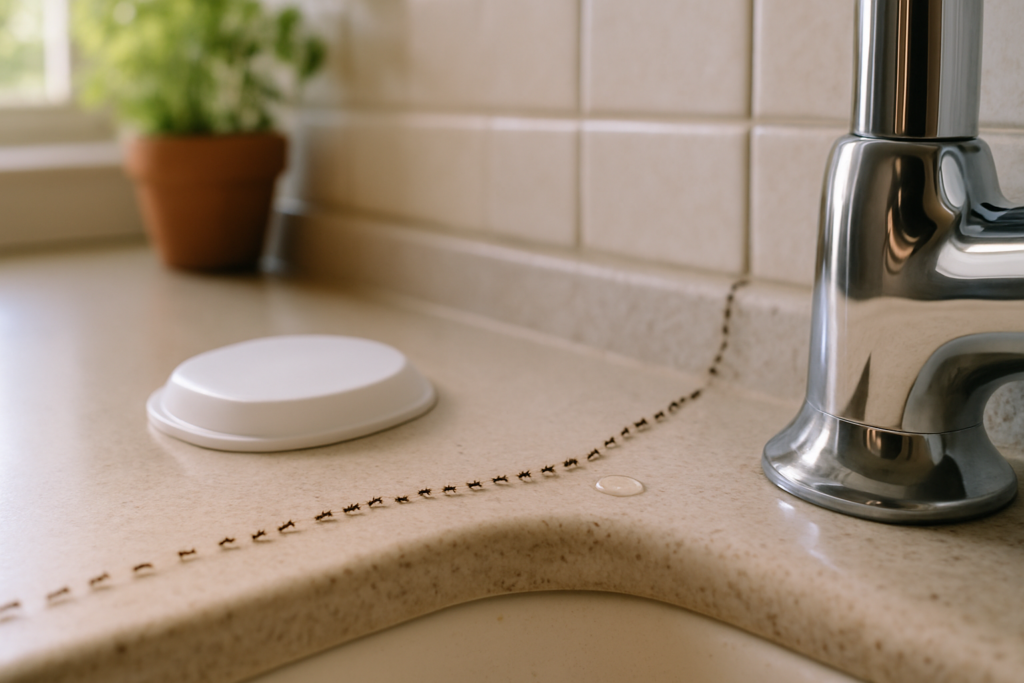
Direct Answer: Fresh mulch over irrigated soil creates damp, sheltered nesting space that Argentine ants love. When that bed touches your foundation, the colony is already at the house and trails move indoors.
A homeowner reached out this summer with a story I hear all the time. The front yard had been landscaped the season before, the crew laid wood mulch, and now ants swarmed up every time she dug in the bed. They were showing up inside a house that had never had an ant problem.
Her words stuck with me: never had this problem before. That is the part most ant advice online gets wrong, because it starts by blaming your housekeeping.
This is a yard condition story, not a dirty kitchen story. Below I will walk through what fresh mulch actually changes, why the plants themselves are often feeding the colony, and what a careful approach looks like when you have a vegetable garden, kids, or pets in the picture.
Why Ants in Mulch After Landscaping Show Up So Fast
The ant running your yard along the Santa Cruz coast is almost always the Argentine ant. It behaves differently than the ants people picture.
Argentine ants do not build one deep central mound. They nest shallow, in whatever protected damp spot is available, and they move constantly. A colony can relocate in a day when conditions change.
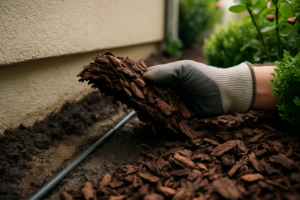
Now think about what a fresh landscape job puts down. A three inch layer of bark or wood chips over irrigated soil gives them almost everything they want:
- Steady moisture held under the mulch, even through a dry stretch
- Temperature buffering, so the soil under the chips stays mild day and night
- Cover from birds and other predators that would otherwise pick them off
- Drip lines running beneath the mulch, which act as both a permanent water source and a smooth highway
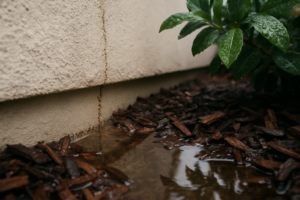
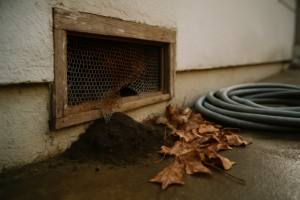
Then there is placement. When the bed runs right up against stucco or a slab edge, the colony is already touching the house. The trail from the mulch to the kitchen counter is a few feet, not a few yards.
That is why people feel blindsided. Nothing changed indoors. The habitat outside the wall changed, and the ants simply took the shortest route in.
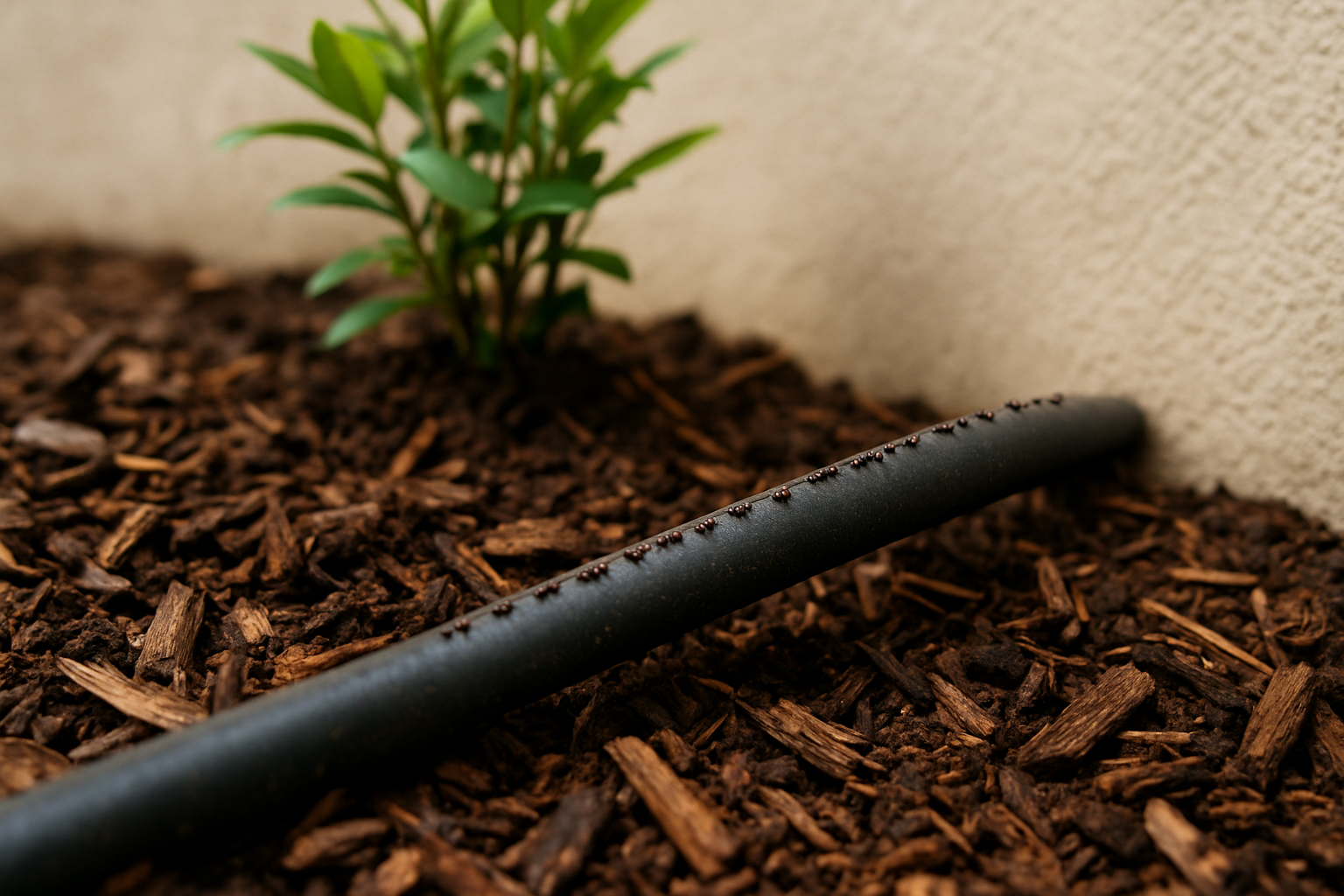
The Sugar Supply Nobody Mentions: Aphids on Your New Plants
Here is the piece I rarely see explained locally. New landscape plantings often arrive from the nursery already carrying aphids, scale, or whitefly.
Those insects feed on plant sap and excrete honeydew, a sugary waste product. Ants farm them for it. They protect the aphids from predators and collect the honeydew like livestock feed.
So a homeowner can be feeding a large, growing colony through the roses, the citrus, or a new ceanothus without ever leaving a crumb on the counter. One customer described ants everywhere across a nearly one acre property, in the grass, the dirt, the garden, and the trees, long before any of them came inside.
The practical read for you is simple. If ants are streaming up a shrub or a fruit tree, that plant is part of the problem. Treating the trail on the kitchen baseboard while the food source is still running in the yard is why people feel like nothing sticks.
University of California guidance on ant management in gardens and landscapes says the same thing: pull irrigation water, leaf litter, mulch, and vegetation back from foundations and walls, and deal with the honeydew producers, not just the ants.
It also explains why so many people tell me their baits did nothing. A colony with a steady honeydew supply is not desperate for a grocery store bait station.
What I Look At First in a Freshly Landscaped Yard
When I walk a property after new landscaping, these are the spots that tell me most of the story within ten minutes.
| What I check | What it usually means | What you can change |
|---|---|---|
| Mulch depth against the wall | Damp, sheltered nesting right at the structure | Pull mulch back several inches from stucco and siding |
| Drip emitters and hose bibs | A leak creates a permanent wet zone ants settle into | Repair or reposition the emitter, check the bib for drips |
| Ants running up a shrub or fruit tree | Aphids or scale are feeding the colony honeydew | Treat or wash the plant pests, prune heavily infested growth |
| Branches touching the roof or eave | Vegetation works as a bridge over any ground treatment | Prune back so nothing contacts the house |
| Trail direction at the foundation | Shows where the colony is, not just where you see ants | Note it before anyone treats anything |
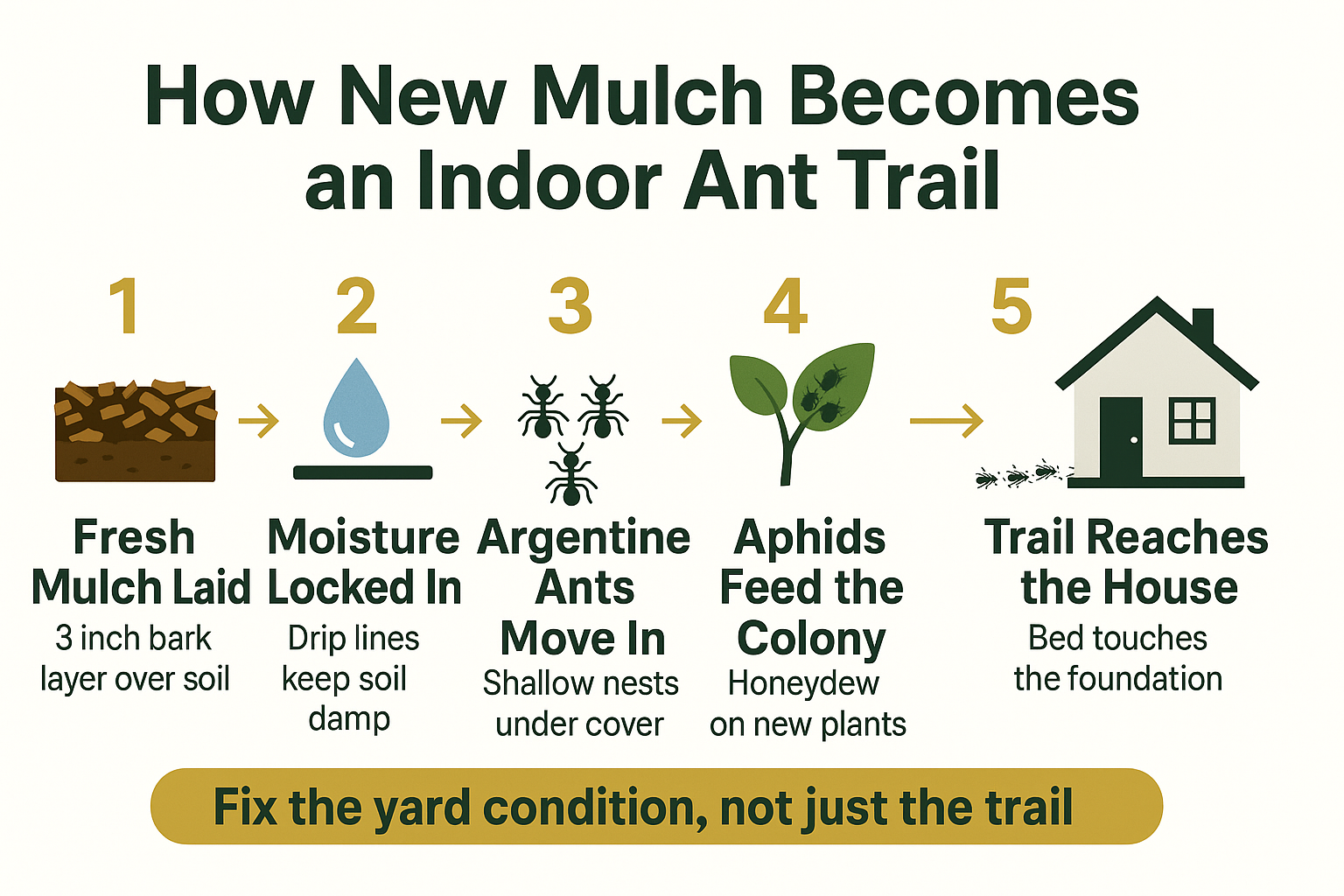
How a New Mulch Bed Turns Into an Indoor Ant Trail
This is the chain of events I walk homeowners through on site, from the day the bark went down to the morning ants appeared on the counter.
What Treatment Looks Like With an Organic Vegetable Garden Out Back
One Santa Cruz homeowner asked whether her organic vegetable garden might limit treatment options. Good question, and I get it unprompted more often than any other.
The honest answer is that it shapes the plan, and it should. A careful approach in a landscaped yard concentrates on where the activity actually is, not on blanketing the property:
- The active trails, traced back toward their origin
- The mulch bed itself, where the shallow nesting is happening
- The structure perimeter, at the specific points the trail crosses
- Contained bait placements instead of broad spraying across open yard
- Buffer distances around vegetable beds, herb pots, and pet areas
I will not promise you a specific product from a blog post. The plan depends on what a technician finds on site and which pests are active that day.
What you can do is speak up at the start. Say plainly that you have edibles, pets, kids, or anyone in the house with health sensitivities. That information changes the recommendation before anything gets applied, and any technician worth calling will want it.
Honest Expectations About Timing on the Central Coast
Ant pressure here does not follow the inland calendar. Coastal fog plus regular irrigation keeps soil moisture up close to year round, so colonies stay active through months when Salinas Valley or Central Valley yards go quiet.
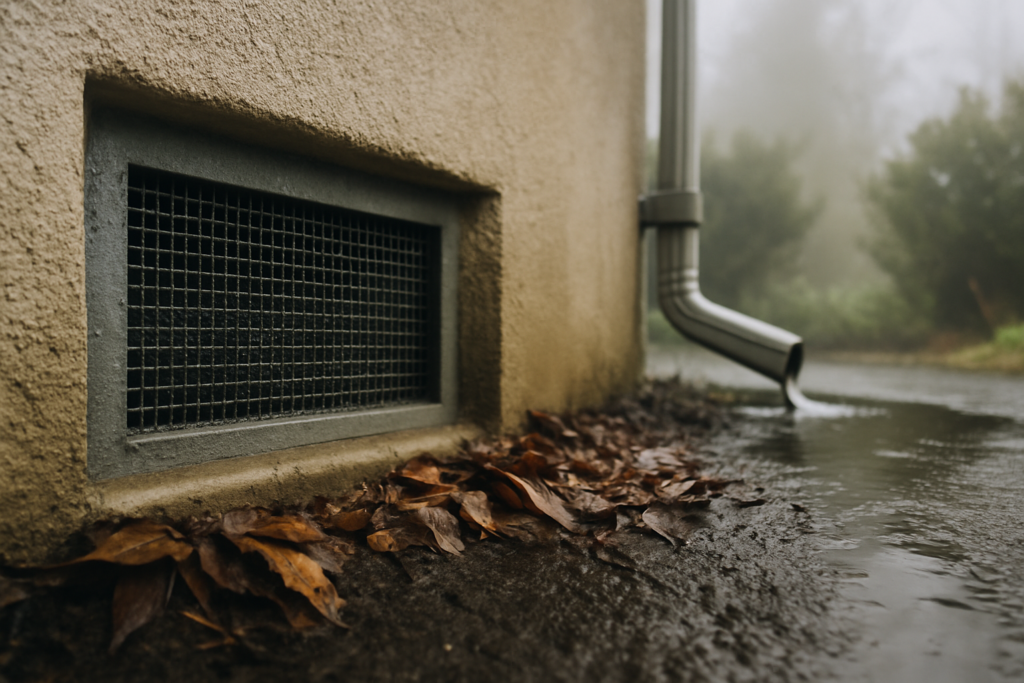
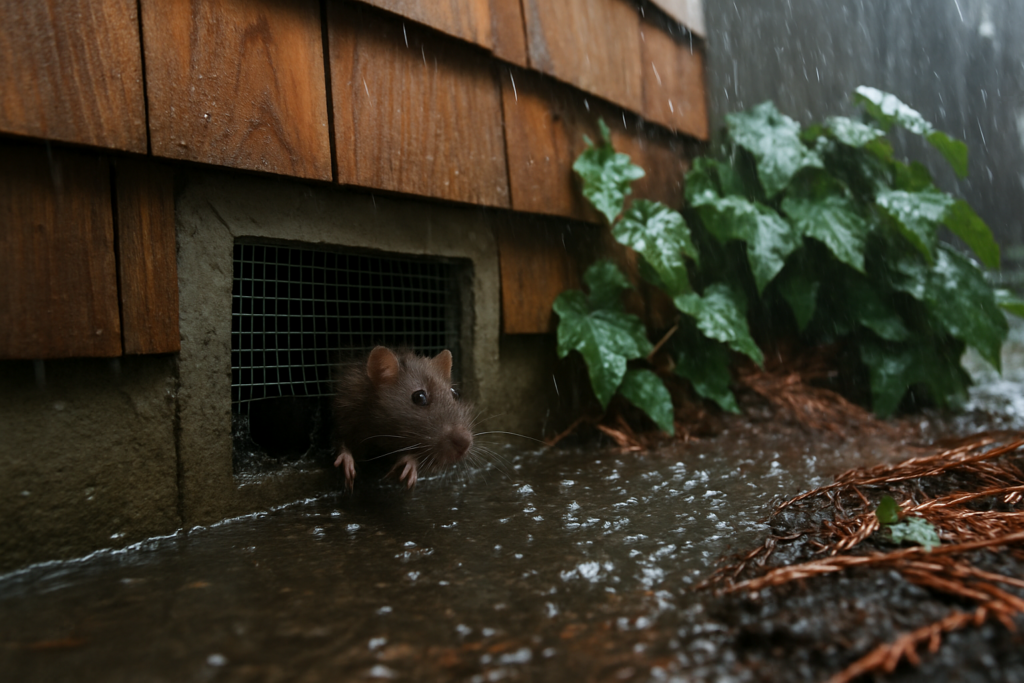
Fall is the turn to watch. When the first real rains saturate the ground, colonies get pushed out and move toward dry structures, which is why ants reappear indoors after the first rain in homes that were fine all summer.
So here is the straight version. Treatment addresses the active problem in front of us. A mulch bed pressed tight against the foundation, with drip line running under it, keeps the pressure coming regardless.
The yard is part of the long term answer. Three things you can do this weekend, before anyone treats anything:
- Pull mulch back several inches from the foundation and siding so there is a dry break
- Fix the leaking emitter or hose bib that keeps one corner permanently wet
- Prune branches that touch the roofline so they stop working as bridges
If the trails keep returning even after all of that, there is usually a reason worth finding, and it is almost never the crumbs.
What a Real Inspection Looks Like in a Landscaped Yard
Walking a property is different from spraying a perimeter. In a yard with new beds, I want to see where trails originate, which plants have honeydew producers on them, and where the irrigation is running.
Then I explain what I found before I do anything. That conversation is where you decide what you are comfortable with, especially around a vegetable bed or a dog that naps in the shade of the new plantings.
Adjusting for a household matters more than people expect. One customer put it this way in a review:
“he adjusted his recommendations due to my wife’s lung sensitivity and still provided a safe, effective treatment that’s used in hospitals and veterinary clinics.” – David R.
If your new landscaping also brought in garden pests on the plants themselves, that gets looked at during the same walk, since the two problems feed each other.
Frequently Asked Questions About Ants in Mulch After Landscaping
Did my landscaper bring the ants in with the mulch?
Usually not directly. Argentine ants are already established across most coastal neighborhoods here. The mulch did not import them, it gave a nearby colony damp, sheltered ground right next to your house, so they moved in and expanded.
Should I remove the mulch entirely?
No. Mulch does real work for your plants and your water bill. The fix is placement, not removal. Keep a dry gap of several inches between the mulch and any wall or foundation, and avoid piling it deeper than it needs to be against the structure.
Why do store bought baits and sprays stop working after a day or two?
Two reasons I see constantly. The colony has a better food source out on the plants, so the bait is not appealing. And spraying a visible trail kills the ants you can see while the nest under the mulch keeps producing. Several callers have told me borax baits did nothing for weeks.
What does ant service cost in this area?
Costs vary quite a bit, and anyone quoting a flat number sight unseen is guessing. What drives the price is property size, how many active trails there are, whether the yard is involved or just the interior, and whether it is a one time visit or ongoing management. Call for a real number on your specific property.
Is it safe to treat with a vegetable garden and pets in the yard?
It can be handled responsibly, but the plan has to be built around it. That means contained placements, buffer distances around edibles and pet areas, and treatment focused on the trails and the bed rather than broadcast across the yard. Tell whoever comes out about the garden before they start.
Want Someone to Walk the Yard With You?
If the trails keep coming back after you have pulled the mulch away and fixed the wet spots, it usually takes an on site look to find where they start. West Pest Co. covers Santa Cruz, Aptos, Capitola, Soquel, Scotts Valley, and Watsonville, along the same foggy Monterey Bay coastline that keeps this soil damp most of the year. The number is (831) 430-8402 for anyone who wants a look at their yard.