Direct Answer: In May 2026, Santa Cruz County warned that grapevine plants sold at local Costco stores may carry the glassy-winged sharpshooter. Isolate the plant and call the County Agricultural Commissioner before moving or tossing it.
If you picked up a grapevine or an ornamental plant at Costco this past spring, you may have brought home more than a plant. In May 2026, Santa Cruz County agricultural officials put out a public warning about the glassy-winged sharpshooter showing up on nursery stock sold at Bay Area stores.
The Santa Cruz Costco was one of the locations that received plants from the wholesale nursery involved. That makes this a real local issue, not a headline from somewhere else.
I want to walk through what actually happened, how to check your own plants, and what the right next step is. Spoiler: for this particular bug, the first call is not to a pest control company.
What Happened With the Costco Grape Plants
The short version: a wholesale nursery in Fresno County shipped grapevine plants to Costco stores across the wider Bay Area, and some of those plants carried the glassy-winged sharpshooter. Santa Cruz was among the stores that received them.
The county’s Agricultural Commissioner issued a notice asking residents to check plants bought between April and May 2026 and report anything suspicious. You can read the county’s own May 2026 warning about the glassy-winged sharpshooter directly.
A few things worth being clear about right away:
- This insect does not infest houses. It is not going to end up in your walls or pantry.
- It does not bite people or pets.
- It is a plant pest, and it is regulated, which means there is an official process for handling it.
So this is not a reason to panic about your home. It is a reason to walk out to the patio and look at what you bought this spring.
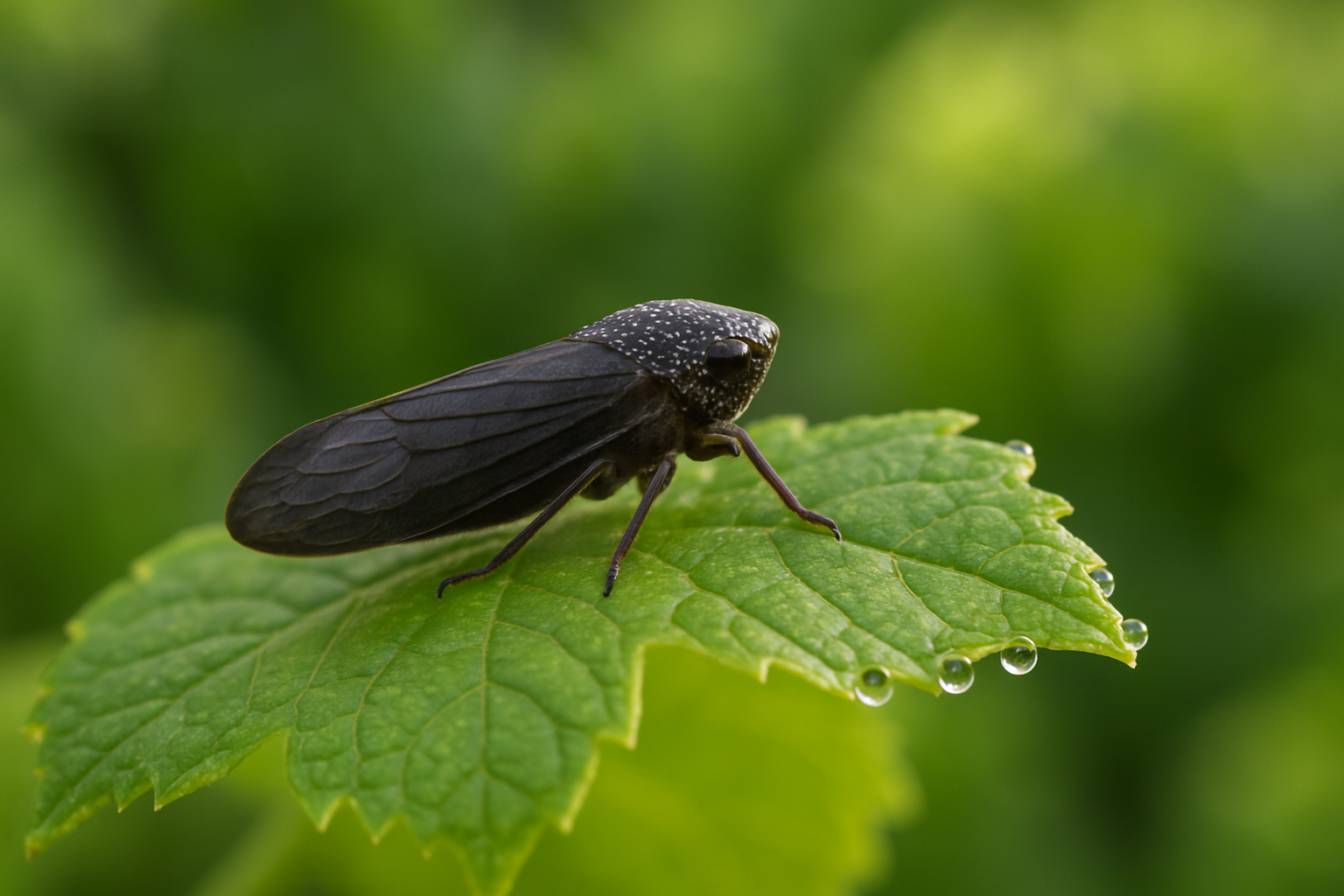
How to Spot a Glassy-Winged Sharpshooter in a Santa Cruz Garden
This bug is big for a leafhopper, which is honestly the easiest tell. Most leafhoppers you see on Central Coast plants are tiny and green. This one is not.
Here is what to look for:
- About half an inch long, noticeably chunky compared to common garden leafhoppers
- A dark brown to black body
- Wings that look glassy and slightly see-through
- Whitish or ivory spots scattered across the head and thorax
- Quick, sideways scuttling around a stem, then a fast jump or flight when you get close
The other clue shows up on the plant itself. These insects feed on plant fluid and pass a lot of it back out, which leaves a whitewashed, chalky residue on leaves and fruit underneath where they feed.
If you see that pale spatter on the leaves of a plant you bought this spring, that is worth a closer look. On a foggy Santa Cruz morning it can be easy to mistake it for water spots, so check it dry.
Quick Check: What You Might Be Seeing on a New Plant
Not every insect on a new nursery plant is a problem. This is how I sort out what I am looking at.
| What you see | What it looks like | What it usually means |
|---|---|---|
| Large dark hopper, half inch, glassy wings, pale head spots | Sits on stems, jumps fast when disturbed | Possible glassy-winged sharpshooter. Report it before doing anything else |
| Chalky white spatter on leaves or fruit | Dried pale specks, does not wipe off like dust | Feeding waste from sharpshooters. Inspect the plant closely |
| Tiny soft green or black clusters on new growth | Slow moving, packed along stem tips | Aphids. Common on Central Coast transplants and treatable |
| Sticky shine on leaves plus ants marching the stem | Glossy film, steady ant trail | Aphid honeydew and ants farming them |
| Fine webbing with speckled, faded leaves | Dusty look under the leaf | Mites, usually a watering and airflow issue |
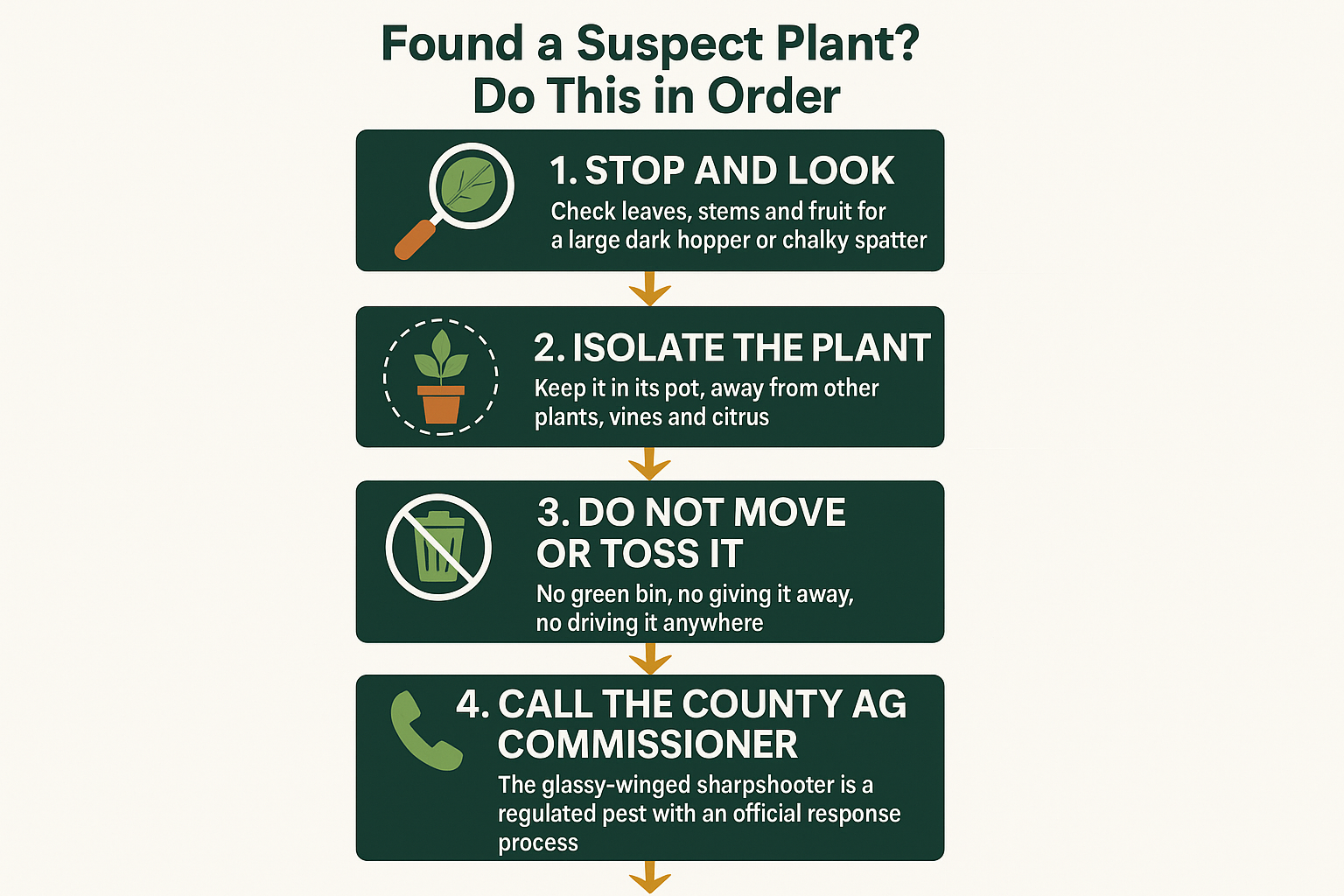
What to Do If You Bought a Grape or Ornamental Plant This Spring
The order of these steps matters. Moving or trashing a suspect plant can spread the problem.
Why This One Matters Around the Monterey Bay
The glassy-winged sharpshooter spreads Pierce’s Disease, a bacterial infection that travels in plant fluid. It kills grapevines and can hurt citrus, almond, and ornamental plants too.
That is a bigger deal here than most people realize. Santa Cruz County has backyard vineyards tucked all over Corralitos, the Aptos hills, and up past Soquel, plus a lot of homes with a lemon or orange tree in the yard.
And we sit right next to Monterey County, CA, where wine grapes are a serious part of the local farm economy. A single infested patio plant is not going to take down the Salinas Valley, but the whole point of the reporting process is that nobody wants to find out how far it spreads before someone speaks up.
The insect was first found in California in the 1990s and is native to the southeastern United States. It has been a regulated pest ever since, which is exactly why the county wants reports instead of homeowners quietly dumping a plant in the yard waste bin.
Invasive Garden Pests Usually Arrive in a Truck
The thing I keep coming back to with this story is how the bug got here. It did not fly in from the woods behind your house. It rode up from Fresno County on a pallet of nursery plants.
That is how most of our worst garden pests show up. Argentine ants, the ones behind almost every kitchen ant call I take from Santa Cruz to Watsonville, spread through California largely on commerce and landscaping material. Aphid problems in a home garden often start the same way, when one infested transplant goes into a clean bed and the population takes off in our mild, damp coastal air.
So a reasonable habit after a story like this:
- Turn a few leaves over before you put the plant in your cart
- Check the soil surface and the underside of the pot rim
- Keep new plants separate from established beds for a week or two
- Look again after that quarantine period, before planting
It takes about thirty seconds. If you want more on keeping trouble out of your beds, my guide on how to protect a vegetable garden from pests covers the rest of the routine.
Where Professional Garden Pest Treatment Fits In
This is where I want to be straight with people. For a suspected glassy-winged sharpshooter, the County Agricultural Commissioner comes first, not a pest control company. It is a regulated pest, and there is a specific response protocol for a reason.
What we handle is the everyday side of garden pests: active aphid infestations on ornamentals and edible plants, along with the ant activity that usually shows up right alongside them. Treatment there is targeted and eco-friendly, which matters when the plant in question is a tomato plant your kids pick from.
Cost depends on yard size, how many plants are affected, and how far the population has spread, so I would rather look at it than quote a number blind. Many local homeowners find a single garden pest treatment lands in a modest range compared with a full-property plan, but that varies enough that it is worth asking directly.
One more honest note: garden pest treatments deal with what is active right now. Plants keep coming and going from a yard, and so do the insects on them. Ongoing attention beats a one-time fix, which is the same reason ants keep coming back every summer in so many Santa Cruz kitchens.
Frequently Asked Questions About the 2026 Garden Pest Warning
Can the glassy-winged sharpshooter get into my house?
No. It feeds on plant fluid and has no reason to be indoors. It does not bite people or pets and it does not nest in walls or attics.
I already threw out the plant I bought. Now what?
Call the County Agricultural Commissioner anyway and tell them what you bought, when, and where it went. They would rather know about a plant that already left your yard than not know at all.
Should I spray the plant myself just in case?
I would not. Spraying a regulated pest before it is confirmed can scatter insects off the plant and makes identification harder for the county. Isolate it, report it, then follow what they tell you.
How do I tell a sharpshooter from a regular leafhopper?
Size is the fastest check. Common leafhoppers here are small and usually green. The glassy-winged sharpshooter runs about half an inch, with a dark body, clear glassy wings, and pale speckling on the head and thorax.
Does this affect fruit trees other than grapes?
It can. Pierce’s Disease is worst on grapevines, but the insect also feeds on citrus, almond, and a wide list of ornamentals. If you have a lemon tree near a plant you bought this spring, give it a look too.
Wondering what is actually living on your plants?
If you are seeing unusual insect activity on a plant you brought home this spring, start with the Santa Cruz County Agricultural Commissioner so it gets logged the right way. For ordinary garden pest trouble like aphids on your ornamentals or edibles, anywhere from the Westside to Watsonville and out toward the Monterey County line, West Pest Co. is around to take a look and explain what is going on. Reach the office at (831) 430-8402 or at westpestco.com.