Direct Answer: Treat your yard for ticks in spring (March through May) and again in early fall (September through October). Santa Cruz County’s damp coastal climate keeps ticks active in winter too, so timing matters more than season.
A homeowner in Santa Cruz reached out last spring about what she called a major tick problem in her yard. She had two dogs, she was pregnant, and she was pulling ticks off the dogs and herself almost every week. Her question was simple: when should the yard be treated, and what does that cost?
That is a fair question, and it deserves a straight answer instead of a sales pitch. Timing is the single biggest factor in whether a yard treatment actually reduces how many ticks your family runs into.
Below I’ll walk through why tick season here does not match the calendar most people expect, the two windows I focus on, and what a treatment actually targets in a Santa Cruz County yard.
Why Tick Yard Treatment Timing in Santa Cruz County Breaks the Usual Rules
Most tick advice written for California assumes an inland summer pattern. Dry heat, cracked soil, ticks that hunker down and wait. That is not what happens on this side of the hills.
The main tick I deal with in local yards is the Western black-legged tick, which is the primary Lyme disease carrier in this part of California. It needs moisture to survive, and Santa Cruz County hands it moisture almost all year.
The same fog and humidity that make a January morning in Aptos feel mild keeps leaf litter and grass damp enough for ticks to stay active and keep looking for a host. The CDC’s tick information pages note that this species is found along the Pacific coast, and our climate is a big part of why.
Local conditions that stretch the season here:
- Year-round fog drip under redwoods and oaks in Ben Lomond, Scotts Valley, and the Aptos hills
- Cool winters that rarely freeze, so activity slows instead of stopping
- Deer moving freely through unfenced yards in Rio del Mar, Soquel, and Corralitos
- Damp leaf litter that never fully dries out on the shaded side of a house
The practical takeaway: if you wait for “tick season” to start in late spring, you have already missed months of real exposure.
The Two Windows I Focus On
If I could only treat a yard twice a year, I would pick spring (March through May) and early fall (September through October).
Spring matters because tick activity climbs as temperatures warm and the young ticks that are hardest to spot start looking for hosts. Treating before that peak gets ahead of the problem rather than chasing it.
Early fall matters because deer and small mammals shift where they travel as the weather cools. Yards that saw almost no wildlife traffic in July suddenly become part of the route in October.
That said, treatment outside those windows is not wasted. A yard with overgrown grass, a wood pile, or open deer access can carry elevated tick activity in any month of the year here, including December.
When someone calls me in the middle of winter because they keep finding ticks on the dog, I do not tell them to wait until March. Active pests get treated when they are active.
Tick Treatment Timing by Season in Santa Cruz County
Here is roughly how I think about the calendar for local yards. Your property’s shade, vegetation, and wildlife traffic can shift this either direction.
| Window | What’s Happening Outside | Treatment Priority |
|---|---|---|
| March – May | Activity climbing, young ticks seeking hosts, damp leaf litter | High. Best first treatment of the year |
| June – August | Drier open areas, ticks concentrated in shade and margins | Moderate. Worth it if you have active bites |
| September – October | Deer and small mammals shifting movement patterns | High. Second treatment window |
| November – February | Slowed but not stopped, fog keeps habitat damp | As needed. Treat active problems, don’t assume you’re safe |
Where Ticks Actually Live in Your Yard
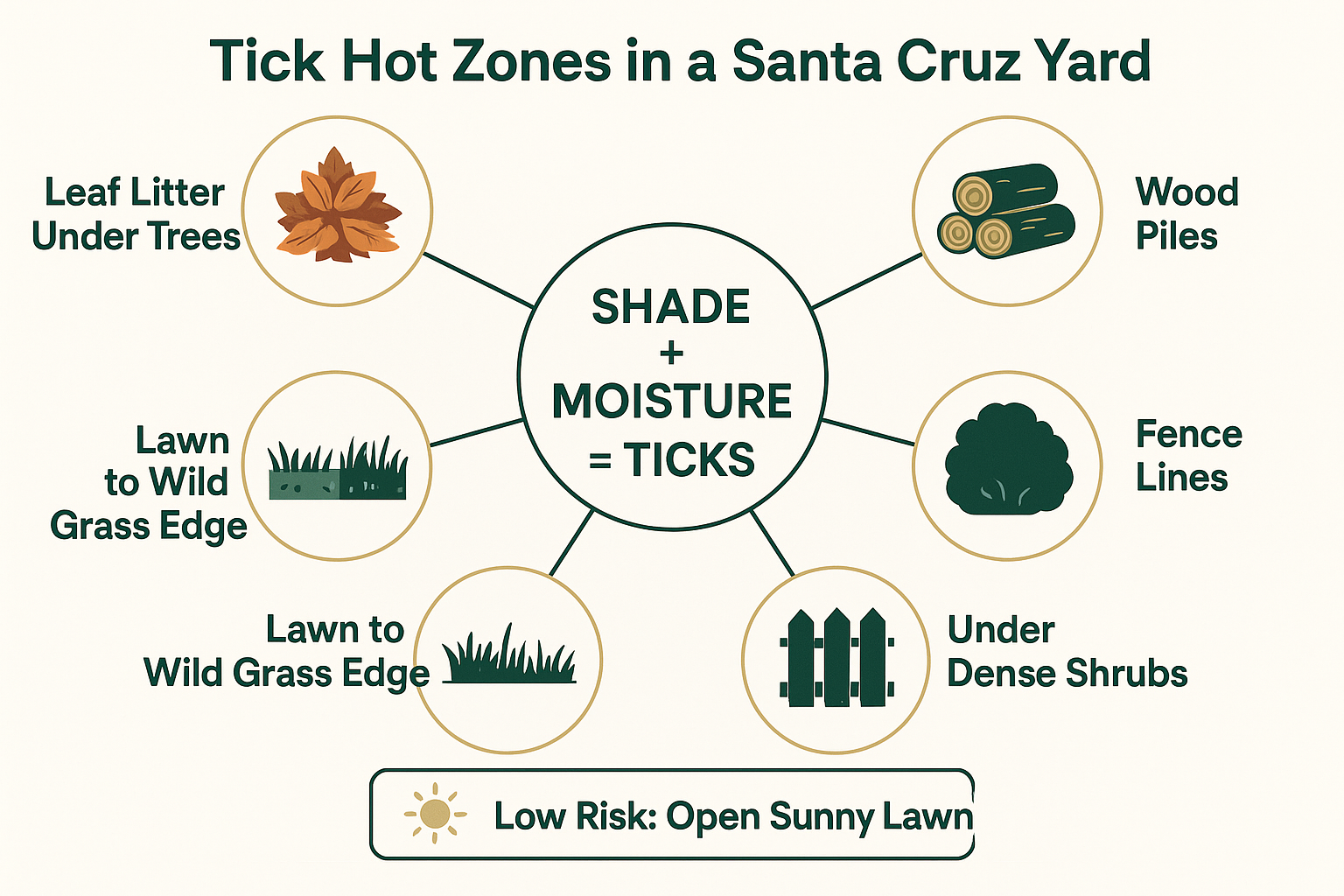
Ticks are not spread evenly across a property. They cluster in a handful of predictable spots, and those spots are what a treatment should target.
What a Yard Treatment Actually Targets
This is where I think a lot of homeowners get let down. They pay for a yard spray, still find ticks, and assume treatment does not work.
Usually the problem is coverage. Ticks do not survive well in open, sunny, mowed lawn, so blanketing the middle of the yard accomplishes very little.
The zones that matter are:
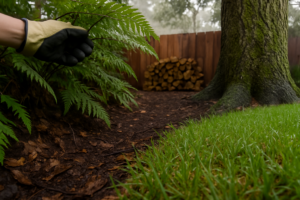
- The transition edge where mowed lawn meets natural vegetation, ivy, or unmowed grass
- Shaded, leaf-littered margins under oaks, redwoods, and dense hedges
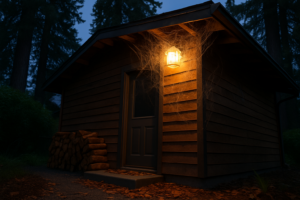
- Around and under wood piles and stacked lumber
- Along fence lines, especially where deer or raccoons push through
- The base of dense shrubs and ground cover near walkways and play areas
When a homeowner tells me their yard was treated and ticks came back fast, my first question is whether those edge zones were covered at all. That is almost always where the gap is.
A treatment addresses active ticks in those zones. It is not a permanent fix, and no honest technician will tell you otherwise. Yards that back up to open space or greenbelt get new ticks carried in by wildlife, which is exactly why repeat timing matters more than one heavy application.
Safety With Kids, Pets, and Pregnancy
This is the concern I hear most, and I take it seriously. The homeowner who first got me thinking about this article was pregnant with two dogs in the yard.
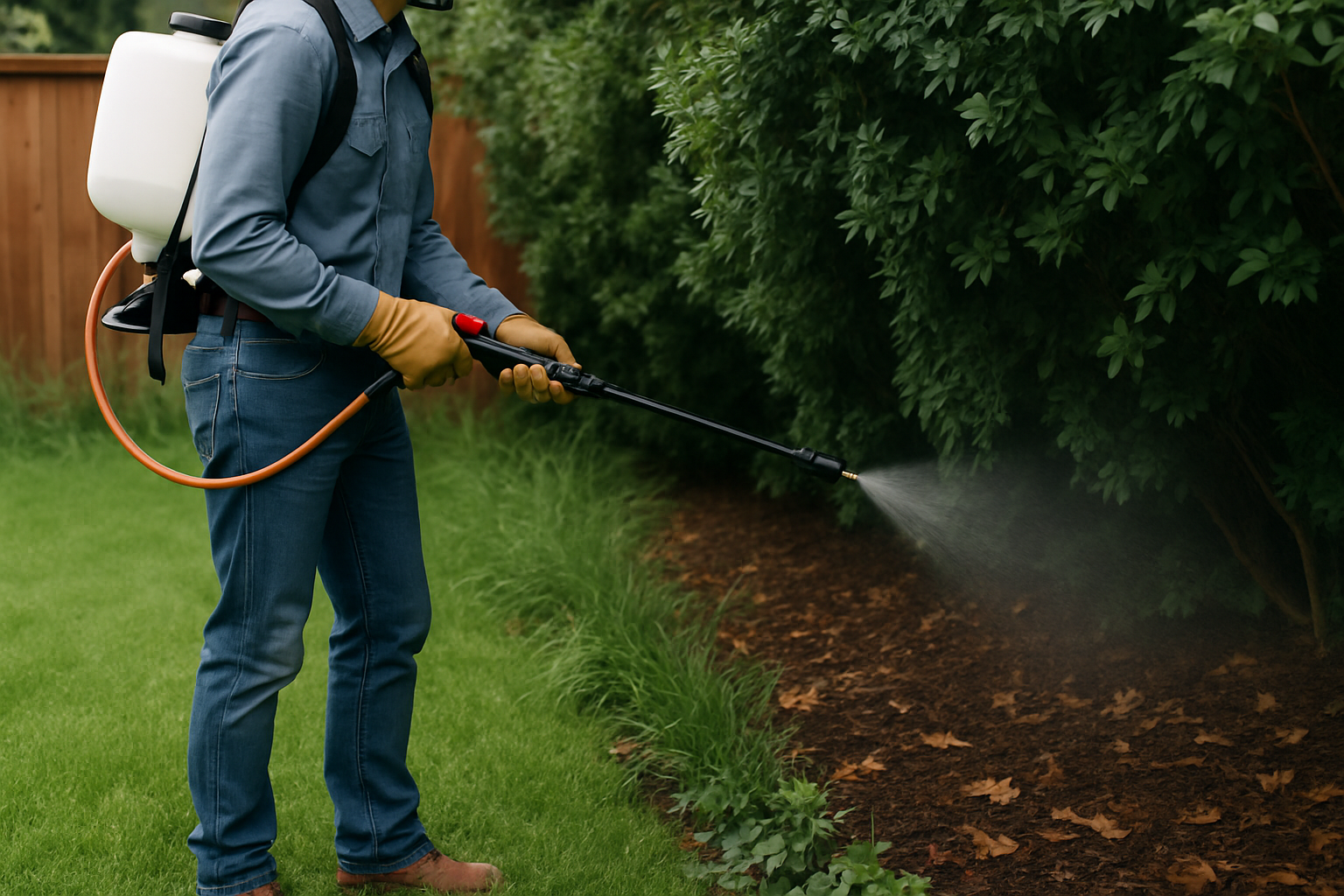
Eco-friendly yard treatments applied by a licensed technician use targeted, low-toxicity products placed only in the zones where ticks live. That means the treatment is not going where your kids play or where the dog lies in the sun.
Standard practice is to keep people and pets off treated areas until the product is dry, which is typically a short window the same day. I walk through that timing on site so nobody is guessing.
One local customer put it well in a review after a treatment was adjusted around a family member’s lung sensitivity: the whole experience was “easy, reassuring, and effective.” That adjustment is the job, not an extra.
As for cost, yard tick treatment pricing varies a lot by property. The main drivers are:
- Yard size and how much of it is high-risk edge versus open lawn
- Vegetation density and how much shaded ground cover needs coverage
- Whether you want a single treatment or a second visit in the other seasonal window
- Slope, access, and how much of the perimeter borders open space
A half-acre parcel in Corralitos with heavy brush and a small Capitola backyard are different jobs, so an on-site look is the only way to give a real number.
Frequently Asked Questions About Tick Yard Treatment Timing
Is it too late to treat if I’m already finding ticks on my dog?
No. Finding ticks means there is active tick pressure right now, and that is the right time to treat. The spring and fall windows are about getting ahead of peaks, not about turning away an active problem in July or January.
How many treatments do I need in a year?
Most Santa Cruz County yards do well with two treatments, one in spring and one in early fall. Properties that border open space, have heavy deer traffic, or stay damp year-round sometimes need more attention in between. I would rather look at the property than guess.
Can I just treat my dogs instead of the yard?
Vet-recommended tick preventatives on your pets are important and I always encourage them. But they do not reduce the number of ticks living in your leaf litter, so people in the household still get exposed. The two approaches work together.
Will one treatment get rid of ticks for good?
No, and be skeptical of anyone who says it will. Yard treatments reduce active ticks in the zones where they live. Wildlife keeps bringing new ones in, which is why timing and repeat visits matter more than any single application.
How long do we need to stay off the yard after treatment?
Until treated areas are dry, which is usually a matter of hours depending on shade and weather. I explain the specific timing before I leave so you know exactly when the kids and dogs can go back out.
Questions About Timing Your Yard Treatment?
If you are finding ticks on the dog or on yourself and want a straight answer about timing for your specific property, West Pest Co. works throughout Santa Cruz County and the surrounding Central Coast. You can reach Matthew West at (831) 430-8402 or read more at westpestco.com. Happy to talk through what your yard actually needs before anything gets scheduled.