Mosquitoes are more than just a summer nuisance; they are vectors for serious diseases and a persistent pest in residential and commercial spaces throughout Santa Cruz County. While many reach for chemical sprays, a powerful and eco-friendly solution already exists in nature. The key lies in understanding what insects eat mosquitoes and how to cultivate these tiny allies in your own backyard or commercial landscape.
This guide moves beyond generic advice to provide a comprehensive look at the specific predators that can dramatically reduce mosquito populations. We will explore the fascinating world of dragonfly aerial acrobatics, the stealthy ground assault of wolf spiders, and the aquatic ambush of backswimmers. For each of these eight natural exterminators, we'll detail their unique hunting strategies, their ideal habitats, and provide actionable, practical tips for attracting and supporting them.
By fostering a balanced ecosystem, you can create a robust, natural defense against mosquitoes, protecting your family, customers, and local wildlife. This approach, often a core component of professional Integrated Pest Management (IPM), offers a sustainable, long-term solution that works in harmony with the environment. Let's meet the predators that keep mosquito numbers in check.
1. Dragonflies (Odonata)
Often called "mosquito hawks," dragonflies are formidable and highly efficient predators of mosquitoes. Their effectiveness stems from a dual-pronged life cycle where both their aquatic larval stage and their adult aerial stage are voracious carnivores, making them one of the most beneficial insects for natural mosquito control. If you're wondering what insects eat mosquitoes, the dragonfly is a top answer.
Adult dragonflies are masterful aerial hunters, capturing and consuming prey mid-flight. Their incredible agility and eyesight allow them to snatch hundreds of mosquitoes, gnats, and other small flying insects out of the air daily. This constant predation can significantly impact local mosquito populations, providing relief in backyards, parks, and around commercial properties.
The Two-Stage Attack on Mosquitoes
Dragonflies employ a powerful two-stage strategy that targets mosquitoes throughout their life cycle.
- Aquatic Larvae (Nymphs): Dragonfly nymphs live underwater for months to years, depending on the species. During this time, they are ambush predators, feeding on mosquito larvae, tadpoles, and other aquatic invertebrates. By targeting mosquito larvae before they can mature and emerge as biting adults, nymphs prevent future infestations at the source.
- Aerial Adults: Once they emerge from the water, adult dragonflies patrol the air. Their hunting prowess is legendary; a single adult can consume between 30 and several hundred mosquitoes per day, making them a constant threat to adult mosquito populations.
This infographic highlights just how effective these predators are.
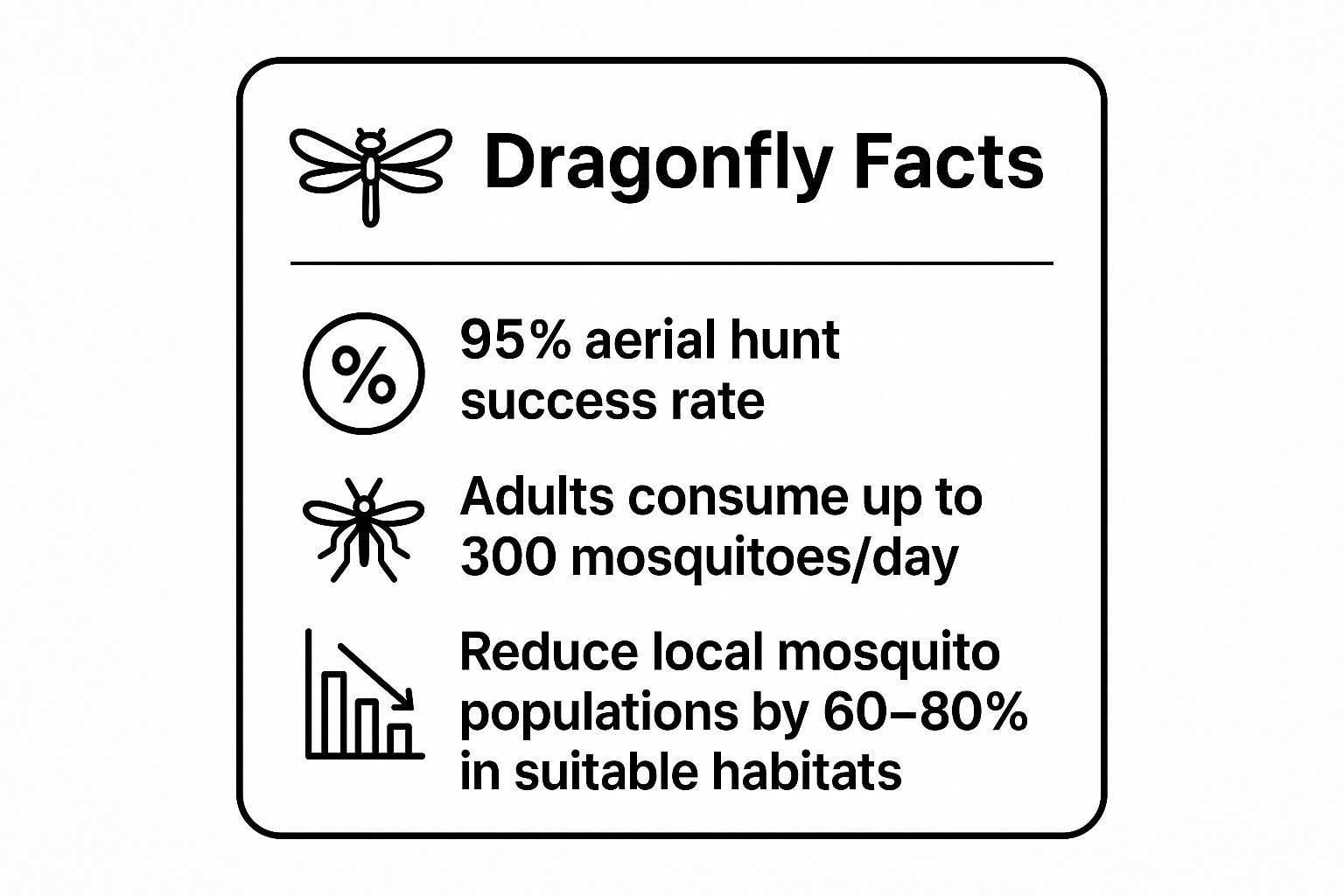
The data clearly shows that dragonflies are not just casual snackers; they are specialized hunters capable of dramatically reducing mosquito numbers in a given area.
How to Attract Dragonflies to Your Property
For homeowners and property managers in Santa Cruz County, attracting dragonflies offers a sustainable, chemical-free pest control method. Creating a dragonfly-friendly habitat is straightforward.
- Introduce a Water Source: Install a shallow pond or a water feature with still or slow-moving water. A depth of at least two feet is ideal to protect nymphs from predators and temperature extremes.
- Add Aquatic Plants: Plant submerged and emergent native vegetation like cattails or water lilies. These plants provide oxygen, shelter for nymphs, and emergence sites for adults.
- Provide Perching Spots: Place stakes, flat rocks, or tall plants around your water feature. Adult dragonflies need sunny spots to rest, hunt, and regulate their body temperature.
- Avoid Pesticides: Broad-spectrum insecticides will kill both dragonflies and their larvae, undermining your natural pest control efforts. Opt for targeted, eco-friendly solutions when necessary.
2. Damselflies (Zygoptera)
Often mistaken for their larger cousins, damselflies are delicate and graceful predators that play a significant role in mosquito control. While they may appear less intimidating than dragonflies, their appetite for mosquitoes is just as impressive. Their life cycle, like the dragonfly's, features both aquatic and aerial stages, making them a consistent and natural enemy of mosquitoes in various environments. Anyone asking what insects eat mosquitoes should consider the highly effective damselfly.
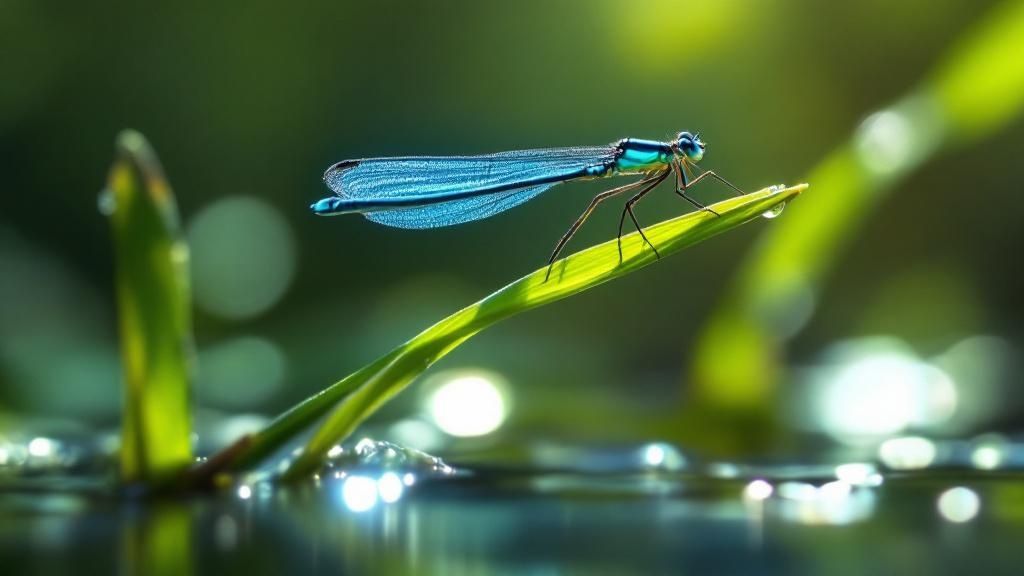
Adult damselflies are agile hunters, though their flight is more fluttery than that of a dragonfly. They typically hunt among grasses and other low-lying vegetation, picking off mosquitoes, gnats, and other small insects that rest on plants or fly in sheltered areas. This method of predation complements the open-air hunting of dragonflies, covering more ground and reducing mosquito numbers in different niches.
The Life-Cycle Assault on Mosquitoes
Damselflies attack mosquitoes at two critical points in their development, providing a comprehensive and continuous form of biological control.
- Aquatic Larvae (Naiads): Damselfly naiads are slender, aquatic predators that thrive in the still waters of ponds, marshes, and even rain gardens. They actively hunt mosquito larvae, using their extendable lower jaws to snatch them from the water. By eliminating mosquito larvae, naiads curb the population before they have a chance to become biting adults.
- Aerial Adults: Upon emerging, adult damselflies become aerial predators. They consume dozens of mosquitoes daily, targeting them in vegetated areas where mosquitoes often shelter from wind and sun. This predation helps manage adult mosquito populations throughout the spring and summer.
How to Attract Damselflies to Your Property
Homeowners and property managers in Santa Cruz County can easily foster a damselfly-friendly habitat to boost their natural mosquito-fighting force. Creating an environment that supports them is a sustainable, long-term pest management strategy.
- Maintain a Water Source: A pond, rain garden, or container water garden with still or very slow-moving water is ideal. A depth of one to three feet is perfect for damselfly naiads.
- Provide Emergent Vegetation: Plant native species like rushes or irises that grow out of the water. Damselflies lay their eggs on these plant stems, and the emerging adults use them to climb out of the water.
- Add Floating and Submerged Plants: Plants like water lilies provide shelter and hunting grounds for naiads beneath the surface.
- Minimize Water Disturbance: Damselflies prefer calm water. Avoid installing powerful fountains or aerators that create significant surface movement in the areas intended for breeding.
3. Predatory Midges (Chironomidae – Subfamily Tanypodinae)
Often mistaken for their pesky counterparts, predatory midges are unsung heroes in the fight against mosquitoes. While adult midges may look like non-biting mosquitoes, their true power lies in their larval stage. These larvae are voracious aquatic predators that specifically target and consume mosquito larvae, making them a crucial component of natural water-based pest control. If you're asking what insects eat mosquitoes, predatory midges are an important, often overlooked, answer.
The larvae of certain midge subfamilies, particularly Tanypodinae, are highly effective biological control agents. Found in various still or slow-moving water bodies like ponds, ditches, and even storm drains, these tiny predators actively hunt mosquito larvae, preventing them from ever reaching the adult biting stage. This proactive approach significantly reduces emerging mosquito populations at their source.
The Hidden Aquatic Hunter
Unlike predators that attack adult mosquitoes, predatory midges focus exclusively on the vulnerable aquatic stage, providing a critical, preventative form of control.
- Targeted Larval Predation: Midge larvae, such as those from the Tanypus and Procladius genera, are equipped with specialized mouthparts for grasping and consuming prey. They share the same aquatic habitats as mosquito larvae, positioning them as direct and efficient competitors and predators.
- Widespread Impact: Because these beneficial midges thrive in diverse aquatic environments, from natural wetlands to artificial retention ponds and even rice fields, they offer broad-scale, self-sustaining mosquito management without human intervention. They attack the problem before it can take flight.
Their role is so significant that they are often studied and monitored in large-scale water management systems, like urban storm drains or wastewater treatment wetlands, to gauge the health of the ecosystem and its natural ability to suppress mosquito breeding.
How to Support Predatory Midges on Your Property
For property managers and eco-conscious homeowners, fostering a healthy environment for predatory midges can enhance your overall pest management strategy. Supporting these insects is about promoting a balanced aquatic ecosystem.
- Maintain Water Quality: Healthy midge populations thrive in water with stable pH levels and sufficient oxygen. Avoid chemical runoff or pollutants that can harm these beneficial insects and the microbial communities they depend on.
- Avoid Broad-Spectrum Larvicides: Chemical larvicides designed to kill mosquito larvae are often indiscriminate and will eliminate beneficial predatory midge larvae as well. This can disrupt the natural balance and lead to worse mosquito problems in the long run.
- Encourage Microbial Diversity: A rich community of algae, bacteria, and detritus provides a food source for young midge larvae, helping their populations become established before they begin preying on mosquito larvae.
- Integrate with Other Methods: Supporting predatory midges is a key part of a larger integrated pest management plan. This approach works best alongside other natural solutions for comprehensive garden pest control.
4. Robber Flies (Asilidae)
Robber flies are aggressive and powerful aerial predators known for their impressive hunting skills and distinctive, often bristly appearance. These insects are exceptional at catching mosquitoes and other prey mid-flight, using their strong legs to ensnare victims before using their sharp proboscis to consume them. Their role in the ecosystem makes them another great answer to the question of what insects eat mosquitoes.
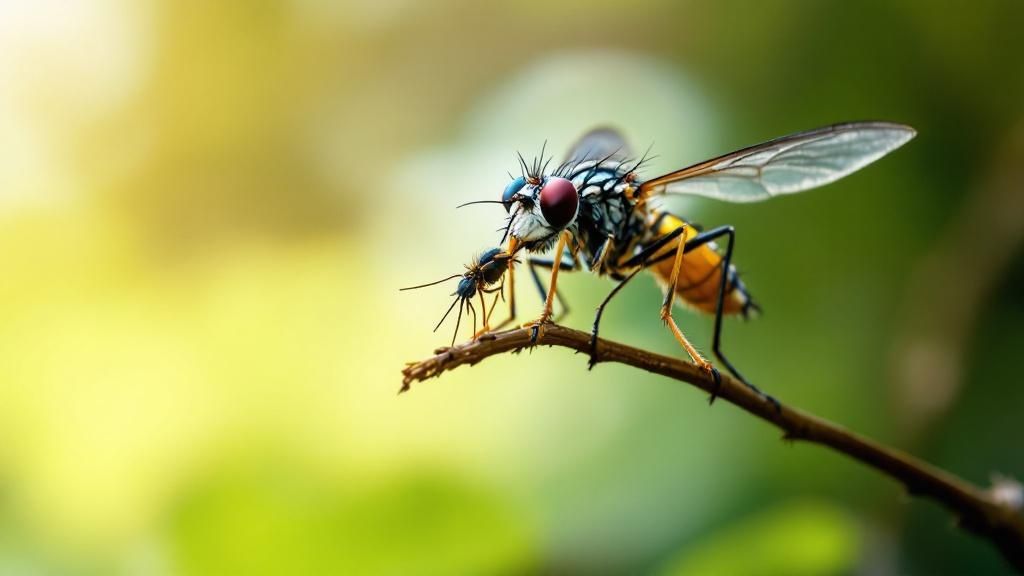
While their primary diet is varied, including bees, wasps, and beetles, they will readily attack and consume mosquitoes, contributing to natural pest control in gardens, fields, and forests. Different species of robber flies are effective in various environments; for example, Promachus species are valuable in grassland restoration projects, while Laphria species help control mosquito populations along forest edges.
The Ambush Predator Strategy
Unlike the constant patrol of dragonflies, robber flies are classic ambush predators, which makes them highly effective in a different way.
- Perch-and-Wait Hunting: Robber flies typically find a prominent perch, such as a twig, fence post, or even a leaf, where they wait for prey to fly past. Their excellent vision allows them to spot a target, launch into a rapid attack, and return to their perch to feed.
- Targeting Adult Mosquitoes: This hunting method makes them particularly effective against adult flying mosquitoes. By intercepting mosquitoes as they move through an area, robber flies help reduce the number of biting adults, providing immediate relief from these pests.
Their opportunistic nature means they will capitalize on any abundant and appropriately sized prey, making them a valuable ally when mosquito populations are high.
How to Attract Robber Flies to Your Property
Attracting these beneficial predators involves creating a habitat that supports their hunting and life cycle needs. For property owners in Santa Cruz County, a few simple steps can encourage a healthy robber fly population.
- Provide Perching Sites: Since they are ambush hunters, robber flies need places to wait. Leave dead branches on trees or install stakes and posts around gardens and open areas to give them ideal hunting perches.
- Maintain Bare Soil Areas: Many robber fly species lay their eggs in sandy or loose soil, where their larvae develop as predators of soil-dwelling insects. Leaving some small patches of bare, sunny ground can provide essential nesting habitat.
- Encourage Plant Diversity: While they are fierce predators, adult robber flies sometimes feed on nectar. Planting a variety of flowering plants can help sustain them. Diverse vegetation also attracts a wider range of prey, ensuring a stable food source.
- Avoid Broad-Spectrum Pesticides: Chemical sprays are indiscriminate and will kill robber flies along with the pests. Limiting pesticide use protects these beneficial predators and allows them to manage mosquito populations naturally.
5. Wolf Spiders (Lycosidae)
While not insects, wolf spiders are such effective ground-level predators that they are a crucial answer to the question of what eats mosquitoes. Unlike their web-building cousins, wolf spiders are active, roaming hunters that stalk their prey on the ground. This makes them particularly skilled at eliminating adult mosquitoes that rest in cool, damp, and shaded areas like leaf litter or low-lying vegetation during the day.
Wolf spiders are opportunistic and robust hunters, relying on their excellent vision and speed to ambush or chase down prey. Their ground-dwelling nature allows them to control mosquitoes that have just emerged from aquatic habitats or those taking refuge from the midday heat. By preying on these resting adults, they help disrupt the mosquito life cycle before the pests can find a host to bite.
The Ground-Level Ambush on Mosquitoes
Wolf spiders offer a distinct advantage by targeting mosquitoes where many aerial predators cannot reach them.
- Hunting Resting Adults: Mosquitoes often rest on the ground, under leaves, or in dense vegetation to conserve energy and avoid desiccation. Wolf spiders patrol these exact areas, preying on vulnerable, inactive adult mosquitoes and reducing the number of biting females.
- Controlling Emergent Mosquitoes: As mosquitoes emerge from their pupal stage near water sources, they are often clumsy and weak. Wolf spiders lurking near these damp environments, such as those from the Pardosa genus, can easily pick them off before they even take their first flight.
The presence of a healthy wolf spider population, including species like Hogna and Lycosa, provides a constant, passive form of mosquito control in gardens, lawns, and natural landscapes.
How to Encourage Wolf Spiders on Your Property
For property owners in Santa Cruz County, fostering a habitat for wolf spiders is a simple and sustainable way to enhance natural mosquito control.
- Provide Ground Cover: Maintain a layer of leaf litter, mulch, or low-growing ground cover plants. This provides essential shelter and hunting grounds for wolf spiders.
- Minimize Soil Disruption: Avoid excessive tilling or soil disturbance in garden beds and landscape margins, as these are prime wolf spider habitats.
- Create Shelter Sites: Place small rock piles, logs, or pieces of bark in your garden. These structures offer spiders protection from predators and the elements.
- Limit Broad-Spectrum Pesticides: Chemical pesticides will harm these beneficial arachnids. Adopting an integrated pest management approach ensures that you protect your eight-legged allies. While encouraging spiders is beneficial for mosquito control, if you find them becoming a nuisance indoors, you can learn more about how to prevent spiders in your home.
6. Jumping Spiders (Salticidae)
Jumping spiders are small, agile predators with exceptional vision that makes them highly effective hunters of mosquitoes. Unlike web-building spiders, these charismatic arachnids are active stalkers, using their keen eyesight to spot and ambush prey. Their precise, powerful jumping attacks allow them to capture mosquitoes resting on walls, plants, and other surfaces, making them a key answer to the question of what insects eat mosquitoes in and around homes.
These spiders are particularly beneficial because they hunt during the day, the same time many nuisance mosquitoes, like the invasive Aedes aegypti, are active. Their ability to thrive in diverse environments, from urban gardens to window sills, means they provide continuous pest control without requiring any special intervention from property owners. Their presence is a sign of a healthy, balanced ecosystem.
The Stalk-and-Pounce Method
Jumping spiders do not rely on webs to trap food. Instead, they use a methodical and impressive hunting strategy that is perfectly suited for catching alert prey like mosquitoes.
- Visual Detection: Jumping spiders possess eight eyes, including a large, forward-facing pair that provides excellent binocular vision. This allows them to spot and gauge the distance to a resting mosquito with incredible accuracy.
- Active Pursuit: Once a target is identified, the spider will carefully stalk it, moving slowly and deliberately to avoid detection. It then launches a rapid, precise jump, often covering many times its own body length, to capture the mosquito before it can take flight.
This active hunting behavior makes them particularly valuable in controlling adult mosquito populations in a variety of settings, including gardens, patios, and even inside buildings.
How to Encourage Jumping Spiders on Your Property
For homeowners and property managers in Santa Cruz County, fostering a habitat for jumping spiders is a simple way to boost natural mosquito control.
- Plant Diverse Flowering Plants: A variety of flowers will attract small insects that jumping spiders prey on, ensuring a stable food source that keeps them in the area.
- Provide Varied Surfaces: Jumping spiders need platforms for hunting and basking. Maintain vegetation at multiple heights and incorporate rocks, mulch, bark, and logs to create a complex environment.
- Avoid Broad-Spectrum Pesticides: Chemical sprays are indiscriminate and will eliminate jumping spiders along with their food sources. Protecting these predators is crucial for long-term, sustainable pest management.
7. Praying Mantids (Mantodea)
Praying mantids are renowned ambush predators, using camouflage and patience to capture unsuspecting prey. While they are generalist hunters, their diet often includes mosquitoes, making them a fascinating addition to the list of insects that eat mosquitoes. Their strategy relies on lightning-fast reflexes and powerful, spiny forelegs to snatch insects directly from the air or off foliage, contributing to biological control in gardens and landscapes.
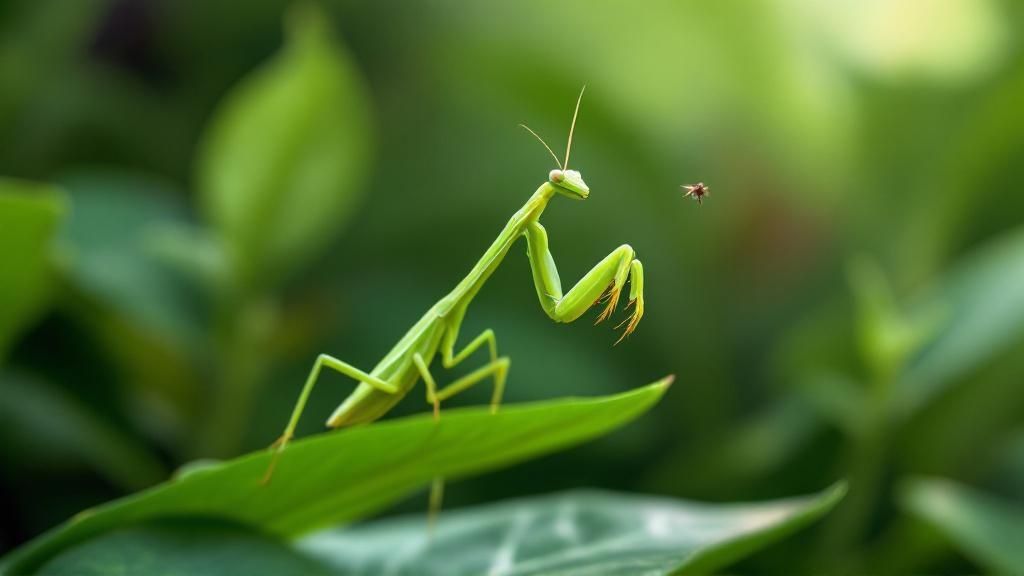
These remarkable predators are valued in integrated pest management programs for their ability to control various pests without chemicals. From Chinese mantids in commercial agriculture to native Carolina mantids in residential gardens, their presence signifies a healthy, balanced ecosystem.
The Ambush Hunting Strategy
Praying mantids employ a sit-and-wait hunting technique that is both patient and deadly, making them effective at catching adult mosquitoes.
- Camouflage and Stealth: Mantids blend seamlessly with surrounding vegetation, waiting motionless on leaves and stems. This allows them to go unnoticed by passing insects, including mosquitoes that land nearby to rest.
- Lightning-Fast Strike: When a mosquito or other prey comes within reach, the mantis strikes with incredible speed, often in less than a blink of an eye. Its specialized forelegs trap the insect in a vice-like grip, making escape impossible.
This ambush approach helps reduce the number of adult, biting mosquitoes, contributing to a more comfortable outdoor environment for property owners in Santa Cruz County.
How to Introduce Praying Mantids to Your Property
For those interested in a hands-on approach to pest management, introducing praying mantids can be a rewarding experience. This form of natural pest control complements other eco-friendly efforts.
- Purchase Egg Cases: You can buy mantid egg cases (oothecae) from reputable garden or biological control suppliers. Attach these cases to twigs or branches in sheltered locations in your garden.
- Provide Diverse Vegetation: A garden with varied plant heights and structures offers ideal hunting grounds. Mantids need plenty of perches to effectively survey their surroundings for prey.
- Ensure a Food Source: Planting flowers that attract smaller insects like flies and gnats will ensure your mantids have a steady food supply, encouraging them to stay on your property.
- Avoid Broad-Spectrum Sprays: Chemical pesticides will harm or kill praying mantids. Eliminating these sprays is crucial for establishing and maintaining a healthy population of these beneficial predators.
8. Backswimmers (Notonectidae)
Backswimmers are unique aquatic insects known for their habit of swimming upside-down just beneath the water's surface. This unusual behavior perfectly positions them to be highly effective predators of mosquito larvae and pupae. As an answer to "what insects eat mosquitoes," backswimmers are a crucial component of a healthy aquatic ecosystem, providing constant, natural control in various water bodies.
These skilled hunters use their powerful, oar-like hind legs to propel themselves through the water with surprising speed. Once they locate prey, they use their sharp, piercing mouthparts to inject digestive enzymes and consume the liquefied contents of mosquito larvae. Their presence in ponds, temporary pools, and even neglected swimming pools can significantly reduce the number of mosquitoes that successfully emerge as biting adults.
The Surface-Skimming Attack on Mosquitoes
Backswimmers specialize in hunting prey at or near the water's surface, making them a direct threat to mosquito larvae which must come to the surface to breathe.
- Larval and Pupal Predation: Living their entire lives in water, backswimmers are a constant menace to developing mosquitoes. They actively hunt both the larval and pupal stages, targeting them when they are most vulnerable at the air-water interface. For example, Notonecta species are known to thrive in constructed wetlands, clearing them of mosquito larvae.
- Persistent Control: Unlike insects with a terrestrial adult stage, backswimmers remain in the water, providing continuous pest control throughout the warmer months. Studies on Buenoa backswimmers have demonstrated their value in keeping ornamental ponds free from mosquito infestations.
Their specialized hunting strategy makes them a key predator in managed water systems, such as in rice paddies where Martarega species are used as part of integrated pest management programs.
How to Attract Backswimmers to Your Property
For Santa Cruz County property owners with water features, encouraging a healthy backswimmer population is an excellent, self-sustaining mosquito control strategy.
- Maintain Water Quality: Backswimmers thrive in clean, unpolluted water. Regularly monitor water quality and avoid introducing chemicals or pesticides that could harm these beneficial insects.
- Provide Open Water: While aquatic plants are important, ensure there are open water areas. Backswimmers are active hunters and need space to effectively pursue mosquito larvae.
- Avoid Predatory Fish: Certain fish species, especially larger, aggressive ones, will prey on backswimmers. Choose fish that are compatible with a diverse insect population or create fish-free zones.
- Prevent Complete Freezing: In colder areas, a pond heater or aerator can keep a small section of the water from freezing solid, allowing backswimmers to survive the winter.
Predators of Mosquitoes Comparison
| Predator Type | Implementation Complexity 🔄 | Resource Requirements 💡 | Expected Outcomes 📊 | Ideal Use Cases 💡 | Key Advantages ⭐ |
|---|---|---|---|---|---|
| Dragonflies (Odonata) | Moderate – requires water bodies and habitat management | Needs clean water sources, native plants, perching spots | Reduces mosquito populations by 60-80% | Wetlands, ponds, large gardens | High hunting success; controls larvae & adults |
| Damselflies (Zygoptera) | Moderate – dependent on calm, vegetated waters | Requires aquatic vegetation, proper water depth | Consumes 10-50 mosquitoes daily per individual | Small water bodies, garden ponds | Tolerant of shaded areas; compatible with other beneficial insects |
| Predatory Midges (Tanypodinae) | Low to moderate – thrives in varied aquatic habitats | Supports diverse microbial communities; monitoring needed | Larvae consume multiple mosquito larvae daily | Urban water retention, artificial wetlands | Thrives in polluted waters; rapid reproduction |
| Robber Flies (Asilidae) | Low – no aquatic habitat needed, requires perching sites | Need flowering plants and perching areas | Captures 10-20 mosquitoes per day per fly | Open areas, forest edges, gardens, grasslands | Highly agile aerial hunters; no water dependency |
| Wolf Spiders (Lycosidae) | Low – ground habitat management needed | Requires ground cover, leaf litter, diverse vegetation | Hunts mosquitoes resting on vegetation or ground | Ground level in fields, gardens, wetlands | Active during mosquito resting periods; maternal care |
| Jumping Spiders (Salticidae) | Low – simple habitat diversity needed | Needs varied vegetation heights and hunting platforms | Captures 1-3 mosquitoes daily | Vegetation, buildings, sunny gardens | Excellent vision; active daytime hunters |
| Praying Mantids (Mantodea) | Moderate – requires release and habitat setup | Requires vegetation for perches and prey attraction | Single mantid consumes dozens of insects weekly | Gardens and agricultural fields | Effective ambush predators; public-friendly |
| Backswimmers (Notonectidae) | Moderate – dependent on permanent/semi-permanent water bodies | Needs diverse aquatic plants, predator-free water | Significantly reduces mosquito larvae populations | Ponds, pools, slow streams | Specialized larval and pupal predators; year-round in warm climates |
Creating a Mosquito-Free Zone: When Nature Needs a Professional Boost
Embracing the power of biological control is a sustainable and deeply effective strategy for managing mosquito populations. As we've explored, your own backyard or commercial property can become a thriving ecosystem that actively works to keep these biting pests in check. By understanding what insects eat mosquitoes, you can transform your approach from reactive spraying to proactive, nature-based prevention.
Recruiting this tiny army of predators involves a strategic, multi-pronged effort. It means preserving aquatic habitats for dragonfly and damselfly nymphs, who are voracious consumers of mosquito larvae. It means maintaining clean, aerated ponds to welcome backswimmers. On land, it’s about providing the right environment for ground-dwelling hunters like wolf spiders and agile predators like jumping spiders. Even fearsome-looking insects like robber flies and praying mantids play a crucial role in this natural defense system.
Key Takeaways for Building Your Natural Defenses
Mastering this approach is about more than just knowing the names of these beneficial creatures. It's about implementing specific, actionable steps to support their life cycles.
- Support Aquatic Predators: Maintain clean, fish-free water sources like ponds and rain barrels. Add native aquatic plants to provide shelter and oxygen for dragonfly nymphs and backswimmers.
- Cultivate Terrestrial Habitats: Avoid clearing all leaf litter and ground cover. This organic material provides essential shelter and hunting grounds for wolf spiders and other beneficial ground insects.
- Plant for Pollinators (and Predators): A diverse garden with native flowering plants attracts not only pollinators but also predators like robber flies and mantids that use the plants for ambushing prey.
- Eliminate Mosquito Breeding Grounds: Your best efforts will be undermined if mosquitoes have ample opportunity to reproduce. Diligently empty standing water from containers, clean gutters, and manage drainage on your property.
When Nature's Army Needs Reinforcement
While fostering a predator-friendly environment is a powerful first line of defense, even the most balanced ecosystem can face challenges. A particularly wet season in Santa Cruz County, nearby unmanaged properties, or persistent, hidden breeding sites can lead to a mosquito outbreak that overwhelms your natural allies. This is the critical point where your diligent efforts can be fortified with professional expertise.
Severe infestations require a targeted, strategic intervention that respects the delicate balance you've worked to create. An Integrated Pest Management (IPM) approach doesn't seek to replace nature’s helpers but to supplement their efforts. A professional can identify and treat stubborn mosquito larvae sources without harming the beneficial insect populations you've nurtured. This combined strategy ensures that your property remains a sanctuary for you, your family, and your customers, not for disease-carrying pests. By integrating natural controls with expert support when needed, you create the most resilient and comprehensive defense possible.
Ready to take your mosquito control to the next level? If you’ve built a habitat for beneficial insects but still struggle with mosquito populations, contact the experts at West Pest Co. We specialize in eco-conscious Integrated Pest Management for Santa Cruz County, designing targeted solutions that work with nature, not against it, to keep your property protected.