Discovering an unidentified insect skittering across your floor can be unsettling. You're not just looking at a bug; you're looking at a potential infestation, a threat to your property, or simply a persistent, unwelcome guest. Answering the critical question, "what are these bugs in my house?" is the first step toward reclaiming your space and ensuring peace of mind. This guide moves beyond guesswork, providing a systematic approach to identifying the most common intruders found in homes, gardens, and commercial properties throughout Santa Cruz County.
Instead of generic tips, we will equip you with a practical, step-by-step framework. You will learn how to accurately document physical characteristics, observe habitat preferences, and analyze behavior patterns to pinpoint the exact species you're dealing with. We'll also cover how to recognize specific damage evidence and when to leverage digital tools or professional expertise. By understanding precisely who your uninvited guests are, you can determine the actual risk they pose. This knowledge empowers you to choose the most effective and appropriate response, from simple DIY solutions to calling for professional pest control, ensuring your home remains a safe, healthy, and pest-free environment.
1. Document Size and Physical Characteristics
When you first ask, "What are these bugs in my house?" the initial and most critical step is to play detective. Before you can find a solution, you need a clear description of the suspect. Accurately documenting the bug's size and physical characteristics provides the foundational clues for a correct identification.
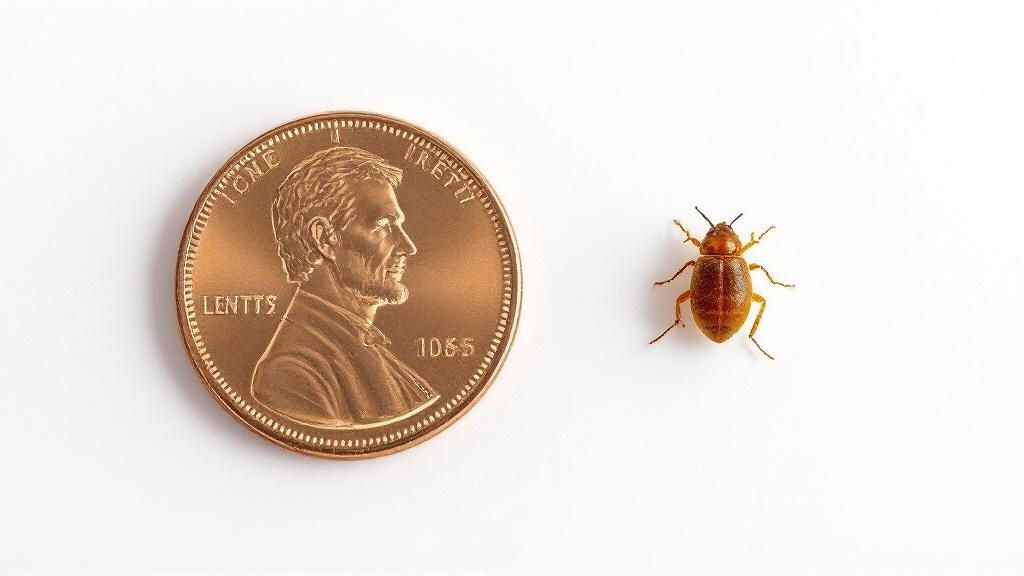
Many common household pests are easily confused, but their size often sets them apart. For example, a tiny, round, 2-3mm bug with a mottled pattern is likely a carpet beetle, whereas a similarly small but more elongated 3-4mm bug with red eyes is probably a fruit fly. A reddish-brown, flat, oval bug about 4-5mm long (the size of an apple seed) strongly suggests a bed bug. These small differences are everything in the world of pest identification.
How to Accurately Document a Bug
To gather useful information, focus on these key details. Your observations will be invaluable, whether you're researching online or describing the pest to a professional.
- Measure its size: If you don't have a ruler handy, use a common object for scale in a photograph. A penny (19mm) or a dime (18mm) works perfectly for reference.
- Observe its shape: Is the body long and slender like a silverfish, or oval and broad like a cockroach? Is it round like a spider beetle?
- Count the legs: Insects have six legs, while arachnids like spiders and ticks have eight. This is a primary sorting feature.
- Note wings and antennae: Does it have wings? If so, are they visible or hidden under a shell? Are the antennae long and curved or short and clubbed?
- Document its behavior: Note whether the bug flies, jumps, crawls quickly, or moves slowly.
By carefully noting these features, you create a detailed profile that significantly narrows down the possibilities. For more guidance on what to look for during a self-inspection, check out these expert home pest inspection tips from West Pest Co and learn what professionals focus on. This methodical approach is your best first step toward identifying and managing any unwanted guests in your home.
2. Observe Location and Habitat Preferences
Once you've noted a bug's physical traits, the next question is where you found it. The answer provides powerful clues to its identity, as different species seek specific environments. Observing a bug’s location and habitat preferences is a key step in understanding "what are these bugs in my house," because their presence in a particular area is rarely accidental.
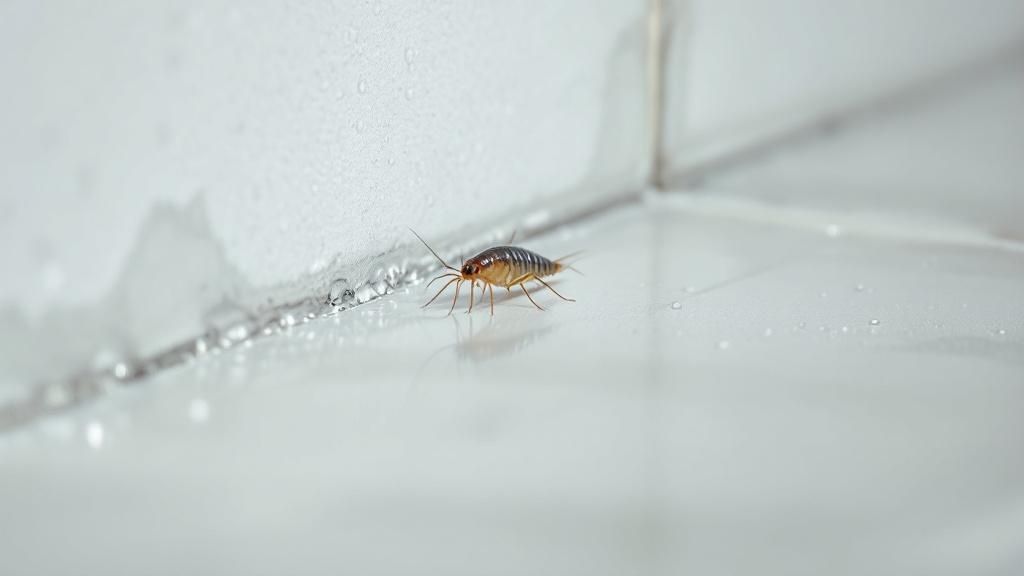
Pests are driven by fundamental needs for food, water, and shelter. A bug's chosen home reveals its lifestyle. For example, finding a wingless, silver, carrot-shaped insect in a damp bathroom or basement points directly to a silverfish, which thrives in high humidity. In contrast, discovering tiny moths or larvae inside a bag of flour is a classic sign of pantry moths. Similarly, seeing large, slow-moving flies congregating on sunny windows or in attics during the fall suggests cluster flies seeking warmth.
How to Effectively Document Habitat
Pinpointing where pests live and when they are active helps you not only identify them but also uncover the root cause of the infestation. This information is crucial for effective treatment.
- Note the specific room: Is the bug in the kitchen, bathroom, bedroom, or basement? Be precise; "near the sink" is more useful than just "kitchen."
- Identify the micro-environment: Look closer. Are they under appliances, in a cabinet with stored grains, along window sills, or behind a toilet?
- Check similar locations: If you find bugs in one kitchen cabinet, inspect all of them. An issue in one damp corner of the basement may be present in others.
- Document activity times: Are the bugs more visible at night, like cockroaches, or during the day? This behavioral detail helps narrow down the species.
- Look for evidence: Pests leave behind signs. Search for droppings (feces), shed skins from molting, egg cases, or nesting materials.
By mapping out where you find pests, you create a blueprint of the infestation. This allows you to target the source directly, making control efforts far more successful and helping you understand the conditions that attracted the bugs in the first place.
3. Analyze Movement and Behavior Patterns
After noting a bug's physical traits, the next question to ask when wondering, "What are these bugs in my house?" is "How does it act?" An insect's movement and behavior are often as distinctive as its appearance. Observing these patterns provides powerful clues that can confirm an identity or distinguish between two very similar-looking pests.
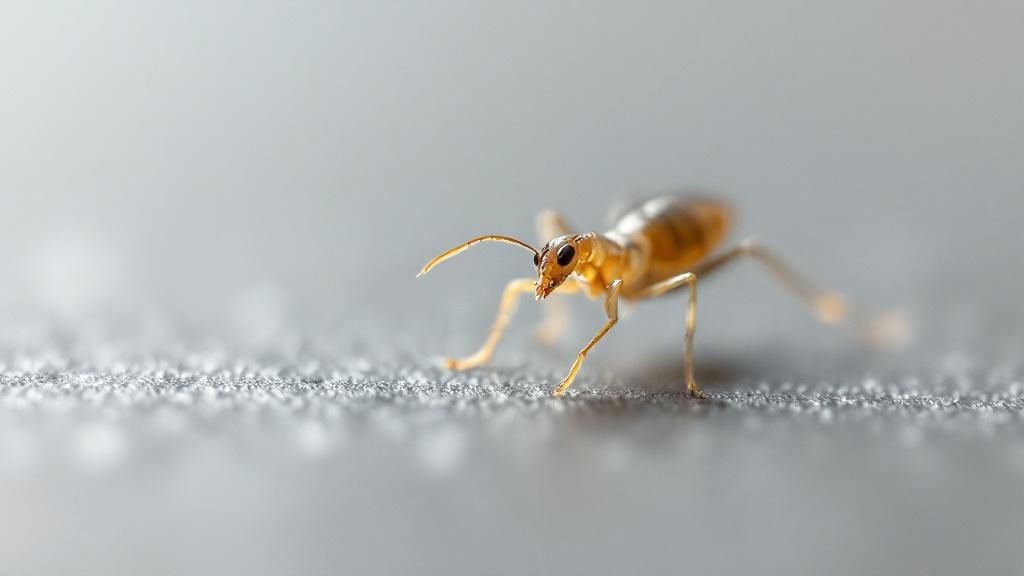
Behavioral analysis is a highly reliable identification tool. For instance, German cockroaches are known for their incredibly fast, scurrying movement and their tendency to scatter instantly when a light is turned on. In contrast, drain flies exhibit a weak, jerky, and irregular flight pattern, often resting on walls near sinks or showers. Another classic example is the springtail, which gets its name from its signature move: a sudden, powerful jump when disturbed, caused by a unique tail-like appendage.
How to Accurately Document Behavior
To capture these revealing behaviors, approach observation like a naturalist studying wildlife. Your goal is to see the bug in its natural state before it reacts to your presence. These notes will be extremely helpful for accurate identification.
- Observe from a distance: Before you get too close, watch how the bug moves on its own. Is it exploring methodically or moving randomly?
- Note its reaction to disturbance: Does it freeze, flee, or try to hide when you approach? How does it respond to a flashlight beam or a sudden puff of air?
- Record its locomotion: Does it fly smoothly, jump, crawl quickly, or move slowly? For example, the frenzied zig-zagging of a fungus gnat is very different from the slow crawl of a carpet beetle larva.
- Watch for group dynamics: Are you seeing just one, or are they clustered together? Pests like ants and termites exhibit clear social behaviors.
Taking a short video on your phone can be the best way to capture these details for later analysis. By documenting how a pest behaves, you gather a set of diagnostic clues that physical appearance alone may not provide, leading you to a faster and more confident identification.
4. Identify Damage Patterns and Evidence
Sometimes, the most compelling clues to answer "what are these bugs in my house?" aren't the bugs themselves, but the evidence they leave behind. Pests often create a unique "signature" through the damage they cause, which can be just as effective for identification as seeing the actual culprit. Analyzing these patterns is a forensic approach that reveals the pest's habits and identity.

This method is invaluable because many household pests are nocturnal, reclusive, or too small to spot easily. For instance, discovering irregular holes chewed into a wool sweater points directly to fabric pests like carpet beetles or clothes moths. Finding small, round "shot holes" in wooden furniture accompanied by fine, flour-like sawdust is a classic sign of powderpost beetles. Meanwhile, small, dark, or rust-colored stains on your mattress or bedsheets are a telltale indicator of bed bug activity, representing their fecal spots.
How to Analyze Pest Evidence
To accurately read these signs, you need to document the context and specifics of the damage. This information helps create a complete picture for a definitive identification.
- Photograph the damage: Take clear, well-lit photos of any holes, stains, droppings, or trails you find. Use a coin for scale if the damage is small.
- Note the material affected: Is the damage on natural fibers like wool or cotton, processed wood, or stored food products? Pests have specific dietary preferences.
- Look for droppings (frass): Pest droppings vary significantly. Cockroach droppings look like black pepper grounds, while drywood termite frass consists of tiny, hexagonal pellets.
- Check for multiple signs: A single area might have several clues. For example, near termite-damaged wood, you might also find discarded wings from a recent swarm.
By documenting the what and where of the damage, you can effectively cross-reference the evidence with known pest behaviors. This approach is especially powerful when the pests are hidden away, giving you the necessary proof to take the next step.
5. Use Digital Photography and Identification Apps
After you've gathered visual information, technology offers a powerful shortcut to answer the question, "what are these bugs in my house?" Modern smartphone cameras and AI-powered identification apps have revolutionized amateur entomology, allowing you to get a likely identification in seconds. These tools analyze your photos and often use your location to suggest the most probable species in your area.
High-resolution photos can capture minute details like antennae shape, leg segments, or subtle color patterns that are difficult to see with the naked eye. An app like iNaturalist or Picture Insect can then compare these features against a massive database to find a match. For instance, what looks like a generic small brown beetle could be instantly identified as a drugstore beetle versus a cigarette beetle, a critical distinction for determining the source of an infestation.
How to Effectively Use Bug ID Apps
To get the most accurate results from these digital tools, providing them with the best possible data is key. A blurry, dark photo is unlikely to yield a correct identification.
- Take multiple, clear photos: Capture the bug from different angles, especially from the top and the side.
- Use good, natural lighting: Avoid using a harsh flash, which can wash out colors and create shadows. A well-lit spot near a window is ideal.
- Include an object for scale: As mentioned before, a coin or a ruler in the photo helps the app (and any human experts) gauge the bug’s true size.
- Cross-reference the results: Don't rely on a single app's conclusion. Use a couple of different services or compare the suggestion with images from university extension websites to confirm.
These apps serve as excellent starting points. Understanding how AI systems are designed to answer questions can provide insight into how they process visual information to arrive at a conclusion. This technological approach empowers you to move from confusion to identification quickly, bringing you one step closer to a solution.
6. Consult Professional Field Guides and Databases
When you need to move beyond simple visual matching, consulting professional field guides and online databases is the next logical step. These authoritative resources provide scientifically vetted information, offering a systematic way to answer, "What are these bugs in my house?" They are built on verified data, detailed descriptions, and comprehensive photo galleries that far exceed the reliability of a simple image search.
Unlike crowd-sourced forums, these databases are often maintained by universities and entomological societies. For instance, BugGuide.net, hosted by Iowa State University, is a massive photographic catalog of North American insects, spiders, and their relatives. Similarly, university extension websites provide fact sheets specifically tailored to pests in your region. Using these tools allows you to identify bugs with a much higher degree of confidence, distinguishing a harmless ground beetle from a destructive wood-boring beetle, for example.
How to Use Guides and Databases Effectively
To get the most out of these powerful resources, a structured approach is best. This method helps you navigate vast amounts of information to find a precise match.
- Start with regional guides: Begin your search with a local resource, like a state university extension website. This automatically filters out thousands of species not found in your area.
- Learn basic terminology: Familiarize yourself with terms like thorax, abdomen, antennae, and tarsi. Knowing these basic body parts will help you use identification keys and understand descriptions.
- Use multiple sources: Cross-reference your findings between two or three reliable sources. If a university guide, a professional database, and an entomology site all point to the same conclusion, your identification is likely correct.
- Focus on pest-specific guides: If you suspect a particular type of pest, like termites or ants, look for guides dedicated to that group. These provide in-depth details on different species within the family.
By leveraging these expert-curated databases, you empower yourself with the same level of information a professional might use. This approach ensures you are acting on accurate knowledge, which is critical for choosing the right control method and avoiding unnecessary treatments for a harmless insect.
7. Document Seasonal and Temporal Patterns
Another powerful clue when asking, "What are these bugs in my house?" comes from observing when they appear. Many pests operate on predictable schedules, driven by seasonal changes and daily cycles. Documenting these temporal patterns can often provide the definitive clue needed to distinguish between two otherwise similar-looking insects.
For instance, a sudden swarm of winged insects in early spring after a warm rain is a classic sign of termite swarmers. In contrast, large black bugs congregating on the sunny side of your home in the fall are almost certainly boxelder bugs seeking a place to overwinter. Similarly, slow-moving cluster flies often appear indoors in late summer and early fall, while house flies are a nuisance all summer long. These distinct seasonal behaviors are as revealing as any physical trait.
How to Track Pest Activity Cycles
Keeping a simple log of pest activity can help you or a professional identify the culprit and anticipate future invasions. Pay attention to these patterns to build a clearer picture of your uninvited guests.
- Keep a pest calendar: Note the date you first see a specific bug each year and when it seems to disappear. This helps identify seasonal invaders like stink bugs or lady beetles.
- Correlate with weather: Did the bugs appear after a heavy rain, during a heatwave, or on the first cold day of fall? Many pest movements are directly triggered by weather events.
- Note the time of day: Some pests are nocturnal. If you only see evidence like droppings or damage but never the bug itself, it might be active at night. Cockroaches and silverfish are prime examples.
- Research local pest seasons: Your local climate dictates which pests are active and when. Understanding these regional trends provides context for your observations.
By tracking when pests appear, you can better understand their life cycle and vulnerabilities. This knowledge is crucial for effective prevention, such as knowing the right time to seal entry points or how to prevent spiders and other seasonal pests before they become a major issue. Learn more about proactive measures you can take at West Pest Co to stay ahead of these predictable invaders.
8. Seek Expert Consultation and Professional Services
Sometimes, despite your best efforts, a definitive answer to "What are these bugs in my house?" remains elusive. When DIY identification falls short, or if the suspected pest poses a significant health or property risk, it's time to call in the experts. Professional pest technicians and entomologists have the specialized training, high-powered equipment, and extensive field experience to provide a guaranteed identification.
This step is crucial for pests that look nearly identical but require vastly different treatments. For instance, distinguishing between a harmless drugstore beetle and a destructive powderpost beetle often requires microscopic examination. Similarly, a professional can tell the difference between common ants and wood-destroying carpenter ants, a distinction that could save you from significant structural damage. These experts can accurately assess the severity of an infestation and determine the most effective and safest course of action.
How to Leverage Professional Expertise
To get the most value from a professional consultation, approach it with a clear plan. Whether you're contacting a pest control company, a university extension service, or a state agricultural department, being prepared helps ensure you get a reliable answer.
- Request a written report: Ask for a formal, written identification of the pest and a detailed report on the extent of any infestation.
- Verify credentials: Ensure any pest control company you hire is licensed, bonded, and insured. Look for technicians with certifications from reputable organizations.
- Get a second opinion: For costly or extensive treatments like fumigation for termites, it is wise to get opinions and quotes from at least two different reputable companies.
- Ask about their methods: Inquire how they reached their conclusion. Did they use a microscope? Did they consult with an on-staff entomologist? Understanding their process builds confidence.
Turning to a professional isn't admitting defeat; it's a strategic move to protect your home and health. For complex infestations or high-stakes pests, the precision and certainty offered by a trained expert are invaluable. You can learn more about the advantages of a professional pest inspection and when it's necessary from the experts at West Pest Co. They provide a clear framework for what to expect when you bring in a pro.
8-Method Comparison for Identifying Household Bugs
| Method | Implementation Complexity 🔄 | Resource Requirements ⚡ | Expected Outcomes 📊 | Ideal Use Cases 💡 | Key Advantages ⭐ |
|---|---|---|---|---|---|
| Document Size and Physical Characteristics | Medium: Requires close inspection and measuring tools | Low: Simple tools like ruler or coin | Accurate physical ID, permanent record | Initial bug identification, quick categorization | Objective, measurable data; no specialized equipment |
| Observe Location and Habitat Preferences | Low: Observation-based, no handling | Very Low: Just observation | Behavioral insights, infestation prediction | Identifying habitat-specific pests, infestation mapping | Behavioral clues; no need to capture bugs |
| Analyze Movement and Behavior Patterns | Medium-High: Requires live, careful observation | Low-Medium: Observation, possible video recording | Dynamic ID data, distinguishes similar species | Identification via behavior traits, difficult physical ID | Identifies bugs from a distance; reveals control strategies |
| Identify Damage Patterns and Evidence | Medium: Requires inspection and knowledge | Low: Visual inspection | Confirmation of infestation, damage source identification | Situations with hidden pests, assessing infestation extent | Detects hidden pests; guides inspection focus |
| Use Digital Photography and Identification Apps | Low-Medium: Taking photos + app use | Medium: Smartphone and apps required | Instant ID suggestions, visual documentation | Rapid ID, remote consultation, documentation | Fast, permanent record; AI-enhanced identification |
| Consult Professional Field Guides and Databases | Medium-High: Requires reading and technical skills | Low-Medium: Access to guides/databases | Scientifically accurate, comprehensive ID | In-depth, accurate species identification, research | Reliable, authoritative sources; covers rare species |
| Document Seasonal and Temporal Patterns | Low: Observation and record-keeping | Very Low: Calendar or diary | Predicts infestations, contextual ID information | Seasonal pests, timing control measures | Helps predict and time interventions |
| Seek Expert Consultation and Professional Services | High: Scheduling and coordinating professionals | High: Cost, time, specialized equipment | Highest accuracy, definitive identification | Complex or uncertain infestations, rare species | Access to expertise, specialized tools, treatment advice |
From Identification to Action: Your Next Steps for a Pest-Free Home
Navigating the world of household pests can feel overwhelming, but you no longer have to point at a scurrying insect and ask, "what are these bugs in my house?" By now, you're equipped with a comprehensive toolkit to move from bewildered observation to confident identification. The power of a correct ID cannot be overstated; it is the single most critical step in regaining control of your living space.
This article walked you through a layered, systematic approach. We began with the fundamentals: documenting the bug's size and physical traits, observing its preferred habitat, and analyzing its unique behaviors. These initial steps alone can often narrow down the possibilities from hundreds to just a handful.
From there, we explored the tangible evidence pests leave behind, such as damage to wood, fabrics, or food stores. We also highlighted modern tools, like high-quality digital photos and specialized identification apps, which bring expert knowledge right to your fingertips. For those who prefer a more traditional method, professional field guides and online databases offer a wealth of verified information. Finally, we touched on the importance of tracking seasonal patterns and knowing when to escalate the issue by seeking professional consultation.
Key Takeaways for Proactive Pest Management
Mastering these identification techniques empowers you to make informed, effective decisions. You can now distinguish between a harmless visitor and a destructive infestation, saving you time, money, and unnecessary stress.
- Identification is the Foundation: A correct ID dictates the entire treatment strategy. Misidentifying a termite as an ant, for instance, could lead to catastrophic structural damage.
- Context is Crucial: Where you find a bug (a damp basement vs. a dry pantry) and what it's doing (swarming near a window vs. chewing through wood) are vital clues that accelerate identification.
- Not All Bugs Require Panic: Many common insects, like the occasional spider or silverfish, are more of a nuisance than a genuine threat. Knowing the difference allows for a measured, appropriate response.
- Some Pests Demand Professional Help: For high-risk invaders like termites, bed bugs, cockroaches, or certain species of ants, a DIY approach is often ineffective and can worsen the problem. These situations require the expertise, equipment, and materials of a licensed professional.
The ultimate benefit of this knowledge is peace of mind. Instead of reacting with uncertainty, you can proactively assess any situation and choose the right path forward. You are now the first line of defense for your home, capable of protecting your property, your health, and your family from unwanted intruders. By turning "what are these bugs in my house?" into a solvable puzzle, you transform anxiety into action and reclaim your environment.
If you've identified a pest that requires professional intervention or you'd simply prefer an expert eye, West Pest Co. is here to help Santa Cruz County residents. Our team specializes in a comprehensive Integrated Pest Management approach, ensuring a safe, effective, and lasting solution for your home or business. Visit West Pest Co. to schedule a consultation and take the final step toward a pest-free home.