Yes, you can stop gophers from ruining your yard for good. But it takes a different way of thinking. You need to move away from temporary fixes and toward a permanent prevention plan. The best long-term answer is a professionally installed gopher barrier. It physically blocks them from ever getting into your lawn and garden beds.
This is how you end the frustrating cycle of trapping, patching, and repairing damage season after season. Have you tried traps and other methods, only to see the gophers keep coming back? You're not alone. The good news is, a true fix exists.
The Never-Ending Cycle of Gopher Damage in Santa Cruz
If you live in Santa Cruz County, from Capitola to Scotts Valley, you know the feeling. You spend your weekend patching up mounds and setting traps. A week later, you walk outside to see a fresh network of tunnels.
It’s an exhausting game that feels impossible to win. It leaves you wondering if a permanent solution is even possible.
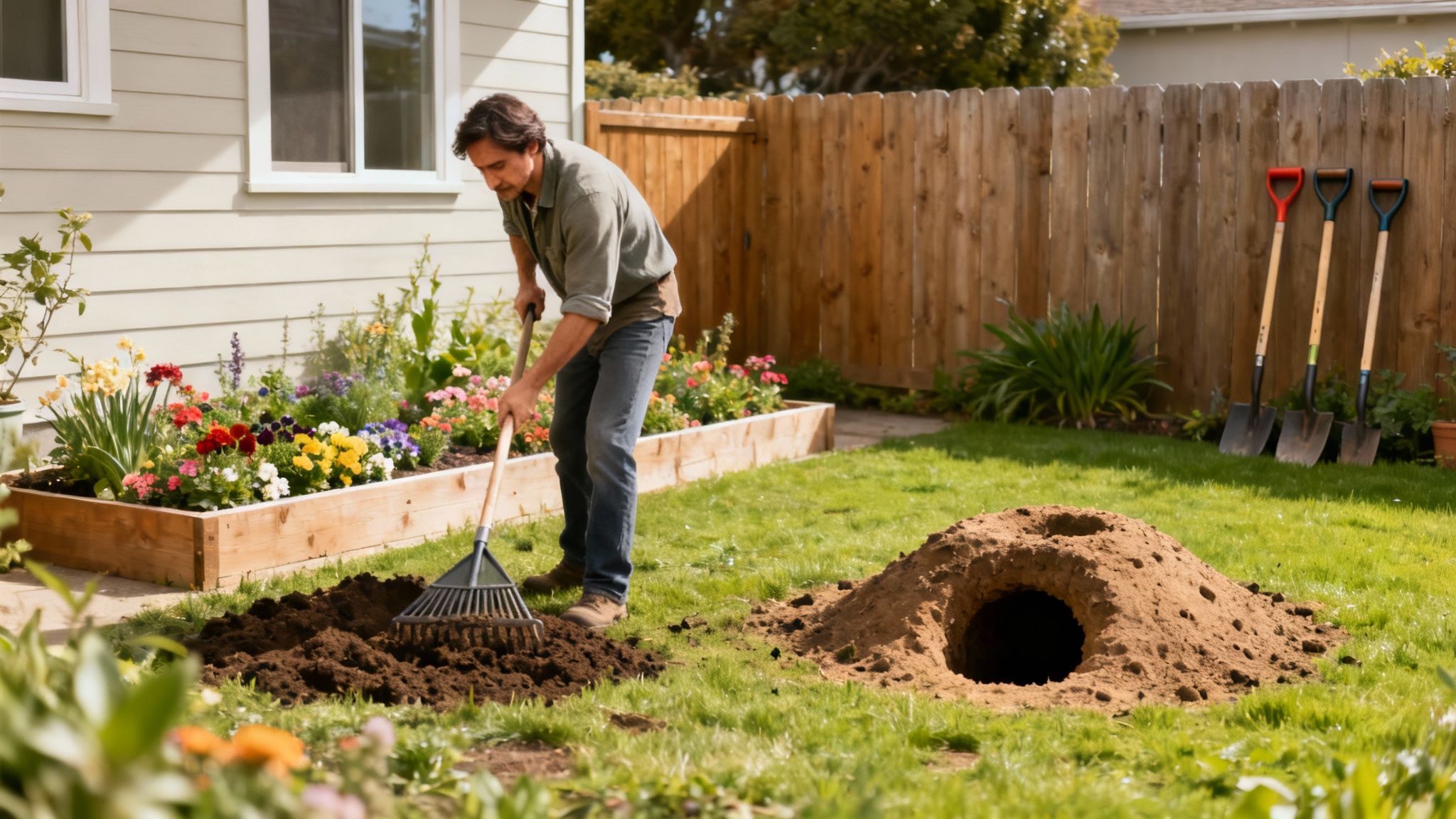
This constant trap-and-repair cycle becomes a costly, time-consuming chore you never signed up for. While dealing with gophers, it's easy to overlook other crucial gardening tips that protect your landscape investment.
Why Traps and Baits Don't Work Long-Term
The rich soil and vibrant gardens that make Santa Cruz County so beautiful also create a paradise for gophers. They have an endless supply of plant roots, bulbs, and vegetables. This means just removing one gopher is never enough.
A common misstep is getting stuck in a never-ending cycle of trapping. People assume a barrier is too expensive or requires digging up the whole yard. So, they keep patching the damage, losing time and money every season.
The big problem with methods like trapping is that they create a "vacancy" in prime gopher territory. As soon as one gopher is removed, another one from a nearby property is ready to move in and take its place.
Think Prevention, Not Just Removal
Instead of asking, "How do I get rid of this gopher?" the better question is, "How do I make my yard impossible for any gopher to invade?" This is where your strategy should shift from temporary removal to permanent exclusion.
It’s about building a defense that protects your most valuable areas—your lawn, vegetable gardens, and irrigation lines. As you plan your defense, our guide on year-round garden pest tips for Santa Cruz yards can help you build a complete approach.
A gopher barrier is a special wire mesh installed below the ground. It physically blocks gophers from tunneling into your protected zones. This one-time installation offers lasting peace of mind that traps simply can't match.
Why Traps and Baits Aren't a Permanent Solution
If you've battled gophers in your Santa Cruz yard, you know the feeling. You set a trap and catch one. It feels like a win, but the relief is almost always temporary. Soon, a new mound of fresh dirt appears, and the frustrating cycle starts all over again.
This isn't a sign that you're doing it wrong. It's just the nature of reactive gopher control. Methods like trapping only get rid of the gopher causing trouble today. They do nothing to stop the next one from moving in tomorrow.
The Problem with Creating an Open House
The biggest issue with trapping is something called the "vacuum effect." Your yard, with its watered lawn and tasty plant roots, is prime real estate for a gopher. When you successfully trap and remove one, you just create an open house.
An empty tunnel system is an open invitation for gophers from neighboring properties to move in. They are always looking for new areas to claim. This is why it feels like you're playing a never-ending game—because you are.
A single gopher can create up to 200 mounds per year, digging up a huge amount of soil. When a new gopher moves in, it quickly expands the existing tunnels, causing even more damage.
Legal and Safety Concerns with Baits
Besides being a temporary fix, baits and poisons bring a whole other set of risks, especially here in California. Many of the most powerful poisons are restricted for public use. This is because of the danger they pose to wildlife, pets, and even children.
Accidental poisoning is a serious concern. A poisoned gopher can be eaten by predators like hawks, owls, or a neighborhood cat. This leads to secondary poisoning that harms our local ecosystem. For Santa Cruz residents who value our natural environment, this is a risk not worth taking.
The True Cost of a Quick Fix
This constant trap-and-repair cycle also has hidden costs that add up fast. It's not just the price of new traps. The real expense comes from:
- Lost Plants: Replacing expensive flowers, shrubs, and vegetables that gophers destroy from below.
- Irrigation Repairs: Fixing chewed sprinkler lines, which leads to water waste and costly bills.
- Your Time: The value of your own time spent endlessly patching mounds and resetting traps.
This approach traps you in a cycle of spending money and effort without ever solving the real problem. To truly stop gophers, you have to shift your strategy from removal to prevention. You can learn more by exploring why trapping alone doesn’t solve your gopher problem.
How Does a Gopher Barrier Actually Work?
You’ve probably heard people talk about a permanent fix for gophers. That permanent fix is a gopher barrier, and it’s the most effective, long-term solution to stop gophers from tearing up your yard for good.
This isn’t a chemical spray that washes away or a temporary repellent. It’s a physical, underground fence that gophers simply can’t get through.
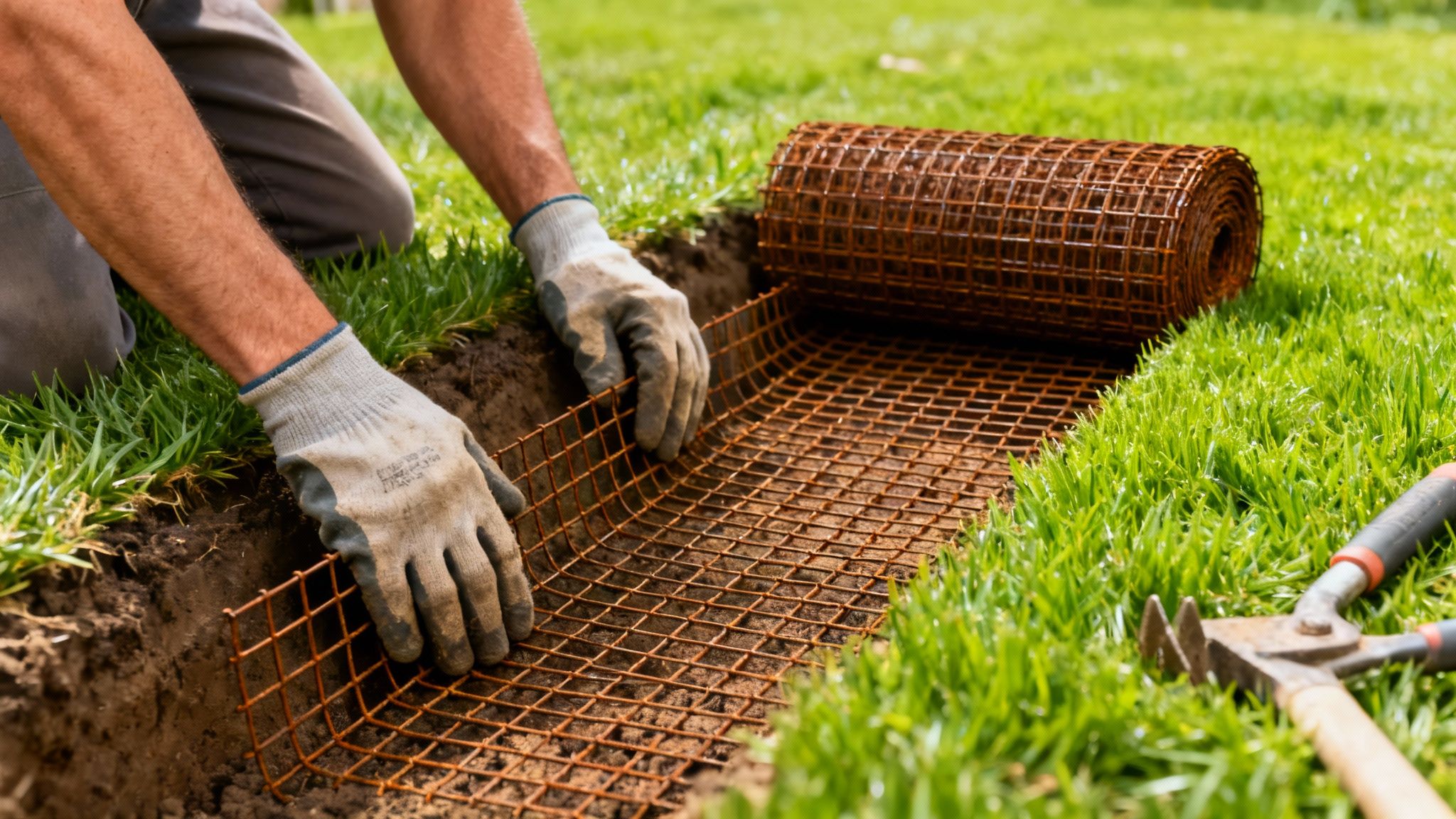
Think of it as security for your landscape. A gopher barrier is a special, rust-resistant wire mesh installed several inches below the ground. This creates a shield that physically blocks gophers from tunneling up into your lawn or chewing through your irrigation lines. Once it’s in, it provides silent, 24/7 protection.
Busting a Common Myth
When people hear "underground barrier," they often imagine a huge digging project that will destroy their entire yard. This is the biggest misunderstanding about gopher barriers. A professional installation is about smart, strategic protection.
The goal is to protect your most valuable areas. You don’t need to dig up your whole property to see great results. It’s about a targeted approach that gives you maximum protection with minimal disruption.
Common spots for installation include:
- Under New Lawns: Installing the mesh before new sod goes down is the perfect time to get complete lawn protection.
- Vegetable Gardens: Lining the bottom of raised beds or trenching around gardens keeps your harvest safe.
- Around Irrigation Systems: A protective zone around main sprinkler lines can prevent costly leaks caused by gophers.
Understanding the Installation Types
Not all yards need the same type of barrier. A professional will look at your specific needs to recommend the best solution. To install these barriers with precision, some professionals use a specialized hydro excavation vacuum system. This is a game-changer for working around existing landscaping without causing damage.
There are two main installation methods:
- Under-Lawn or Under-Bed Installation: This is ideal for new landscaping projects. The wire mesh is rolled out over the soil before you add topsoil or sod. Once it's covered, it’s invisible but provides a powerful defense.
- Perimeter Trenching: For existing lawns and gardens, this method involves digging a narrow trench around the area you want to protect. The gopher wire is installed vertically in the trench, creating an underground wall.
The key to success is precision. Every seam must be overlapped and secured perfectly, because a gopher can and will find the smallest gap. This is why professional installation is so important—it guarantees the barrier is installed correctly for permanent protection.
The Peace of Mind from a Permanent Solution
The best part of a gopher barrier is that it’s a one-and-done installation. There are no chemicals to reapply and no traps to reset. And there are no poisons that could harm kids, pets, or wildlife here in Santa Cruz County. You finally get to enjoy your yard without the constant stress of gophers.
West Pest Co. is one of the only providers in Santa Cruz County that installs custom gopher barriers as part of a long-term control plan. Learn more about our approach to gopher barrier installation in Santa Cruz County. It is the only way to truly stop gophers for good.
Is a Gopher Barrier Right for Your Santa Cruz Property?
A gopher barrier is a powerful tool. But is it the right investment for your specific yard in Santa Cruz County? A barrier can be a fantastic, permanent solution, but it isn’t the perfect fit for every single property. Understanding when it’s a great idea is key to making a smart decision.
This isn’t about a one-size-fits-all answer. It's about looking at your yard, your landscaping plans, and how frustrated you are with gophers. A professional assessment will give you the clearest picture, but you can start evaluating the situation yourself right now.
When a Gopher Barrier Makes Perfect Sense
In certain situations, installing a gopher barrier is a clear win. The upfront cost pays for itself quickly in saved plants, avoided repairs, and peace of mind. If you find yourself nodding along to one of these scenarios, a barrier should be at the top of your list.
A gopher barrier is most effective when installed during these key moments:
- Before Laying New Sod: If you're putting in a new lawn, this is the absolute best time for a barrier. Laying the gopher mesh down before the sod is simple and protects your grass from day one.
- When Building Raised Garden Beds: Don't let gophers steal your hard work. Lining the bottom of new raised beds with gopher wire before you add soil is a smart move for Santa Cruz gardeners.
- For Yards with Constant Gopher Problems: If you've been fighting a losing battle for years, a barrier can finally break the cycle. It's the best way to say, "This area is off-limits."
- Protecting High-Value Landscaping: For a prized rose garden or complex irrigation system, a barrier acts as permanent insurance against gopher damage.
When a Barrier Might Not Be Practical
Let's be honest—a gopher barrier isn't the right call for every property. Certain landscape features can make installation very difficult or expensive. It’s important to recognize these potential problems.
A barrier may not be the best choice for:
- Properties with Many Mature Tree Roots: Large, established roots from trees like oaks or redwoods can make trenching nearly impossible without damaging the trees.
- Extremely Rocky Soil: If your property in the Santa Cruz mountains is on rocky ground, digging the clean trenches needed for a barrier can be very costly.
- Yards with Complex Existing Hardscaping: If your yard already has intricate patios, concrete paths, and retaining walls, trying to fit a seamless barrier can be a major challenge.
The point of a barrier is to create a perfect, unbroken underground fence. If roots or rocks create too many gaps, the barrier's effectiveness drops, and it may not be worth the investment.
A Quick Checklist to See if a Barrier is Right for You
To help you think like a pro, answer these simple questions. Your answers will give you a clearer idea of whether a gopher barrier is a logical next step. You might also find it helpful to explore our guide on choosing gopher-resistant plants for your Santa Cruz garden as another layer of defense.
Ask Yourself:
- Am I planning a major landscaping project (new lawn, garden beds) in the next year?
- Have I spent significant time and money on trapping with little long-term success?
- Are gophers threatening specific, high-value parts of my yard (like a vegetable garden)?
- Is my property mostly free of large, dense tree root systems in the areas I want to protect?
- Is my main goal to find a permanent, chemical-free solution?
If you answered "yes" to two or more of these questions, that’s a strong sign that a gopher barrier could be the permanent solution you’ve been looking for.
What to Expect From a Professional Installation
Deciding on a permanent gopher barrier is a big step. It's smart to wonder what the process looks like. A professional installation is a careful, strategic operation designed to give you maximum protection with the least disruption to your Santa Cruz yard.
Here at West Pest Co., our goal is to be completely transparent. This isn't a one-size-fits-all job. The entire plan is built around your property's specific layout and needs. We aim to get it right the first time so you get a yard that's permanently protected.
Step 1: A Thorough Property Inspection
It all starts with a detailed, on-site inspection. We walk your property with you to understand the full scope of the problem. We look for gopher hotspots, map out their travel routes, and find the high-value areas you need to protect the most.
During this initial chat, we’re looking for a few key things:
- Your Must-Protect Zones: This could be your lawn, a vegetable garden, or your underground irrigation lines.
- Potential Challenges: We’ll spot any hurdles right away, like mature tree roots or rocky soil.
- Your Future Plans: Knowing your landscaping plans helps us create the most effective strategy from the start.
Step 2: Creating a Custom Installation Plan
Once we have a clear picture of your property, we design a custom installation plan. We don't believe in digging up your entire yard if it's not needed. Instead, we focus on selective installation that targets the most critical areas.
A professional plan is about surgical precision. The goal is to build a shield around your most important landscape features while leaving the rest of your yard as undisturbed as possible.
We'll explain exactly where a barrier makes sense for your property and, just as importantly, where it might not. This honest approach ensures you're making an informed decision. Before hiring anyone, it's always smart to know what questions you should ask a pest control company.
This simple flowchart breaks down how we think through the best gopher barrier solution for a property.
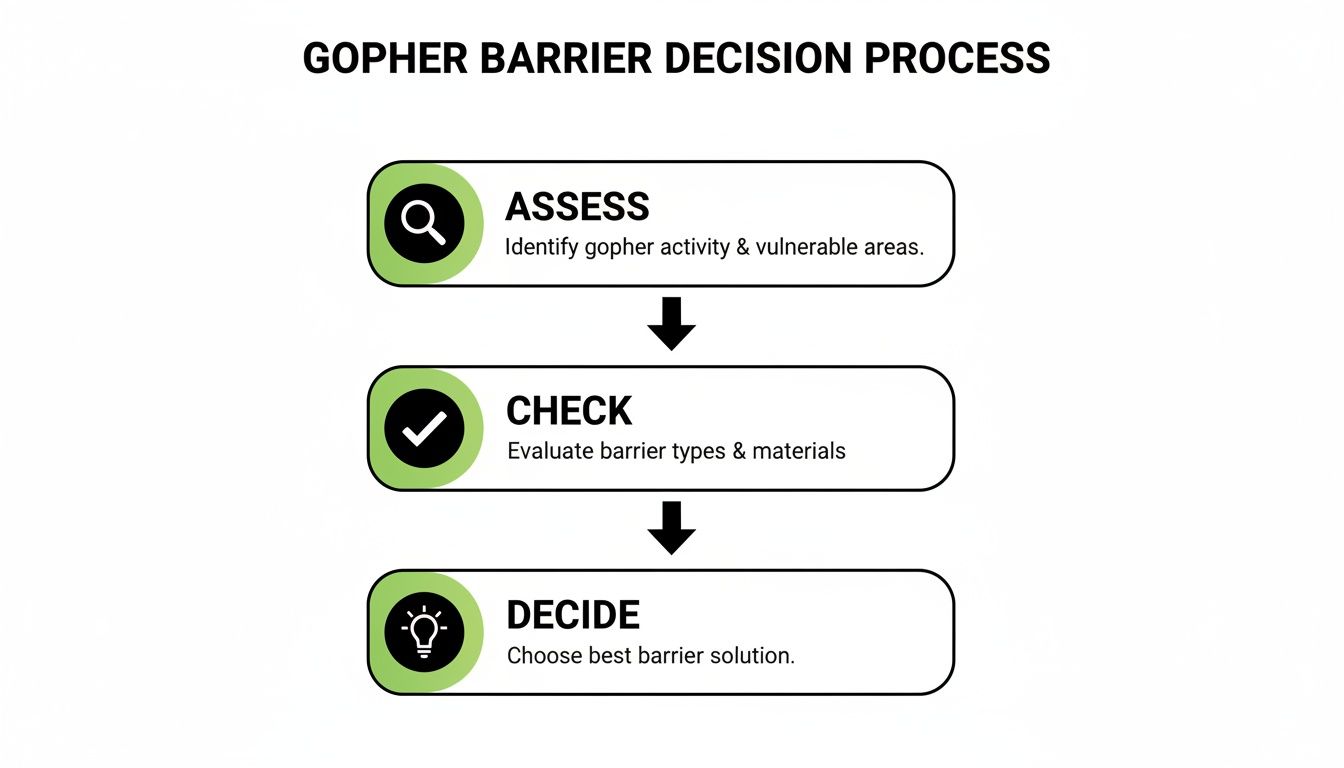
This process makes sure the solution we propose is a perfect match for your property's unique challenges.
Step 3: The Professional Installation
On installation day, our team shows up with the right equipment to get the job done right. We only use high-quality, galvanized or stainless steel wire mesh designed for underground use. This material is highly rust-resistant and built to last for years.
The installation technique depends on the situation:
- Trenching for Perimeters: To protect an existing lawn, we dig a clean, narrow trench. The wire mesh is installed vertically, and all seams are overlapped and secured to make sure there are no gaps.
- Laying Mesh Under New Sod: For a new lawn, the process is even smoother. We roll the mesh out over the prepared soil before the sod goes down, creating an invisible layer of protection.
We handle every detail, from carefully setting aside your turf to making sure the final result looks clean and professional. It’s a serious investment, and our work makes sure it finally stops those gophers for good.
Frequently Asked Questions About Gopher Barriers
Making the decision to install a permanent gopher barrier is a big one. It’s smart to have questions. Here are the honest answers to the questions we hear most often from homeowners in Santa Cruz County.
How Much Does a Gopher Barrier Cost?
This is usually the first question people ask, and the honest answer is: it depends. The cost is tied to the size of the area you want to protect and the difficulty of the installation.
That’s why we always provide a custom quote after a free, no-pressure inspection. It’s the only way to give you a transparent price for your yard's specific needs. Think of a barrier not as a cost, but as a one-time investment. It often saves money and frustration in the long run.
Will a Gopher Barrier Harm My Lawn or Plants?
Not at all. When installed correctly by a professional, a gopher barrier is invisible and safe for your landscape. We place the wire mesh at a depth that allows grass and plant roots to grow and thrive.
It’s a protective shield that works without adding any chemicals to your soil. For new projects, the barrier is laid down before the topsoil or sod goes in, creating a seamless layer of protection that won't affect the health of your garden.
Can I Install a Gopher Barrier Myself?
Technically, yes, but it’s an incredibly tough job that demands perfect precision. The barrier's success depends on it—the mesh has to be buried at the right depth, and every single seam must be overlapped and secured flawlessly.
A determined gopher will find any weakness. One small mistake can render the whole project useless. Professional installation guarantees the job is done right the first time for lasting protection.
What If a Gopher Is Already Inside the Barrier Area?
This is a critical step in our process. Before we lay down a barrier, we conduct a thorough inspection and perform effective trapping to make sure the area is 100% gopher-free.
Sealing a gopher inside a protected area would be pointless. Our service is a complete solution: we remove any current gophers to guarantee your yard starts clean and stays that way for good.
How Long Does a Gopher Barrier Last?
A professionally installed gopher barrier is built to last for years. We use high-quality, galvanized or stainless steel mesh that’s designed to resist rust and decay in the soil. This isn’t a temporary fix. It’s a true set-it-and-forget-it solution that provides permanent peace of mind.
If you’re tired of playing whack-a-mole with gophers in Santa Cruz County, West Pest Co. is here to help. We’ll inspect your yard and give you honest advice on whether a gopher barrier is right for you—no pressure, just a plan to protect your garden for good.