Direct Answer: Call West Pest Co at (831) 430-8402. We cover Aptos and can often reach active stinging insect jobs same day. Until then, keep the deck closed off and leave the nest opening alone.
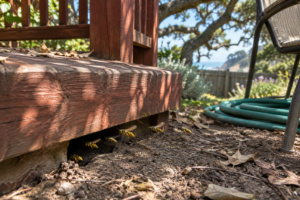
You go out to light the grill on a warm September afternoon in Aptos and notice a steady line of yellow jackets dropping into a small hole under the bottom step. The kids use that deck. So does the dog. And now nobody wants to walk past it.
If that’s your situation right now, the short answer is that West Pest Co handles active yellow jacket nests throughout Aptos, along with Rio del Mar, La Selva Beach, Capitola, and Soquel, and stinging insect jobs near a door or deck usually move to the front of the schedule. Call (831) 430-8402 and say the words active nest.
Here is the position I’ll defend for the rest of this article: where the nest sits decides almost everything about how fast it can be handled and what the visit involves. So the most useful thing you can do in the first hour is watch carefully from a safe distance instead of acting.
There’s a Yellow Jacket Nest by Our Deck in Aptos. Who Can Remove It Today?
I cover all of Santa Cruz County, and Aptos is a short drive, so same-day is realistic more often than not for an active stinging insect call. It depends on where I already am that day and how many jobs are stacked ahead of you.
A wasp and yellow jacket visit generally covers:
- Confirming what you actually have (yellow jackets behave differently than paper wasps)
- Locating the nest opening and the colony itself, which is not always where you think
- Targeted treatment of the nest, using the least disruptive method that will do the job
- Nest removal when the nest is reachable and safe to take down
- Recommendations on what was drawing them to that spot
What moves timing and price: how close the nest is to a door or walkway, whether it sits in open soil or inside a deck frame, how big the colony has grown by late season, and whether anyone in the house has been stung already.
Two things worth asking for on the phone. Ask to be put on the cancellation list if the first offered slot is too far out, and ask for a call or text before arrival so you can get pets and kids inside. I text ahead as a matter of routine, and most local customers now expect that.
For an actual number on your nest, a two minute conversation beats any range I could print here.
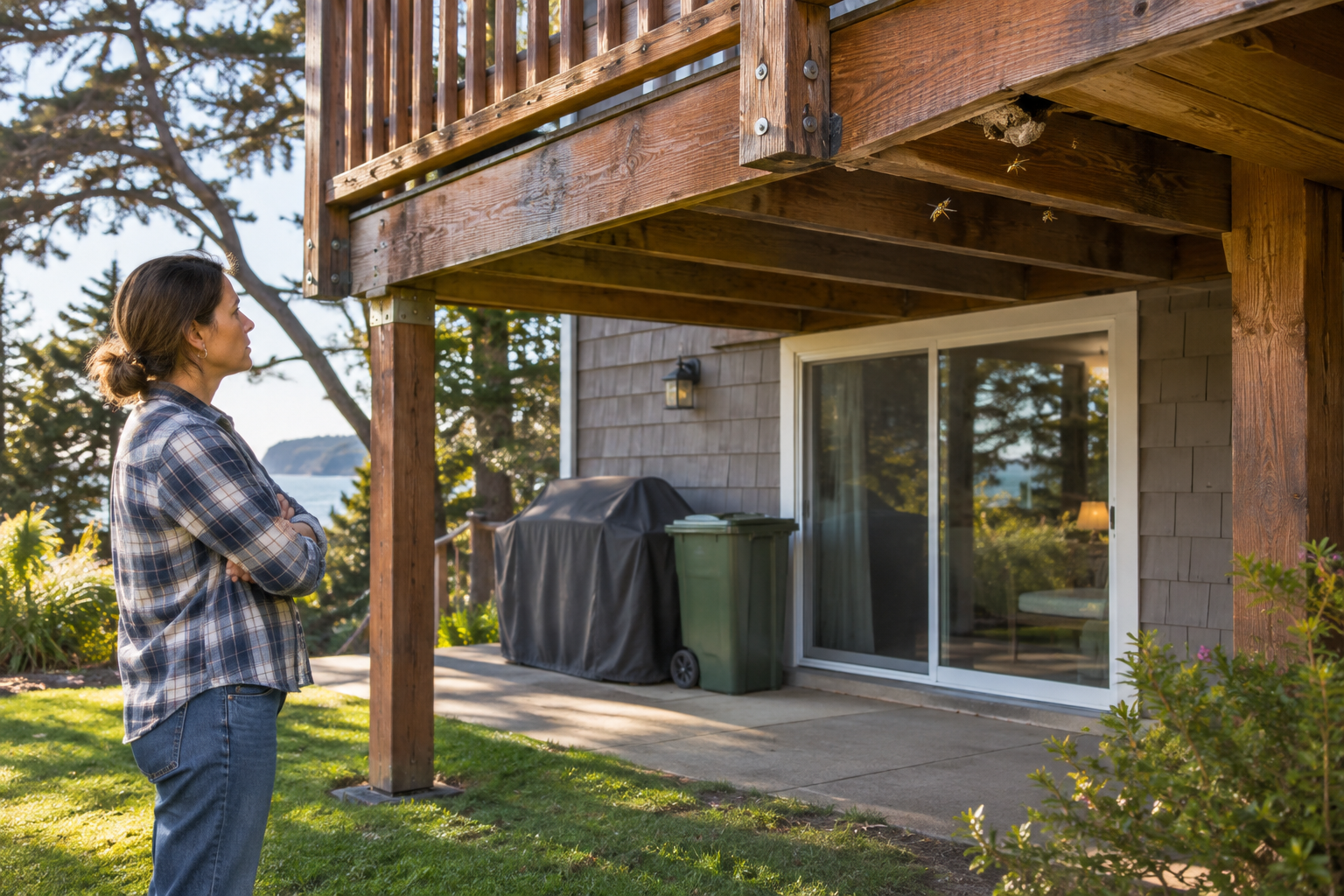
The First Hour: Watch From a Distance and Write Down What You See
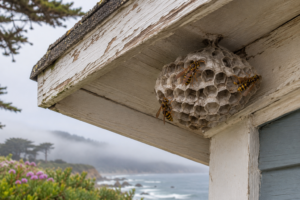
Three situations look identical to a worried homeowner and are completely different jobs for me. A nest in open soil out in the yard, a nest burrowing into a dirt and sand patch beside the front door, and a nest tucked up under an eave or inside a deck frame.
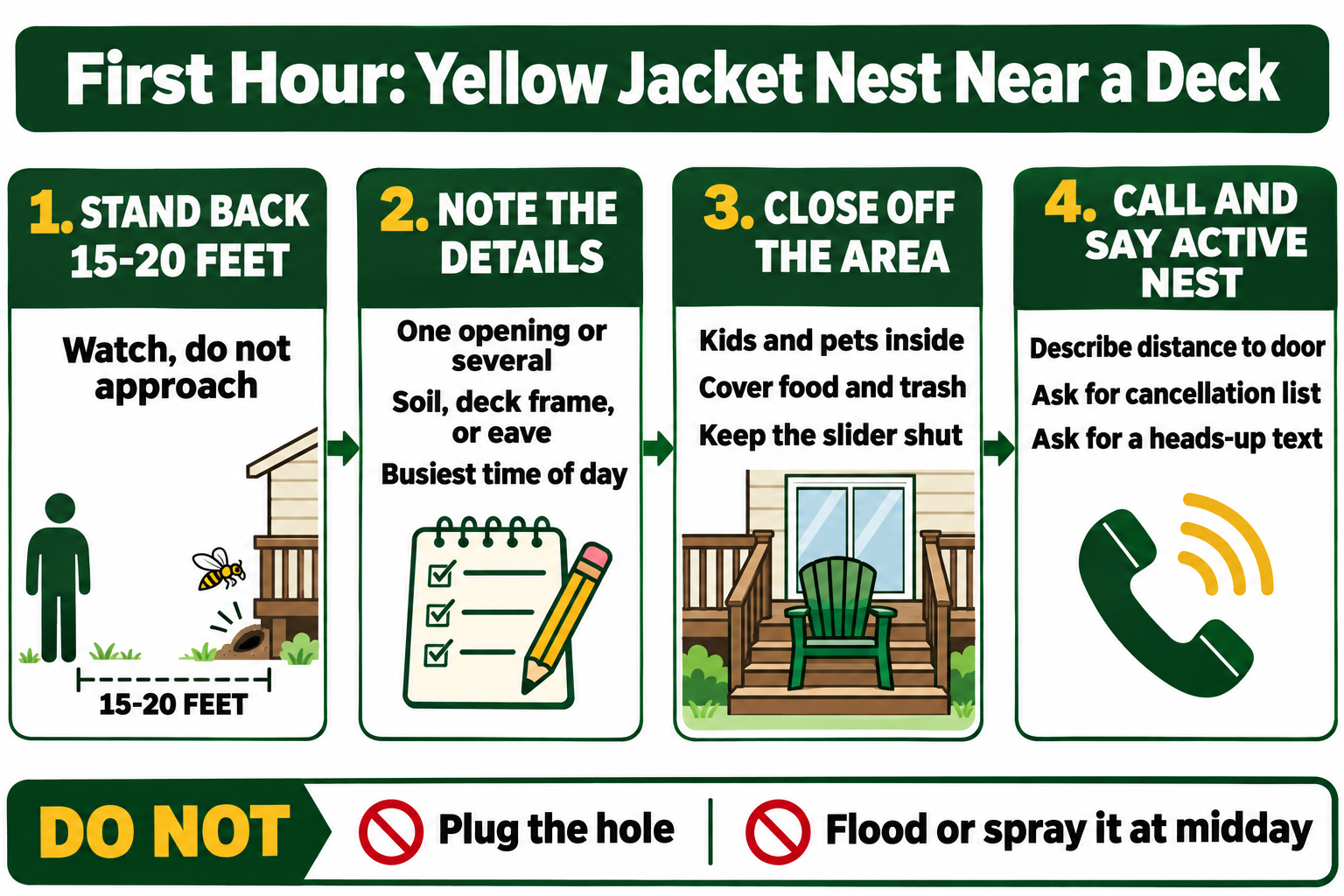
Stand back at least 15 to 20 feet and note:
- One opening or several. Multiple openings often mean a bigger, older colony.
- Where the flight line disappears. Into bare soil, under deck boards, into a gap in the siding, or up under the eave.
- How heavy the traffic is. A few an hour is different from a constant in and out stream.
- What time of day it peaks. Mid-morning and late afternoon are usually busiest.
- How close it is to a door, step, or seating area. This is the detail that drives urgency.
Thirty seconds of description like that lets whoever answers the phone size up the job before loading the truck. It also tells me what to bring.
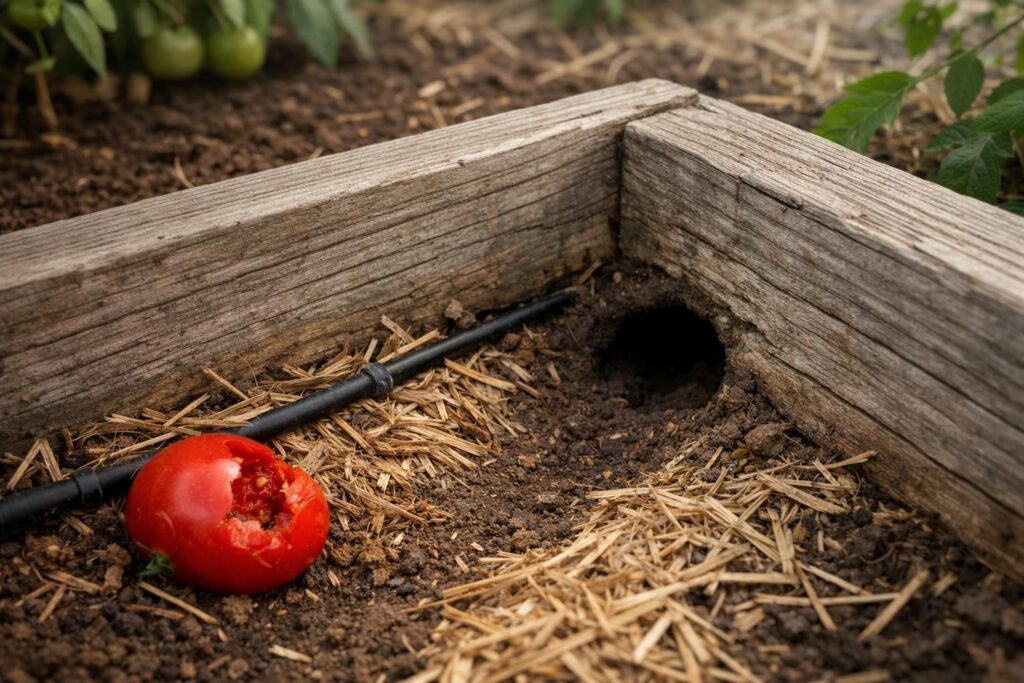
A ground nest is its own category, and people sense that. One visitor to our site typed almost exactly that question about a yellowjacket ground nest. If that’s what you’ve got, I wrote more about why fall ground nests show up in Santa Cruz County yards.
Why the Hardware Store Can Usually Makes a Deck Nest Worse
I understand the instinct. You’ve got a can under the sink and the nest is right there. But three common moves tend to backfire on a deck nest specifically.
Plugging the hole. Yellow jackets in a wall void or deck frame will often chew a second route out, and sometimes that route comes out on the inside of the house.
Flooding it with a hose. Water rarely reaches the brood chambers in loose coastal soil. It mostly sends workers out in every direction at once.
Spraying at midday. That’s peak foraging time, which means the maximum number of defenders in the air and a bunch of returning workers who will be back within the hour anyway.
Timing matters here. By late August and September, a colony that started as one queen in spring is at its largest size of the year, and UC Agriculture and Natural Resources notes that yellowjacket colonies peak in late summer and become more aggressive scavengers as natural food runs short.
The realistic interim plan while you wait:
- Close the deck off. Rope, a chair across the steps, whatever keeps kids and the dog off it.
- Move the food source. Open green bins, pet bowls, hummingbird feeders, and grill drippings are what pulls scavenging yellow jackets onto a patio in the first place.
- Leave the opening alone. No plugs, no water, no poking.
- Keep the slider closed if the nest is within a few feet of the door.
What to Do in the First Hour
A quick reference for the window between finding the nest and the visit.
Where the Nest Sits and What It Means for the Visit
This is roughly how I sort a stinging insect call before I arrive. Every property is different, but the pattern holds up.
| Nest location | What you’ll see | What it means for the visit |
|---|---|---|
| Open soil in the yard | Flight line disappearing into a small hole in bare dirt or sand | Usually the most straightforward. Good access, often handled in one visit |
| Under the bottom step or inside the deck frame | Wasps slipping between boards or into a shaded gap | Access is the variable. May require working from more than one side of the structure |
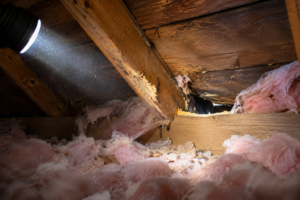
| Eave, roof overhang, or wall void | Activity at a corner of the roofline, or sightings indoors | Height and entry point matter. Indoor sightings usually mean the nest is in a void |
| Near a front door or gate | Steady traffic within a few feet of a doorway | Treated as a safety priority and typically moved up the schedule |
Will One Visit Finish It? That’s the Real Question Behind the Cost Question
When people ask what this costs, they usually mean something else: is this going to be over today? Most of the time with a reachable nest, yes. But a few things decide it.
- Access. An open ground nest in a lawn is simpler than a colony nested inside a sealed deck frame or a wall void.
- Colony size. A nest found in June is a fraction of the size of the same nest in September.
- Returning foragers. Workers out in the field during treatment come home afterward. Seeing stragglers for a day or two is normal and does not mean it failed.
- Whether there’s more than one nest. Deck areas with good food sources sometimes host two.
- Structure type. Older Aptos and Rio del Mar homes with layered decks, lattice skirting, and shingle siding give colonies more places to tuck into.
If a short follow-up check is warranted, I’d rather tell you that up front than pretend one pass handles every scenario. Nest removal addresses the active colony. It doesn’t stop a new queen from picking the same shaded spot next spring, and anyone who tells you otherwise is overselling.
For a look at how method and nest type affect what a job runs, I broke that down separately in the piece on chemical versus non-chemical wasp nest removal and what moves the cost. Exact pricing always comes from a quick look at your specific setup.
Frequently Asked Questions About Yellow Jacket Nests Near Decks
There’s a yellow jacket nest by our deck in Aptos. Who can remove it today?
Call (831) 430-8402. We serve Aptos and the rest of Santa Cruz County, and active stinging insect nests near a deck or doorway are prioritized, so same-day or next-day is often possible. When you call, say you have an active nest and describe how close it is to a door or seating area. If the first available slot doesn’t work, ask to go on the cancellation list.
How much does it cost to get rid of a yellowjacket ground nest?
It depends on how reachable the nest is, how large the colony has grown by late season, and whether there’s more than one. An open ground nest in a lawn usually sits at the simpler end. A colony inside a deck frame or wall void takes more work to reach. I’d rather quote you after hearing the details than throw out a number that doesn’t match your yard.
Is it safe to use the deck while we wait?
I’d keep everyone off it until the nest is handled, especially kids and pets. Yellow jackets defend a radius around the opening, and vibration from footsteps on deck boards can set them off.
Why are there suddenly so many of them around our food and trash?
Late summer and early fall is when natural food sources dry up and the colony is at its peak size. That’s when they start scavenging grills, open green bins, and anything sweet on the table. The fog-driven warm stretches we get here in September often extend that window later than inland parts of California.
We still see a few flying around a day after treatment. Did it work?
Usually yes. Foragers that were away from the nest during the visit come back and find the colony gone. A day or two of stragglers is normal. If you’re still seeing steady in-and-out traffic at the same opening after several days, that’s worth a call back.
Dealing With an Active Nest Near Your Deck?
Stinging insect calls in Aptos, Rio del Mar, Capitola, and the rest of Santa Cruz County are the kind we try hardest to fit in quickly, and arrival is usually confirmed by text beforehand. If you’d like someone to take a look at what’s under your deck, you can reach us at (831) 430-8402 or at westpestco.com.